McKinney, TX
North up US-75, from the historic square to the big master-planned communities.
North Collin County Foundation Repair
Allen sits about nine miles north of Plano on US-75, and it grew in two clear waves: the older east side around historic downtown, and the master-planned west side that filled in during the 1990s and 2000s. Both sides sit on the same moving clay, but the houses show it in different ways.
East Allen, in the 75002 ZIP code, is the older half of the city. The streets around historic downtown, Exchange Parkway, and the roads east of US-75 carry 1980s brick homes on conventional slabs, with smaller lots and mature trees that have had decades to grow. These homes have lived through many wet springs and dry summers, and their slabs carry that history in hairline cracks, sticking doors, and floors that slope a little toward one corner.
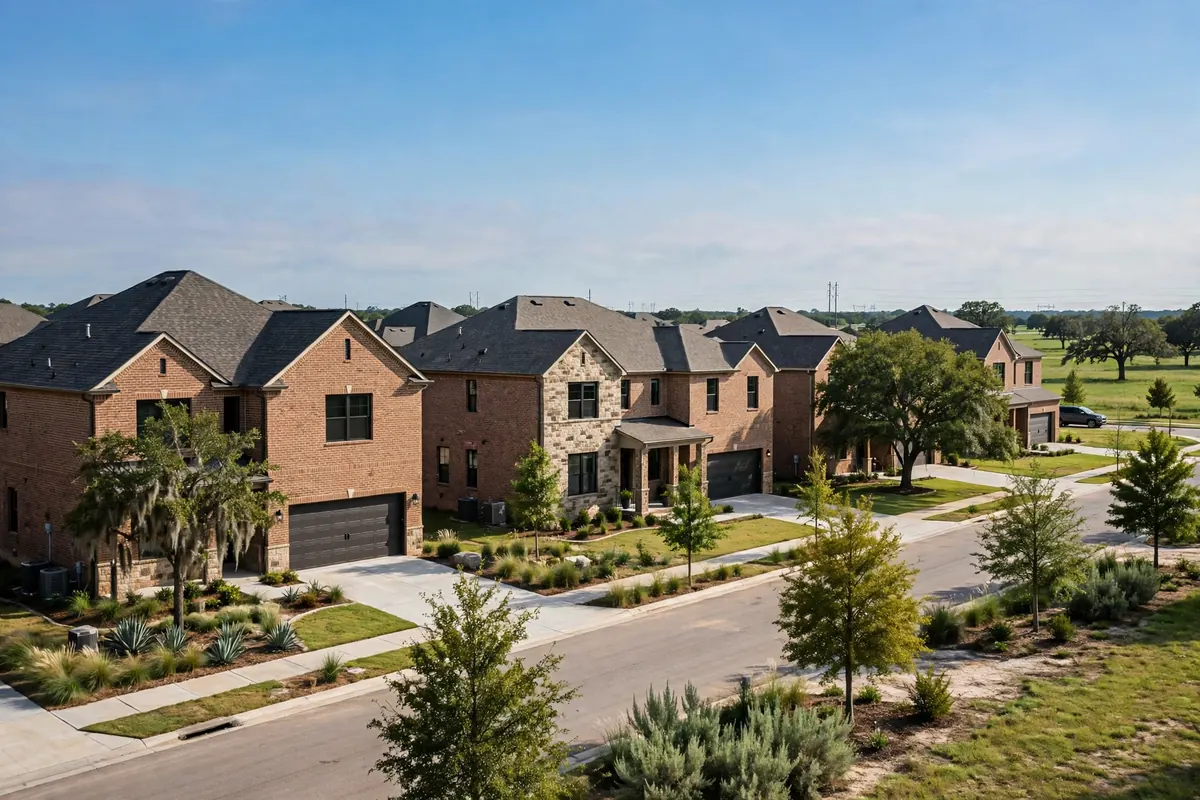
West Allen, in the 75013 ZIP code, is the master-planned half. Twin Creeks, Watters Crossing, Starcreek, and Montgomery Farm filled in during the 1990s and 2000s with larger two-story brick homes on post-tension slabs, built around golf courses, trails, and greenbelts. The slabs are newer and the footings are deeper, but the ground is the same Blackland Prairie clay, and the lots were graded and filled before the homes went up. A home built on fill can settle in its first few seasons as that fill compacts, and the clay underneath still swells and shrinks with the weather.
The difference between the two halves shows in what owners notice first. In east Allen, the signs are usually the slow ones: a crack that has been there for years and is now a little wider, a floor that slopes a little more than it used to. In west Allen, the signs are often sharper: a stair-step crack at the corner of a two-story home, a garage floor pulling away from the house wall, a window that sticks on the second floor. The cause is the same clay in both cases, and the fix starts the same way, with floor readings.
Most Allen homes are slab homes, so the comparison that matters is slab against pier and beam, and our guide to pier and beam vs slab foundations explains what sits under each type. If your Allen home is a slab, the repair conversation is about piers, drainage, and the grade around the house, and our concrete slab foundation repair page covers that work in detail.
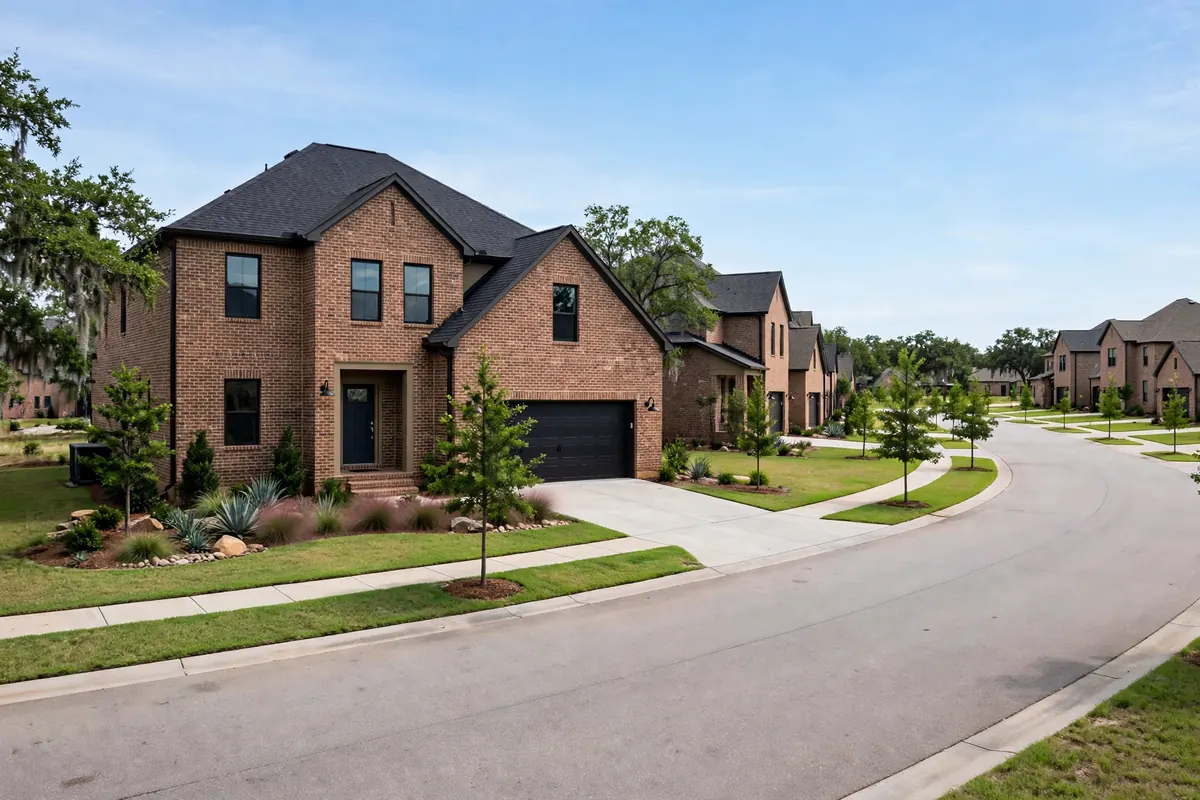
The call we hear most from Allen starts with a crack in the brick. On a two-story home, the crack usually runs in steps through the mortar near a corner, often starting at a second-floor window. On a single-story home, it more often shows inside first, as a crack above a door frame or along the ceiling joint. Both point to one part of the slab settling while the rest holds. Our guide to how to tell if a foundation crack is serious walks through which cracks to watch and which ones to act on.
Garage floors are the second common call. The garage slab is usually poured apart from the house slab, so it settles on its own schedule. A gap at the doorway between the garage and the house, or a floor that slopes toward the garage door, tells you the garage side has dropped. It is a separate slab with a separate fix, and it is worth checking at the same time as the house, because the same clay is moving under both.
Drainage causes a third group of problems, especially on the west side. Master-planned lots are graded to move water, but a downspout that dumps at the foundation, a flower bed that holds water against the brick, or a swale that has filled in over the years can all soak one side of a slab while the other side stays dry. That uneven moisture is what makes one corner move. Drainage correction sorts out the grading and the downspouts so the clay around the house stays as even as possible.
Tree roots add a fourth. The greenbelts and trails through Twin Creeks, Watters Crossing, and Suncreek are lined with oaks and pecans, and a large tree near a corner can dry out the clay under that corner in a hot summer. When the roots are the cause, a root barrier between the tree and the house can slow the drying, and it is often done alongside pier work on the same corner.
An inspection gives you the floor readings and a written plan, so you can see what moved before you decide what to do.
It starts with an inspection. We walk the outside of the house first, looking at the brick, the grade, the gutters, and where the big trees stand. Then we take floor elevation readings inside, room by room, and map the high and low points of the slab. That map is what the repair plan is built on, and it is what we show you before any work starts. Our foundation inspection page explains what those readings check, and our guide to what a foundation inspection covers walks through the visit step by step.
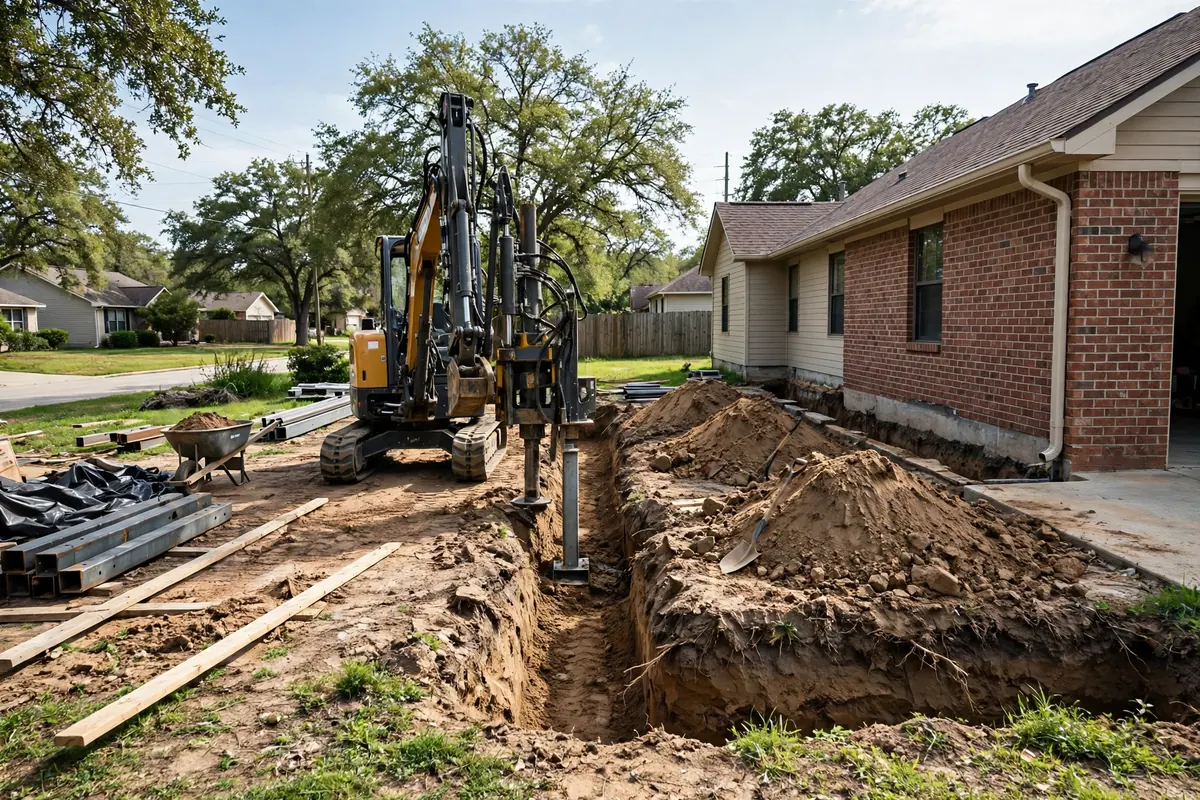
If piers are needed, they go in beside the footing at the points the elevation map calls for. Each pier is driven down to firm, load-bearing ground, a bracket is set under the footing, and the home is lifted back toward level in small steps while we watch the readings. The lift is slow on purpose: a slab that has settled over years is brought back a little at a time, and the doors and cracks are checked as it moves. The method is the same one on our steel pier installation page.
Two-story homes need a little extra care during the lift, because the upper floor adds weight and the frame has more places to show stress. We check the second-floor doors and windows as the slab moves, and we stop when the readings say the slab is level, not when the house looks straight from the street. If the home needs leveling rather than just support, our house leveling and lifting page covers that work.
After the piers are in, we look at the water. A pier repair holds best when the clay around the house stays even, so the grade, the downspouts, and any low spots get attention before we leave. Then we walk the house with you, check the doors and windows you pointed out at the start, and leave you with the elevation readings from before and after, so you can see the change in numbers rather than taking our word for it.
Allen covers two ZIP codes. The 75002 side on the east holds historic downtown Allen, Bethany Lakes, Cumberland Crossing, Cottonwood Bend, and the older streets around Exchange Parkway and Greenville Avenue. The 75013 side on the west holds Twin Creeks, Watters Crossing, Starcreek, Montgomery Farm, Suncreek, and Waterford Parks, along with the newer building north of Ridgeview Drive and west of Alma Road.
The two sides feel different to drive through. East Allen has smaller lots, older trees, and streets that grew up around the original town. West Allen has wider streets, trails, and amenity centers, with homes that share a builder era and a slab type. The clay does not care which side you are on, but the age of the slab and the grading of the lot change what we look for first.
The roads that tie Allen together are US-75, the Sam Rayburn Tollway, Stacy Road, Exchange Parkway, Bethany Drive, and Ridgeview Drive. The landmarks owners use to place a street are Watters Creek and the Allen Premium Outlets off the tollway, the historic downtown strip along Main Street, Bethany Lakes Park, and the Twin Creeks golf course. If your home sits near one of those, we know the streets around it.
We work across both Allen ZIP codes, and across the border into McKinney to the north and Frisco to the west, so a home near the city line is covered the same as one in the middle of town.
| Neighborhood | ZIP | What to know |
|---|---|---|
| Twin Creeks | 75013 | Golf course community with trails, parks, and larger two-story homes. |
| Watters Crossing | 75013 | 1990s homes near Watters Creek Village with trails and greenbelts. |
| Starcreek | 75013 | Master-planned streets west of US-75 with two-story brick homes. |
| Montgomery Farm | 75013 | Newer community on the west side near Ridgeview Drive. |
| Suncreek | 75013 | Established neighborhood with parks and trails off Suncreek Drive. |
| Waterford Parks | 75013 | Family streets near the west side parks and trails. |
| Bethany Lakes | 75002 | Older east side homes near Bethany Lakes Park. |
| Cumberland Crossing | 75002 | East Allen streets near Cumberland Drive and the older core. |
| Cottonwood Bend | 75002 | Established homes on the east side near Cottonwood Creek. |
| Historic Downtown Allen | 75002 | The original town center along Main Street with older homes nearby. |
They take more care, but the method is the same. A two-story home carries more weight on the slab, and the upper floor shows movement in its doors and windows, so we watch those as the lift goes on. The main difference is time on site, not a different kind of repair.
Corners carry the most load and sit at the edge of the slab, where the clay dries out first. On a two-story home, the weight above pushes down while the clay below shrinks in a dry spell, and the brick at the corner is where that stress shows. A stair-step crack at a corner is the classic sign, and it is worth measuring even if it looks small.
The soil type is the same heavy clay across the city. What changes is the lot. Twin Creeks lots were graded for a master-planned community, with fill in places and greenbelts between streets, so settlement there often follows the grading. East Allen lots are older and flatter, with mature trees doing more of the drying. The inspection looks for the cause on your lot, not a citywide average.
Keeping the soil around the slab from drying out completely can help, and a soaker hose run on a steady schedule is the usual way owners do it. The aim is even moisture, not soaking one side while the other stays dry. Keep the hose a foot or so out from the slab edge, and water in the cooler part of the day.
Yes. Newer homes sit on graded lots where the fill settles in the first few seasons, and the clay underneath is the same ground as the rest of Allen. A small crack in a two-year-old home is worth a look, because catching settlement early is simpler than correcting it after several more cycles of wet and dry.
Last updated November 24, 2026
Call or book online and we will measure your floors, check the grade and drainage, and lay out the options.