Foundation Repair in Flower Mound, TX
Flower Mound lies west of Lewisville, with wooded master-planned neighborhoods and lake shore homes.
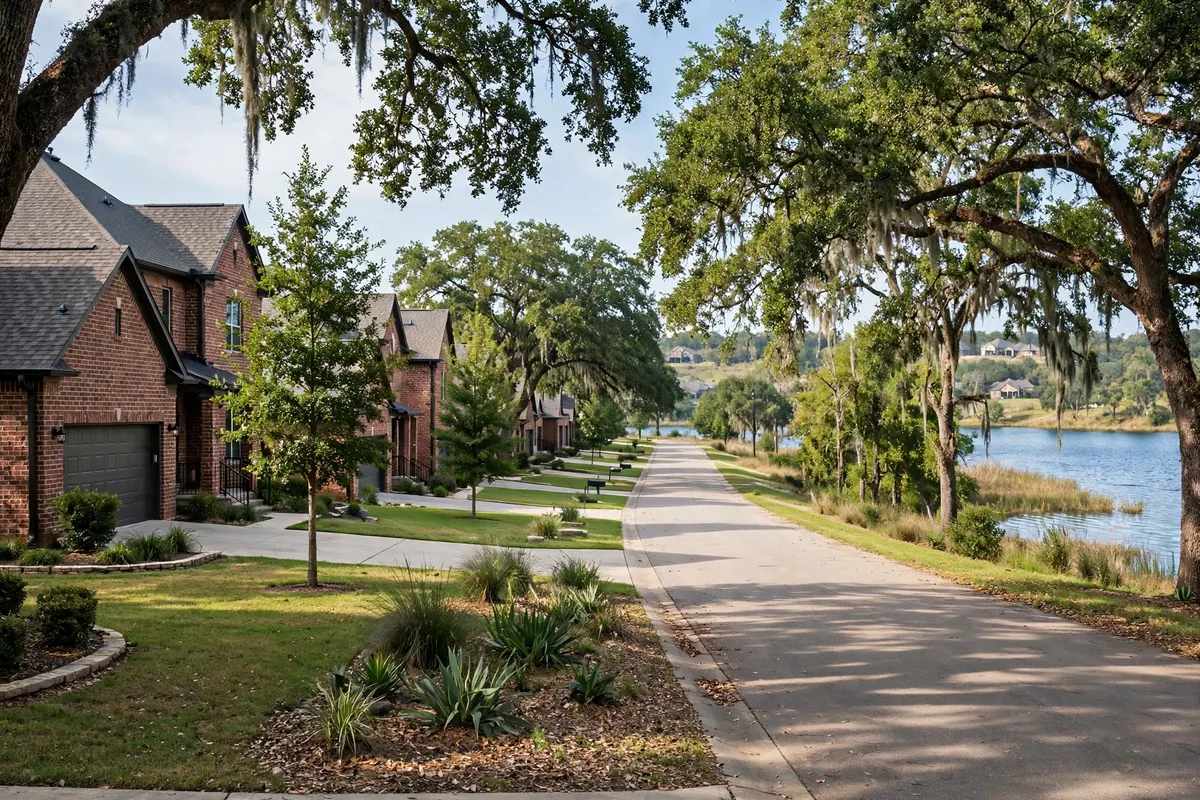
Lewisville sits about twenty-two miles west of Plano, along I-35E, with Lewisville Lake on its northeast edge. It is a city of two very different housing stocks: Old Town, with the city's oldest streets around the A-train station and the Grand Theater, and the 1980s and 1990s subdivisions that hold most of the city's homes, plus Castle Hills, the large community annexed in 2021. The soil runs from lake-side sand to inland clay, and the age of the house decides a lot about what the repair looks like.
Last updated November 24, 2026
Lewisville grew from about 24,000 people in 1980 to more than 110,000 in 2020, and its houses record that growth. Roughly 23,000 homes and apartments went up in the 1980s and 1990s alone, and half of all homes in the city date from 1997 or later. Old Town holds the city's oldest standing building, from 1885, and only about 1,350 Lewisville homes predate 1960. I-35E cuts through the middle of the city, Lewisville Lake lies to the northeast, and Timber Creek runs through the south side. The city builds to the 2021 residential code, and permits for foundation work run through the Building Services Division on West Church Street. Homeowners just over the line in Flower Mound, TX and The Colony, TX get the same inspection and the same crew, and each town has its own page with local soil and ZIP details.
Lewisville homes fall into four clear groups. Old Town holds the original town around the Old Town A-train station and the Grand Theater, with the city's oldest houses, many of them pier and beam, and exterior changes there go to the Old Town Design Review Committee. The second group is the 1980s and 1990s subdivisions that form the core of the city, where about 23,000 homes and apartments went up in two decades, mostly slab-on-grade brick houses on modest lots. The third group is Castle Hills, about 3,000 acres and 18,000 residents, built from the late 1990s onward around The Lakes at Castle Hills golf course, with its own private development standards and HOA approvals. The fourth group is the homes built since 2000, on infill lots and near the lake, where Corps of Engineers land and easements set the limits.
Most Lewisville homes sit on concrete slab foundations, and most are brick, one or two stories. Slab construction suits the flat ground, but the clay under the city still moves with the seasons, and a slab that has been in place for forty years has been through forty wet springs and forty dry summers. The result shows up as stair-step cracks in the brick, doors that bind, and floors that slope toward the low corner. Our guide to signs your home's foundation is moving covers the same signs we look for on a Lewisville inspection, and our post on what causes foundation problems in Collin County explains the soil behavior behind them.
The lake changes the ground on the northeast side of town. Soils near Lewisville Lake run sandier and drain faster, while the inland neighborhoods hold heavier clay, and homes near Timber Creek sit on ground that stays wet longer after rain. A home in Vista Ridge or Valley Vista may sit on different ground than a home in Old Town a few miles away, and the drainage plan has to match the ground. Water that pools beside a foundation swells the clay, and water that runs off too fast leaves it dry and cracked, so the inspection looks at the yard as well as the house.
The most common call from Lewisville is a crack that has been watched for a year and has finally grown. Stair-step cracks in brick mortar, diagonal cracks above doors and windows, and separation where the chimney meets the house are the usual signs, and they often appear on the side of the house nearest a large tree. Pecan trees are common in the older neighborhoods, and they pull moisture from the soil all summer. Our post on tree roots and your foundation covers how to tell whether a tree is part of the problem, and when a root barrier is worth adding.
The second pattern is floors that slope in the 1980s and 1990s subdivisions. These homes were built fast, on ground that was graded and filled during construction, and where a slab crosses from undisturbed clay onto engineered fill, the two sides settle at different rates. The floor tells the story, and house leveling and lifting corrects the slope by lifting the low side on piers, with the elevation readings taken before the work showing exactly how far each corner has moved. Our guide to how long foundation repair takes describes what a typical job looks like from the first excavation to the final backfill.
The third pattern is water, and Lewisville has more of it than most towns we serve. The lake, Timber Creek, and the flat ground mean some yards hold water after a storm, and a low corner of the yard can stay wet for days. Standing water softens the clay and lets it swell, and then a dry spell shrinks it back, so the slab rocks through the year. Drainage correction re-grades the yard, extends downspouts, and adds French drains where water collects, and it is often the first work we do before any piers go in.
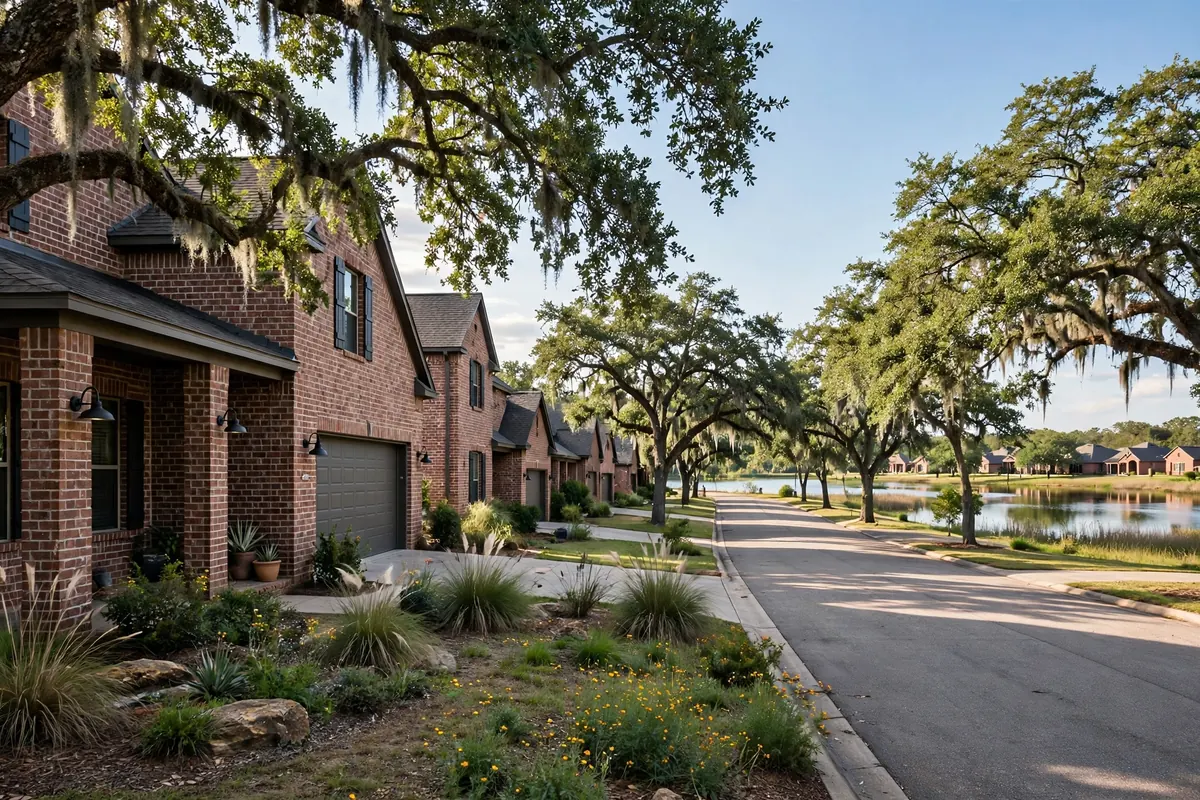
Work in Lewisville starts with a foundation inspection. We take floor elevation readings in every room, walk the outside of the house, and note the trees, the grade, and the way water leaves the roof. The readings go on a simple floor plan sketch, so you can see which corners are high and which are low, and the written plan that follows names the piers, the drainage work, and the order of the job. Our post on what a foundation inspection covers describes the same steps, so you know what to expect before we arrive.
For a settled slab, steel pier installation is the standard repair. Piers are driven beside the footing down to load-bearing soil, bracketed to the slab edge, and the house is lifted in small increments while we watch the readings. Concrete slab foundation repair covers the whole job, and where a concrete driveway or patio has sunk, concrete lifting and leveling raises it so the walkway drains away from the house instead of toward it. Old Town homes on raised floors get pier and beam foundation repair, with new footings and shims under the beams, and crawl space repair covers the moisture and ventilation work under those floors.
After the piers are in, the yard is put back. Excavations are dug by hand, the soil is set aside and returned, and the lawn and beds near the work are restored. In Castle Hills, the HOA approves fences, windows, and doors before the city will take a permit application, so the plan is written to fit the community's standards, and in Old Town, exterior changes go through the design review committee. Foundation crack repair finishes the visible signs, with monitoring gauges where a crack needs watching.
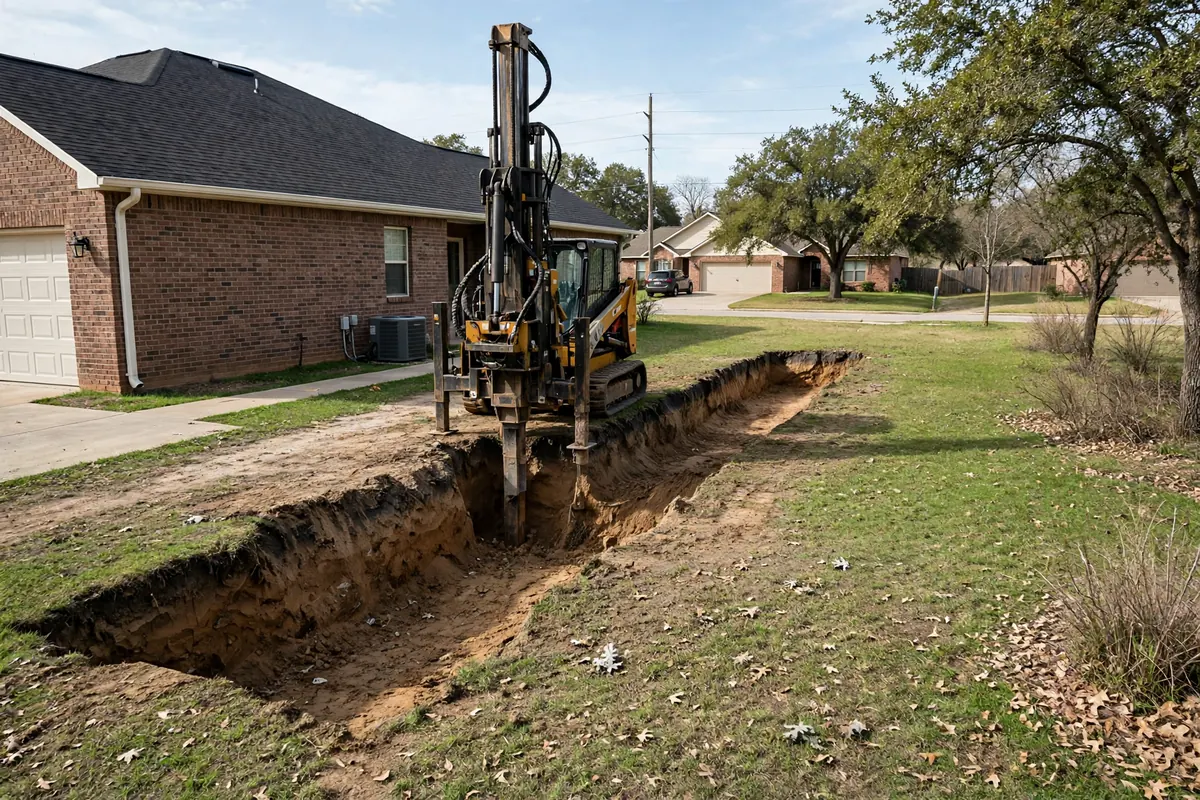
In Lewisville, the inspection starts with floor elevation readings in every room and a walk around the outside of the house, and the written plan follows from those numbers.
Lewisville is served by three ZIP codes, and the table below lists them with the part of town each one covers. The central and northern neighborhoods use 75057, the southern neighborhoods use 75067, and the northwest neighborhoods, including the Castle Hills area, use 75077. The ZIP on your mail follows the postal route, not the city line, so check the address rather than the ZIP alone.
Old Town sits around the A-train station and the Grand Theater, with the city's oldest streets and its design review rules. Castle Hills, annexed in 2021, is the large community on the west side, built around The Lakes at Castle Hills golf course. Vista Ridge, Valley Vista, and Valley Ridge hold the 1980s and 1990s subdivisions in the center of town, while Highland Lakes, Indian Creek, Garden Ridge, and Lakewood Hills sit closer to the lake. Kings Grant, Meridian, and Valley Ridge round out the central neighborhoods, and the lake shore itself holds homes with Corps of Engineers easements along the water.
| ZIP code | Area |
|---|---|
| 75057 | Central and northern Lewisville, including Old Town and Vista Ridge |
| 75067 | Southern Lewisville, including the Timber Creek corridor |
| 75077 | Northwest Lewisville, including Castle Hills and the lake shore |
Yes. Castle Hills was annexed by Lewisville in 2021, and we serve it the same as the rest of the city. The community has its own private development standards and HOA approvals, so the plan is written to fit those rules before the work starts.
Often, yes. Old Town holds the city's oldest homes, many on pier and beam, and exterior changes there go to the Old Town Design Review Committee. The inspection checks whether your home is on a slab or a raised floor, because the repair is different for each.
Flat ground does not mean still ground. The clay under Lewisville swells when wet and shrinks when dry, and the lake, Timber Creek, and graded fill make one part of a slab move more than the rest. A flat lot can still hold one side wetter than the other, and that uneven moisture is what lets one part of the slab drop while the rest stays put.
Most slab repairs take a few working days from the first excavation to the final backfill, depending on how many piers the plan calls for and how much drainage work is included. The inspection itself usually takes about an hour.
The care is the same, but the houses are not. Castle Hills, annexed in 2021, holds newer master-planned homes on graded lots in the northwest, where fill settlement is the usual story. Old Town sits around the A-train station with the city's oldest streets, and those homes have had decades of wet and dry cycles. An inspection reads each home on its own floors and walls.
We work across the towns around Plano, so if your home sits just over the line from Lewisville, the same crew and the same inspection process cover it. These nearby service areas each have their own page with local soil, housing, and ZIP details.
Call (972) 430-3826 or send an email, and we will set up a foundation inspection for your Lewisville home.
Book a Foundation Inspection1 Call or email2 Inspection and readings3 Written repair plan