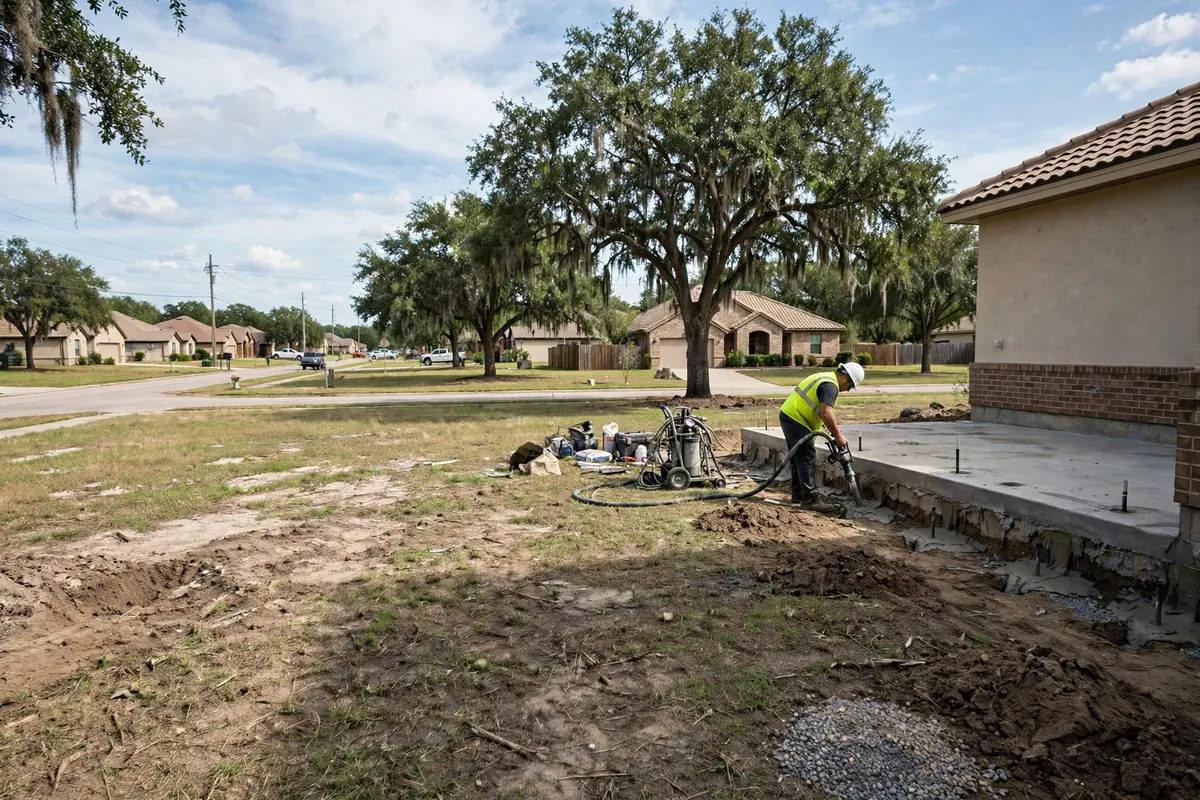
Soil Stabilization in Plano, TX
Most foundation work treats the house. Soil stabilization treats the ground the house stands on. When Plano clay swells in a wet spring and shrinks in a dry August, the soil itself is the moving part, and treating it can steady a foundation that piers alone cannot hold still.
How soil stabilization steadies Plano clay
The goal is not to make clay into rock. It is to make it move less when moisture changes.
Plano sits on Blackland Prairie clay, a heavy soil that takes in water and swells, then gives it up and shrinks. A foundation on that soil rides the seasons: up a little in a wet spring, down a little in a dry summer, and unevenly wherever one side is wetter than the other. Soil stabilization injects a stabilizing material into the ground under and around the foundation to change how that clay behaves. The material fills the spaces between soil particles, binds loose grains together, and reduces how much water the clay can take in and give out. The ground still moves, but it moves less, and it moves more evenly.
The material is placed through small holes drilled in a planned pattern, usually around the foundation perimeter and under the slab edge where movement is worst. A low-pressure pump sends the grout into the soil, and it spreads through the cracks and pores of the clay before it sets. The crew works in stages, checking the surface for any lift as they go, because the aim is to treat the soil, not to jack the house up. A foundation inspection with elevation readings comes first, because stabilization is chosen when the readings show the whole foundation moving with the seasons rather than one corner dropping from a single cause. The full list of foundation repair services in Plano shows how stabilization fits beside pier work.
Stabilization is often paired with pier work rather than replacing it. Piers carry the house down to stable ground; stabilization steadies the soil between the piers so the slab and the grade beams stop flexing with every wet and dry cycle. The two together suit homes where the clay is deep and active and where piers alone still leave seasonal movement in the floors. The U.S. Geological Survey publishes information on expansive soils that explains why this clay behaves the way it does, and it is a useful read before deciding on any ground treatment.
Soil injections under a moving foundation
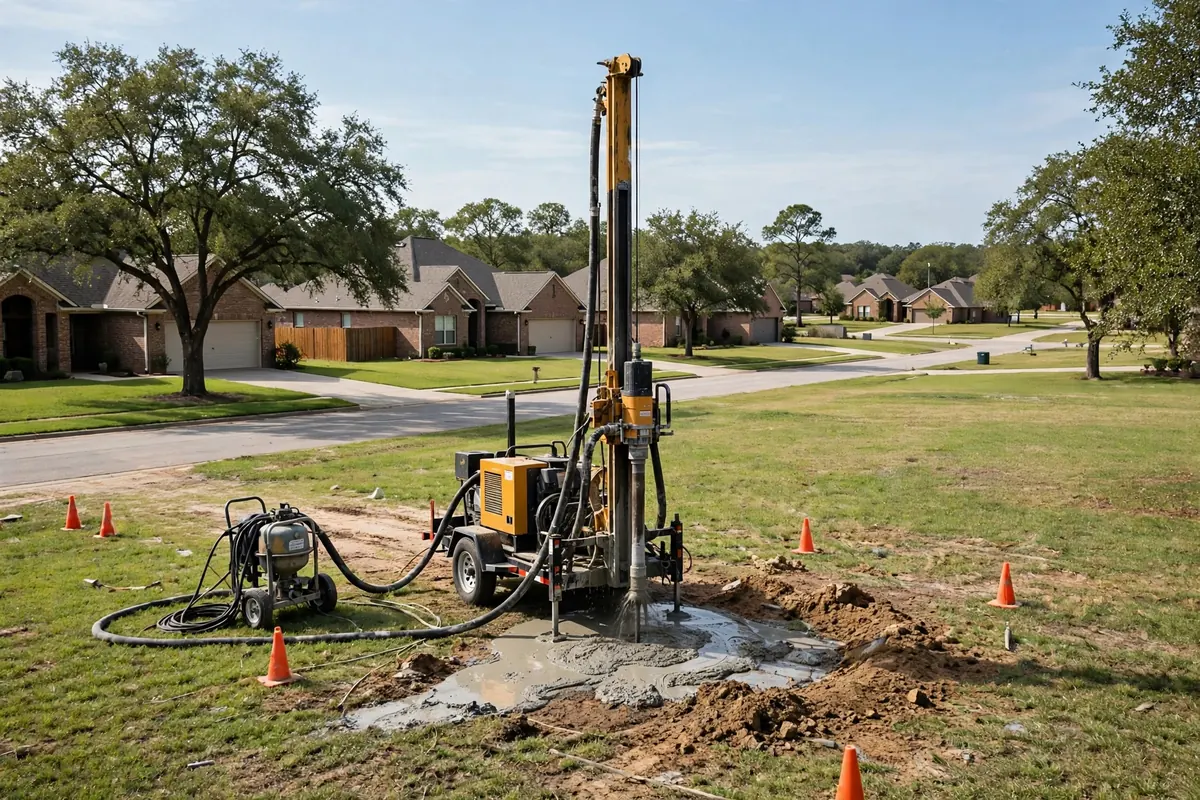
Soil injections are the delivery method for stabilization. Small holes are drilled through the slab edge or into the soil beside the footing, and a grout mix is pumped down in controlled amounts. The grout follows the paths water follows: the cracks that open in dry clay, the pores between soil clumps, and the gaps left where roots or old backfill have loosened the ground. As it sets, it binds those paths shut and gives the soil a firmer structure. The injection pattern is set by the readings: more material where the movement is worst, less where the ground is already firm.
Injection pressure stays low on purpose. High pressure would fracture the clay and lift the slab, which is not the aim. The crew watches a level on the floor above while injecting, and stops a hole as soon as the surface shows any rise. The holes are small, the surface is restored after, and the work leaves no trench across the yard. Injections are also used to fill voids under a slab edge where soil has washed away, which is a different job from full stabilization and is priced and planned as its own scope. A concrete lifting and leveling visit handles the slab surface when the void is the main problem and the clay underneath is still sound.
What stabilization changes, and what it leaves alone
A treated patch of clay behaves differently through a wet spring and a dry summer. Here is what that looks like in the house.
The first change is in the seasons. A foundation that used to rise in spring and drop in August moves less in both directions, and the doors that stuck in late summer stop sticking as early or as hard. Floors that sloped a little more each dry season hold their level longer. The change is gradual rather than sudden: the grout sets in days, but the soil moisture evens out over the following wet and dry cycle, and the full effect is read in the elevation measurements taken a season later, not the week after the work.
The second change is in the cracks. A brick crack that opened a little wider every summer and never quite closed in winter stops growing, and the seal placed over it stays sealed. Hairline drywall cracks above doors and windows stop returning after each patch. That is the real test of stabilization: not that the house looks different the day the crew leaves, but that the same cracks do not come back next summer. We photograph and measure the cracks before treatment so the comparison a year later is honest.
Similar clay runs under McKinney, TX, where the same seasonal movement shows up in brick and drywall. What stabilization does not change is the house itself. It does not lift a foundation that has already dropped, it does not straighten a wall that has bowed, and it does not replace a pier. A house that needs lifting still needs house leveling and lifting or steel pier installation, and stabilization is planned before or alongside that work, not instead of it. It also does not remove the need for drainage and watering discipline: a treated patch of clay still takes in water from a downspout that discharges beside the wall, and it still dries out under a large tree. The treatment steadies the soil; the homeowner steadies the moisture.
Seasonal movement
- Doors stick in late summer and loosen in winter
- Brick cracks widen each dry season
- Floors slope a little more after every drought
Steadier ground
- Doors hold their fit through the dry season
- Sealed cracks stay sealed through the next summer
- Floor readings stay closer together across seasons
Clay that moves every season will keep moving
Treating the ground steadies the house in a way that patching cracks cannot. Readings show whether your clay is the cause.
What affects the scope of a soil stabilization job
Clay is not the same under every house in Plano. Depth, moisture, and what is already under the slab all set the scope.
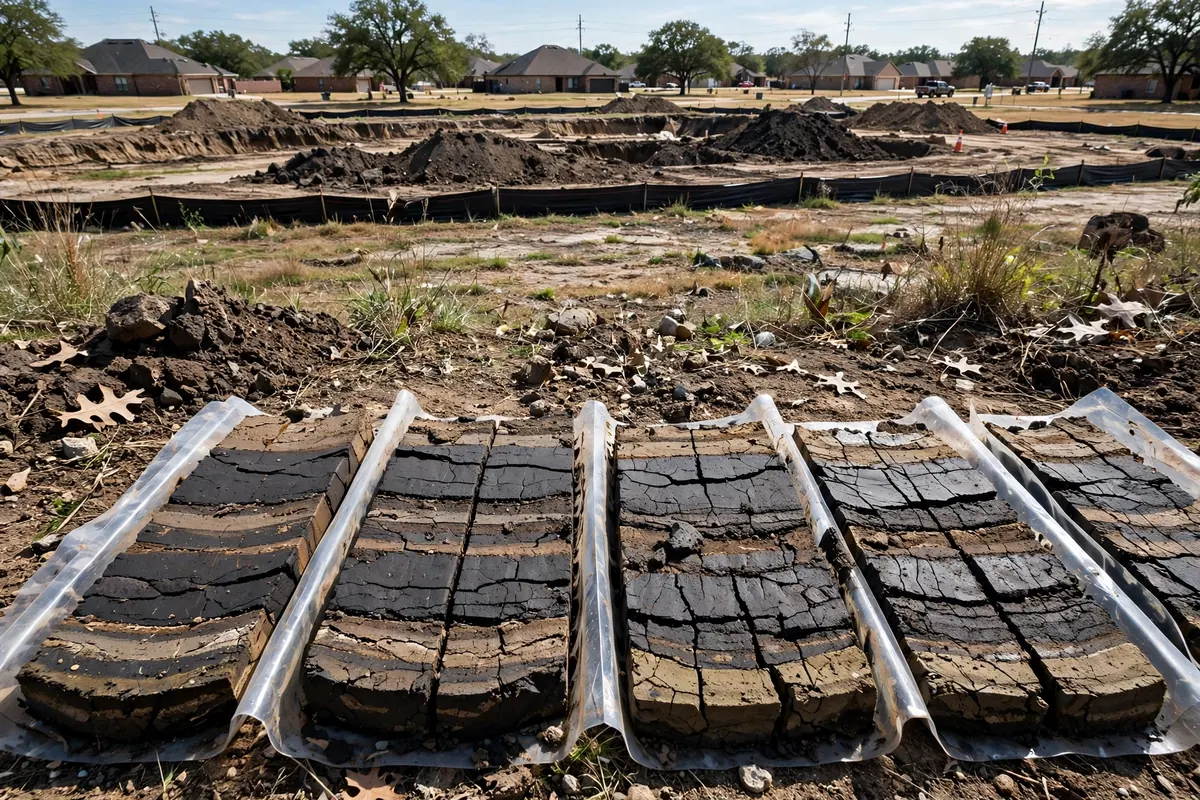
Clay depth is the first factor. In some parts of Plano the active clay runs a few feet deep before it meets firmer ground; in others it runs much deeper. Deeper clay means more material and a wider injection pattern, because the treatment has to reach the soil that is actually moving. A soil boring or a test pit answers the depth question before the job is planned, and we would rather know the depth from a boring than guess it from the surface.
Moisture at the time of work is the second factor. Clay that is wet and swollen takes in less grout, because its pores are already full of water; clay that is dry and cracked takes in more, because the cracks give the grout paths to follow. The season of the work therefore changes the amount of material and the injection pattern, and a job planned in a wet spring looks different from the same job planned in a dry August. The crew checks the soil moisture at the footing before setting the pattern, and the pattern is adjusted hole by hole as the ground responds.
What is already under the slab is the third factor. Old backfill, a previous void fill, a plumbing line, or a tree root mass all change how grout spreads, and each one is handled in the plan. A slab that has already been lifted with foam needs its injection points placed to avoid the foam, and a foundation that already has piers needs the grout kept away from the pier brackets so it does not bind a pier that should stay adjustable. Drainage correction is often planned alongside stabilization, because a treated patch of clay that keeps receiving roof water at one corner will still move at that corner. The City of Plano publishes local guidance on grading and drainage that we use when planning the water side of the job.
Mistakes to avoid with soil stabilization
Ground treatment is hard to undo, so the avoidable mistakes are worth naming before the work starts.
The first mistake is treating the soil before finding the real cause. A foundation that is moving because of a plumbing leak, a broken drain, or a tree drinking from one corner will keep moving after stabilization if the leak or the tree is left alone. The inspection comes first for exactly that reason: readings, a look at the plumbing, and a walk around the trees and downspouts. Stabilization treats clay movement. It does not fix a leak, and it does not guide roots away from a corner. Those jobs have their own plans, and they run before or alongside the grout.
The second mistake is injecting at high pressure to chase a quick lift. High pressure fractures clay, lifts the slab in the wrong place, and can crack a floor that was only meant to be steadied. Low pressure, small amounts, and a level on the floor above are the discipline of the job. If a crew promises to lift a house with grout alone, that is a sign to pause and ask for the elevation readings and the injection plan in writing. A lift is a pier job; stabilization is a soil job, and confusing the two is how floors get cracked.
The third mistake is treating only the worst corner. Clay movement is a whole-house pattern, and treating one corner while the other three keep moving can make the house twist instead of settle. The injection pattern covers the perimeter where the readings show movement, even where the cracks have not appeared yet. The fourth mistake is skipping the follow-up readings. The effect of stabilization shows up over a full wet and dry cycle, and a job without a reading a season later has no proof it worked. We schedule that reading at the end of the job, and we compare it with the readings taken before treatment. Our guide to Plano clay soil explains how the soil behaves through the seasons and why the follow-up reading matters. Our guide to what causes foundation problems in Collin County lists the causes to rule out before any ground treatment.
The rule we follow
Find the cause first, treat the whole moving perimeter, inject at low pressure, and measure again after a full season. Any plan that skips one of those four steps is a plan to question.
Piers carry the house. Stabilization steadies the ground.
The two are planned together when the clay is deep and active. One visit sets out both.
Questions about soil stabilization in Plano
Straight answers on grout, clay, timing, and what stabilization cannot lift.
What is soil stabilization?
Soil stabilization injects a grout material into the clay under and around a foundation to bind the soil grains together and reduce how much water the clay takes in and gives out. The ground still moves with the seasons, but it moves less and more evenly.
How is stabilization different from pier installation?
Piers carry the house down to stable ground; stabilization treats the clay itself so it swells and shrinks less. The two are often planned together: piers for support, stabilization for the soil between the piers. Stabilization alone does not lift a foundation that has already dropped.
How long does the treatment last?
The grout sets in days and stays in the ground, binding the soil it reached. The effect is read over the following wet and dry cycle, and a follow-up elevation reading a season later shows how much the movement has steadied. Drainage and watering still matter, because a treated patch that is soaked at one corner will still move there.
Will stabilization lift my house?
No, and it should not be sold as a lift. The grout is injected at low pressure to treat the soil, and the crew stops if the surface shows any rise. A house that needs lifting needs piers, and that work is planned as its own job.
How do you know if my soil needs stabilization?
Elevation readings across the floor show whether the whole foundation is moving with the seasons rather than one corner dropping from a single cause. A soil boring or test pit shows how deep the active clay runs. Those two together decide whether stabilization fits.
Can I water my lawn normally after stabilization?
Yes, and even watering helps. The aim is steady moisture around the whole house, not a wet side and a dry side. A soaker hose during dry spells and downspouts that discharge away from the walls keep the treated soil at an even moisture level.
Questions we hear at the drill rig
Short answers to the things homeowners ask while the grout is going in.
Does the treatment work on every type of ground?
It is made for expansive clay like the Blackland Prairie clay under Plano. Sandy soil and firm rock do not swell and shrink the same way, so they do not need the same treatment. The soil boring tells us what is actually under the house.
Will the injection holes damage my slab?
The holes are small and placed at the slab edge or in the soil beside the footing, not through the middle of a room floor. They are patched after the work, and the surface is restored. The crew watches a level throughout so no lift occurs.
How soon will I notice a difference?
The grout sets in days, but the difference shows up over the next wet and dry cycle as the soil moisture evens out. Doors that stuck each August and cracks that widened each summer are the signs to watch, and the follow-up reading confirms it.
Work that pairs with soil stabilization
Ground treatment, pier support, and drainage are usually planned as one job.
Steady the ground, and the house stops chasing the seasons.
Clay will always move a little. The question is how much, and whether it moves evenly. Start with readings and a soil check, and decide with the facts in front of you.
Book a Foundation Inspection