Foundation Crack Repair in Plano, TX
A crack is a message, not a verdict. Some cracks are the house settling into its shape and will never move again. Others are the first sign that the ground below is shifting. We measure each crack, seal the ones that need sealing, and watch the ones that need watching, so you act on facts instead of worry.
How crack repair works, from first measurement to sealed wall
Measure first, seal second, and keep watching after.
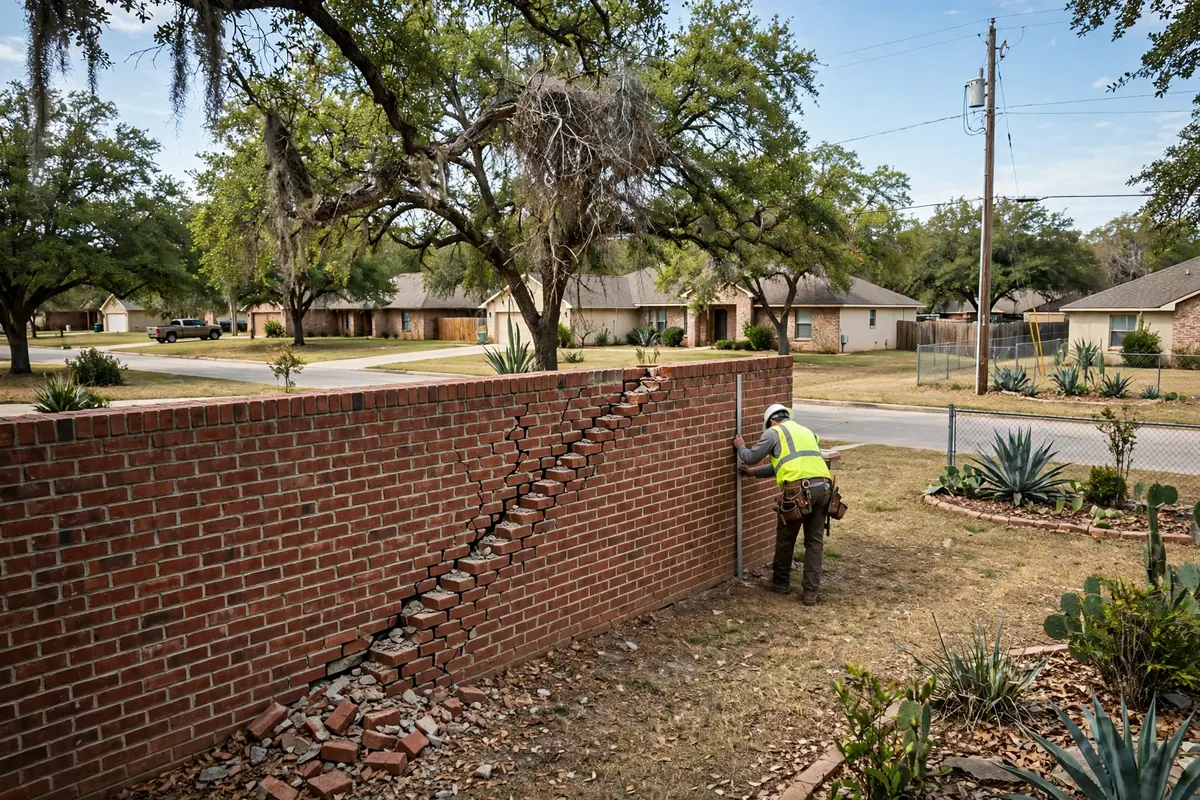
Every crack job starts with a ruler and a notebook, not a tube of sealant. We measure the width of the crack at its widest point, note whether it runs straight, stepped, or diagonal, and check whether it goes through the brick, the mortar, or only the surface. A hairline crack in drywall above a door is a different matter from a stair-step crack running through the brick outside, and a crack that is wider at the top than at the bottom tells a different story from one that is even all the way down. A foundation inspection pairs those measurements with floor elevation readings, so the crack is read together with the movement of the whole house.
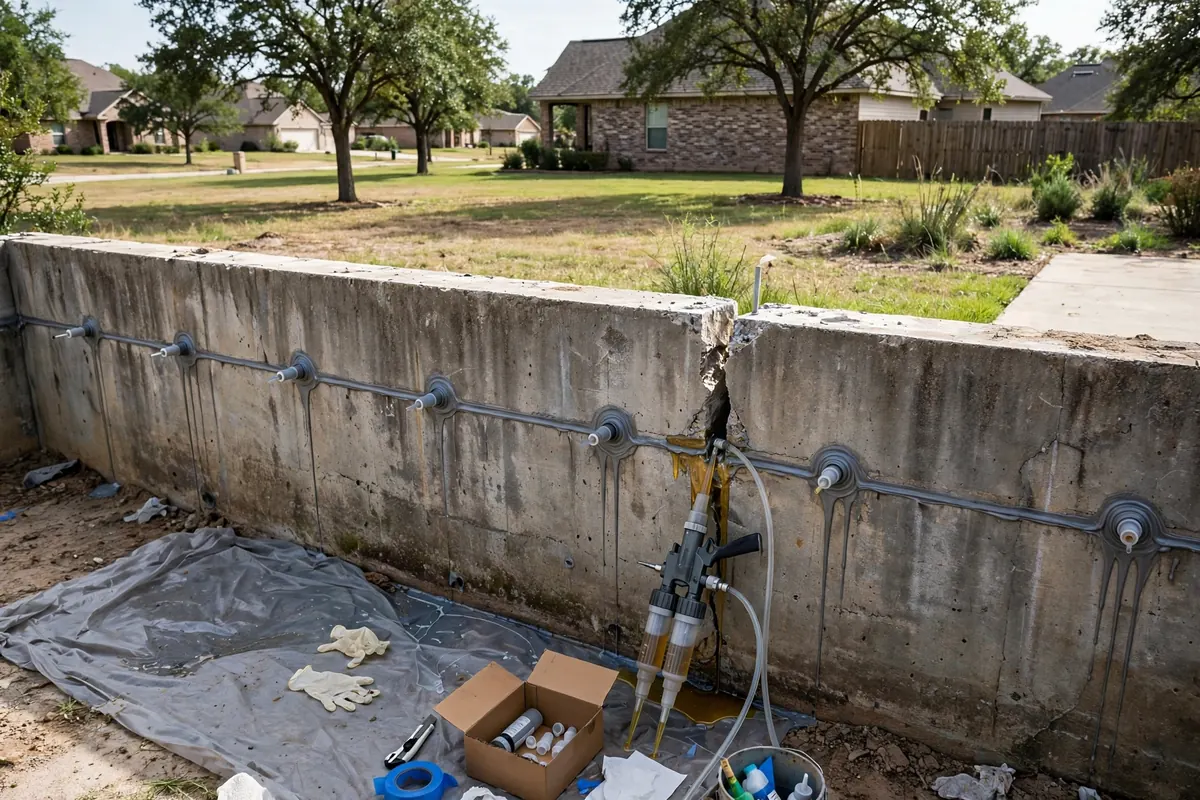
Sealing is the second step, and the method follows the crack. A stable crack in a concrete foundation wall is usually sealed with epoxy injection, which fills the crack from the inside out and bonds the two sides together. A crack in brick mortar is repointed, with the old mortar raked out and new mortar pressed in to match the joint. A drywall crack is taped and patched after the movement behind it has been dealt with, because patching drywall over a moving wall only buys a few months before the crack comes back. Our guide on how to tell if a foundation crack is serious walks through the same measurements homeowners can make themselves.
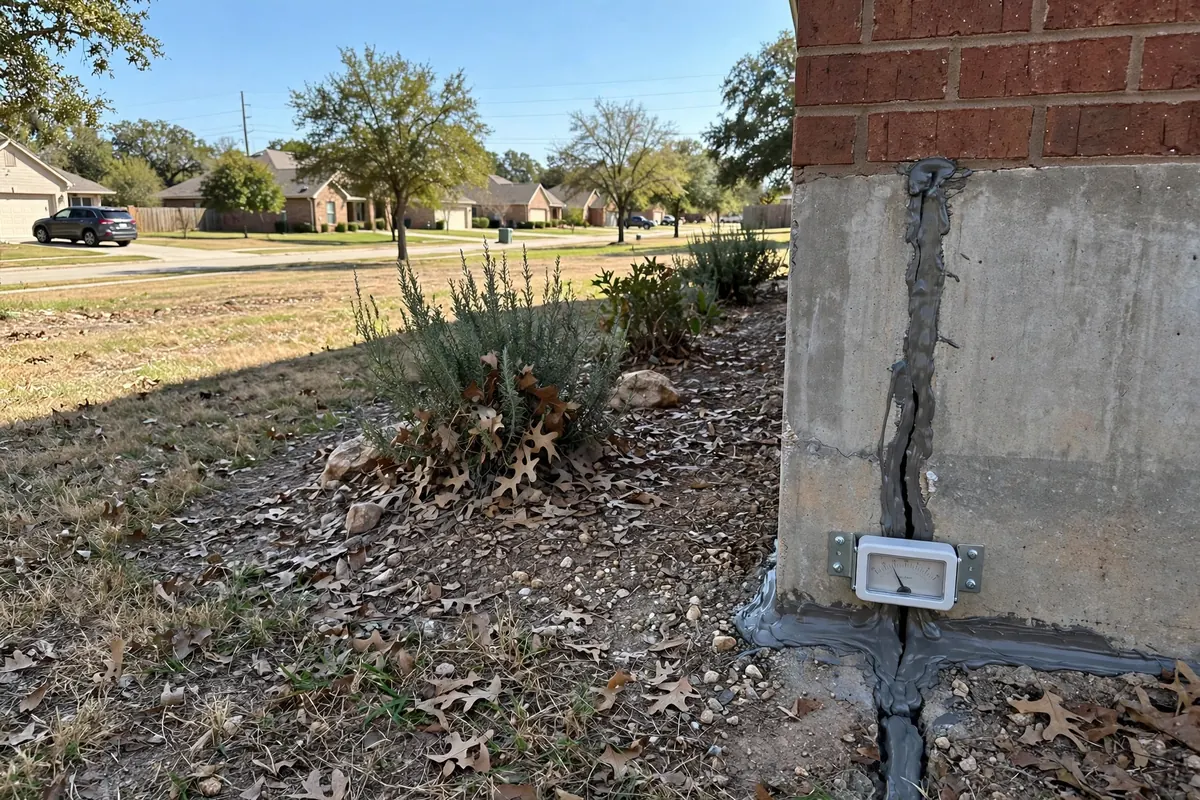
Monitoring is the part most people skip, and it is the part that matters most. A small gauge fixed across the crack, or a set of dated pencil marks, shows whether the crack is growing month by month. A crack that stays the same width through a dry August and a wet spring is a crack that has stopped, and it can be sealed and left alone. A crack that widens by even a small amount over a season is a crack that is still moving, and sealing it without dealing with the movement below only hides the symptom. That is when the conversation turns to piers, and our steel pier installation page explains how the house is pinned to firm ground when the movement needs stopping.
Water is the other reason cracks get sealed. A crack in a foundation wall lets water into the house in a heavy rain, and water in the wall softens the soil at the footing and feeds the very movement that opened the crack. Sealing keeps the rain out while the bigger question, whether the house is still moving, is answered by the readings. Homes in Frisco and McKinney show the same pattern, because the clay belt runs across the whole area, and the same measure-first approach applies there too.
Before and after: what crack repair actually changes
The wall looks better, the water stays out, and the movement stops growing.
Before repair, a stair-step crack in the brick is the first thing a visitor notices, and it is the first thing a buyer asks about. The crack runs through the mortar joints in a neat staircase, usually below a window or near a corner, and it is often wider at the top. Inside, the same movement shows as a drywall crack above a door, a gap where the baseboard meets the floor, and a door that rubs its frame. Rain can find its way through an open crack in a foundation wall, leaving a damp line on the inside of the wall after a storm. The house feels like it is coming apart, even when the structure is sound.
After repair, the visible change is a clean, sealed joint. Repointed mortar matches the wall, epoxy fills the concrete crack flush, and patched drywall takes paint like the rest of the wall. The change you cannot see matters more: the crack stops growing, because the gauge across it reads the same width month after month, and the rain stays outside because the seal holds. Doors that rubbed start to close again once the movement behind the crack is dealt with, and the gap at the baseboard closes up. The house looks settled because it is settled, and the readings prove it.
| What you see | Before | After |
|---|---|---|
| Brick mortar crack | Stair-step crack, often wider at the top, mortar crumbling at the edges | Repointed joint, sealed against rain, gauge shows no further widening |
| Drywall crack | Crack above a door or window, reopening after every patch | Patched and painted once the movement behind it has stopped |
| Concrete wall crack | Open crack letting water in during heavy rain | Epoxy-filled and bonded, water kept out of the wall |
| Doors and baseboards | Doors rub, baseboards gap away from the floor | Doors close cleanly, baseboards sit tight once the frame is steady |
A sealed crack is not a lifted house. If the readings show the slab or the frame is still moving, piers or leveling come first, and the crack is sealed after the movement stops. Sealing first and lifting later wastes the seal.
The change that matters most at sale time is the paper trail. A buyer who sees a sealed crack and a set of dated readings, showing the crack has not moved in a year, has a fact to work with instead of a worry. Our post on foundation problems and your home's value in Plano explains how that paper trail reads to a buyer and an inspector. If the crack sits in a slab home, concrete slab foundation repair is the page that covers the work below the crack, and if the crack sits in a raised home, pier and beam foundation repair covers it there.
Found a crack and not sure what it means?
Measure its width, note its direction, and watch it for a season. The readings decide what comes next.
What affects the scope of a crack repair
Width, direction, and whether the crack is still moving set the job.
Width is the first measure. A hairline crack, thinner than a credit card, is usually a surface matter, and it is sealed and watched. A crack wider than a quarter inch gets a closer look, because a wide crack means real movement has happened. A crack that is wider at one end than the other means the wall has rotated, and that points to movement at one corner of the house rather than even settling. The guide to serious cracks uses the same quarter-inch rule of thumb, and it is a good first check for any homeowner.
Direction is the second measure. A vertical crack in a foundation wall often comes from shrinkage as the concrete cured, and it may never move again. A diagonal crack, or a stair-step crack that follows the mortar joints in brick, usually comes from one side of the house dropping, and it needs the movement behind it to be read. A horizontal crack in a foundation wall is the one to take most seriously, because it can mean soil pressure pushing the wall inward, and it calls for a prompt inspection rather than a wait-and-see approach.
Whether the crack is still moving is the third measure, and it is the one that decides the scope. A gauge across the crack, read once a month, gives a plain answer. If the gauge does not move through a dry season and a wet season, the crack is stable and the job is sealing and patching. If the gauge moves, the job grows: the movement is read with floor elevations, the cause is found in the soil or the water around the house, and piers or drainage correction deal with the cause before the crack is sealed. A crack in a home that also needs house leveling and lifting is sealed after the lift, never before, so the seal is not torn open by the work that follows.
- Hairline cracks: sealed and watched, usually stable and cosmetic.
- Stair-step cracks: the wall follows a dropping corner, and the movement needs reading.
- Diagonal cracks: one side of the opening has dropped relative to the other.
- Horizontal cracks: soil pressure on the wall, and a prompt inspection is the right call.
- Cracks that keep growing: the house is still moving, and the cause comes before the seal.
Mistakes to avoid with foundation cracks
The common errors that turn a small crack into a bigger job.
The first mistake is patching the drywall and calling the job done. A patched crack over a moving wall reopens in a few months, and each reopening is wider than the last. The patch hides the symptom while the movement continues, and by the time the crack is too wide to ignore, the slab or the frame has moved further than it needed to. Measure the crack first, read the floors, and patch only after the movement has been dealt with or ruled out.
The second mistake is sealing a crack from the outside only, with a surface smear that keeps rain out for a season and then peels. Epoxy injection fills the crack through the wall, and repointing replaces the mortar in the joint, so the repair goes through the material instead of sitting on top of it. A surface smear looks fixed on the day it is applied and fails at the first heavy rain. If water is coming through a foundation wall, the seal needs to reach through the wall, and the water needs a path away from the wall, which is where drainage correction earns its place.
The third mistake is ignoring a crack because it is small. A small crack that is growing is more urgent than a wide crack that has sat still for years, and the only way to know which one you have is to measure it over time. A pencil mark across the crack, dated, costs nothing and tells you in a season whether the house is still moving. The fourth mistake is the opposite: panicking over a hairline drywall crack that appeared after a dry August and will not move again. Not every crack means piers, and a reading that shows level floors and a stable crack is good news, not a sales pitch. Our guide to the signs of a moving foundation helps sort the cracks that need a visit from the ones that need a watchful eye.
A crack that grows is a crack that talks
Measure it, date it, and read it again in a month. A crack that stays the same through a dry season and a wet season has told you all it has to say. A crack that widens has told you the house is still moving, and that is the time to book a reading rather than another patch.
Already patched a crack that came back?
A patch over a moving wall always reopens. The movement behind the crack has to be dealt with first.
Questions about crack repair in Plano
Straight answers before you book a visit.
Which cracks are serious and which are not?
A crack that is widening, wider than a quarter inch, horizontal in a foundation wall, or paired with sloping floors and sticking doors is serious and calls for an inspection. A hairline drywall crack that has stayed the same width for a year, with level floors, is usually cosmetic. The gauge across the crack, read over a season, is what turns a guess into an answer.
Can a foundation crack be sealed without piers?
Yes, when the crack is stable. A stable crack in a concrete wall is sealed with epoxy, and a stable crack in brick mortar is repointed. Sealing works when the movement behind the crack has stopped. If the readings show the house is still moving, piers or leveling come first, and the crack is sealed after.
How do you monitor a crack after it is sealed?
A small gauge is fixed across the crack, or dated pencil marks are drawn across it, and the width is read once a month. A sealed crack that stays the same width through a dry summer and a wet spring has held. A crack that widens again means the movement has returned, and the house needs another reading.
Will a repaired crack show when I sell the house?
A well repointed mortar joint blends with the wall, and an epoxy-filled concrete crack sits flush with the surface. A buyer will still see that a repair was made, and that is a good thing when it comes with dated readings showing the crack has not moved. Hiding a crack helps no one, and a documented repair reads far better than a fresh patch over a growing crack.
Do cracks let water into the house?
Yes, an open crack in a foundation wall is a path for rainwater, and a crack in a slab can let ground moisture up into the flooring. Sealing closes that path, but the water still needs somewhere to go, so gutters, grading, and drains matter as much as the seal itself. If water keeps pooling against the wall, the crack will find a way to open again.
How long does crack repair take?
Measuring and sealing a few stable cracks usually takes a day. Repointing a run of brick takes longer, because the old mortar is raked out joint by joint and the new mortar needs time to set. If the crack turns out to be a sign of a moving house, the plan grows to include piers or leveling, and the crack is sealed after that work is done.
Questions we hear about cracks in Plano homes
Short answers to the questions homeowners ask most while we are on site.
What causes stair-step cracks in brick?
A stair-step crack follows the mortar joints in a staircase pattern, and it usually means one side of the wall has dropped relative to the other. In Plano that drop is most often the clay below drying out under one corner of the house, so the wall settles unevenly and the brickwork steps down with it.
Can a crack in drywall mean the foundation is moving?
It can, especially when the crack runs from the top of a door frame toward the ceiling and shows up in the same place on both sides of the wall. A small drywall crack is often just the house drying out in summer. The pattern matters more than any one crack, which is why floors and doors are read together.
Related services that go with foundation crack repair
Other work that often goes with this repair.
Start by measuring the crack.
Book a foundation inspection and we will measure the cracks, read the floors, and write a plan for your home.
Book a Foundation Inspection