Wylie, TX
East along Farm to Market 544, with the Woodbridge golf community.
East Plano Corridor Foundation Repair
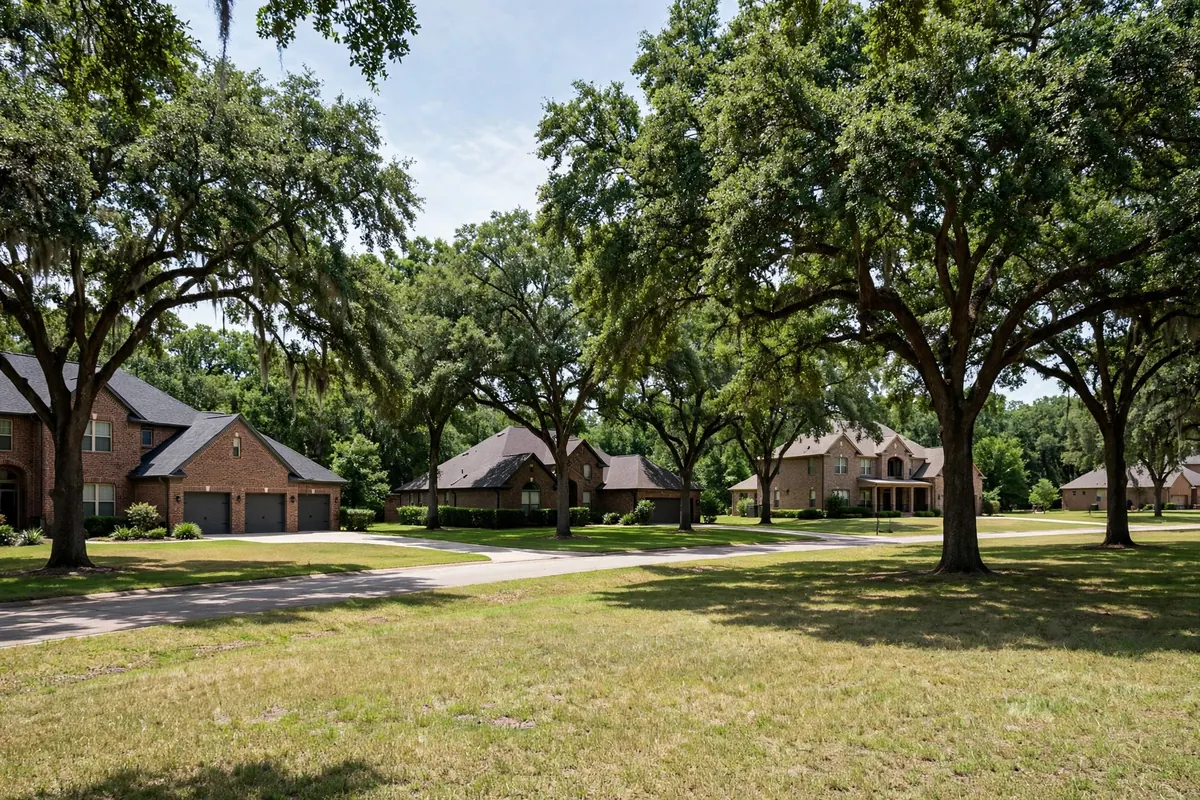
Murphy sits about eight miles east of Plano, a small city of large lots and two-story brick homes between Plano, Wylie, Sachse, and Parker. The subdivisions here date mostly from the 1990s through the 2010s, and Maxwell Creek runs through the middle of town, with greenbelts following the creek between the neighborhoods.
Murphy is a small city, about five and a half square miles, and it packs a lot of well-kept housing into that space. The subdivisions date mostly from the 1990s through the 2010s, and the lots are larger than most of the metro, which means the homes are larger too: two-story brick homes with four or five bedrooms, wide front lawns, and long driveways. The ground underneath is the same heavy Blackland Prairie clay that moves the rest of the metro, and the clay does not care how big the lot is.
Maxwell Creek runs through the middle of Murphy, and the greenbelts follow the creek between the neighborhoods. That water shapes the soil. A home near the creek sits on ground that stays damper on the creek side, while the far side of the same lot dries out faster in summer. That uneven moisture is what makes one corner of a slab move while the rest holds, and the homes near the creek show it first. The creek also brings trees: the greenbelts are lined with oaks and pecans, and a large tree near a corner can pull enough water out of the clay in a dry summer to drop that corner by itself.
The two school districts split the city, with Plano ISD on the west side and Wylie ISD on the east side, and the housing follows that split in a rough way. The west side, around Rolling Ridge Estates and Crescent Hill, has the largest homes and the widest lots. The central city, around Maxwell Creek and Maxwell Creek North, has the largest subdivisions and the most homes. The east side, around Windy Hill Farms and the Aviary, has newer homes and smaller lots. The clay is the same on all three sides, but the age of the slab and the grading of the lot change what we look for first.
Our guide to what causes foundation problems in Collin County covers the clay, the fill, and the tree roots in more detail. In Murphy, the creek and the trees are the local part of the story, and the inspection looks at where the home sits relative to both. When the soil itself needs help, soil stabilization is sometimes part of the answer on a graded lot.
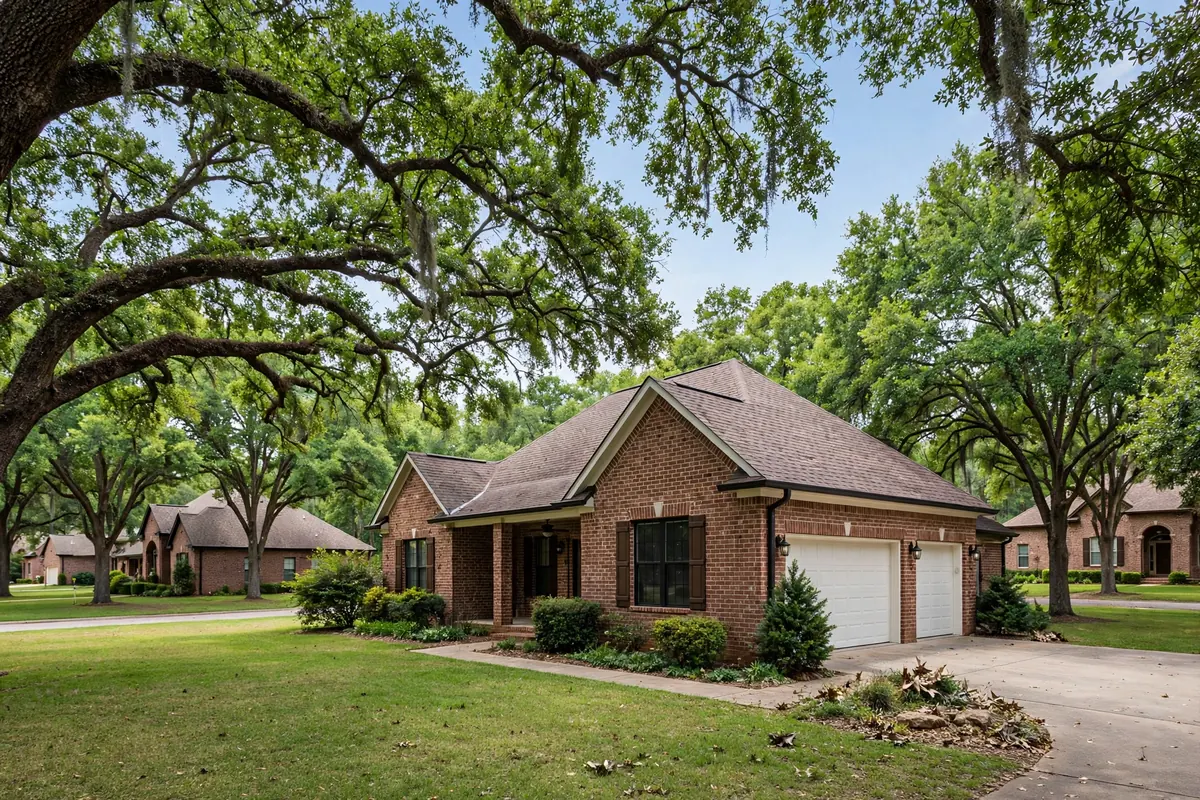
The most common Murphy call starts with a stair-step crack in the brick of a two-story home. The crack usually runs through the mortar near a corner, often starting at a second-floor window, and it shows up after a dry summer when the clay has shrunk the most. On a large two-story home, the weight above pushes down while the clay below shrinks, and the brick at the corner is where that stress shows. Our guide to signs your Plano home's foundation is moving covers the same warning signs, and they read the same way on a Murphy two-story.
Doors that stick are the second common sign, because owners touch them every day. A door that used to close cleanly and now rubs at the top corner is often the first thing noticed, and it usually goes with a slab corner that has dropped. On a two-story home, the second-floor doors show it first, because the upper floor has more places to go out of square. Floors that slope, gaps at the baseboards, and windows that stick on one side all point the same way.
Garage separation is the third common call. The garage slab is poured apart from the house slab, so it settles on its own schedule, and the gap at the doorway between the garage and the house tells you how far it has dropped. On a Murphy home with a long driveway and a three-car garage, that gap can open over a few seasons as the fill under the garage compacts.
Tree roots add a fourth. The greenbelts along Maxwell Creek are lined with oaks and pecans, and a large tree near a corner can dry out the clay under that corner in a hot summer. When the roots are the cause, a root barrier between the tree and the house can slow the drying, and it is often done alongside pier work on the same corner. Our guide to tree roots and your foundation explains how roots move a slab, and our foundation crack repair page covers the cracks that come with the movement.
Book an inspection and get the floor readings first, so any repair decision starts from measurements.
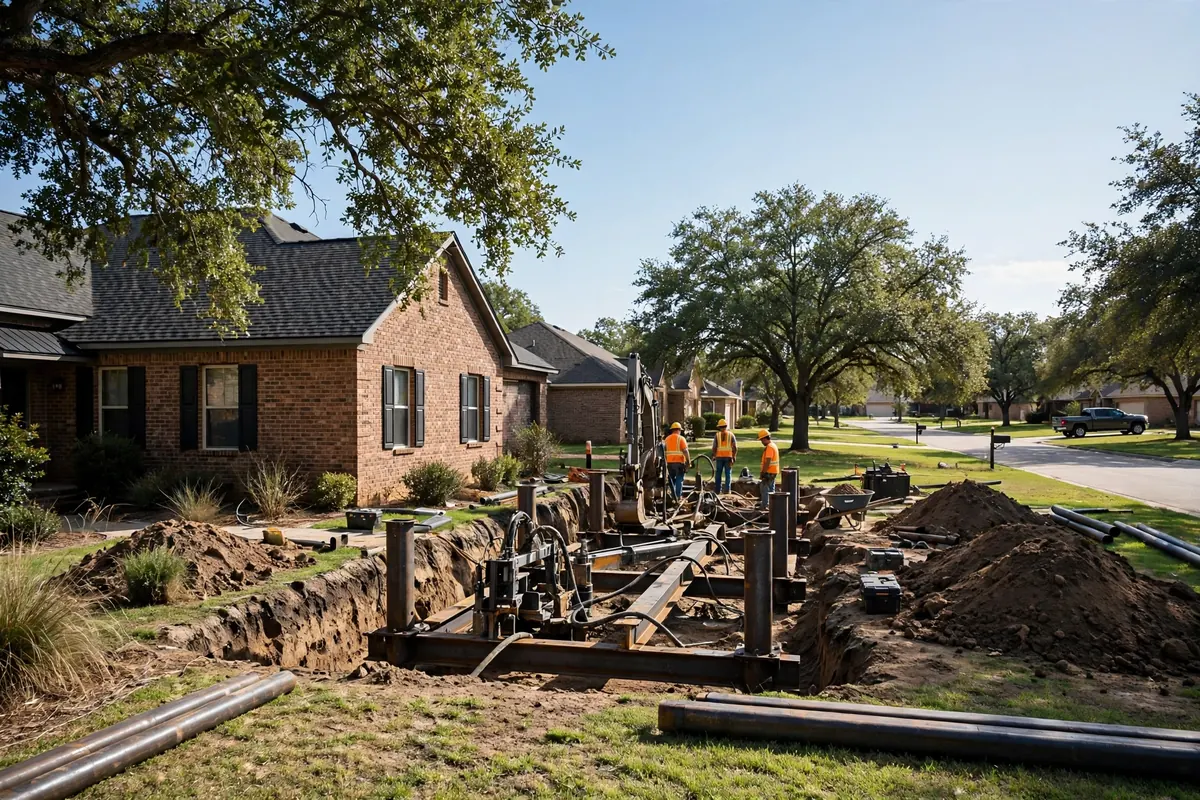
Most Murphy repairs come down to steel piers. The pier is driven beside the footing down to firm, load-bearing ground, a bracket is set under the footing, and the home is lifted back toward level in small steps while we watch the elevation readings. Because the piers reach past the moving clay, the repair holds through the wet and dry cycles that caused the problem. You can read how the method works on our steel pier installation page, and how it fits a slab home on our concrete slab foundation repair page.
A two-story home takes more care during the lift, because the upper floor adds weight and the frame has more places to show stress. We watch the second-floor doors and windows as the slab moves, and we stop when the readings say the slab is level, not when the house looks straight from the street.
Water is the other half of most Murphy jobs. Gutters that dump at the foundation, a yard that slopes toward the house, or a low spot that holds water after rain all feed the clay right where it does the most harm. Drainage correction moves that water away, and it is often the step that keeps a pier repair holding for the long run. Near Maxwell Creek, that drainage work matters even more, because the ground is already damp on the creek side.
We start every job with readings, not assumptions. The inspection maps the high and low points of the floor, the pier plan follows that map, and the lift stops when the readings say the slab is back where it belongs. After the work, we walk the house with you and check the doors, windows, and cracks you pointed out at the start, so you can see what changed. Our foundation inspection page explains what the visit checks.
Murphy shares a single ZIP code, 75094, across the whole city, from the Plano line on the west to the Wylie line on the east. That one code also covers part of east Plano, so a 75094 mailing address does not always mean a Murphy city address. The neighborhood tells you more about a home than the ZIP does.
Maxwell Creek is one of the largest subdivisions in Murphy, with two-story homes close to the creek greenbelt and Farm to Market 544. Maxwell Creek North is the newer section north of it, with larger two-story floor plans. Rolling Ridge Estates holds some of the largest homes in the city, with four thousand square foot floor plans and wide lots on the west side. Windy Hill Farms and the Aviary hold newer homes on the east side, with long front yards and wide driveways. Glen Ridge Estates, Gables at North Hill, and Timberline hold established two-story homes along the north side.
The roads that tie Murphy together are Farm to Market 544, North Murphy Road, McCreary Road, and South Murphy Road. The landmarks owners use to place a street are Murphy Marketplace, the Maxwell Creek greenbelt, the Maize Days festival grounds, and the Murphy City Hall complex. If your home sits near one of those, we know the streets around it.
We work across the whole 75094 ZIP code, and across the border into Wylie to the east, Sachse to the southeast, and Rowlett to the south, so a home near the city line is covered the same as one in the middle of town.
| Neighborhood | ZIP | What to know |
|---|---|---|
| Maxwell Creek | 75094 | One of the largest subdivisions, close to the creek greenbelt and FM 544. |
| Maxwell Creek North | 75094 | Newer section north of Maxwell Creek with larger two-story plans. |
| Rolling Ridge Estates | 75094 | Some of the largest homes in Murphy, with wide lots on the west side. |
| Windy Hill Farms | 75094 | Newer homes on the east side with long front yards. |
| The Aviary | 75094 | Newer neighborhood with two-story homes near the east side. |
| Glen Ridge Estates | 75094 | Established homes on the north side of the city. |
| Gables at North Hill | 75094 | Two-story homes near the north Murphy Road corridor. |
| Timberline | 75094 | Established neighborhood with mature trees on the north side. |
| Crescent Hill | 75094 | Upper-tier homes on the west side near Rolling Ridge. |
| Murphy Farms | 75094 | Established streets near the Murphy Road corridor. |
Not always. The number of piers follows the elevation map, not the size of the house. A large home that has dropped at one corner may need fewer piers than a smaller home that has settled along a whole side. Two-story homes do need more care during the lift, because the upper floor shows movement in its doors and windows.
It can. The creek keeps the ground damper on the creek side of a lot, while the far side dries out faster in summer. That uneven moisture is what makes one corner of a slab move while the rest holds. Homes near the greenbelt often show their first crack on the side nearest the creek. An inspection can show whether the creek side has already dropped.
In a two-story Murphy home, the corners take the most weight and sit where the clay dries out first, at the edge of the slab. A dry spell shrinks the clay below while the upper floor pushes down from above, and the brick at that corner is where the strain appears, usually as a stepped crack.
Check the brick, the floors, and the water. Outside, look for stair-step cracks in the brick. Inside, test every door and window, including the second-floor doors, for sticking or gaps. Ask for floor elevation readings as part of the inspection, and look at the gutters and the grade to see where storm water goes.
The care is the same, but the loads and the water are not. Rolling Ridge Estates holds some of the largest homes in the city, and a big two-story puts more weight on the same clay. Maxwell Creek homes sit near the creek greenbelt and Farm to Market 544, where the soil stays damper on one side. An inspection reads each home on its own floors and walls.
Last updated November 24, 2026
Call or book an inspection and we will map your floors, check the creek-side grade, and lay out the options.