Foundation Repair in Addison, TX
Addison borders North Dallas to the north, with townhomes and condos around Addison Circle.
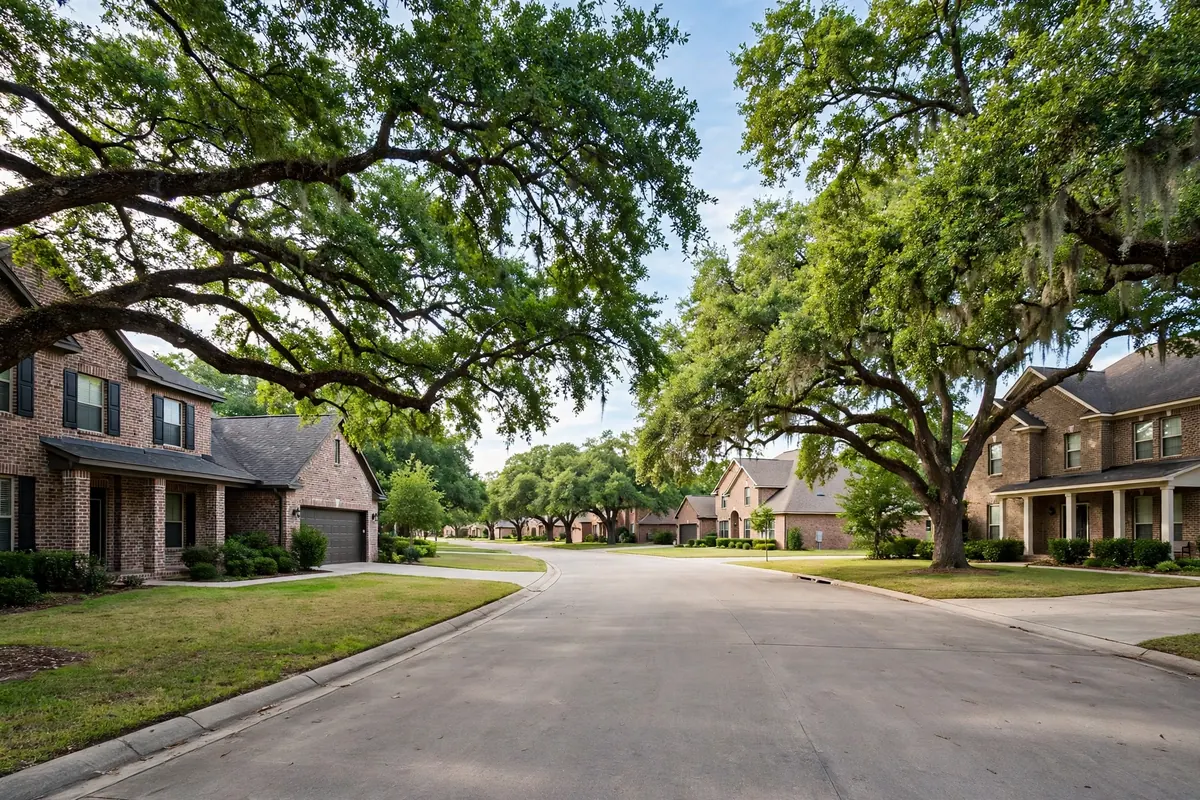
North Dallas sits about sixteen miles southwest of Plano, between the Dallas North Tollway and Central Expressway, and it is the oldest residential ground we serve. Preston Hollow estates from the 1940s and 1950s stand beside 1960s ranch homes and two-story traditional houses, all under a canopy of mature oaks. The soil is Austin Chalk and Eagle Ford clay, and the trees that make these streets beautiful are also the reason many slabs move.
Last updated November 24, 2026
North Dallas is a broad name for the part of the City of Dallas that includes Preston Hollow and the area north of Northwest Highway, roughly between the Dallas North Tollway on the west and Central Expressway, US 75, on the east, with LBJ Freeway, I-635, crossing east to west through the middle. Preston Road, Hillcrest Road, and Coit Road run north and south, and Forest Lane and Spring Valley Road run east and west. The Galleria Dallas mall sits on the west side of the area, near the Tollway and LBJ, and DART's Red Line runs along US 75. Homes here are mostly ranch and traditional single-family houses from the 1960s onward, with townhomes and condos mixed in, and some streets fall in Richardson schools while most are in Dallas schools. Homeowners just over the line in Addison, TX and Richardson, TX get the same inspection and the same crew, and each town has its own page with local soil and ZIP details.
The most common North Dallas repair is a settled slab under a 1960s or 1970s ranch home. These houses are wide, one story, with long rooflines and brick walls, and when one corner settles, the whole house tells the story: a stair-step crack in the brick, a door that sticks, a floor that slopes toward the low corner. Steel pier installation pins the low side to load-bearing soil, and house leveling and lifting brings the floors back toward level in small, measured steps.
Preston Hollow brings a different job. The estates there are larger, many built in the 1940s and 1950s, some on raised floors and some on slab, with additions added over the decades. An addition built on different soil than the original house can settle at a different rate, and the seam between the two is where cracks appear. Older raised homes get pier and beam foundation repair, with new footings, shims, and beams under the floor, while slab additions get piers of their own. Our guide to pier and beam vs slab foundations explains how the two types behave differently, and why the readings matter more than the age of the house.
Cracks and water round out the work. Foundation crack repair covers stair-step brick cracks, interior drywall cracks, and the monitoring that shows whether a crack is stable or still moving, and drainage correction re-grades the yard, extends downspouts, and adds French drains where water collects. Mature trees are part of the plan too, and a root barrier is sometimes added where a large oak stands close to the house.
North Dallas housing falls into three clear groups. Preston Hollow, bounded by Northwest Highway to the south, Midway Road to the west, Hillcrest Road to the east, and Royal Lane to the north, holds the area's oldest and largest homes, built mainly in the 1940s and 1950s, with large lots and mature landscaping. South Preston Hollow, in 75229, sits next to the Park Cities, while North Preston Hollow, in 75230, holds the largest estates. The second group is the ranch and traditional homes of the 1960s through the 1980s, in 75230 and 75240, on both sides of LBJ Freeway, with single-story ranches, two-story traditional houses, townhomes, and condos.
The third group is the far north neighborhoods, in 75248, 75252, and 75287, up toward the Collin County line. Prestonwood, Bent Tree, and Preston Highlands hold newer homes from the 1970s onward, with larger lots and more trees than the older streets. Across all three groups, most homes sit on concrete slab foundations, but the oldest Preston Hollow houses and some of the 1940s and 1950s homes stand on pier and beam, and those need a different inspection, because the crawl space under the house is part of the diagnosis. Our post on crawl space problems in pier and beam homes covers what we look for under a raised floor.
The trees are the defining feature of North Dallas housing, and they are also the defining foundation problem. A mature oak can pull a large amount of water from the soil each day in summer, and when several oaks stand on one side of a house, that side dries first and drops first. The result is a slab that tilts toward the trees, with cracks on the dry side and doors that bind on the same side. Our guide to tree roots and your foundation explains how to tell whether a tree is part of the problem, and why removing a tree is rarely the whole answer.
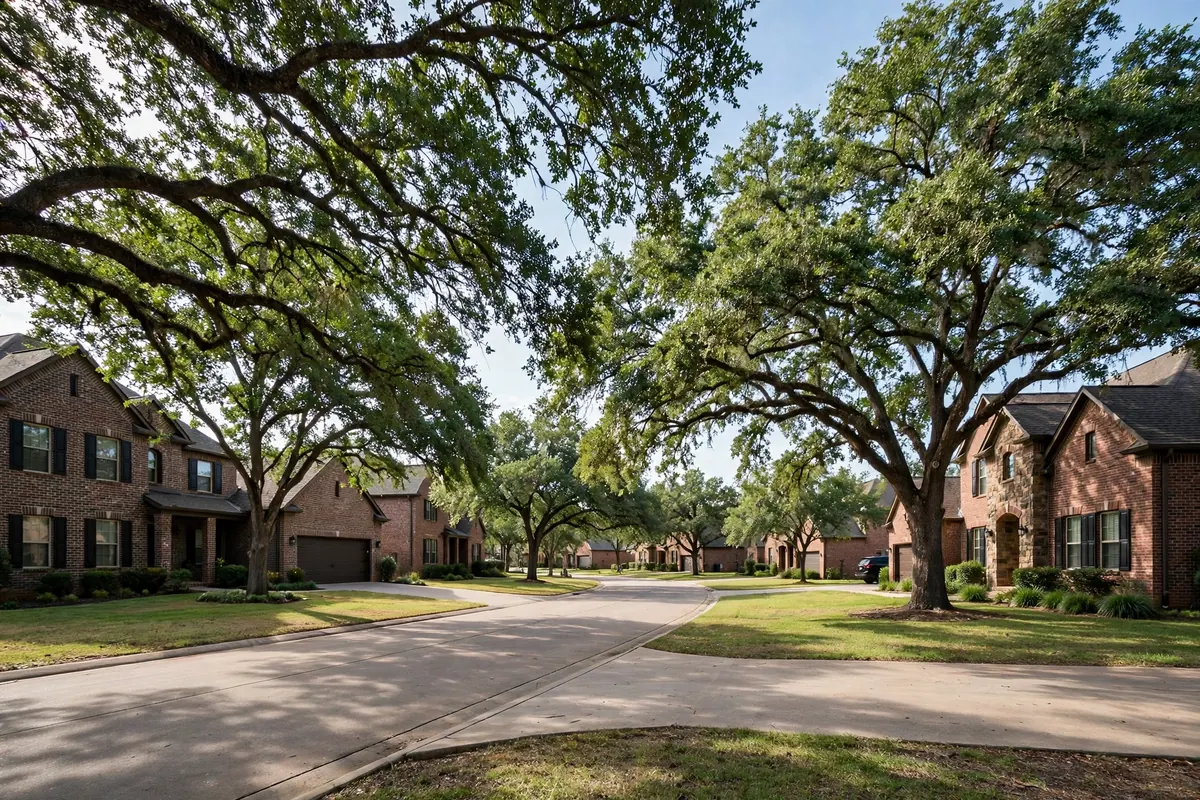
The scope of a North Dallas repair starts with the readings. A foundation inspection takes floor elevation readings room by room, and the pattern of high and low corners decides how many piers the plan needs and where they go. A house that has settled an inch at one corner needs fewer piers than a house that has settled at two corners, and a house with an addition may need piers under the addition alone. The written plan names the piers, the drainage work, and the order of the job, so the scope is set by measurements rather than by a guess.
Soil and trees decide the rest. The Austin Chalk and Eagle Ford clay under North Dallas swells when wet and shrinks when dry, and the soil near a large oak dries faster than the soil in open sun. Where the clay is deepest, the piers go deeper, and where the yard holds water after rain, drainage correction is part of the plan, because water that pools beside the foundation works against the piers. Soil stabilization is added where the clay itself swells and shrinks the most, and our post on what causes foundation problems in Collin County covers the same soil behavior in plain language.
Access and age add their own factors. A Preston Hollow estate with a long driveway and a wide lawn gives the crew room to work, while a 1960s ranch on a tighter lot needs the equipment staged carefully to protect the driveway and the beds. Older homes may have plumbing under the slab that needs checking before piers are driven, because a water leak under a slab softens the clay and has to be fixed first. Our methods guide, Foundation Repair Methods Explained, compares the repair options, and it is the same comparison we talk through with North Dallas homeowners before any work is agreed.
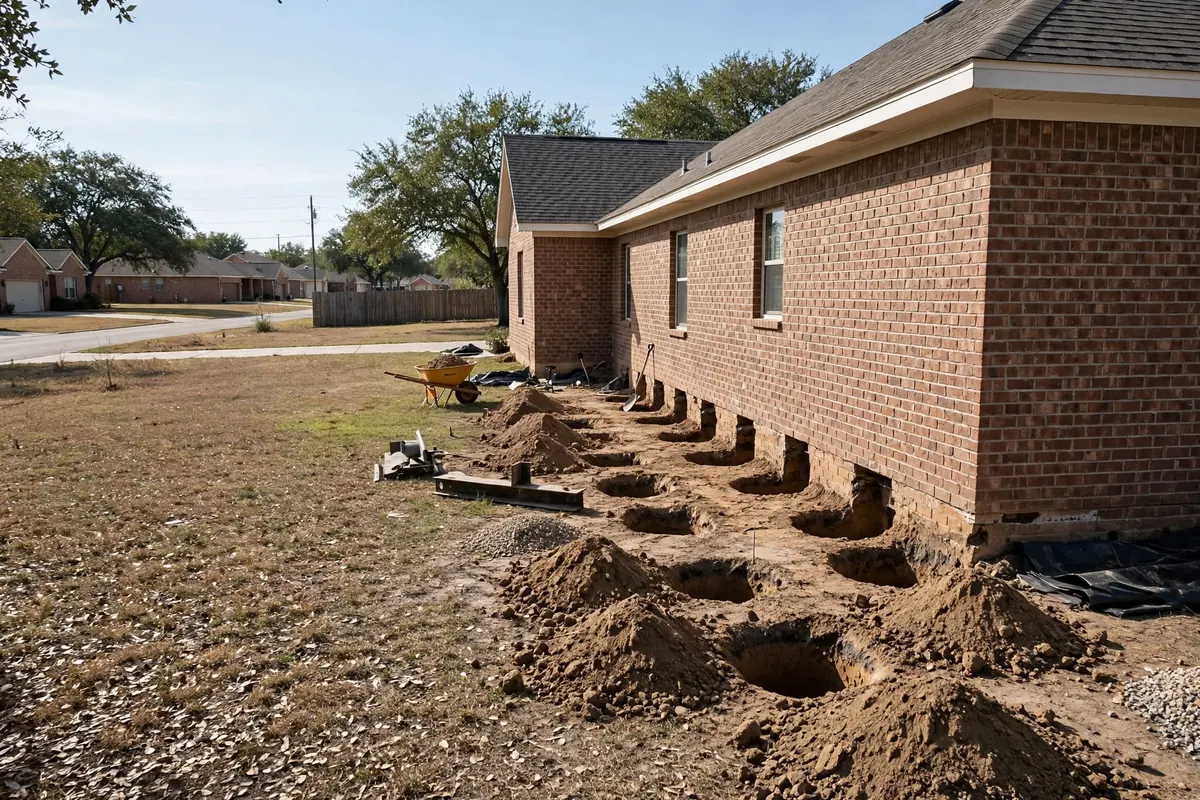
For a North Dallas home, the inspection starts with floor elevation readings and a look at the grade, the trees, and the roof water, and the written plan follows from what the readings show.
North Dallas is not a single city with a single ZIP code, so the table below lists the ZIP codes that cover the area we serve, with the neighborhood each one covers. The core of our North Dallas work is in 75230 and 75240, on both sides of LBJ Freeway, and the far north neighborhoods use 75248, 75252, and 75287. Preston Hollow itself spans 75225, 75229, and 75230, so a Preston Hollow address can carry any of those three, and the street matters more than the ZIP.
The neighborhoods inside those ZIP codes are distinct. Preston Hollow is the oldest and largest, with estates from the 1940s and 1950s. Prestonwood and Bent Tree, in 75248 and 75287, hold newer homes with larger lots and more trees. Northwood Hills, in 75240, holds established ranch homes with mature trees and spacious lots. Lake Highlands, to the east, is often counted as part of North Dallas, with neighborhoods such as Forest Hills and Lakewood Hills, and the Galleria area, in 75254, holds condos and townhomes near the mall and the Tollway.
| ZIP code | Area |
|---|---|
| 75230 | North Dallas core and North Preston Hollow, around Preston Road and Forest Lane |
| 75240 | North Dallas near the Galleria and LBJ Freeway, including Northwood Hills |
| 75248 | Far North Dallas near the Addison border, including Prestonwood |
| 75252 | Far North Dallas and Preston Highlands, up toward the Collin County line |
| 75225 | South Preston Hollow and the University Park edge |
| 75229 | South Preston Hollow and the Northwest Dallas edge |
| 75287 | Far North Dallas, including Bent Tree and the Prestonwood edge |
| 75254 | Galleria area, with condos and townhomes near the mall and the Tollway |
The core of North Dallas is 75230 and 75240, on both sides of LBJ Freeway. Far North Dallas uses 75248, 75252, and 75287, and Preston Hollow spans 75225, 75229, and 75230, so the street matters more than the ZIP. Give the full street address when you call, since the ZIP alone does not always settle which part of North Dallas a home sits in.
Some do. The oldest Preston Hollow houses, built in the 1940s and 1950s, include raised homes on pier and beam, while most 1960s and later homes sit on concrete slabs. The inspection checks which type your home has, because the repair is different for each.
Age does not stop clay from moving. The Austin Chalk and Eagle Ford clay under North Dallas swells when wet and shrinks when dry, and mature oaks pull moisture from one side of a house faster than the other, so a slab can keep moving for decades.
Excavations in North Dallas are dug by hand beside the footing, with the crew working around the root zones of the big oaks, and a root barrier is sometimes added where a large tree stands close to the house, so the tree and the repair can live side by side.
They show movement differently, though the ground is the same clay. Homes north of LBJ Freeway are newer, on graded lots where fill settlement in the first seasons is the usual story. Preston Hollow homes are older, many on pier and beam with mature trees, and they show movement as sloping floors and sticking doors. An inspection reads each home on its own.
We work across the towns around Plano, so if your home sits just over the line from North Dallas, the same crew and the same inspection process cover it. These nearby service areas each have their own page with local soil, housing, and ZIP details.
Call (972) 430-3826 or send an email, and we will set up a foundation inspection for your North Dallas home.
Book a Foundation Inspection1 Call or email2 Inspection and readings3 Written repair plan