A crawl space can hide a long list of problems in a pier and beam home. Damp soil, sagging joists, and fallen insulation all sit out of sight, so the first sign is often a sloping floor or a musty smell inside.
By Plano Foundation Repair · Last updated November 24, 2026
Many of the older homes in Plano and the nearby towns were built on pier and beam foundations, with the house raised above the ground on concrete piers and wooden beams, and a low space underneath that few owners ever enter. That space does a great deal of quiet work: it carries the floor, it holds the plumbing and ductwork, and it takes the first hit from ground moisture. When something goes wrong down there, the house above it tells the story in sloping floors, sticking doors, and smells that seem to come from nowhere. The trouble is that by the time the signs reach the living room, the problem below has usually been growing for a long while. A foundation inspection that includes a look into the crawl space catches these problems while they are still small, and the fixes are far simpler then.
What a healthy crawl space looks like under a pier and beam home
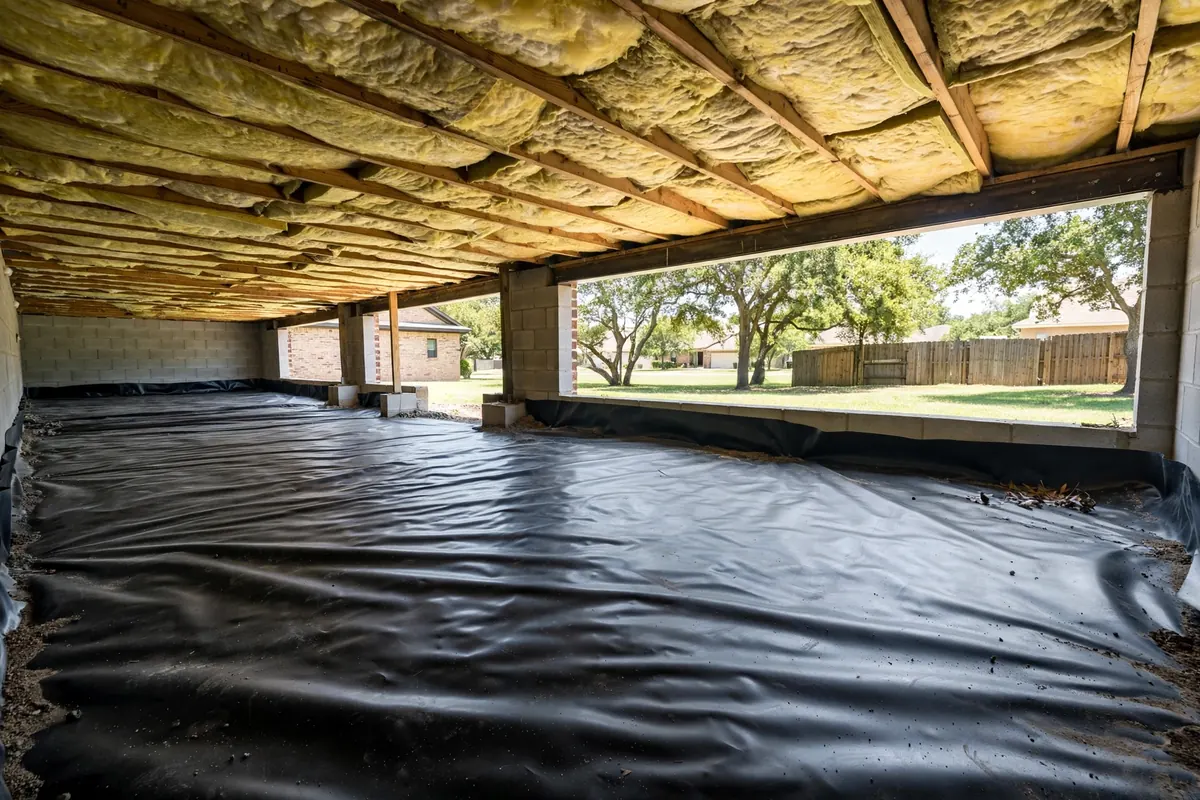
A healthy crawl space is dry, clear, and easy to read. The soil is covered with a moisture barrier, a heavy sheet laid over the ground to slow the damp rising from the earth. The wooden beams and joists sit level on solid piers, the insulation between the joists is in place and dry, and there is enough air moving through the vents to keep the space from turning stale. You can see the piers standing straight, the beams resting squarely on them, and the underside of the floor dry and sound. Nothing pools, nothing smells, and the floor above feels firm underfoot.
The space does not need to be pretty, but it does need to be dry and stable. In a well-built pier and beam home the piers reach down to soil that stays firm through wet and dry seasons, and the beams spread the weight of the house evenly across them. The vents around the foundation let air move through, which matters in a humid Texas summer, and the moisture barrier keeps ground damp from rising into the wood. When any part of that balance fails, the rest follows: damp wood softens, soft wood sags, and a sagging floor shows up in the rooms above. A comparison of pier and beam and slab foundations explains how the two types carry a house differently, and why the crawl space matters so much to the first one.
Moisture and standing water under the floor
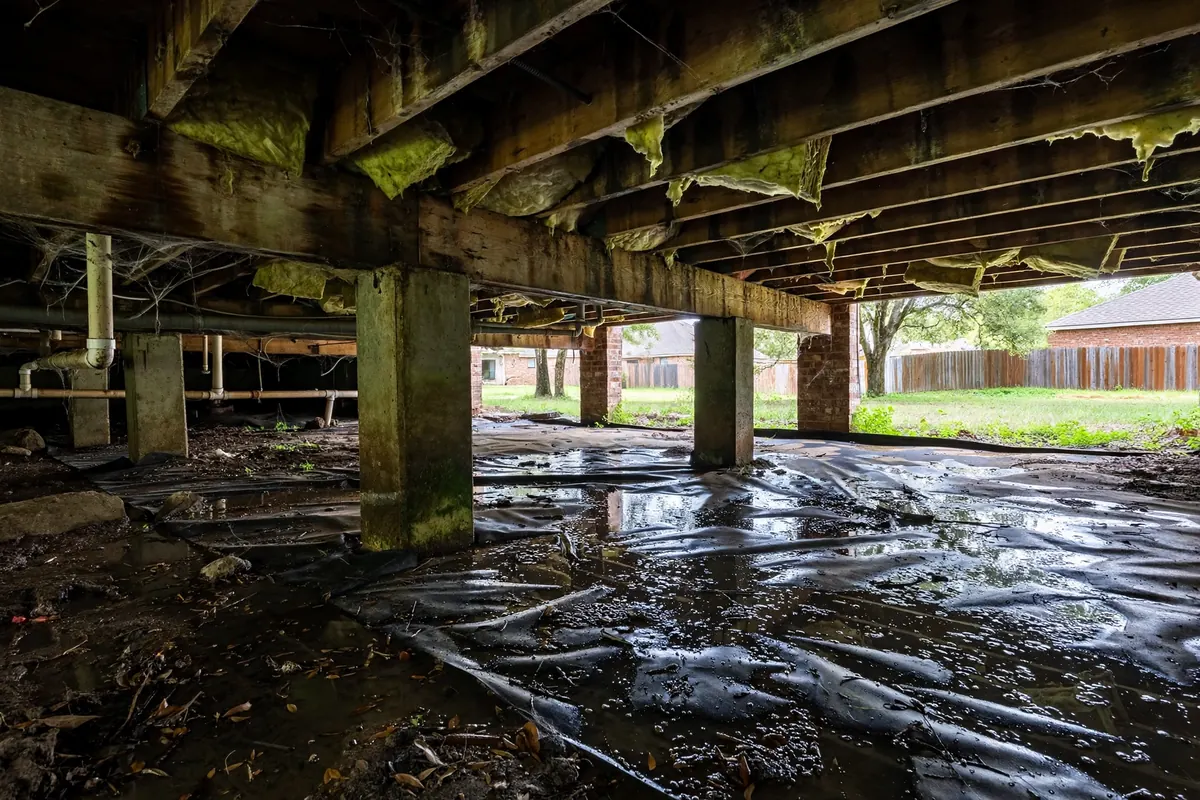
Moisture is the most common crawl space problem in North Texas, and it starts with water finding its way under the house. A downspout that ends at the foundation, a yard that slopes toward the house, or a plumbing leak can all put water under the floor, and once it is there it stays, because the space is low, shaded, and slow to dry. The soil turns to mud, the air turns damp, and the wooden beams and joists begin to absorb moisture from below. Over time the wood softens, fasteners loosen, and the floor above starts to feel springy or uneven.
Standing water is the worst form of it. Even a shallow pool under the house can raise the damp in the whole space, and the smell that rises through the floorboards is often the first thing an owner notices. The U.S. Environmental Protection Agency explains how moisture feeds mold growth indoors, and a damp crawl space is one of the most common sources of that moisture in a home. The fix starts outside, with drainage correction that moves water away from the house, and continues inside the space with a moisture barrier over the soil and, where needed, a drain that carries water out. A guide to foundation problems after heavy rain covers what to check under the house after a storm.
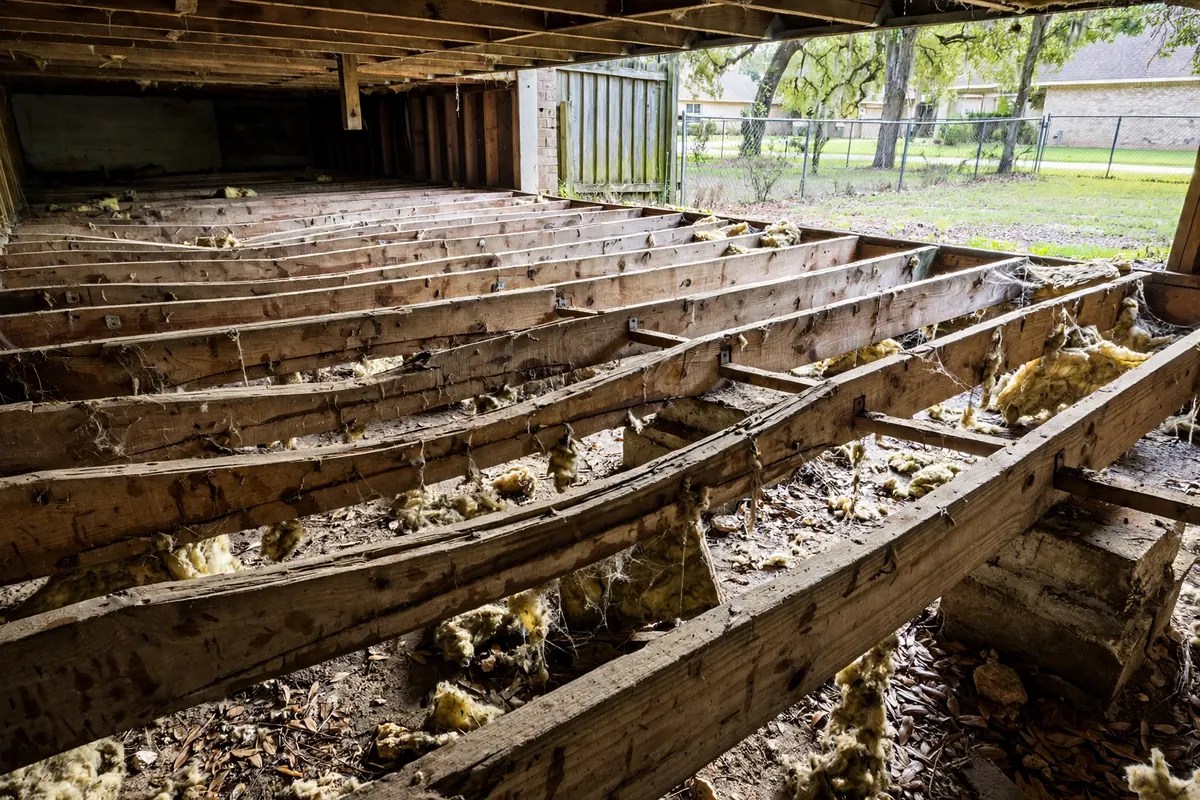
Joists that have sagged. When a joist sags between its piers, the floor above it dips, and the dip grows wider each year the wood stays damp.
Sagging joists, rotted wood, and sinking piers
Wood and water are a poor match over time. A joist that stays damp will soften and sag between its supports, and a beam that rots at its ends will drop where it meets the pier. The floor above follows the wood down, and the dip shows up as a slope you can feel when you walk across the room, or as a door that sticks on the side where the floor has fallen. In older homes the piers themselves can be part of the problem: a pier built on shallow soil can sink as the clay beneath it dries and shrinks, and a pier that was never level can let one corner of the house drop while the rest holds.
Crawl space problems and the signs they leave upstairs
Problem below
Sign upstairs
What it needs
Standing water or wet soil
Musty smell, damp feeling in low rooms
Drainage work plus a moisture barrier
Sagging joists
Floor dips in the middle of a room
Joist support and leveling
Rotted beam ends
Floor drops near a wall, doors stick
Beam repair and pier work
Sinking piers
Sloping floor across a whole room
Pier adjustment and re-leveling
How pier and beam repairs work
None of these problems fix themselves, and all of them grow worse while they stay damp. A joist that has sagged an inch will sag further as the wood weakens, and a pier that has sunk will keep sinking while the clay beneath it dries. Pier and beam foundation repair deals with this directly: shimming and adjusting the piers, sistering or replacing damaged joists, and re-leveling the floor above so the doors and walls sit square again. The work is done from inside the crawl space, which is why a clear, dry space matters to the crew as much as it does to the house.
Pests, mold, and smells that start below the floor
A damp, dark crawl space is an open invitation to the things a house should keep out. Termites and wood-boring insects look for soft, damp wood, and a crawl space with rot is where they start. Rodents and other animals look for a dry corner to nest, and they often enter through a broken vent or a gap where a pipe passes through the foundation. Once they are in, they tear at insulation, chew wiring, and leave droppings that dry out and drift up through the floorboards. The smell that follows is often the first sign an owner notices, and by then the visitors have usually been there a while.
Mold follows the same damp. It grows on the underside of the floor, on the joists, and on any insulation that has stayed wet, and its smell rises into the living space through gaps around pipes and ducts. The fix is not a spray or a scented cover-up; it is drying the space, removing the damaged wood and insulation, and keeping the moisture from coming back. That means a moisture barrier, sound vents, and drainage that keeps water out in the first place. If you smell damp under the floor or notice insulation hanging down in the crawl space, have the space looked at before the next wet season, and keep the vents clear of leaves and debris so air can move through.
A dry, covered crawl space. A moisture barrier over the soil and sound insulation between the joists keep the space dry and the floors above it steady.
How crawl space repairs protect the whole house
Crawl space repair is really floor repair, and it protects everything above it. The work usually starts with drying the space: fixing the drainage outside, laying a moisture barrier over the soil, and clearing any debris or damaged material. Then the structure gets attention: piers are shimmed or adjusted to bring the beams level, sagging joists are supported with new blocking or sistered with sound wood, and rotted beam ends are repaired or replaced. The floor above is checked as the work goes on, so the leveling is measured, not guessed.
Once the structure is level and dry, the space needs to stay that way. A sound moisture barrier, vents that open and close with the season, and gutters that carry water away from the house are the routine that keeps the repair holding. In McKinney and other towns with many older pier and beam homes, the houses that hold up best are the ones where the owner looks into the crawl space once a year and deals with damp early. A crawl space repair visit, paired with a year-round maintenance routine, is the simplest way to keep the space under your floor dry, sound, and out of your thoughts.
Noticed a sloping floor or a musty smell?
Both can start below the floor, where you cannot see them. Call and we will look into the crawl space and measure the floors above it.
Plain answers to the questions Plano homeowners ask us most about this topic.
?
Can a crawl space problem make the whole house slope?
Yes. The floor above the crawl space rests on the beams and piers below it, so a sinking pier or a sagging joist shows up as a slope in the room above. Re-leveling the piers brings the floor back. That is why a sloping floor is read from below, not just from the room above.
?
Does a moisture barrier really help?
Yes. A heavy sheet over the soil slows the damp rising from the ground into the wood above it. It works best paired with drainage outside that keeps water from reaching the space at all. Check it once a year for tears and gaps, since a torn sheet lets damp through at the very spot it should guard.
A year-round routine that keeps soil moisture steady and catches small changes early.
Last updated November 24, 2026
Get a clear look under your floor
Tell us what you have noticed upstairs: the slope, the sticking door, the smell. We will inspect the crawl space, measure the floors, and give you a plain written plan.