Yes, heavy rain can bring on foundation problems in Plano. When clay soil soaks up water it swells, and when water pools against the slab it pushes on one side of the house while the other side stays drier.
By Plano Foundation Repair · Last updated November 24, 2026
Plano gets its heaviest rain in spring and in sudden summer storms, and a single long downpour can drop more water beside a house than the soil can take in a day. The clay under Plano homes is the key: it absorbs water slowly and swells as it does, pressing against the slab edge and lifting the soil around the foundation. A house that was steady through a dry month can show a new crack, a sticking door, or a damp spot after a wet week, and the change can feel sudden even though the soil was building toward it all season. Most rain-related trouble is not about the rain itself but about where the water goes once it hits the roof and the yard. A foundation inspection after a storm can separate a one-time wet patch from real movement, and it is worth doing before the next storm arrives.
Why Plano clay swells after a long rain
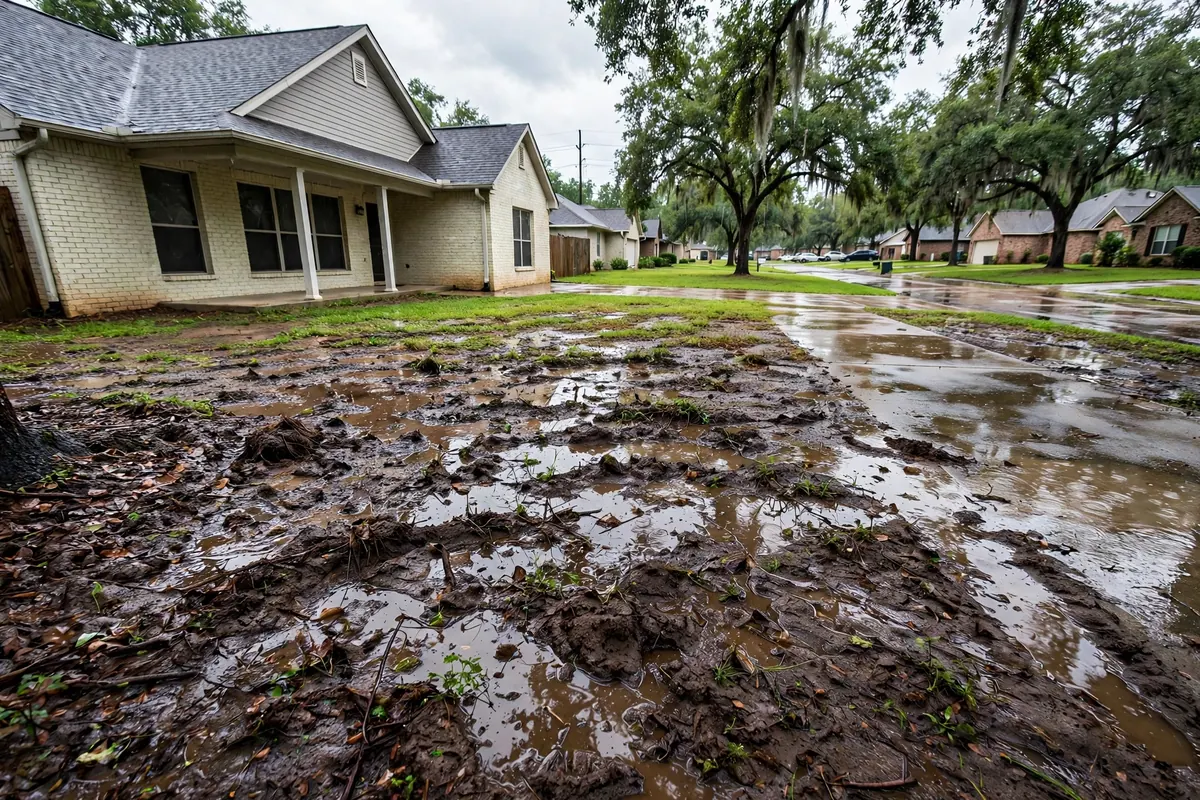
Blackland Prairie clay is made of fine particles that hold water tightly, and it can swell a great deal as it wets up. After a dry spell the top layer of clay is full of small cracks, and the first rain runs into those cracks and soaks in fast. As the clay swells it pushes outward and upward, and the slab edge nearest the wettest soil feels that push. The rest of the house, sitting on soil that stayed drier, does not move with it, so the slab bends slightly and the bend shows up as a crack in the brick or a door that no longer closes cleanly.
The swelling is uneven by nature, because no yard wets evenly. The side with the downspouts, the side under a big tree canopy that drips for hours, and the low corner where the yard drains will all swell more than the high, sunny side. That uneven lift is harder on a house than an even lift would be, since an even lift moves the whole house together while an uneven lift twists it. Why Plano's Clay Soil Cracks Foundations explains the shrink and swell cycle in detail, and the short version is this: clay that swings between dry and soaked is clay that moves a house, and heavy rain is the wettest swing of all.
Where rainwater collects against a Plano home
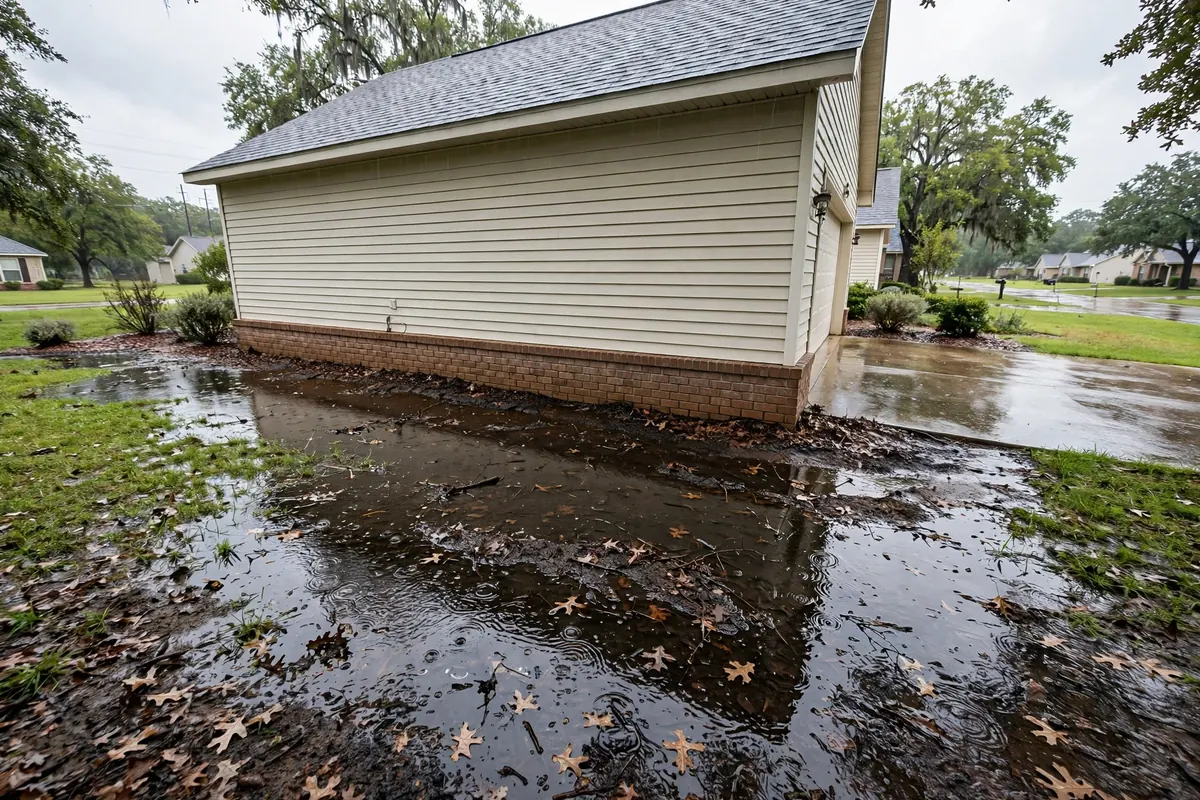
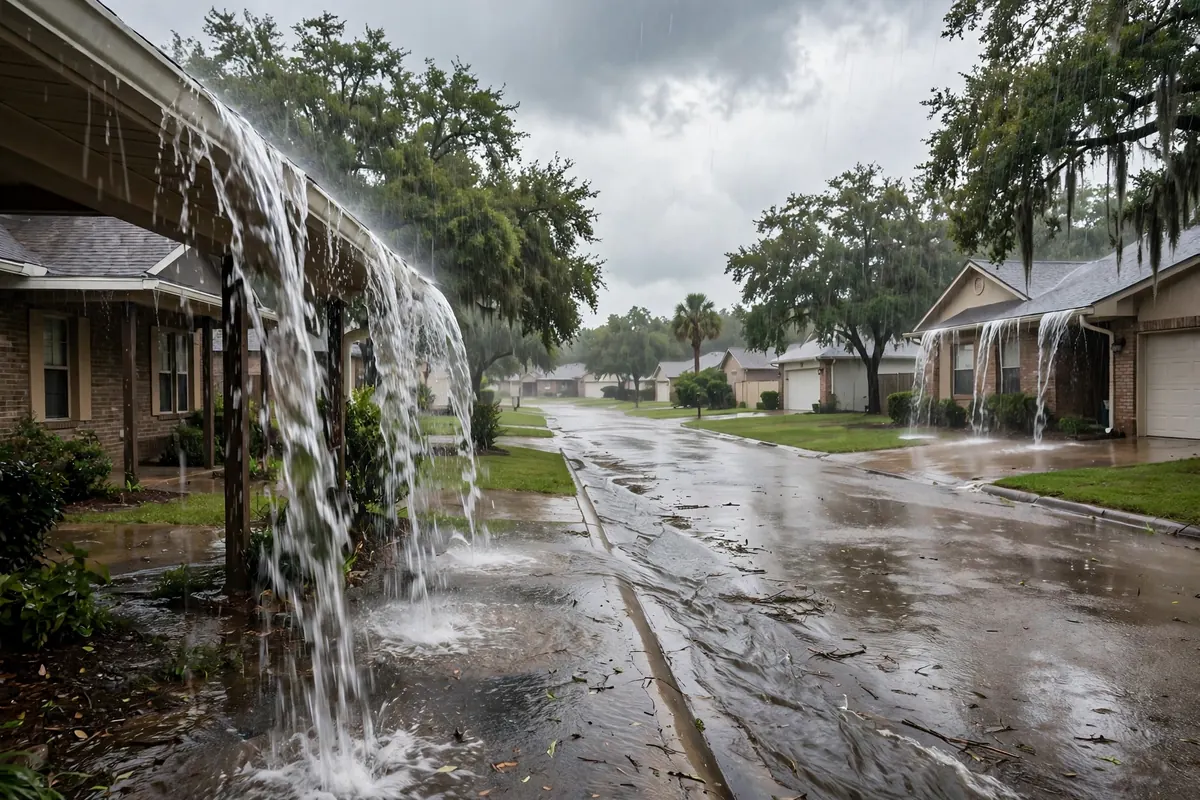
Walk your yard during a storm and you will see the collection points quickly. The first is the base of every downspout, where a whole roof worth of water lands in one spot. If the downspout ends at the foundation with no extension, that spot becomes a small pond every time it rains hard. The second is any low corner of the yard, especially where the ground slopes back toward the house instead of away from it. Flower beds piled high against the brick can act like a dam, holding water against the slab long after the rain stops. A driveway or patio that slopes toward the house sends its runoff the same way.
The third collection point is the one people miss: the soil right against the slab edge, where the ground has settled into a shallow trench along the foundation. That trench fills with water, the clay there swells first, and the slab edge lifts a little while the center of the house stays dry. In west Plano, where some lots are cut and filled, water can also run along the buried edge between fill and undisturbed clay and pool where the two meet. A drainage correction visit looks at all of these points together, because fixing one downspout while a low corner still ponds water leaves the problem half solved. The U.S. Geological Survey tracks rainfall and stream levels across Texas, and its records show how quickly a single storm can saturate the clay in a North Texas yard.
Soaked soil, swollen clay. After a long rain the clay beside a house can stay wet for days, and the slab edge on that side carries the extra push.
Signs to check after a storm passes
Give the house two or three dry days after a heavy rain, then walk it slowly, inside and out. Outside, look for water still standing near the foundation, soil that has pulled into a soft trench along the slab, and mulch or soil washed away from beds. Look at the brick for fresh cracks or for old cracks that have widened, and check the mortar joints near the corners. Inside, open and close every door and window, and note any that stick now but worked fine before the storm. Look at the ceiling and the tops of door frames for new hairline cracks, and check the floor for any spot that feels soft or uneven underfoot.
After-storm checks, room by room
Where to look
What to look for
What it may mean
Outside, at the slab edge
Standing water or a soft trench along the foundation
Water pooling where clay swells against the slab
Brick walls, near corners
Fresh or widened stair-step cracks
Uneven lift from wet soil on one side
Doors and windows
Sticking, gaps, or a latch that misses
Frame out of square from slab movement
Crawl space or low rooms
Damp smell, wet soil, or standing water
Water getting under the house, not just beside it
Recording changes after a storm
Take photos of anything new, with a coin or a ruler beside a crack so the width is clear, and write down the date of the storm. A guide to telling whether a foundation crack is serious will help you sort a hairline seasonal crack from one that needs a closer look. If a door that worked last week now sticks, or a crack has grown since the last rain, that change is the signal to get readings, not to wait for the next storm to confirm it.
What to do in the days after heavy rain
Start with the water, not the crack. Clear leaves and debris from gutters and downspouts so the next rain has a clear path, and check that every downspout extension still points away from the house. If a downspout dumps water at the foundation, add an extension that carries it at least several feet out into the yard, and make sure the ground under the outlet slopes away. Scoop out any mulch or soil that has washed against the slab, and look for the shallow trench that often forms along the foundation after a storm, then fill it with soil sloped away from the house.
Inside, keep an eye on the rooms that showed signs, and do not rush to fill a crack or plane a door. A crack filled while the soil is still swollen may open again as the clay dries, and a door trimmed to fit a lifted slab may gap once the soil settles. Give the house a few weeks of normal weather, watch whether the signs ease or hold, and keep your notes and photos. If the signs hold, or if water stood under the house, call for a foundation inspection and a look at the crawl space repair options for a pier and beam home. A guide to drainage that protects a foundation covers the longer-term fixes in plain terms.
Overflowing gutters. A gutter that spills over in a storm drops its water right beside the foundation, which is exactly where it does the most harm.
Drainage fixes that keep the next storm from doing the same
The fixes that work after heavy rain are the same ones that work all year: move water away from the house, and give it somewhere to go. A French drain along the wet side of the house collects water in a gravel trench and carries it to a lower part of the yard or to the street. Regrading the soil near the foundation, so the ground falls away from the slab for the first several feet, stops the trench effect that ponds water against the brick. Gutter extensions, splash blocks, and a clear path for water across the yard all cost far less in effort than a repair after the slab has moved, and they work every time it rains.
For homes where one corner always ponds, a surface drain or a catch basin at the low spot can be the missing piece, and for a lot that slopes toward the house, a shallow swale across the yard can turn the water aside before it reaches the foundation. In Allen and other newer suburbs, we often find that the original grading has settled since the house was built, so the slope that once carried water away now carries it back. Regrading restores that slope, and pairing it with concrete slab foundation repair where the slab has already moved gives the repair a dry footing to hold. The goal is simple: after the next storm, the water should be in the yard and the street, not against your slab.
Water still standing near your foundation?
Standing water after a storm is a drainage problem today and a foundation problem later. Call and we will walk the yard with you and find where it collects.
Plain answers to the questions Plano homeowners ask us most about this topic.
?
How soon after rain do foundation problems show?
Some signs show within days, like a sticking door or a damp crawl space. Others, like a widening crack, may take a few weeks as the clay swells and then dries. Watch the house for a full month after a big storm.
?
Is a wet crawl space after rain urgent?
It needs attention soon. Standing water under a pier and beam home can rot wood and draw pests, and it tells you water is reaching the structure, not just the yard. Get it looked at before the next storm. A pump or a drain may be needed if the water keeps coming back after every storm.
?
Does rain help a dry foundation?
A little, and unevenly. Rain wets the top layer of clay first, so one side of the house may swell while the rest stays dry. Steady watering and good drainage do more for even moisture than a single storm. Soaker hoses on a steady schedule beat a storm for even moisture, because they wet all four sides the same way.
A leak under the slab soaks the soil from below, and the signs look much like rain damage.
Last updated November 24, 2026
After the rain, get a clear read on your home
Tell us what the last storm left behind: the sticking door, the new crack, the wet corner. We will measure the floors and give you a plain written plan.