Frisco, TX
East along the tollway, with newer two-story homes and fast-growing districts.
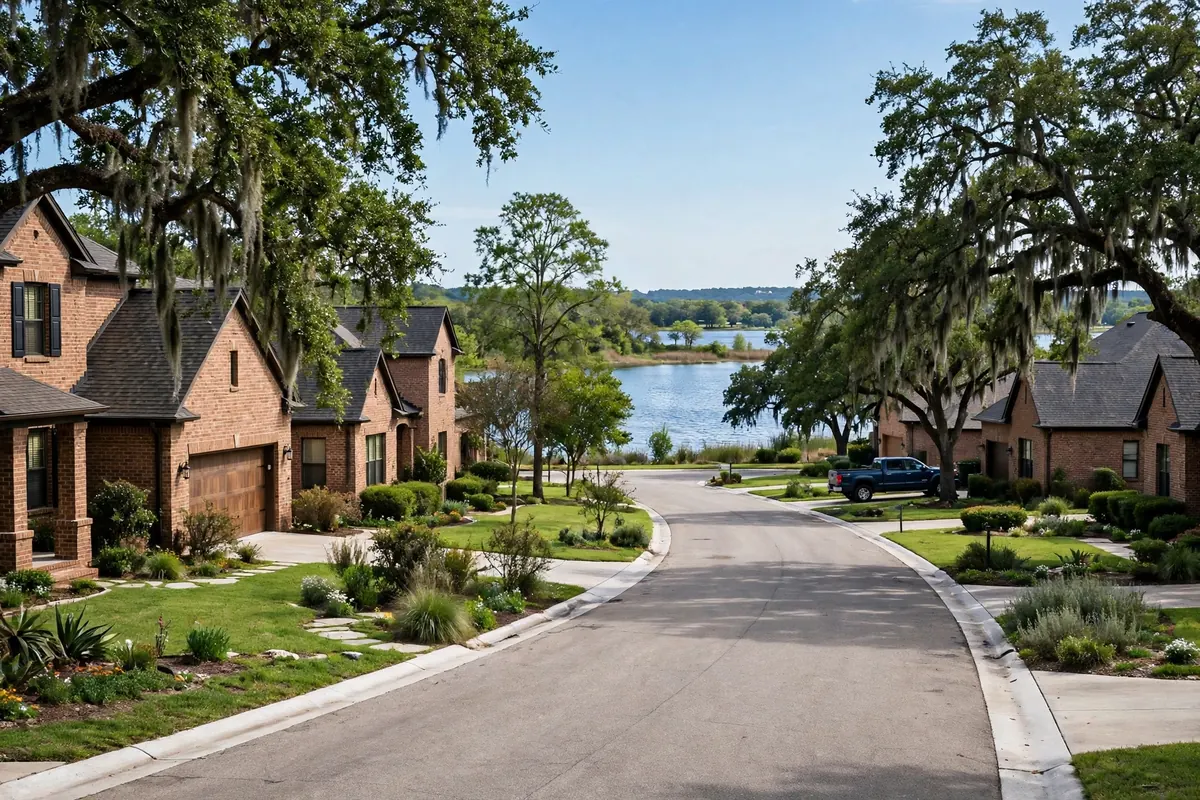
Lake Lewisville Foundation Repair
The Colony sits about fourteen miles west of Plano on the southeastern shore of Lake Lewisville, and it is the only city in the area where the lake shapes daily life. The city grew from 1970s Fox and Jacobs neighborhoods into lakeside golf communities and the Grandscape district, and the ground under those homes mixes lake-edge soil with the same Blackland clay that moves the rest of the metro.
The Colony is built along the southeastern shore of Lake Lewisville, and the soil changes as you move away from the water. Near the shore, in Stewart Peninsula, the Tribute, and the lakeside streets, the ground holds more moisture and the soils are sandier where the old shoreline laid them down. Inland, in the original Fox and Jacobs neighborhoods along Main Street and South Colony Boulevard, the ground is the same heavy Blackland Prairie clay that moves the rest of the metro. A home near the lake and a home a mile inland can behave differently in the same dry summer, because the lake side dries out more slowly.
The city itself is young. The Colony was first settled in 1973 and incorporated in 1977, so the oldest homes are from the 1970s and 1980s, built as a master-planned community with underground utilities and neighborhood parks. Those early homes are mostly single-story brick on conventional slabs, with mature trees now and lots that have had fifty seasons of wet and dry. The newer side is the Tribute, a large lakeside golf community on a peninsula, and Austin Ranch, a mixed-use community near Grandscape, with newer homes, townhomes, and apartments.
Grandscape changed the west side of the city. The district around Nebraska Furniture Mart and the Scheels store brought hotels, restaurants, and entertainment to the Sam Rayburn Tollway corridor, and the homes near it are newer townhomes and apartments rather than single-family ranches. The ground under those is graded fill, and the same settlement rules apply as on any new lot: the fill compacts in the first few seasons, and the clay underneath still swells and shrinks with the weather.
Our guide to what causes foundation problems in Collin County covers the clay, the fill, and the tree roots in more detail. In The Colony, the lake adds a fourth factor: moisture that swings with the seasons and with the water level. The inspection looks at where the home sits relative to the shore, because a lakeside lot and an inland lot need different eyes. When the soil itself needs help, soil stabilization is sometimes part of the answer on a graded lot.
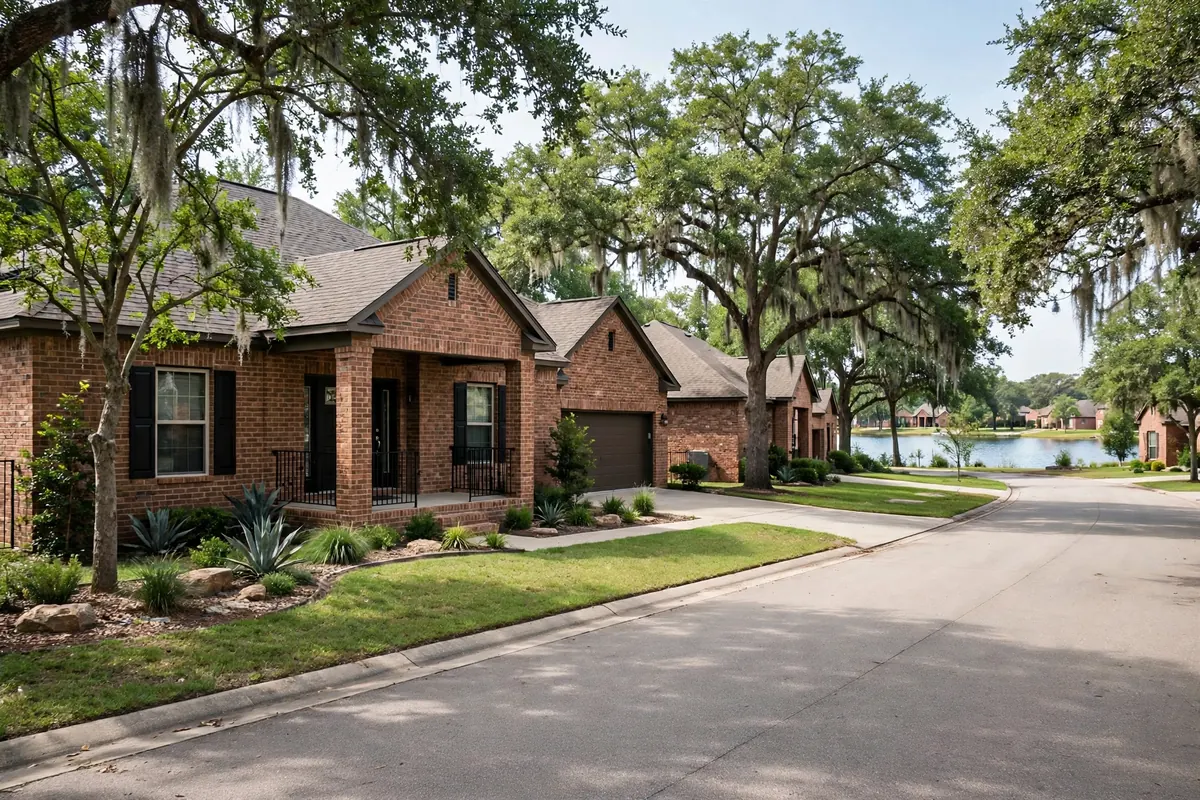
In the original neighborhoods along Main Street and South Colony Boulevard, the signs are the slow ones: a stair-step crack in the brick that has been there for years and is now a little wider, a door that sticks in summer and eases in fall, a floor that slopes a little toward one corner. Those homes have lived through many wet springs and dry summers, and their slabs carry that history. Our guide to signs your Plano home's foundation is moving covers the same warning signs, and they read the same way on a 1970s Colony ranch.
In the lakeside communities, the signs are often about water. A home near the shore can show cracks that open in a wet spring and close in a dry fall, as the soil moisture swings with the lake and the weather. A patio that slopes toward the house instead of away from it, or a low spot that holds water after rain, points to grading that needs attention. Our guide to foundation problems after heavy rain explains how wet seasons move a slab, and it applies to the lake side of The Colony as much as anywhere else.
In the Tribute and Austin Ranch, the signs are usually sharper. A stair-step crack at the corner of a newer two-story home, a garage floor pulling away from the house wall, or a driveway section that has dropped all point to fill settling under a newer lot. Those are worth measuring early, because a small crack in a newer home is simpler to correct than a large one in an older home.
A single sign on its own rarely tells the whole story. A hairline crack in a new home can be normal settling, and a door can stick for reasons that have nothing to do with the slab. What matters is the pattern: several signs on the same corner, or signs that keep getting worse through the dry season, point to movement that is still active.
Book an inspection and we will measure your floors and show you the readings, so the decision is yours with the facts in hand.
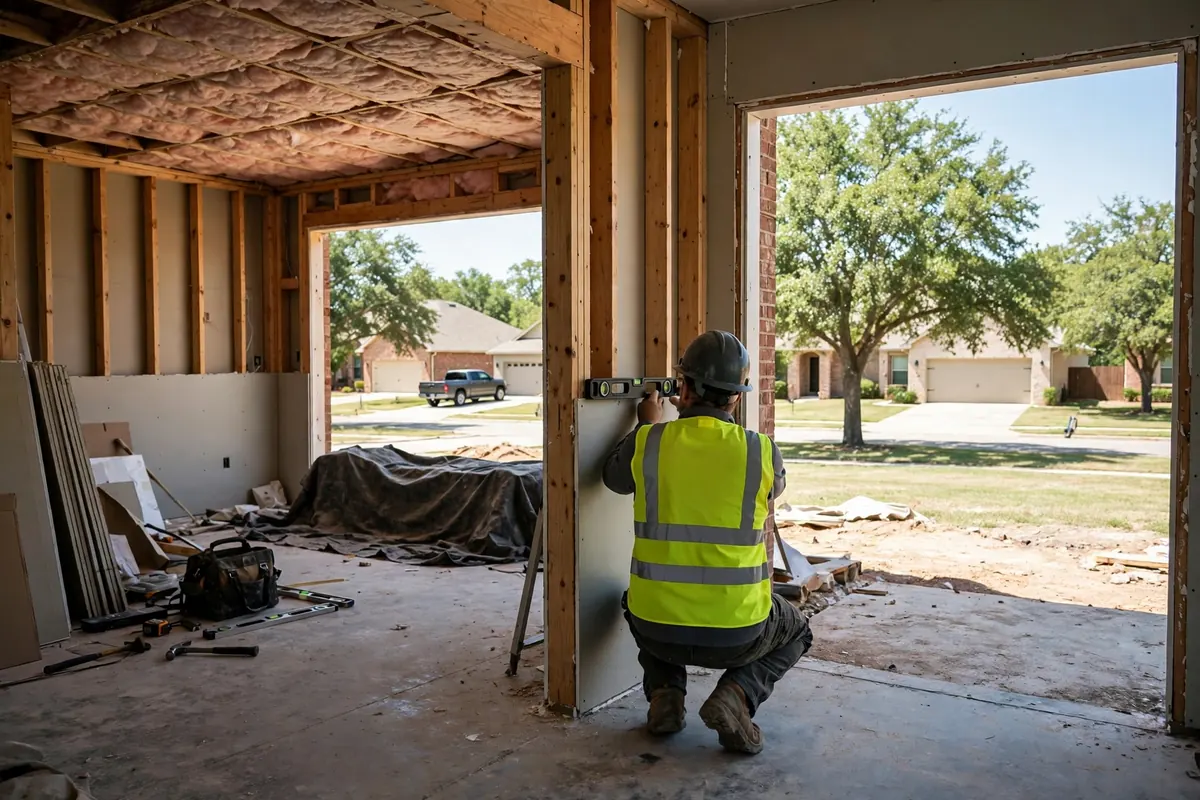
The first step is a walk around the property. The outside shows where the water goes, where the grade falls, how close the shore is, and where the big trees stand. Inside, we take floor elevation readings room by room with a digital level, and those readings become the map the plan is built on.
On a slab home, the piers go in beside the footing at the points the map calls for. Each steel pier is driven down to firm ground, a bracket is set under the footing, and the home is lifted back toward level in small steps while we watch the readings. On a pier and beam home, the work happens in the crawl space: failed piers are replaced, beams are shimmed and re-leveled, and moisture problems are dealt with so the repair holds. The method follows the foundation type, and the steel pier work is on our steel pier installation page.
Water comes next, and in The Colony it matters more than in most places. A pier repair holds best when the clay around the house stays even, so the grade, the downspouts, and any low spots get attention in the same job. Near the lake, that often means a French drain along the side where water collects, or re-grading a bed that has been holding water against the brick. Our drainage correction page covers that work, and the slab side of a repair is on our concrete slab foundation repair page.
The last step is a walkthrough with you. We check the doors and windows you pointed out at the start, measure the cracks again, and hand over the elevation readings from before and after, so you can see the change in numbers. On a pier and beam home, we show you the work under the house too.
The Colony shares a single ZIP code, 75056, across the whole city, from the lake shore to the Sam Rayburn Tollway. That one code covers the original Fox and Jacobs neighborhoods, the lakeside communities, and the newer districts, so the ZIP alone does not tell you much about a home. The neighborhood does.
The original neighborhoods run along Main Street, which is Farm to Market 423, and South Colony Boulevard. Those are the 1970s and 1980s streets the city grew from, with single-story brick homes, mature trees, and neighborhood parks. Stewart Peninsula sits on the lake side, with waterfront homes, a nine-hole golf course, and streets that wind around the shore. The Cascades and the Legends hold established two-story brick homes near the sports complex. Austin Ranch is the mixed-use community south of State Highway 121, with townhomes, apartments, and offices near Grandscape. The Tribute is the large lakeside golf community on the peninsula, with two golf courses, trails, and homes that range from townhomes to lakefront estates.
The roads that tie The Colony together are State Highway 121, Farm to Market 423, Main Street, South Colony Boulevard, and the Dallas North Tollway. The landmarks owners use to place a street are Lake Lewisville, Grandscape, Nebraska Furniture Mart, Stewart Creek Park, Hidden Cove Park and Marina, and the Shoreline Trail. If your home sits near one of those, we know the streets around it.
We work across the whole 75056 ZIP code, and across the border into Carrollton to the south, Frisco to the east, and Lewisville to the west, so a home near the city line is covered the same as one in the middle of town.
| Neighborhood | ZIP | What to know |
|---|---|---|
| The Tribute | 75056 | Large lakeside golf community on a peninsula with two golf courses. |
| Austin Ranch | 75056 | Mixed-use community near Grandscape with townhomes and apartments. |
| Stewart Peninsula | 75056 | Waterfront homes around a nine-hole golf course on the lake side. |
| Cascades at The Colony | 75056 | Established homes near the Highway 121 corridor. |
| Legends | 75056 | Two-story brick homes near the sports complex with mature trees. |
| Austin Waters | 75056 | Master-planned homes with pools and trails off Highway 121. |
| Original Fox and Jacobs Sections | 75056 | The 1970s and 1980s streets the city grew from, near Main Street. |
| Eastvale | 75056 | Established lakeside streets on the east side of the city. |
| Ridgepointe | 75056 | Newer homes near the north side of the city. |
| Camey Place | 75056 | Newer David Weekley homes near Griffin Middle School. |
It can. The ground near the shore stays damper than the inland streets, so the clay does not shrink as hard in a dry summer. A crack that opens in a wet spring and closes in a dry fall is telling you the soil moisture is doing the moving, and it is worth measuring even if it looks small.
Most of the original Fox and Jacobs homes are slab-on-grade, built when slab construction had become the standard for the area. A few of the oldest homes near Main Street may be pier and beam, and the only way to know for sure is to look under the house or check the inspection records.
The Tribute is a large lakeside community built on a peninsula, and the lots were graded before the homes went up. Fill settles in the first few seasons, and the clay underneath still swells and shrinks with the weather. A small crack in a newer home is worth a look, because catching settlement early is simpler than correcting it after several more seasons.
The inspection starts outside, looking at the brick, the grade, the gutters, and the trees, then moves inside for floor elevation readings in every room. It records whether the home is slab or pier and beam, and whether it sits near the shore or inland, because the soil behaves differently in each place. You get a written plan with the readings and the options.
They do, because the water is different. Stewart Peninsula sits on the lake side, where the ground stays damper and washout near the shore is the bigger worry. The original Fox and Jacobs neighborhoods run along Main Street, with 1970s and 1980s single-story brick homes that have had decades of wet and dry cycles. An inspection reads each home on its own floors and walls.
Last updated November 24, 2026
Call or book an inspection and we will check the shore-side grade, map your floors, and talk through the options.