Foundation Repair in Rowlett, TX
Rowlett sits across the lake from Rockwall, with lakeside homes on the western shore of Lake Ray Hubbard.
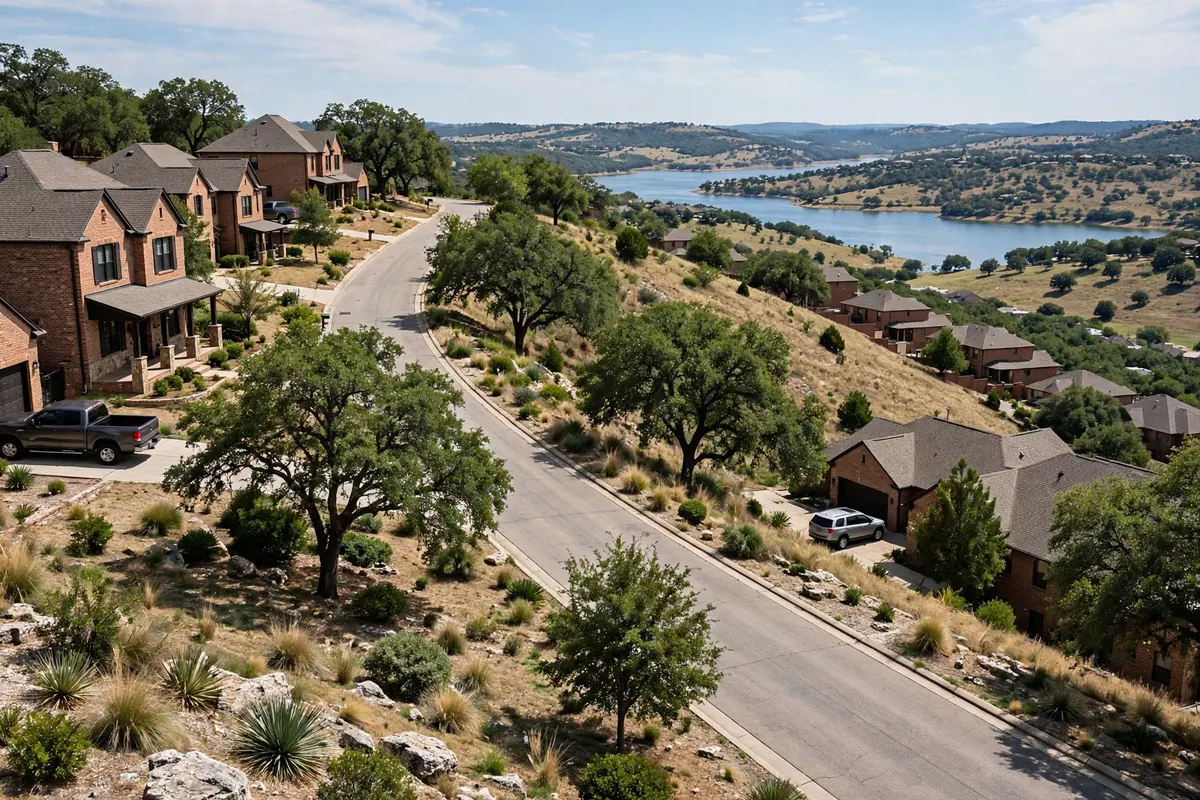
Rockwall sits about twenty-six miles east of Plano, across Lake Ray Hubbard, and it is the county seat of Rockwall County, the smallest county in Texas by area. The Harbor Rockwall district overlooks the lake with waterfront dining and a marina, downtown Rockwall holds the historic square, and the neighborhoods run from gated lakefront estates in Chandlers Landing to the master-planned streets of Woodbridge and the Shores. The ground is lake shore clay with sandier ridges, and the slopes toward the water decide how a slab moves.
Last updated November 24, 2026
Rockwall grew slowly until the 1970s, when the construction of Lake Ray Hubbard turned the city into a lakefront destination and set off residential growth that continues today. The lake holds more than seventy miles of shoreline, and the city sits on its eastern shore, with I-30 running east and west through the middle of town and Goliad Street, TX 205, running north and south through the heart of the city. Ridge Road winds along the western edge near the lake and leads into the Harbor District, and Harry Myers Park, with disc golf, nature trails, a playground, and a spray ground, sits near the center of town. Rockwall ISD is one of the most highly rated districts in Texas, and it is a large part of why families cross the lake to live here. Homeowners just over the line in Rowlett, TX and Forney, TX get the same inspection and the same crew, and each town has its own page with local soil and ZIP details.
Rockwall stands on lake shore ground, clay with sandier ridges, over the same Blackland Prairie and Austin Chalk geology that underlies the east side of the metro. The clay swells when it soaks up rain and shrinks hard in a dry summer, and a rigid concrete slab has to ride that movement. On a hillside lot the effect is uneven, because water runs to the low side of the house and the clay there stays wet longer, while the high side dries first, so the slab twists a little with each season. Our guide to why Plano's clay soil cracks foundations explains the clay behavior, and the lake shore adds its own twist, because the ground near the water holds moisture longer after rain.
The slopes are the other half of the Rockwall story. Homes in Chandlers Landing, the Shores, and the Harbor area sit on hillsides above the lake, and the grade that gives them their views also sends water toward the house. A driveway that runs downhill, a patio that slopes toward the wall, or a low corner of the yard can all soak the clay under one side of the slab, while the high side bakes in the sun. Our guide to how drainage protects a foundation covers the grading and gutter habits that keep that cycle gentle, and drainage correction is often the first work we do before any piers go in.
The lake itself changes the ground near the shore. Soils close to Lake Ray Hubbard run sandier and drain faster, while the inland neighborhoods hold heavier clay, and homes near the water may sit on ground that was graded and filled when the lake was built. That mix is what makes readings matter: the soil under one end of a house can behave differently from the soil under the other end, and the movement shows up as a crack that runs across the house. A foundation inspection with floor elevation readings shows that pattern clearly.
In the lakefront neighborhoods, the first signs are usually on the downhill side of the house. A stair-step crack in the brick mortar below a window, a gap where the baseboard has pulled away from the wall, or a door that sticks on the lake side of the house are the usual calls. Because the ground slopes toward the water, the low side of the slab stays wet longer and swells, while the high side dries and drops, so the slab tilts toward the lake. Our post on signs your home's foundation is moving covers the same signs we look for on a Rockwall inspection.
In the master-planned neighborhoods inland, such as Woodbridge, Stone Creek, and the Cascades, the signs look more like the rest of the metro: diagonal cracks above doors and windows, floors that slope toward the low corner, and separation where a chimney meets the house. These homes were built on ground that was graded for the subdivision, and where a slab crosses from undisturbed clay onto engineered fill, the two sides settle at different rates. Our post on how to tell if a foundation crack is serious walks through the checks we use, including a monitoring gauge that shows whether a crack is still moving.
Water signs matter in Rockwall too. A damp spot on a ground-floor slab, a musty smell in a lower level, or a patio that holds water against the wall can point to a leak or to poor drainage, and both soften the clay under the slab. A water leak under a slab is worth ruling out before any piers are planned, because a repair that ignores a leak will not hold, and foundation crack repair includes sealing and monitoring so the crack can be watched over time.
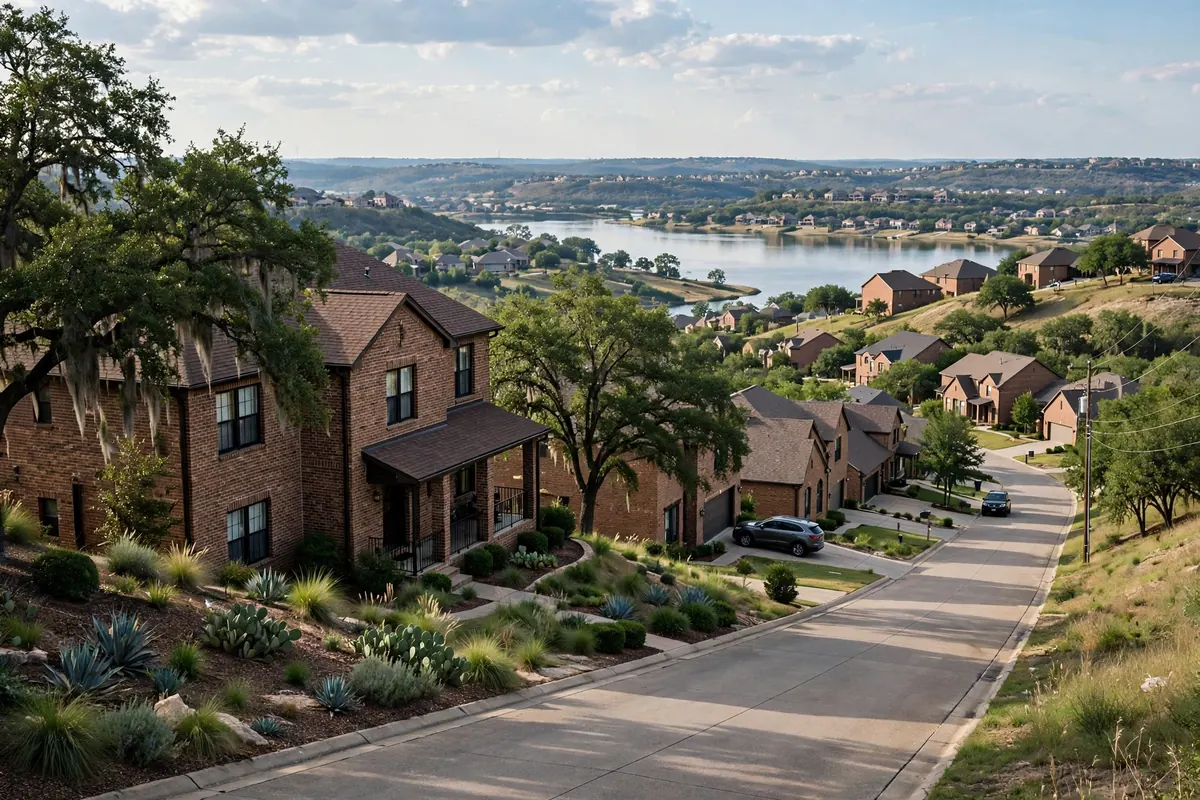
Work in Rockwall starts with a foundation inspection. We take floor elevation readings room by room, check doors, windows, and floors, and walk the outside of the house, including the slope, the grade, and the way water leaves the roof. On a hillside lot that walk takes longer, because the ground around the house is part of the diagnosis, and the written plan that follows names the piers, the drainage work, and the order of the job. Our post on what a foundation inspection covers describes the same steps, so you know what to expect before we arrive.
For a settled slab, steel pier installation is the standard repair. Piers are driven beside the footing down to load-bearing soil, bracketed to the slab edge, and the house is lifted in small increments while we watch the readings. Concrete slab foundation repair covers the full job, and where a driveway or patio has sunk, concrete lifting and leveling raises it so water drains away from the house instead of toward it. Some Rockwall homes are large custom builds on acreage, such as the estates along Anna Cade Road, and those get the same piers, with the plan sized for the house.
After the piers are in, the yard is put back. Excavations are dug by hand, the soil is set aside and returned, and the lawn and beds near the work are restored. Access is planned before the work starts, because hillside lots and gated communities such as Chandlers Landing and the Gates of Rockwall have their own entry rules, and the equipment is staged to keep driveways and shared walks clear. Our methods guide, Foundation Repair Methods Explained, compares piers, pilings, and foam in plain language, and it is the same comparison we talk through with Rockwall homeowners before any work is agreed.
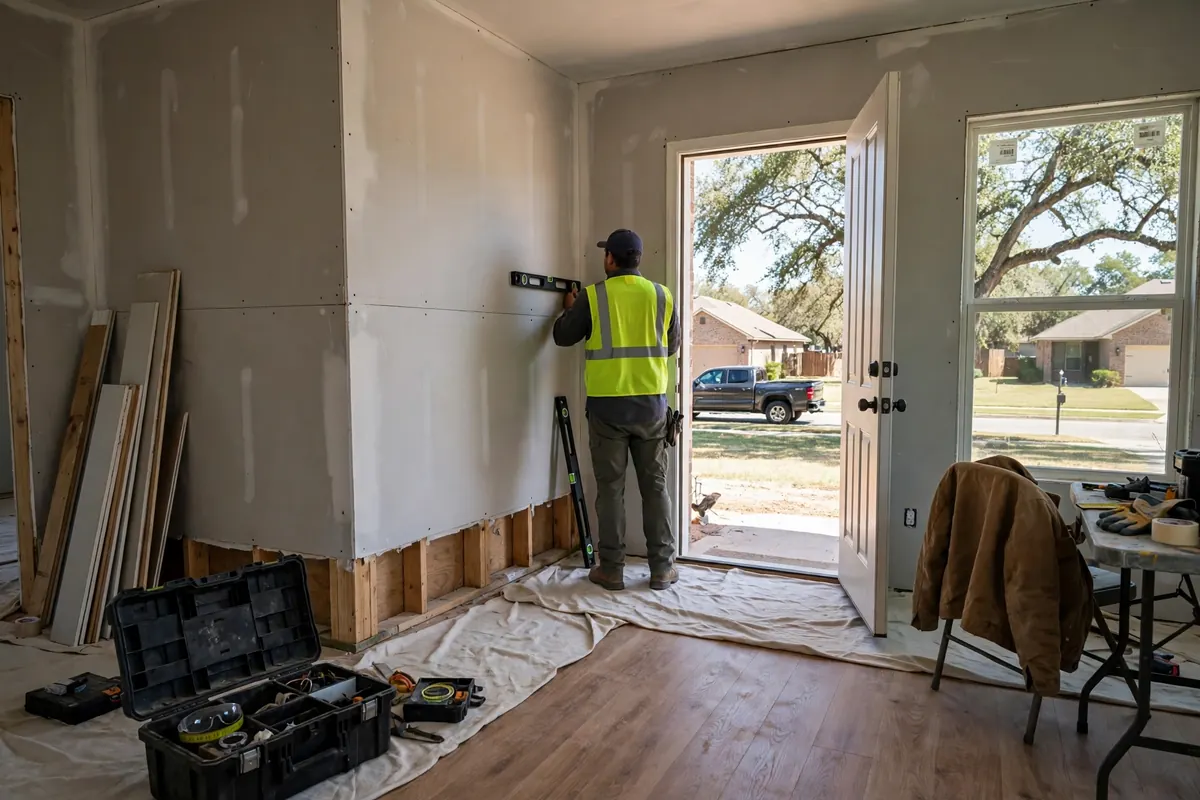
A Rockwall inspection begins with floor elevation readings and a careful walk around the outside of the house, including the slope toward the lake, so the plan is built on measurements rather than a guess.
Rockwall is served by two ZIP codes, 75032 and 75087, and the table below lists them with the part of town each one covers. The 75087 ZIP covers the northern and central sections, including historic downtown Rockwall, the Shores, and Northshore, while 75032 covers the southeastern and southern portions, including Chandlers Landing, Terrabella, and High Point Lake Estates. The ZIP on your mail follows the postal route, not the city line, so check the address rather than the ZIP alone.
Chandlers Landing is the gated lakefront community on the south side, with homes right along Lake Ray Hubbard. The Shores is the golf course community on the north side, with eighteen holes and tennis, and the Gates of Rockwall is the other gated golf community. Stonebridge is the established neighborhood near the center of town, Woodbridge is the master-planned community with a pool, and the Cascades holds resort-style amenities. The Harbor Rockwall district, on the lake shore, holds the waterfront dining, shopping, marina, and walking trails, and downtown Rockwall holds the historic buildings, live music, and farmers markets.
| ZIP code | Area |
|---|---|
| 75087 | Northern and central Rockwall, including downtown, the Shores, and Northshore |
| 75032 | Southeastern and southern Rockwall, including Chandlers Landing and High Point Lake Estates |
Rockwall uses 75087 for the northern and central sections, including downtown and the Shores, and 75032 for the southeastern and southern portions, including Chandlers Landing. The ZIP follows the postal route, so check the address. Give the full street address when you call, since the ZIP alone does not always settle which part of Rockwall a home sits in.
The repair is the same steel piers, but the plan is different, because hillside lots send water toward the low side of the house and the ground near the shore holds moisture longer. Drainage work is usually part of a lakefront repair.
Water is the reason. The lake keeps the ground wet, slopes send rain toward the house, and the clay swells when wet and shrinks when dry, so one side of a slab moves more than the other. The ground near the shore also drains differently from lot to lot, so one home can sit on wet clay while its neighbor sits on ground that dries out fast.
Excavations are dug by hand beside the footing, and the crew works around beds and trees where possible. The soil is set aside and put back when the piers are in, and the yard is restored as part of the job.
They do, because the water is different on each side of town. Chandlers Landing is the gated lakefront community on the south side, where the ground stays damper and washout near the shore is the bigger worry. The Shores sit higher on drier clay that shrinks in summer. Both need even moisture, and an inspection checks the whole perimeter of the home.
We work across the towns around Plano, so if your home sits just over the line from Rockwall, the same crew and the same inspection process cover it. These nearby service areas each have their own page with local soil, housing, and ZIP details.
Call (972) 430-3826 or send an email, and we will set up a foundation inspection for your Rockwall home.
Book a Foundation Inspection1 Call or email2 Inspection and readings3 Written repair plan