Foundation Repair in Allen, TX
Allen sits just south and west of Fairview, with newer subdivisions on the same Collin County clay.
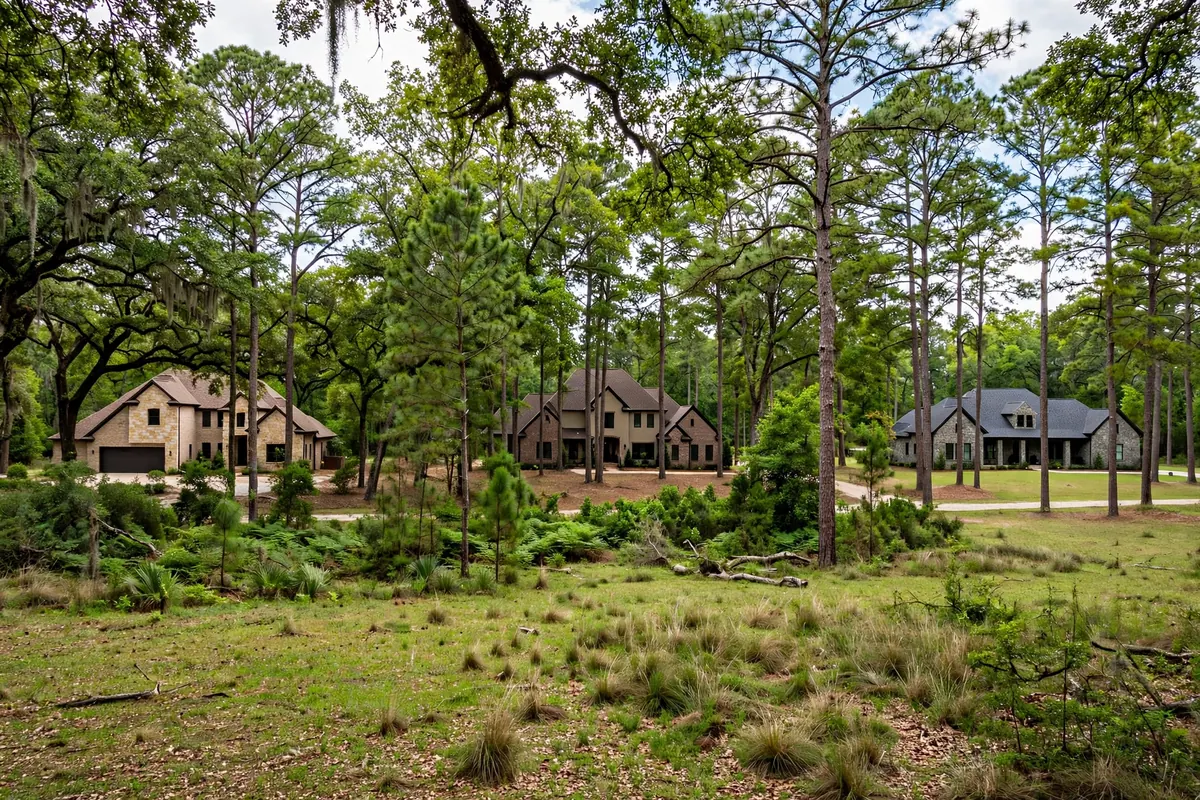
Fairview sits about twelve miles north of Plano, between Allen and McKinney, and it is a town of acre lots and custom homes. Most of the town is zoned for one acre and two acre Ranch Estate homesites, and the interior is almost entirely residential, with horse properties, wooded lots, and custom estates. The ground is the same expansive Blackland Prairie clay found across Collin County, and on a large lot it moves unevenly, one corner at a time.
Last updated November 24, 2026
Fairview covers about nine square miles in central Collin County, bordered by McKinney to the north, Allen to the west and south, and Lucas to the southeast. US 75 runs along the west side of town, State Highway 5 runs along the east, and Stacy Road crosses through the middle, past Fairview Town Center and the Village at Fairview. The Heard Natural Science Museum and Wildlife Sanctuary, 289 acres of trails and native habitat, sits just next to town. Most Fairview homes carry a McKinney 75069 or Allen 75002 mailing address, so the town is easy to miss in a search by city name, and the address matters more than the ZIP. Homeowners just over the line in McKinney, TX and Lucas, TX get the same inspection and the same crew, and each town has its own page with local soil and ZIP details.
Fairview is a town of two very different housing patterns, and the foundation work follows the pattern. The Ranch Estate interior, which covers most of the town, holds custom homes on one acre and two acre lots, built from the 1980s through the 2020s, with horse properties along Country Club Road and older acreage tracts on Stoddard Road, Orr Road, and SH 5. The other pattern is Heritage Ranch, the gated golf community east of FM 1378, with about 1,022 homes and 122 villas on small lots around an Arthur Hills course, built from 1999 onward. A slab on a two acre lot and a slab in a golf villa behave differently, because the first crosses a wide stretch of soil and the second sits close to its neighbors, and the inspection has to match the house.
The ground under both patterns is Houston Black clay and related expansive soils, with Heiden clay mapped across much of central Collin County. This clay swells when it soaks up rain and shrinks hard in a dry summer, and a rigid concrete slab has to ride that movement. On a Ranch Estate lot the effect is uneven, because one corner of a house may sit over clay that stays damp under a grove of trees while another corner bakes in open sun, so the slab twists a little with each season. Our guide to why Plano's clay soil cracks foundations explains the same soil behavior in plain language, and it applies to Fairview just as it does to Plano.
The trees and the horses are part of the Fairview story. The town's wooded lots hold mature oaks, pecans, and cedars, and those trees pull water from the soil all summer, so the side of a house nearest a grove dries first and drops first. Horse properties add their own pattern, with long driveways, paddocks, and outbuildings that change how water moves across the lot. Our post on tree roots and your foundation covers how to tell whether a tree is part of the problem, and when a root barrier is worth adding.
On a Ranch Estate lot, the signs usually show up at the far end of the house first. A long slab spans a wide stretch of soil, and when one end settles, the crack appears at that end: a stair-step crack in the brick below a window, a diagonal crack above a door, or a gap where the baseboard has pulled from the wall. Doors that stick in August and swing easily after rain, windows that need a push to latch, and floors that slope enough to feel underfoot are the next stage, and they usually mean one part of the slab has moved more than the rest.
In Heritage Ranch, the signs look different. The villas and homes there sit on small lots, close together, around the golf course, and the ground was graded for the community, so the movement is often shared: a crack in your living room may line up with a crack in the home next door, and that shared pattern points to movement under the whole street rather than one house. The community's rules also matter, because the homeowners association has a say in exterior work, and the plan is written so it can be shared. Our post on signs your home's foundation is moving covers the same signs we look for on a Fairview inspection.
A crack on a Fairview home deserves a measured answer rather than a guess, because an acre lot gives the slab room to twist. A crack wider than about a quarter inch, a crack that keeps growing, or a crack that runs through brick and mortar together should be measured and watched, not just patched. Foundation crack repair includes a monitoring step, so we can tell whether the crack is stable or still moving, and our post on how to tell if a foundation crack is serious walks through the same checks we use on an inspection. If the readings show the slab is still moving, piers are the repair that pins it to stable soil.
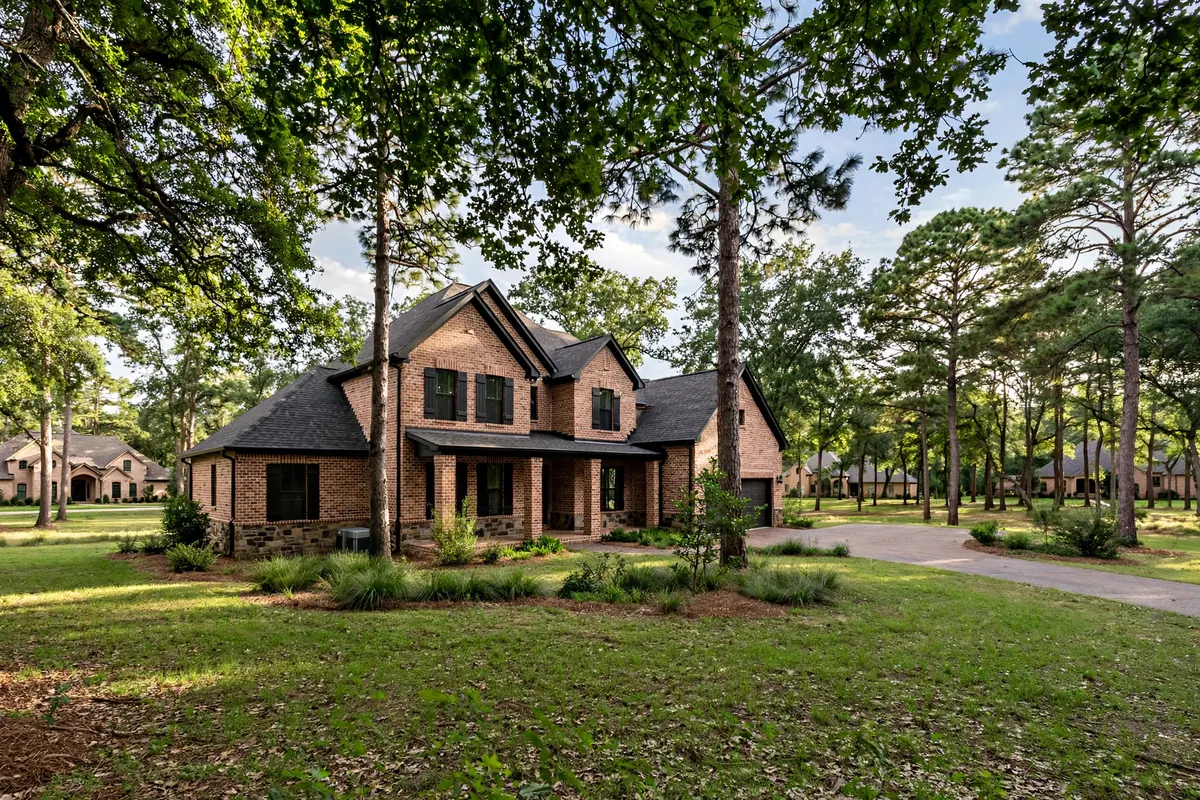
Every Fairview job starts with a foundation inspection, and on a large lot that inspection takes longer, because the ground around the house is part of the diagnosis. We take floor elevation readings room by room, walk the outside of the house looking at brick, mortar, and grade, and note the trees, the driveway, and the way water leaves the roof. The readings go on a simple floor plan sketch, so you can see which corners are high and which are low, and the written plan that follows names the piers, the drainage work, and the order of the work, with nothing hidden.
For a settled slab, steel pier installation is the usual repair. Piers are driven beside the footing down to load-bearing soil or rock, bracketed to the slab edge, and the home is lifted in small increments while we watch the elevation readings. concrete slab foundation repair covers the full job, from the first excavation to the final backfill and yard restoration, and house leveling and lifting is the part of the work where floors come back toward level. The wide lawns of a Ranch Estate lot give the crew room to stage equipment away from the house, while a Heritage Ranch villa needs the work planned around the shared drives and the community rules.
Water work keeps a Fairview repair holding. Drainage correction re-grades soil away from the house, extends downspouts, and adds French drains where water collects, which matters on a lot where a long driveway can send water toward the house. soil stabilization treats the clay itself where it swells and shrinks the most, and older Fairview homes on raised floors get pier and beam foundation repair instead, with new footings, shims, and beams under the house. Our methods guide, Foundation Repair Methods Explained, compares piers, pilings, and foam in plain language, and it is the same comparison we talk through with Fairview homeowners before any work is agreed.
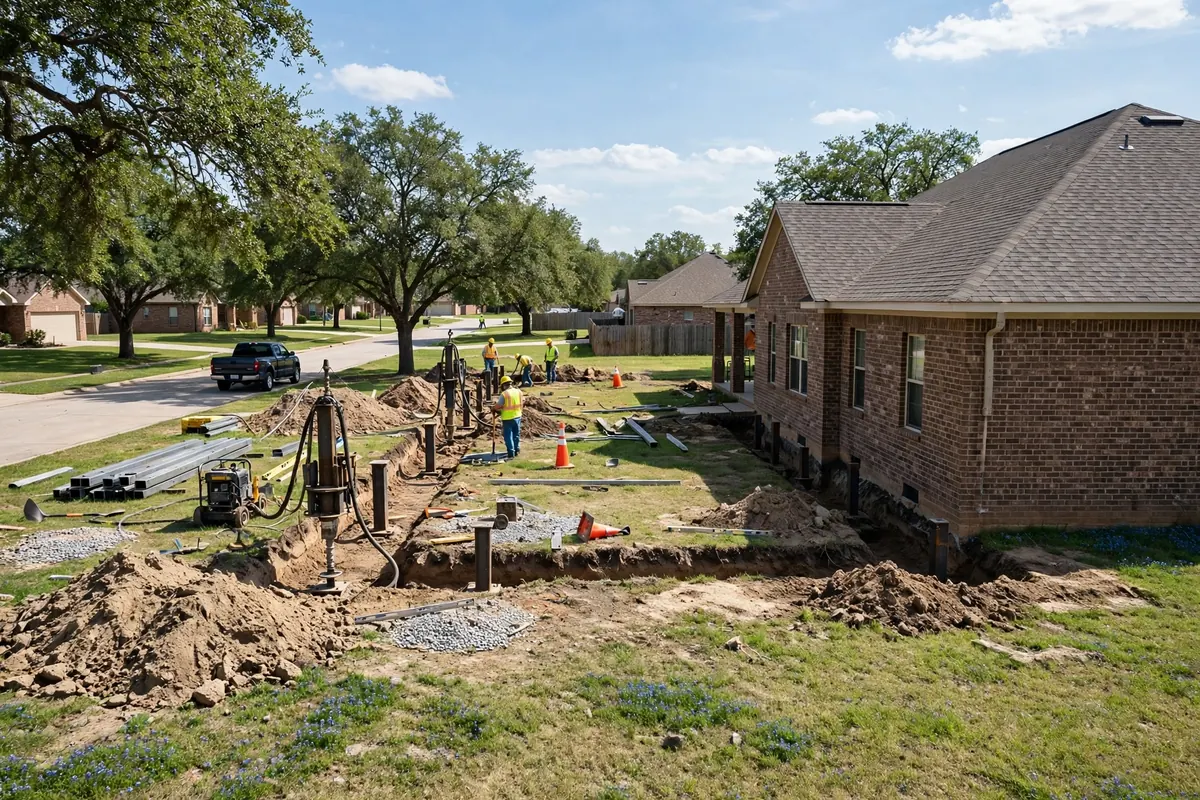
An inspection in Fairview starts with floor elevation readings and a walk around the outside of your home, including the long driveway and the trees, so you get a written plan based on measurements.
Most Fairview homes carry the 75069 ZIP code, the same ZIP that covers much of McKinney, and some on the south side carry an Allen 75002 mailing address. The ZIP on your mail follows the postal route, not the town line, so a Fairview home can list as McKinney or Allen, and the table below lists the ZIP codes with the part of town each one covers. Check the address rather than the ZIP alone when you are confirming a service area.
Heritage Ranch is the town's largest community, a gated golf course neighborhood east of FM 1378 with about 1,022 homes and 122 villas around an Arthur Hills course. The Ranch Estate interior holds the acre-lot subdivisions: Oakwood Estates, the town's largest one acre subdivision with 150 homes known for tree cover; River Oaks, one of the first major developments, with 97 homes on Creekwood Drive and Timberwood Lane; Tranquility Farms, 46 custom homes around a neighborhood lake and greenbelt; Chamberlain Place, 41 one acre homes built from 2017 to 2025; and Hawks Wood, a wooded estate pocket. Smaller townhome and villa pockets, such as Villas in the Park and the Village of Fairview, sit on the west side near the commercial corridor.
| ZIP code | Area |
|---|---|
| 75069 | Most of Fairview, including Heritage Ranch, Oakwood Estates, and the Ranch Estate interior |
| 75002 | Southern Fairview, where some homes carry an Allen mailing address |
Walk the outside of the house and look for stair-step cracks in the brick, doors and windows that stick, floors that slope, and gaps where the baseboard has pulled from the wall. One sign alone may be minor, but two or three together, or a crack that keeps growing, call for an inspection with floor elevation readings.
Yes. Fairview sits on Houston Black clay and related expansive soils, the same ground that moves under Plano homes. The clay swells in wet weather and shrinks in drought, and large trees and uneven watering make the movement worse on one side of a house than the other.
Yes. Many Fairview homes carry a McKinney 75069 or Allen 75002 mailing address, because the ZIP follows the postal route rather than the town line. We serve by address, not by the city name on the envelope. The same thing happens with Allen mailing addresses in Fairview, and it changes nothing about the inspection or the repair plan.
Excavations are dug by hand beside the footing, and the crew works around root zones where possible. The soil is set aside and put back when the piers are in, and the yard is restored as part of the job.
The care is the same, but the water is not. Heritage Ranch sits around a golf course east of FM 1378, and fairway irrigation keeps one side of the ground wetter than the other. That uneven moisture can drop the dry side of a home while the wet side holds. An inspection checks the moisture balance around the whole perimeter, not just the side with the cracks.
We work across the towns around Plano, so if your home sits just over the line from Fairview, the same crew and the same inspection process cover it. These nearby service areas each have their own page with local soil, housing, and ZIP details.
Call (972) 430-3826 or send an email, and we will set up a foundation inspection for your Fairview home.
Book a Foundation Inspection1 Call or email2 Inspection and readings3 Written repair plan