A crack is serious when it is wide, growing, or showing up alongside other signs of movement like sticking doors and sloping floors. A single thin hairline crack that has not changed in a year is usually just the house settling, while a stair-step crack in brick or a crack that keeps widening points at the foundation itself.
By Plano Foundation Repair · Last updated November 24, 2026
The difference is in the details, and this guide teaches you to read them. You will learn which crack shapes matter, how to measure a crack at home, and when to stop watching and book an inspection.
Hairline cracks that usually stay quiet
Hairline cracks are the thin lines, often no wider than a credit card edge, that appear in drywall above doors and windows as a house ages. They come from the wood framing drying out, the house settling into its soil, and the normal flex of a home through hot and cold seasons. One or two of them, stable over a year or more, are part of normal life in a Plano house and are not a reason to worry.
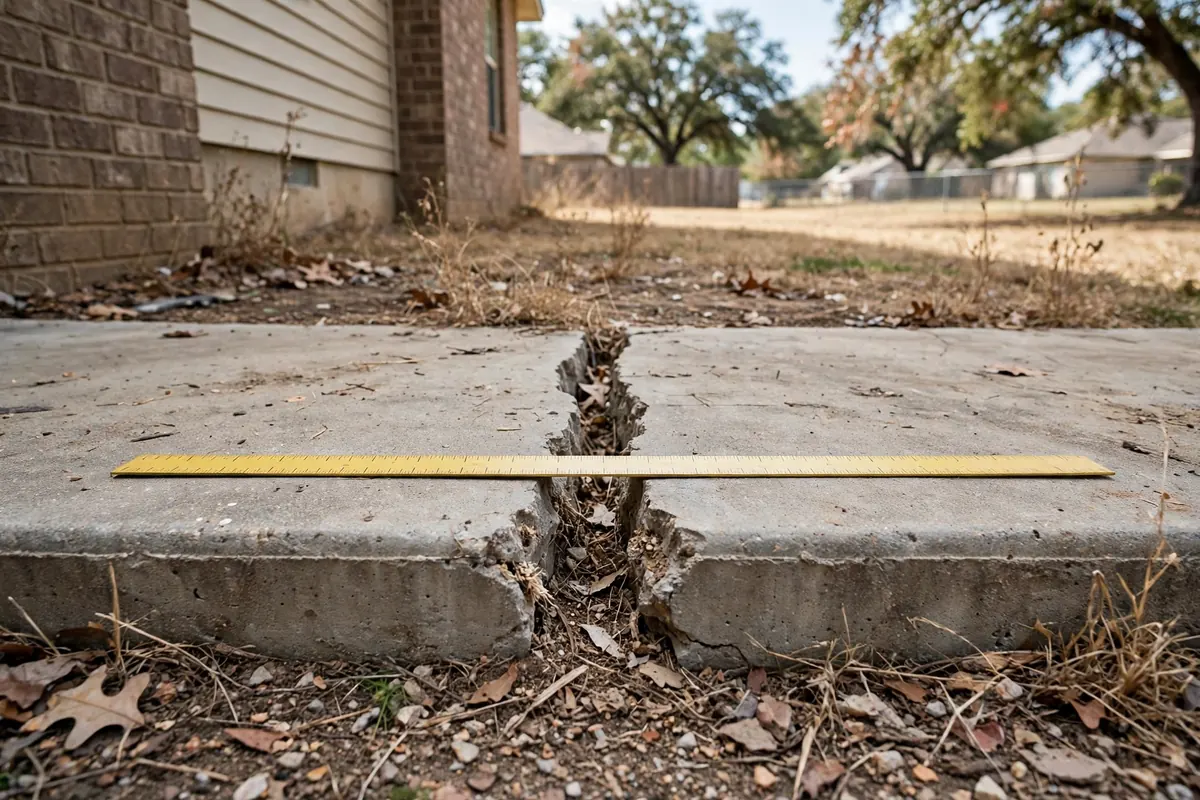
The same goes for thin cracks in a garage floor or a driveway slab. Concrete shrinks as it cures, and the sun and heat of a Texas summer open small cracks in flatwork that carries no structural load. A hairline crack in a porch slab or a sidewalk tells you about the concrete, not about the foundation under the house. Signs your Plano home's foundation is moving lists the other signs to check alongside a crack, because a crack on its own rarely tells the whole story.
The test for a quiet crack is simple: measure it, photograph it, and check it again in a month. If it has not moved, it is almost certainly stable. If it has grown, it moves into the next category in this guide.
Stair-step cracks in brick and what they point to
A stair-step crack follows the mortar joints in a brick wall, stepping up or down like a staircase, and it is the crack shape most closely tied to foundation movement in Plano. It forms when one section of the foundation drops or lifts relative to the section beside it, and the brickwork, which cannot bend, breaks along its weakest lines. The steps usually run from a window or door corner toward the roofline or toward the ground.
A short stair-step crack with tight joints may have formed years ago and stopped, but a crack wider than a quarter inch, or one that runs the full height of a wall, deserves attention. Look at the same crack from inside the house, because a brick crack on the outside often has a matching drywall crack on the inside, and the pair together is a stronger signal than either one alone. Foundation crack repair covers how cracks like these are sealed and watched once the cause is known.
Check the corners of the house as well. Cracks that start at the corners and run diagonally, or cracks that appear on two walls meeting at the same corner, often point at movement under that corner of the house. That corner is where an inspector will take extra readings.
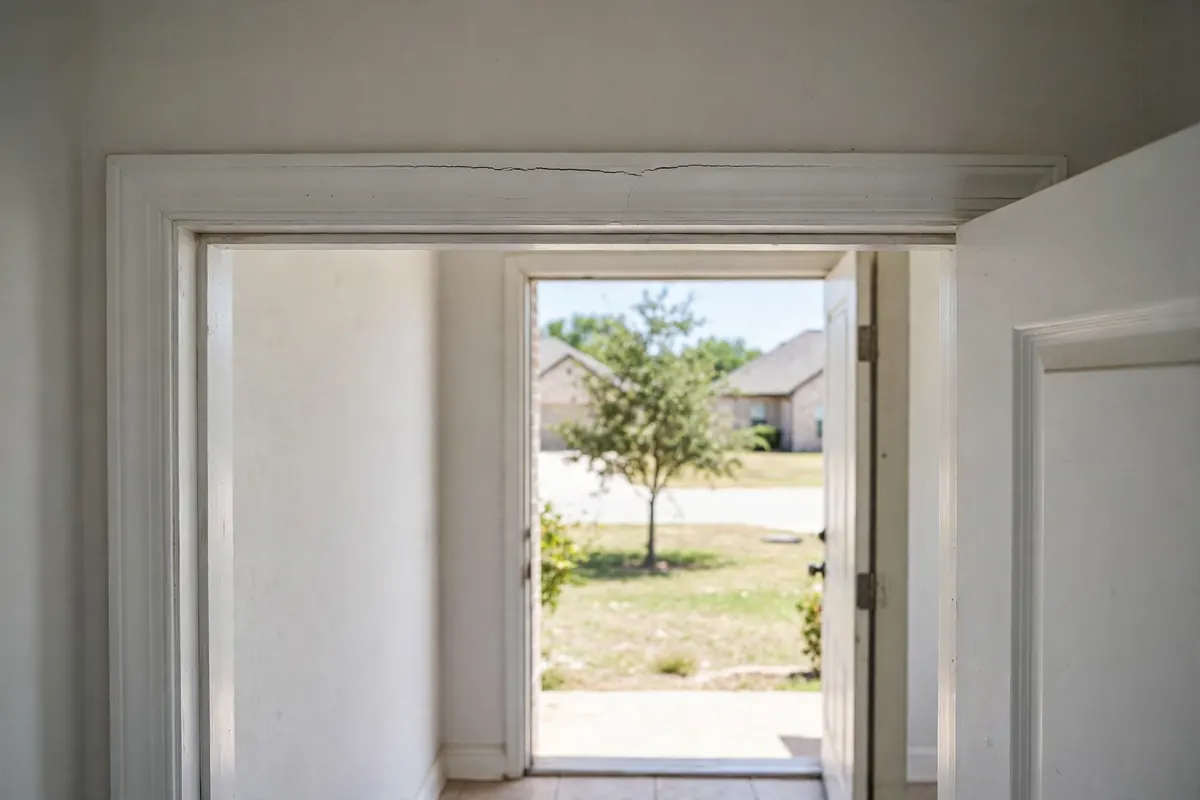
A closer look. Hairline drywall crack above a door frame inside a home.
Wide cracks, leaning walls, and other red flags
Width is the clearest single measure of a crack. A crack wider than about a quarter inch, wide enough to fit a pencil into, is past the hairline stage and should be looked at by a professional. A crack that is wider at one end than the other is also a red flag, because it shows that one side of the crack is moving away from the other side, not just opening evenly.
Other red flags travel with serious cracks. A wall that leans or bows, a chimney that pulls away from the house, a floor that slopes sharply toward one wall, or a door that will not close at all are all signs that the movement is active and structural. Water coming through a foundation crack is another one, because it means the crack runs through the wall and the soil outside is wet against it. If you see any of these, do not wait for the next season to see what happens. What happens if you ignore foundation problems? describes how active movement develops when it is left alone.
Sudden cracks after rain or drought
A crack that appears suddenly after a heavy rain or a long drought is also worth a fast call. Sudden changes usually mean the soil under one part of the house has moved quickly, and quick movement is the kind that keeps going.
Not sure what you are seeing?
An inspection measures the floors and the brick, so you get readings and a written plan instead of guesses. Call (972) 430-3826 or book an inspection.
Measuring a crack at home without guessing
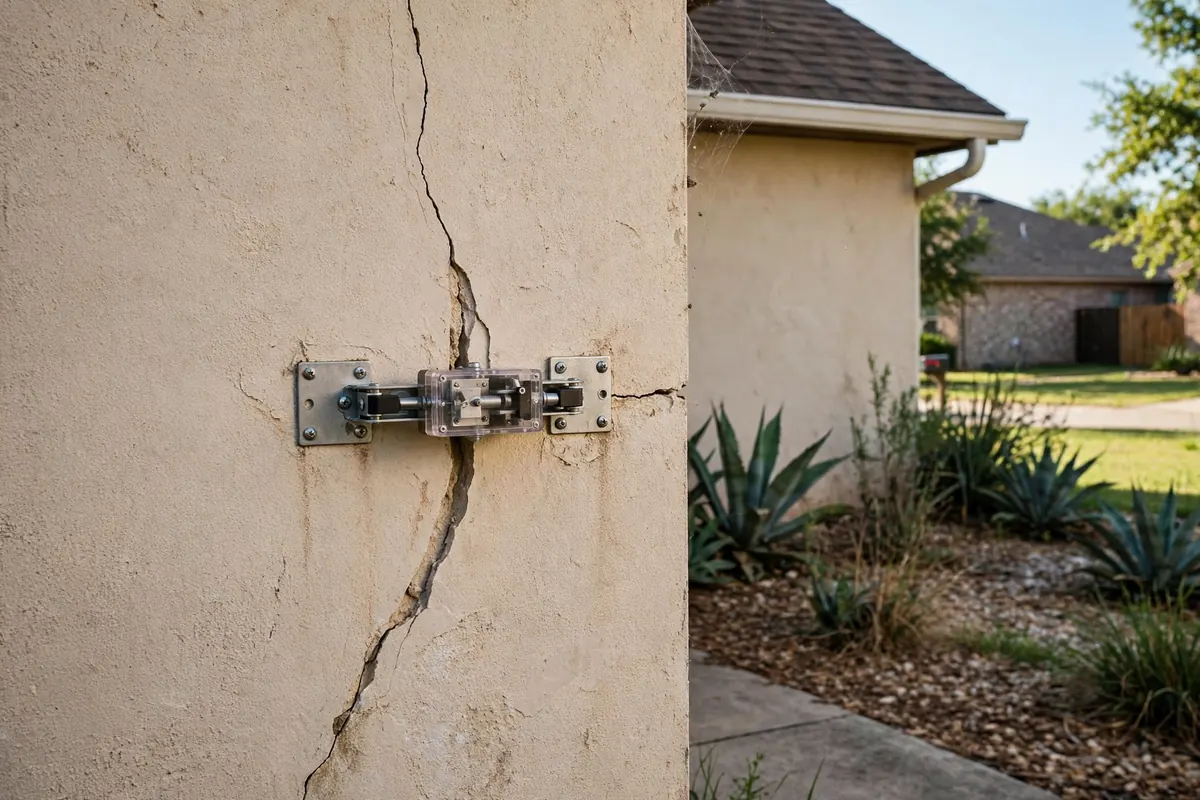
You do not need special tools to measure a crack well. A ruler or a coin gives you the width, and a photo with the coin beside the crack gives you a record you can compare later. Mark the ends of the crack lightly with a pencil, write the date beside the marks, and measure the width at the widest point. A crack gauge, a small plastic plate that sticks across the crack, does the same job more precisely and costs little, and it shows movement at a glance.
Check the crack once a month and write down what you find. A crack that holds the same width for six months is stable, and a crack that grows by even a sixteenth of an inch in a month is active. Note the weather as well, because a crack that opens in a dry August and closes in a wet October is reacting to the clay cycle, and that pattern helps the inspector understand the soil. Foundation inspection turns those home measurements into a full elevation map of the house.
Keep your notes in one place, a phone note or a sheet of paper taped inside a closet, so the record builds over time. When the inspector arrives, that record is the first thing they will want to see, because it shows whether the movement is old and settled or new and active.
Crack types and what to do about each
Crack you see
What it usually means
What to do
Hairline drywall crack
Normal settling and drying
Measure it, check again in a month
Thin garage floor crack
Concrete curing and heat
Watch it, note any change
Stair-step crack in brick
One section of foundation moving
Book an inspection
Crack wider than a quarter inch
Structural movement
Book an inspection soon
Crack growing month by month
Movement still active
Call soon, do not wait
What it looks like. Crack monitoring gauge mounted across a wall crack.
When a crack calls for an inspection this week
Book an inspection soon when a crack is wide, growing, or paired with other signs. That means a crack wider than a quarter inch, a crack that has grown since you last measured it, a stair-step crack running the full height of a wall, or any crack that appears with sticking doors, sloping floors, or gaps at the baseboards. Those combinations point at active movement, and active movement is best measured while it is happening.
An inspection is also the right step when you are buying or selling a house with a crack, because a written report with elevation readings answers the questions a buyer, a seller, and an agent will all ask. Buying a home in Plano: how to check the foundation first covers the buyer side, and selling a home with foundation problems in Plano covers the seller side. In both cases the inspection report replaces argument with measurements.
Questions from homeowners who just found a crack
Three questions Plano homeowners ask us most, answered in plain words.
?
Should I fill a foundation crack myself?
Filling a crack with caulk or epoxy can keep water out, but it does not fix the movement that opened the crack, and it can hide the clues an inspector needs. Measure and record the crack first, get the cause checked, and then seal it as part of the repair plan.
?
Do all brick cracks mean the foundation is failing?
No. Brick can crack from heat, from a lintel rusting over a window, or from a small settlement that stopped years ago. The cracks that point at the foundation are the stair-step kind, the wide ones, and the ones that keep growing or appear with other signs.
?
How fast can a serious crack get worse?
It depends on the soil and the water around the house. A crack fed by a plumbing leak or a broken downspout can widen in weeks, while a crack from a slow drought cycle may take a season to change. Measuring monthly is the only way to know the pace in your house.
Related guides
More reading on the same ground, written for Plano homeowners.