Ignoring foundation problems does not freeze them in place. Clay keeps moving with the seasons, small cracks widen, doors stick worse, and a repair that was once simple can grow into a much larger job.
By Plano Foundation Repair · Last updated November 24, 2026
Every foundation problem starts small. A hairline crack above a door, a window that sticks in August, a floor that slopes so slightly you only notice it when a ball rolls. It is easy to look at those signs and decide to wait, and for a while waiting feels harmless, because the house still stands and the crack still looks small. The trouble is that the clay under a Plano home does not wait with you. It swells in the wet spring, shrinks in the dry summer, and moves the slab a little more with each cycle, and the signs that were small last year are a little larger this year. This guide walks through what happens over time when foundation problems are left alone, from the first year to the point where a simple repair turns into a major one, so you can judge for yourself when waiting stops being sensible. A foundation inspection with floor readings is the way to find out where your house stands on that timeline.
What happens in the first year after a crack appears
In the first year, the changes are small and easy to miss. A hairline crack opens above a door frame or in the brick near a corner, and it may narrow again when the rain returns. A door sticks in late summer and eases off in autumn. The floor slopes so slightly that only a marble or a ball would show it. The house is still sound, and the problem is still small, which is why the first year is the best time to get readings: the movement is at its earliest, the cause is easiest to see, and the fix is usually the simplest it will ever be.
Even in that first year, though, the clay is setting a pattern. The corner that settled once will settle a little more each dry season, because the soil there has already lost its support and the slab has already bent. A guide to telling whether a foundation crack is serious explains how to read a new crack, and a guide to the signs of a moving foundation covers the full list of early clues. The honest summary of the first year is this: nothing terrible has happened yet, and the house is telling you, quietly, that something has started.
How doors, floors, and walls change as movement continues
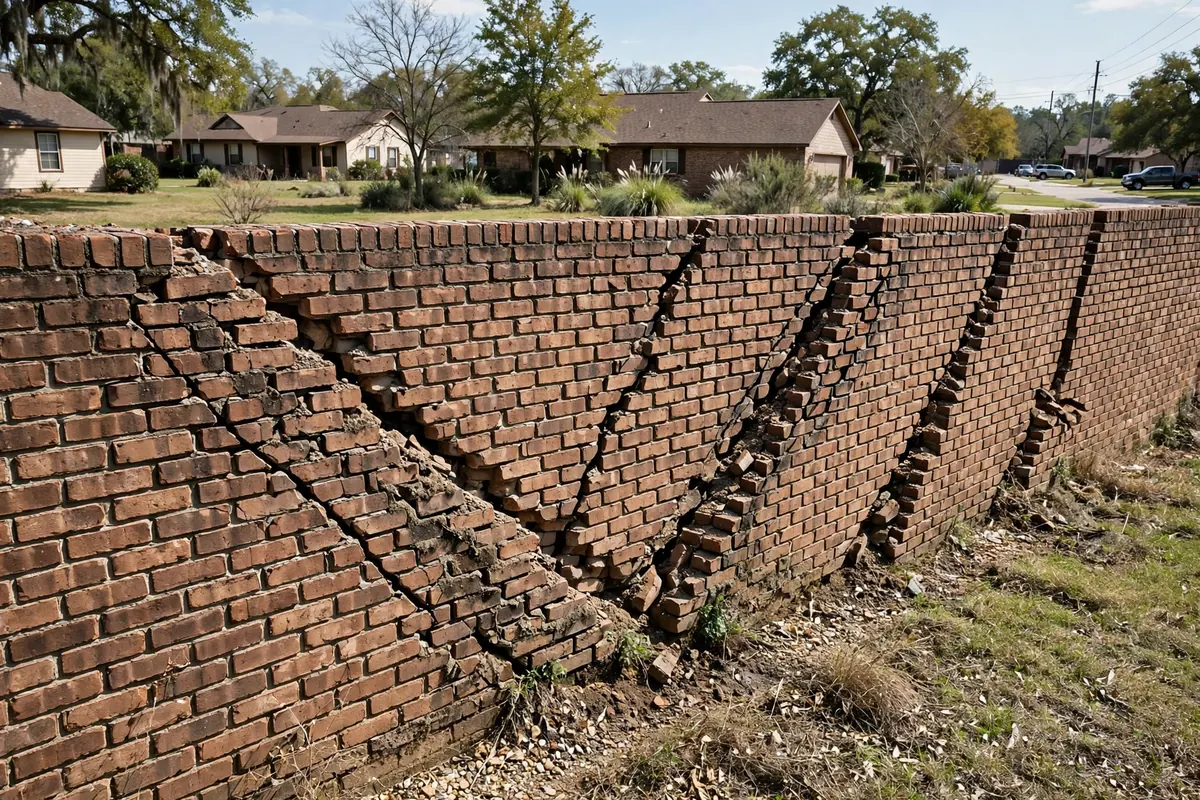
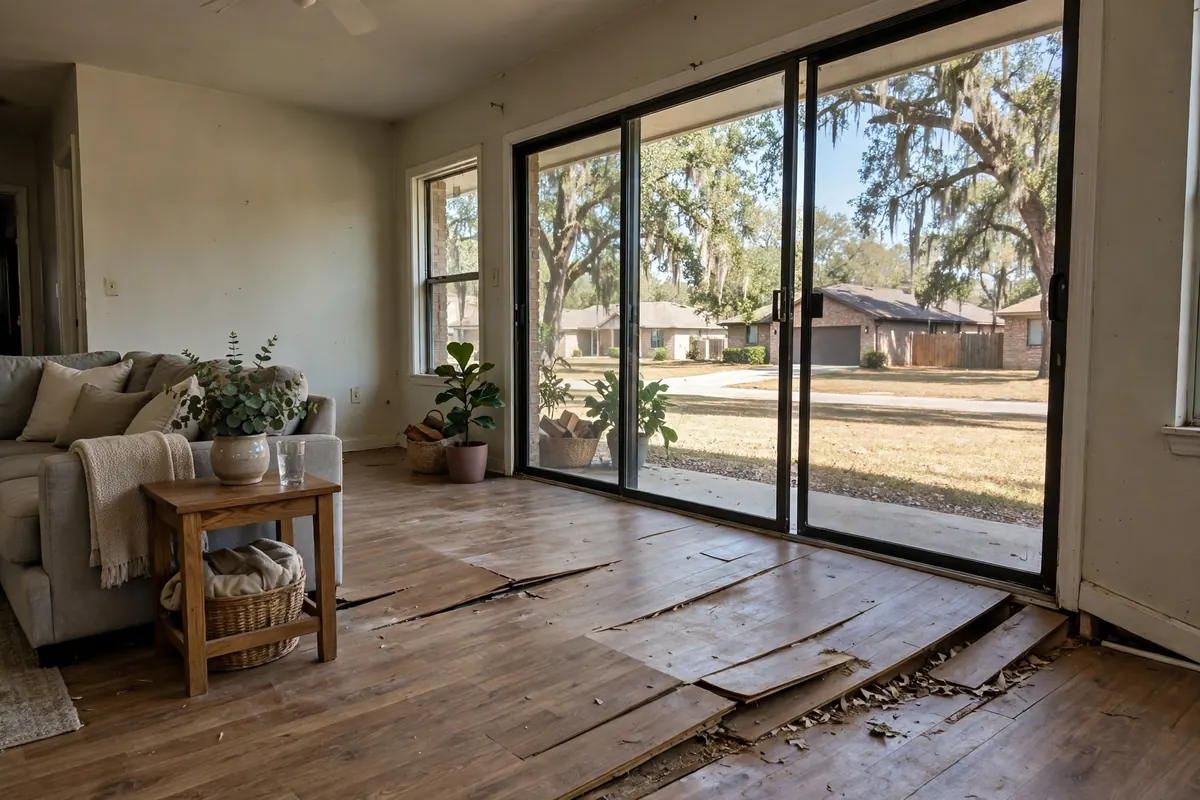
As the seasons pass, the small signs grow into daily annoyances. Doors that stuck only in August now stick all year, and some will not latch at all. Windows bind in their frames, and a window that once opened with one hand now needs two. The floor slope that only a ball could show becomes a slope you can feel when you walk across the room, and furniture that once sat level now needs a shim under one leg. Cracks that were hairline widen, and new cracks open beside them, in the brick outside and the drywall inside.
The walls tell the same story in their own way. A gap opens where the wall meets the ceiling, the baseboard pulls away from the wall, and the trim around a door frame separates at the corners. In the kitchen, a countertop can pull away from the wall, and in the bathroom, tile can crack along a line where the floor has dropped. None of these changes happens in a single day, which is why they are easy to get used to, one small change at a time, until the house feels different from the one you moved into. A guide to foundation problems and home value explains how these visible signs affect a sale, and why buyers notice them even when owners have stopped seeing them.
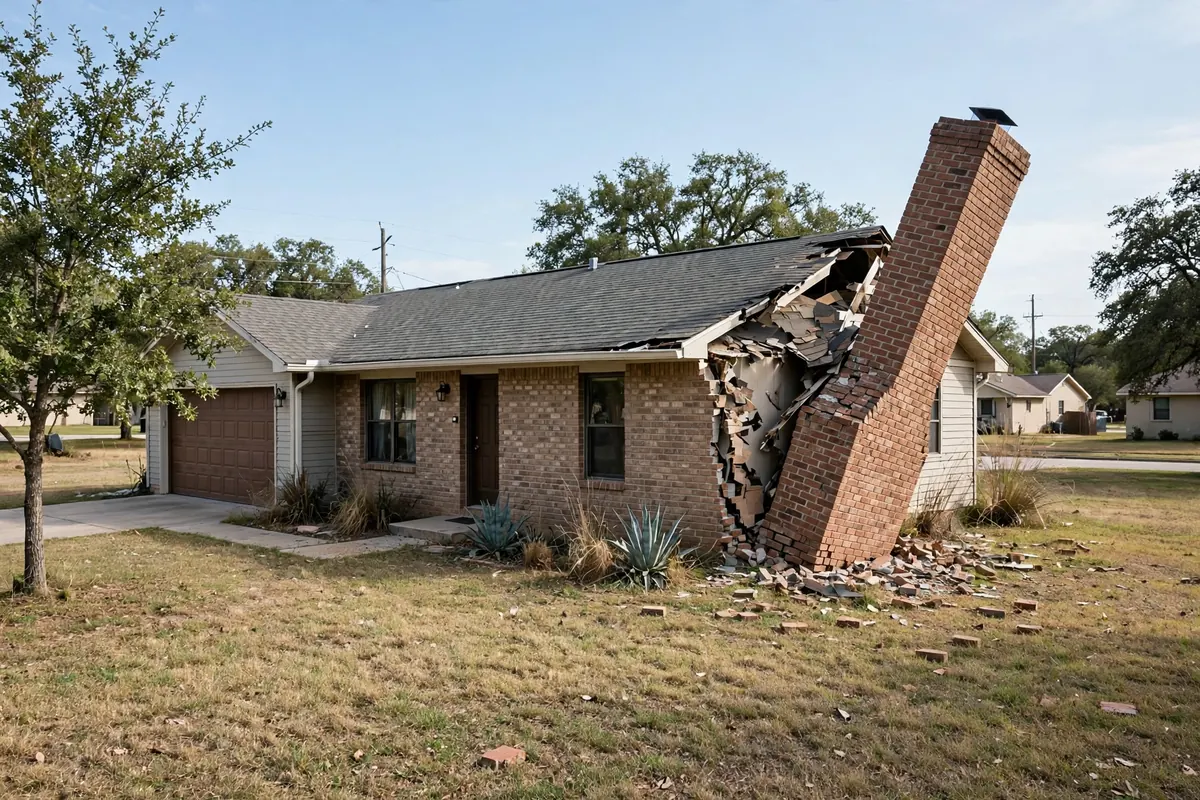
A chimney pulling away. When one side of a house settles for years, even heavy parts like a chimney lean with it, and the gap at the top keeps growing.
Water, pests, and other problems that follow a shifting slab
A shifting slab does not only move the house, it opens it up. Cracks in the brick and the foundation let rain water in, and water that gets into a wall stays there, feeding damp and mold in places you cannot see. Gaps around doors and windows let in drafts and insects, and a slab that has pulled away from the soil leaves a gap along the foundation where pests can enter. In a pier and beam home, the same movement can open the crawl space to damp and animals, as a guide to crawl space problems explains.
What follows a shifting slab, and where it shows
Follow-on problem
Where it shows
Why it starts
Rain water in walls
Damp patches, peeling paint
Cracks letting water past the brick
Pests indoors
Gaps at doors, windows, and the slab edge
Openings where the house has pulled apart
Plumbing strain
Leaks under the slab, slow drains
Pipes bending as the slab moves
Tile and flooring damage
Cracked tile, buckling wood floors
Floor bending over a settled section
How moving slabs stress plumbing
Plumbing deserves a special note, because it is the follow-on problem that does the most damage. As a slab moves, the pipes under it bend and stress, and a pipe that has been stressed for years can crack, leaking water into the soil under the house. That leak then washes the soil away and settles the slab further, which stresses the pipes more, in a cycle that feeds itself. A guide to leaks under a slab explains how that cycle works and how it is broken. The point is simple: a foundation problem left alone does not stay a foundation problem, it becomes a water problem, a pest problem, and a plumbing problem too.
The point where a simple repair turns into a major one
There is a point on the timeline where the repair changes in kind, not just in size. Early on, a settled corner can be pinned with steel pier installation and lifted back toward level, and the house goes back to square with a few days of work. Left for years, the same corner may need more piers, the brick may need rebuilding where cracks have widened through whole walls, and the interior may need drywall, trim, and flooring work across several rooms. The slab itself can crack through, and a cracked slab may need partial replacement, which is a far larger job than pinning a corner.
The chimney is the clearest example of the change. A chimney that has leaned a little can be stabilized with the house, but a chimney that has leaned for years and pulled away from the wall by inches may need to be taken down and rebuilt, which is a job of its own. The same is true of a floor: a floor that slopes a little can be leveled, but a floor that has sloped for years may have joists and beams that have taken a permanent set, and the leveling work grows with it. Slab foundation replacement is the step taken when a slab has gone past pinning, and it is the step a timely repair avoids. The line between the two is not marked on the wall, but it is real, and it is crossed slowly, one season at a time.
A floor that slopes. A slope you can feel underfoot is a slab that has dropped on one side, and it does not level itself with time.
A sensible next step if you have been putting it off
If you have been putting off a foundation problem, the next step is small and simple: get readings. A foundation inspection measures the floors, looks at the walls and the slab edge, and gives you a written plan that says where your house stands and what it needs. The plan may say the house needs piers at the settled corners, or it may say the movement is still small and steady watering and watching are enough for now. Either answer is worth having in writing, because it replaces worry with a number and a date, and it gives you a record to compare against next year.
Start with the notes you already have: the photos of the crack, the dates when the door started sticking, the rooms where the floor slopes. Bring them to the inspection, and walk the house with the inspector so you hear the readings explained as they are taken. In Allen and across the metro, the homeowners who are happiest a year later are the ones who stopped waiting and got a measurement, even when the answer was that the house only needed watching. A guide to selling a home with foundation problems is worth reading if a move is on your mind, since buyers and their inspectors will measure the house whether you do or not.
Been putting it off for a while?
The next step is small: a measurement. Call and we will read the floors, explain the numbers, and leave you a plain written plan.
Plain answers to the questions Plano homeowners ask us most about this topic.
?
Is it ever too late to fix a foundation?
Almost never. Even a house that has settled for years can be pinned and lifted, though the work grows larger and the interior repairs grow with it, since doors, tile, and drywall all need more work once the house has moved further. The sooner the readings are taken, the simpler the fix.
?
Will the house keep moving if I do nothing?
Yes, as long as the clay keeps cycling through wet and dry seasons. Each dry summer drops the edges a little more, and each wet spring swells them back only part of the way. A reading now gives you a number to compare against later, so you can see the movement instead of guessing at it.
What to expect when a sale depends on the slab, and how a written plan helps.
Last updated November 24, 2026
A small step now beats a large job later
Tell us what you have noticed and how long it has been there. We will measure the house and give you a written plan, so waiting becomes a choice, not a habit.