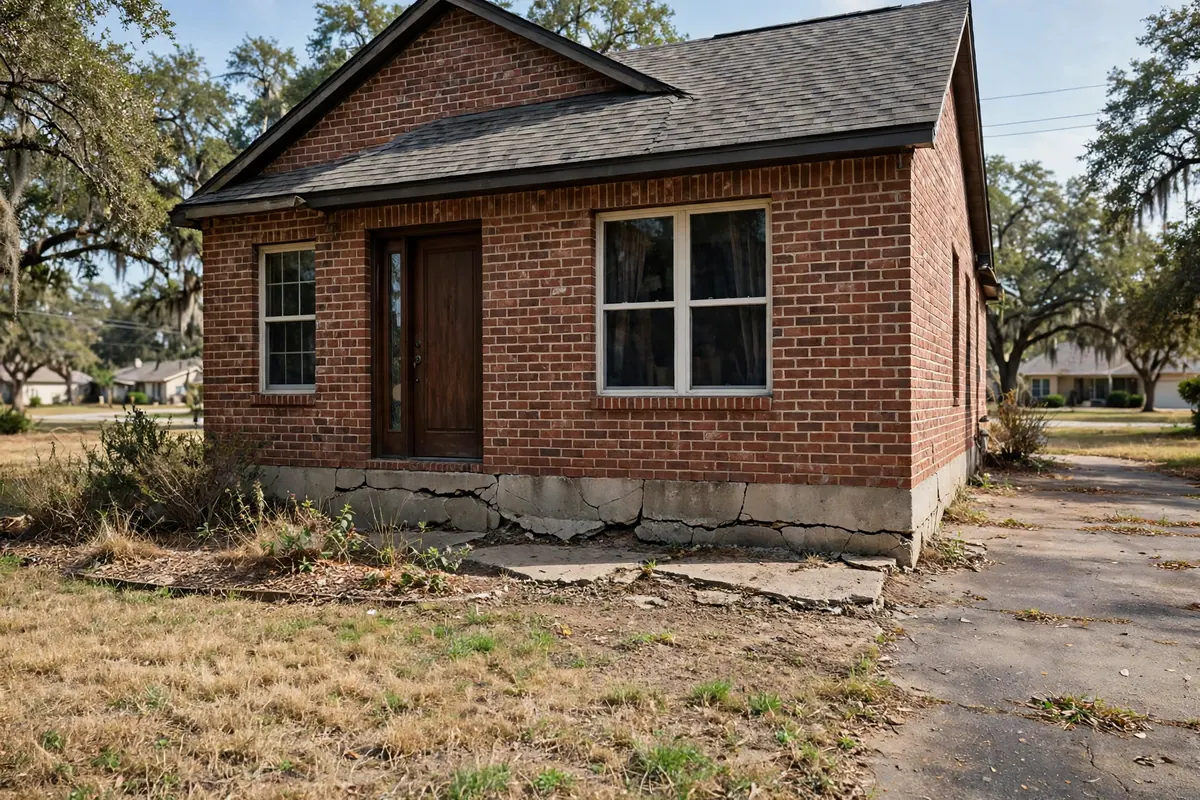
Selling a Plano home with foundation problems is a matter of timing, honesty, and records. A problem that is repaired before listing, with a written plan and readings to show for it, rarely stops a sale, while a problem that a buyer discovers on their own usually does.
By Plano Foundation Repair · Last updated November 24, 2026
The seller who controls the story sells the house. This guide covers whether to repair first, how disclosure works in Texas, and how to work with your agent so the listing shows a house, not a problem.
Deciding whether to repair before you list
The first decision is whether to fix the foundation before the house goes on the market, and the answer depends on the size of the problem and the time you have. A small, stable settlement with a clear repair plan is usually worth fixing first, because the house then shows with level floors, doors that close, and brick that has been repaired, and the buyer sees a home rather than a project. A larger job, or a job that needs piers all around the house, is still usually worth fixing first, because the alternative is a buyer who finds the problem and prices it at the worst case.
The repair also lets you choose the crew and the timing, instead of letting a buyer choose them under the pressure of a closing date. A repair done on your schedule, with the readings checked after the lift, produces the records a buyer wants to see. A repair done after a buyer finds the problem is done on the buyer's schedule, under the buyer's inspector, and with the buyer watching every step. Foundation repair methods explained covers the methods, and how long does foundation repair take? covers the schedule you need to plan around.
If the repair cannot be finished before listing, list with the plan in hand. A buyer who sees a written plan with a start date is a buyer who can plan, and a buyer who can plan is a buyer who stays in the deal.
Seller options when the foundation needs work
Option
How it works
When it fits
Repair before listing
Fix it, let it settle, then list
Most cases, when time allows
List with the plan
Disclose, show the written plan
Repair cannot finish first
Price for the repair
Reflect the work in the asking price
Buyer prefers to choose the crew
List with no plan
Hope the buyer does not notice
Never, the inspector will find it
Pricing and timing when the foundation needs work
Pricing a house with foundation trouble is your agent's job, and the conversation should start early. In a fast market, a repaired foundation with records can be a selling point, because buyers in Plano know the clay and they respect a house that has been looked after. In a slow market, the same repair can be the difference between a showing and a pass, because buyers have time to be picky and they will pick the house with the clear record.
Timing matters as much as pricing. A lift moves the frame, and the drywall and brick need a few weeks to settle into the new position before they are patched and painted. A house listed the week after a lift still shows the fresh patches, and a buyer will ask about them. A house listed a month after a lift shows a finished job. House leveling and lifting covers the lifting sequence, and foundation problems and your home's value in Plano explains how repairs and records change the picture for a buyer.
Do not price the house as if the problem does not exist and hope no one notices. The buyer's inspector will find the movement, and a problem found by the buyer's inspector is a problem the seller can no longer shape. Price the house for what it is, with the repair done or the plan in hand, and the negotiation stays on the house instead of on the surprise.
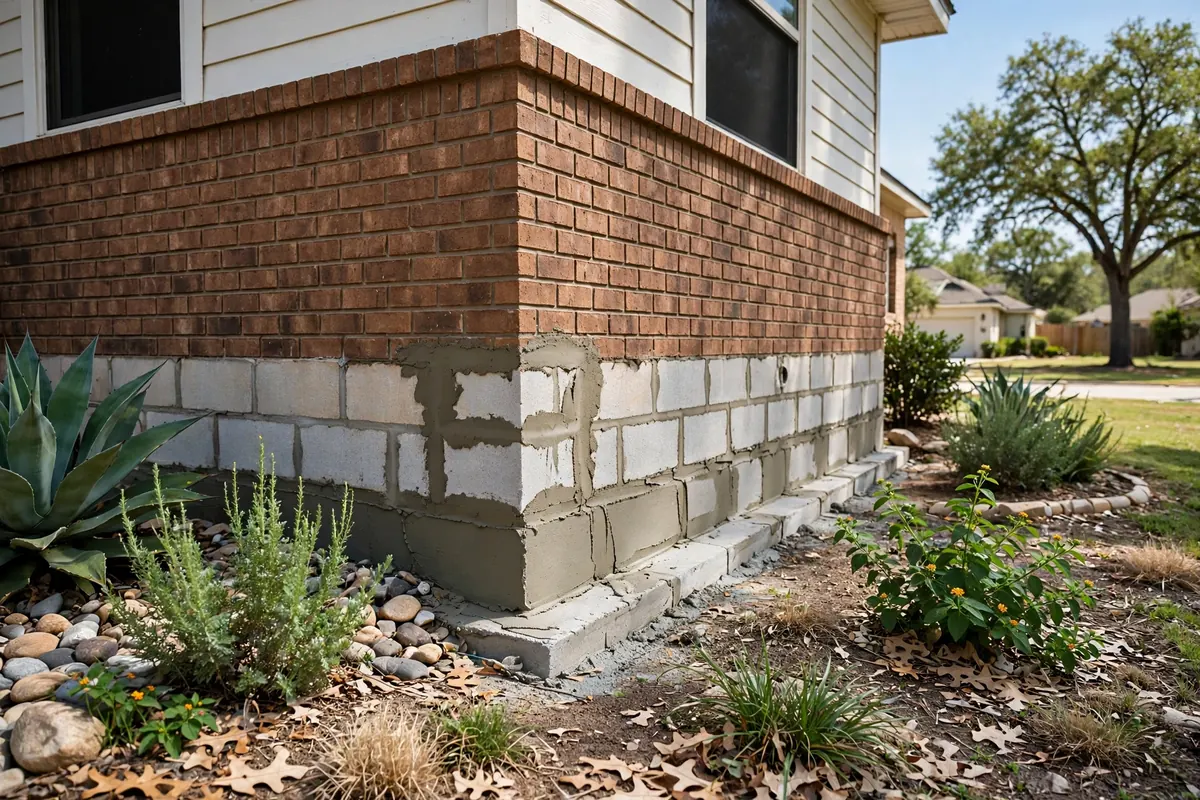
A closer look. Repaired foundation wall with fresh mortar on a home.
Disclosure rules for Texas sellers
Texas sellers fill out a disclosure form that asks about foundation problems directly, and the form is a legal document. A seller who knows about a foundation problem and does not disclose it risks a dispute after the sale, and a dispute after a sale is far more expensive than a repair before it. The honest path is also the practical one, because the buyer's inspector will find the movement anyway.
Disclosure does not mean the house cannot sell. It means the seller controls the story: here is the problem, here are the readings, here is the repair, and here is the house stable afterward. A buyer can accept that story, because it has a beginning, a middle, and an end. A buyer cannot accept a story with a missing middle, and that is what an undisclosed problem looks like. Talk with your agent about the disclosure early, before the listing is written, because the agent has seen foundation disclosures before and knows how to present a repaired foundation as a strength.
Keeping the repair file together
Put the file where the next owner can find it. The readings before the work, the pier plan, and the readings after the lift are the papers a buyer, an agent, or a future inspector will ask for first, and a complete file shows the house was looked after. Foundation inspection is the visit that starts that file, and the report it produces is the first page of it.
Not sure what you are seeing?
An inspection measures the floors and the brick, so you get readings and a written plan instead of guesses. Call (972) 430-3826 or book an inspection.
Showing buyers the repair plan and records
When a buyer asks about the foundation, show them the file. The inspection readings before the work, the pier plan with the number and location of each pier, and the readings after the lift are the three documents that answer the question. A buyer who can read those three documents can see that the problem was found, measured, and fixed, and that the house is stable now. That is a stronger answer than any promise a seller could make.
If the repair is still to come, show the plan instead. The plan names the method, the pier locations, and the drainage steps, and it carries a start date. A buyer who sees a plan can picture the finished house, and a buyer who can picture it is a buyer who can make an offer. Buying a home in Plano: how to check the foundation first shows what the buyer on the other side of the deal is looking for, and the file you show them is the answer to that checklist.
Do not hide the repair behind fresh paint. A crack that was filled and painted over, with no readings and no plan behind it, tells a buyer that someone wanted the problem hidden, and a buyer who feels that will assume the worst. Honesty about a past repair, with the records to back it, is worth more than a clean-looking wall with no story behind it.
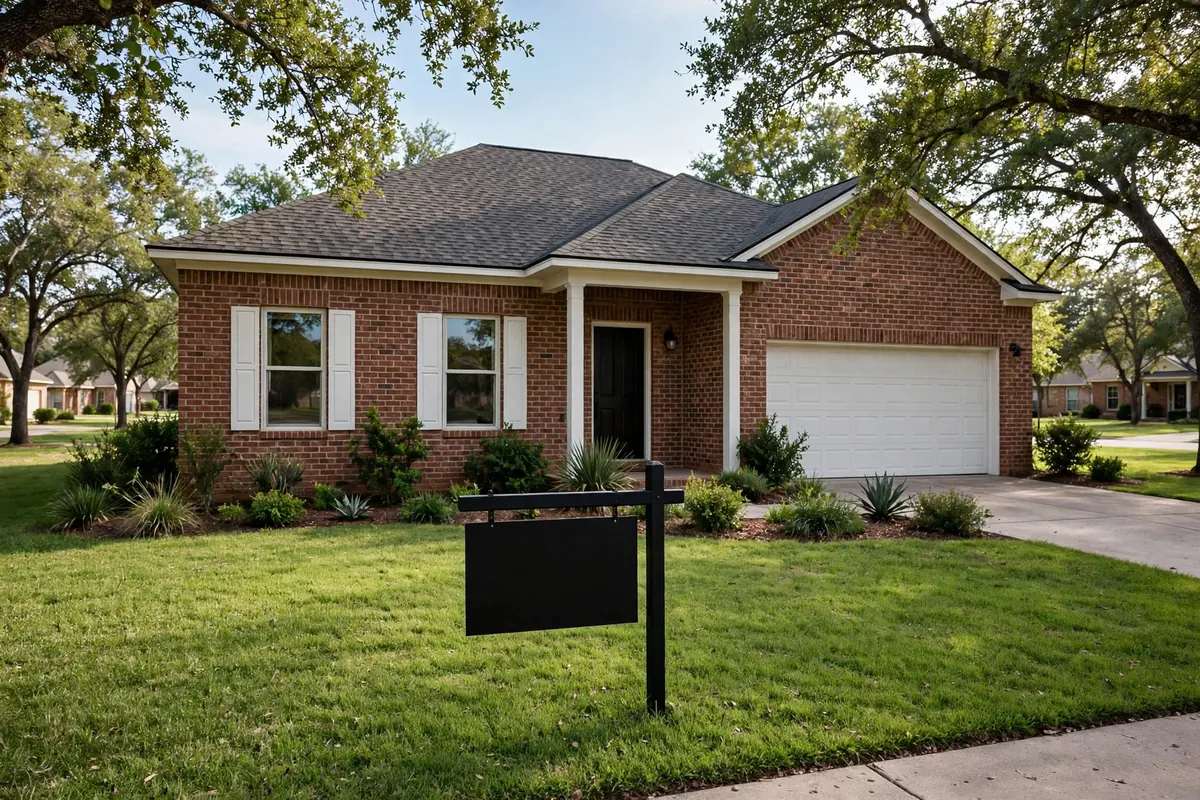
What it looks like. Real estate sign in front of a well-kept brick home.
Working with your agent on the listing
Your agent knows how foundation history is received in your neighborhood, and the listing should reflect that knowledge. Ask your agent whether the buyers looking at your price range expect a clean inspection or accept a house with a repair history, and whether a repaired foundation should be mentioned in the listing or left for the disclosure and the showing. The answer shapes the words in the listing and the order of the conversation with buyers.
The agent can also help you pick the right inspector and the right crew, because they have seen foundation work in your neighborhood before. A crew the agent trusts, a plan the agent has seen work, and a file the agent can show a buyer are the three pieces that make the sale smooth. Foundation repair in Allen, TX and foundation repair in McKinney, TX show how the same questions play out in the towns around Plano, and your agent will know the local version of the story.
The worst timing is no timing: listing a house with visible foundation signs and no plan, no readings, and no disclosure. That house gets the lowest offers and the longest time on the market, because every buyer who walks through it leaves with the same unanswered question. A plan, a file, and an honest disclosure turn that question into an answer.
Seller questions, answered plainly
Three questions Plano homeowners ask us most, answered in plain words.
?
Do I have to disclose a foundation repair in Texas?
Yes. The Texas seller disclosure asks about foundation problems directly, and a past repair is a fact the form expects you to share. Disclosing it with the records behind it is the honest path, and it is also the practical one, because the buyer's inspector will find the history anyway.
?
Will a foundation repair delay my listing?
A repair takes a few days of work plus a few weeks for the house to settle before patching and painting, so plan for that time. Listing a month after a lift shows a finished job, while listing the week after shows fresh patches a buyer will ask about.
?
Can I sell a house with an unrepaired foundation problem?
Yes, if you disclose it and price the house for what it is. Some buyers will take on the repair themselves, especially when the plan is written and the readings are clear. What stops a sale is a problem with no plan and no disclosure, not the problem itself.
Related guides
More reading on the same ground, written for Plano homeowners.