Most foundation repair jobs in Plano take a few days of work on site, not weeks, once the inspection and plan are done. A small pier job on one side of a slab home is often finished in two or three working days, while a larger job with piers all around the house, or a full pier and beam re-level, can run longer.
By Plano Foundation Repair · Last updated November 24, 2026
The timeline depends on the size of the job, the weather, and what the crew finds once the digging starts. This guide walks through each stage, from the first inspection to the final walkthrough, so you know what to expect and how to plan your household around the work.
Inspection and planning before any digging starts
Every job starts with an inspection, and the inspection is what sets the schedule. The inspector walks the house, takes elevation readings in every room, and looks at the brick, the grading, and the soil around the foundation. The readings draw a map of the floor, and the map shows which parts of the house have settled and by how much. That visit usually takes a couple of hours, and the written plan follows from the readings.
The plan names the method, the number of piers or lift points, and the order of the work, and it lists the drainage or watering steps that go with the structural fix. A plan that is written from readings is a plan with a schedule you can rely on, because the crew knows where they are digging before they arrive. Foundation inspection explains the visit step by step, and what to expect from a foundation inspection covers the questions homeowners ask before the visit.
Scheduling the work itself depends on the crew and the season. Spring and summer are the busy months for foundation work in North Texas, because that is when the soil moves most and the signs show up. Booking the inspection early in the process gives you the plan in hand, and the plan is what lets you pick a start date with confidence.
A typical pier job, day by day
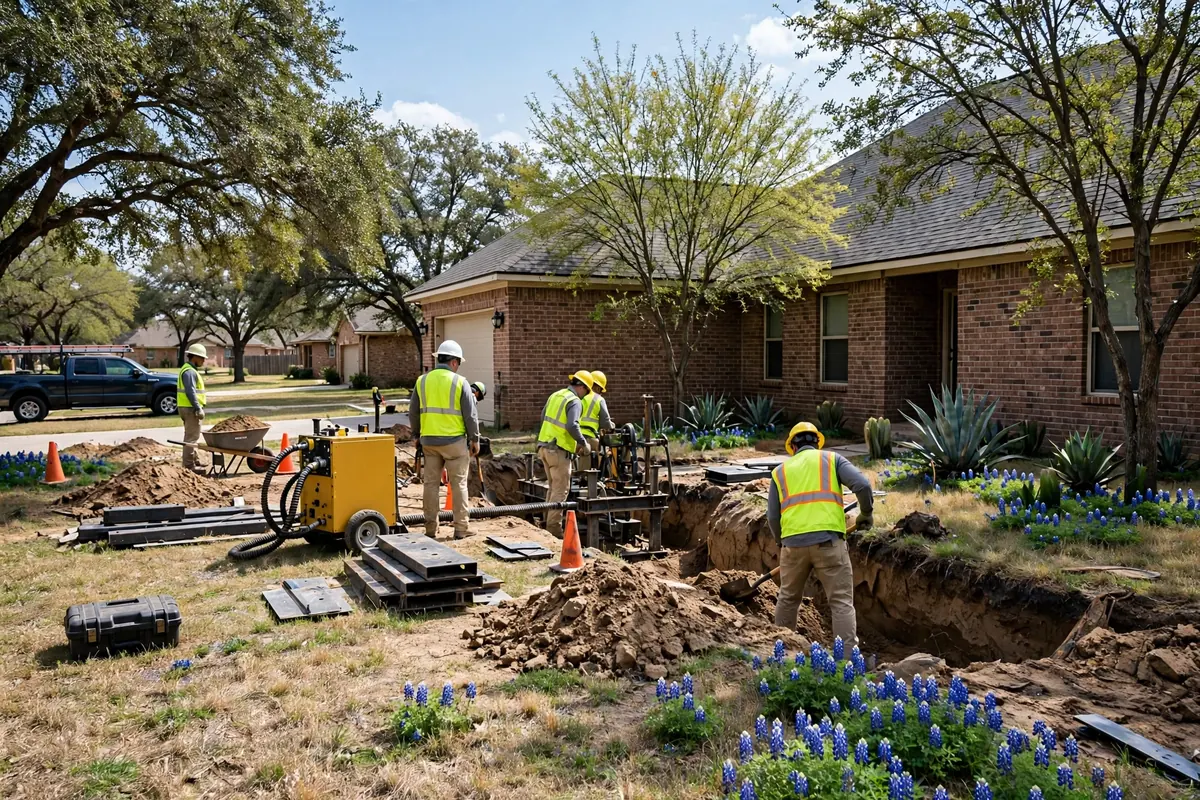
A pier job on a slab home usually opens with the crew marking the pier locations around the foundation and digging a hole at each one. The holes are dug by hand, because the work is close to the footing and to the pipes and lines that run beside the house. The steel brackets are bolted under the footing, and the piers are driven down to stable soil, one at a time, with the hydraulic ram. That first stage, digging and driving, is the bulk of the job, and it is the stage that sets the pace.
Once the piers are in, the crew lifts the slab in small steps, checking the elevation readings as they go, and locks each pier when the lift looks right. The lift is slow on purpose, because a fast lift cracks drywall and brick. The last stage is backfilling the holes, compacting the soil, and cleaning up the yard. The crew walks the house with the homeowner at the end, checks the doors and floors, and goes over the readings. Steel pier installation describes the sequence in detail, and foundation repair methods explained compares the methods that set the pace of a job.
A pier and beam re-level follows a different rhythm. The crew works in the crawl space, jacking beams and shimming piers, and the job is often quieter and cleaner than a pier job, because there is little digging in the yard. The pace is set by the number of piers that need adjusting and by the condition of the wood under the house.
Typical stages of a foundation repair job
Stage
What happens
What sets the pace
Inspection
Readings, walkthrough, written plan
Size of the house
Digging and driving
Holes dug, piers driven to stable soil
Pier count, soil, weather
Lifting and locking
Slab lifted in small steps, piers locked
Amount of lift, care taken
Backfill and cleanup
Holes filled, yard restored
Number of holes, access
Walkthrough
Readings checked, plan handed over
Questions from the homeowner
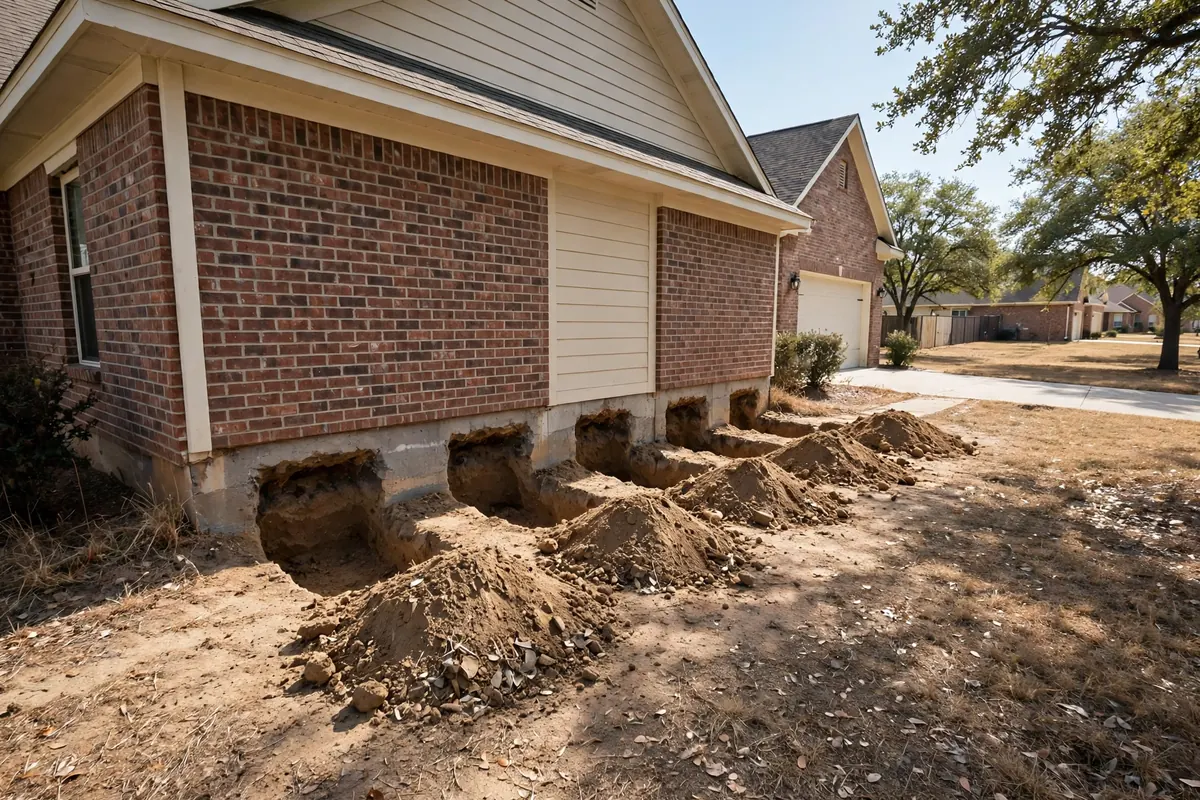
A closer look. Excavation holes along a house footing in a row.
What stretches a job past the first days
Weather is the most common delay. Heavy rain turns the excavation holes into mud and makes the soil too soft to work in, and a crew will pause rather than dig in ground that will not hold a pier. A dry spell rarely delays work, but a wet week can push a job by a day or two, and a good crew will tell you that in advance rather than surprise you with it.
What the crew finds underground is the second cause. A plumbing leak under a slab, a buried line in an unexpected place, or soil that is softer than the readings suggested can all add a day while the plan is adjusted. A house with a large tree close to the foundation can also slow the digging, because the roots have to be worked around. None of these are unusual, and a crew that has worked Plano clay for years will have seen all of them. How a water leak under your slab damages the foundation explains the leak problem that most often changes a schedule.
Access and setup around the house
Access is the third factor. A house with a narrow side yard, a pool close to the foundation, or a driveway that blocks the pier locations takes longer to set up, because the crew has to bring equipment in by hand. The inspection should catch the access questions, and the plan should name them, so the schedule reflects the real house.
Not sure what you are seeing?
An inspection measures the floors and the brick, so you get readings and a written plan instead of guesses. Call (972) 430-3826 or book an inspection.
Cleanup and the walkthrough at the end
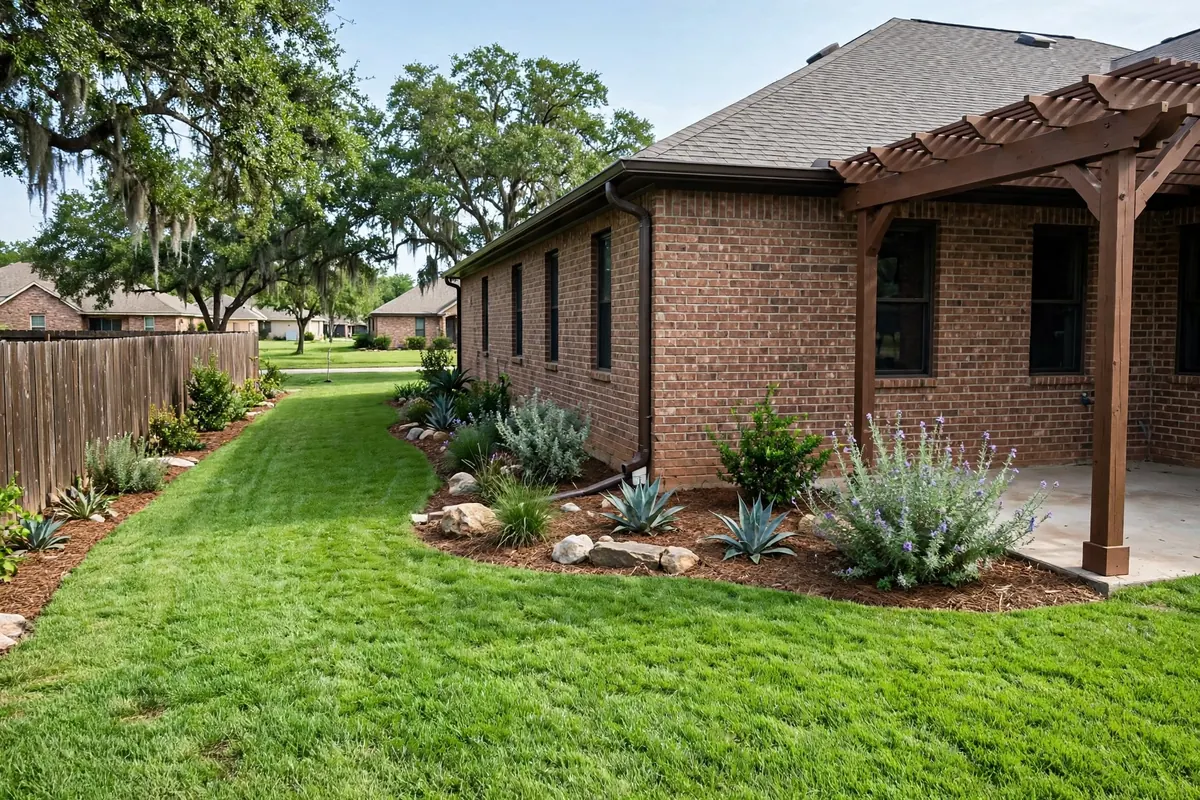
Cleanup is part of the job, not an afterthought. The holes are backfilled with the soil that came out of them, the soil is compacted, and the yard is left level, though the grass over a fresh hole will take time to grow back. The crew removes the equipment, the pier sections, and the spoil, and the driveway and walkways are swept. A homeowner should expect the yard to look worked on for a few weeks, and then to settle back in with watering and time.
The walkthrough is the last step and the most important one. The crew leader walks the house with the homeowner, opens and closes the doors, checks the floors against the new readings, and points out the cracks that were there before and the ones that changed during the lift. The readings are recorded, and the homeowner gets a copy of the plan and the readings to keep with the house records. That record matters later, when the house is sold or when a future inspector asks what was done. Selling a home with foundation problems in Plano explains why that record helps at sale time.
After the walkthrough, the house needs a little patience. Drywall cracks that opened during the lift are patched after the house has had a few weeks to settle into its new position, not the day the crew leaves. That waiting period is normal, and the crew should explain it before they go.
What it looks like. Backfilled and restored yard after foundation work beside a home.
How to plan your household around the work
A foundation job is noisy and dusty, and the crew will be in and out of the yard all day, so plan for the disruption. The work happens outside the house for a slab job, and the water and power usually stay on, though the crew may ask to turn off a line while they work near it. Pets should stay inside or with a neighbor, because the yard will have open holes and equipment in it, and children should be kept clear of the work area.
For a pier and beam job, the crew works under the house, and the noise comes from below rather than from the yard. The house may feel a little movement as the beams are jacked, and the doors may stick or ease as the floor shifts, which is normal during the lift. The crew will tell you which rooms to keep clear on which day, and the schedule in the plan is the guide to follow. House leveling and lifting covers the lifting sequence and what it feels like inside the house.
The simplest plan is to treat the job days as work days: be reachable by phone, keep the driveway clear for the crew truck, and let the crew leader know about any buried lines, septic parts, or sprinkler heads near the foundation. A little information up front saves a day of digging around a surprise.
Timing questions homeowners ask us
Plain answers to the questions Plano homeowners ask us most about this topic.
?
Can I stay in the house during foundation repair?
Yes, in most cases. Slab pier work happens outside the house, and pier and beam work happens underneath it, so the water and power usually stay on. The crew will tell you if any room needs to stay clear on a given day.
?
Does rain delay a foundation job?
Heavy rain can pause the digging, because wet soil will not hold a pier and open holes fill with water. A good crew watches the forecast, tells you about a likely delay in advance, and resumes as soon as the ground firms up.
?
How soon can I patch drywall cracks after a lift?
Wait a few weeks after the lift before patching cracks inside the house. The frame needs time to settle into its new position, and patching too early means the same crack can open again as the house settles. If a patched crack opens again, wait for a second reading before patching it a second time.
?
Can foundation repair be done in winter?
Yes. Plano winters are mild enough that piers, foam, and drainage work go ahead through the cold months, and wet winter soil can even make drilling easier. The crew watches for frozen ground on the coldest mornings and for rain that softens the work area. The schedule depends more on the job size than on the season.
Related guides
More reading on the same ground, written for Plano homeowners.