Drainage Correction in Plano, TX
Water is the quiet force behind most foundation trouble in Plano. It pools against a wall, soaks the clay under one footing, and leaves the rest of the house on drier ground. The house drops where the soil is wet and rises where it is dry. Drainage correction gives that water somewhere else to go, so the ground under your house stays as even as the seasons allow.
How drainage correction works around a Plano home
Grade, gutters, and drains each move water in a different way.
Drainage correction starts with watching water. In a heavy rain, where does it pool, where does it run, and where does it sit against the house? The answers are read in the yard: a low spot beside the foundation that holds water for a day after a storm, a downspout that dumps its load at the wall, a stretch of grade that slopes toward the house instead of away from it. Each of those is a path for water to reach the clay under the footing, and each gets a different fix. A foundation inspection reads the water along with the floors, because the two are so often linked in Plano.
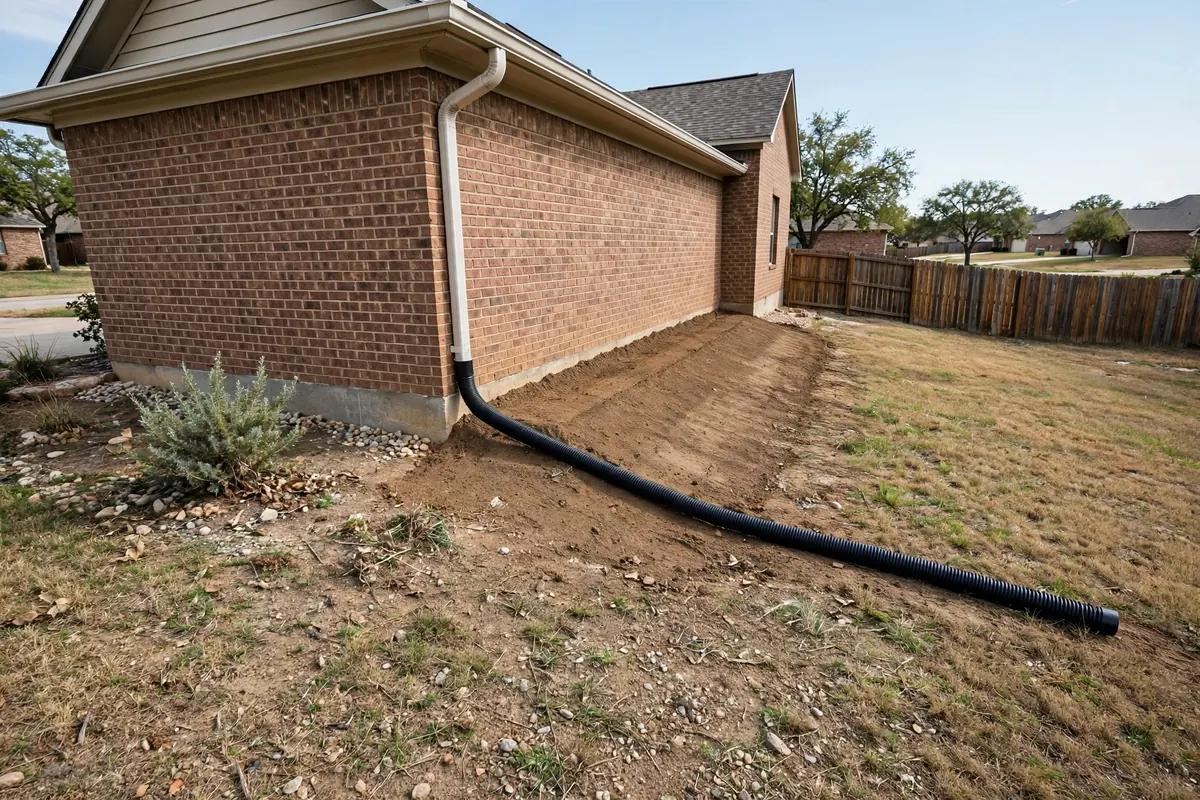
Grading is the first fix, and it is the simplest. The soil beside the house is shaped so it slopes away from the walls, carrying rainwater out into the yard instead of letting it sit against the footing. A slope that falls away from the house for the first few feet is enough to change where the water goes, and it is the fix that costs the least and lasts the longest. Gutters are the second fix. A gutter that is clear carries roof water to the downspout, and a downspout with an extension carries it well away from the house, instead of dumping a roof full of water at the base of one wall. Our guide on how drainage protects your foundation walks through gutters, grading, and the habits that keep them working.
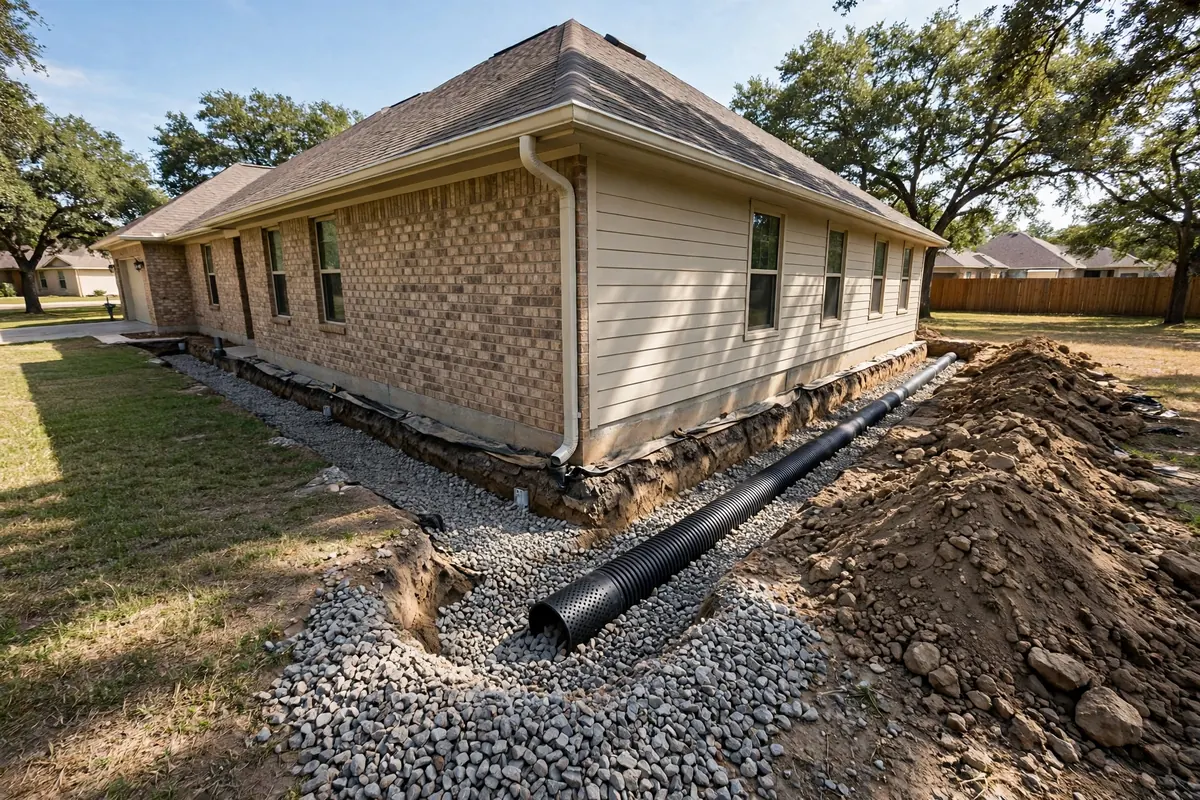
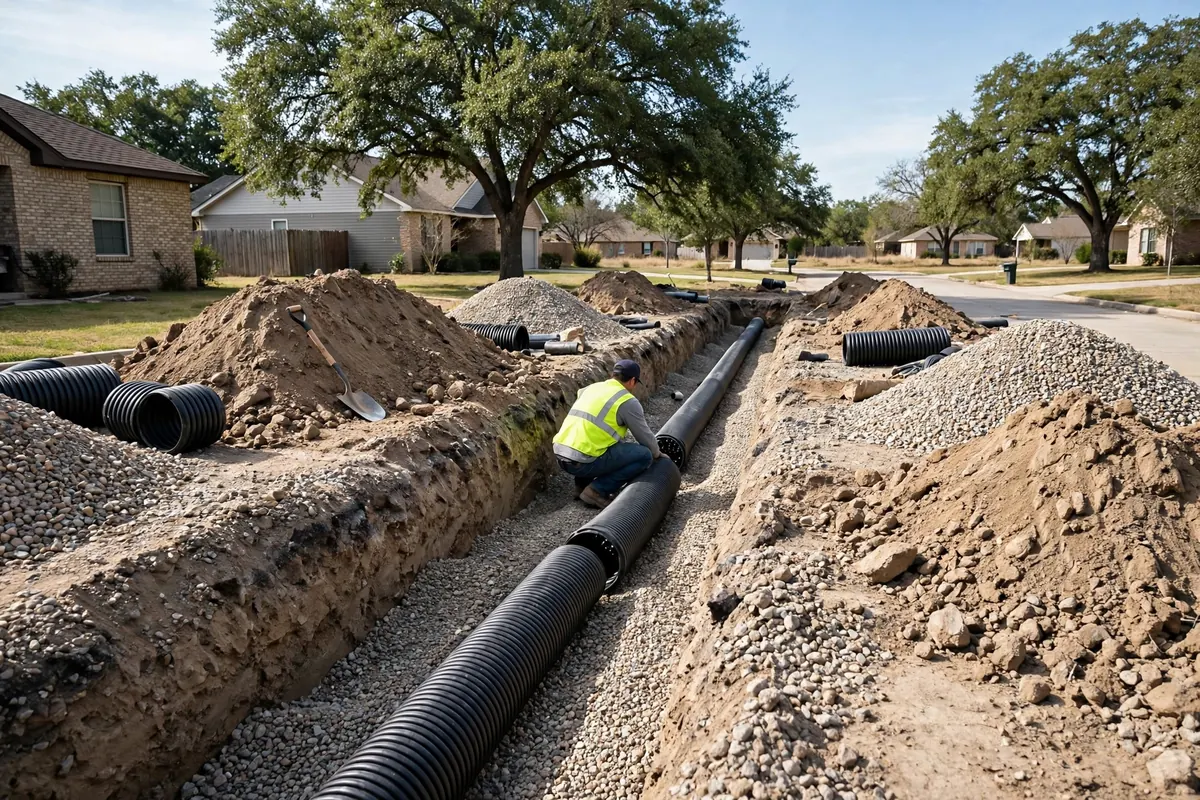
French drains are the third fix, and they work where grading alone cannot. A French drain is a trench filled with gravel and a perforated pipe, dug along the side of the house where water collects, and it carries groundwater away from the footing to a lower part of the yard or to the street. The pipe sits in gravel so water can enter it from the soil around it, and the gravel is wrapped so soil does not clog the pipe over time. A surface drain, a shallow channel with a grate, does the same job for water running across the yard, catching it before it reaches the house. The guide to foundation problems after heavy rain explains what that water does to Plano clay when it is left to sit.
Each fix is chosen for the water it has to move. Grading moves surface water, gutters move roof water, and French drains move groundwater that grading cannot reach. A house that needs all three gets all three, in the order that matters: gutters and grading first, because they keep the water from arriving, and drains second, because they carry away the water that still gets through. Homes in Carrollton and Garland show the same patterns, because the clay and the storms run across the whole area, and the same read-first approach applies there.
Before and after: what drainage correction changes
Dry soil at the footing, a yard that drains, and a house that stops moving.
Before correction, the signs are easy to read after a storm. Water stands against the wall for a day, the soil beside the footing stays dark and soft, and the grass near the house grows thicker than the grass further out, because it is the wettest patch in the yard. Inside, the low corner of the house drops a little more each wet season, the brick cracks widen, and the door nearest the wet wall sticks a little more each August. The house is moving with the water, and the movement follows the wet side.
After correction, the yard drains. Rain runs away from the walls instead of pooling against them, the soil beside the footing dries between storms, and the low corner stops dropping. The change is not dramatic on a dry day, which is the point: a yard that drains well looks ordinary. The proof shows up in the readings, with floor elevations that stay steady through a wet spring and a dry summer, instead of rising and falling with the rain. The house stops moving with the weather, and the piers or the lift that came before the drainage work hold their height because the ground under them has stopped swelling and shrinking.
| What you see | Before | After |
|---|---|---|
| Water at the wall | Pooling against the foundation for a day after rain | Rain runs away from the walls and the soil dries between storms |
| Soil at the footing | Dark, soft, and swollen on the wet side of the house | Even moisture around the house, with no one side soaked |
| Floor readings | Low corner drops a little more each wet season | Readings stay steady through wet springs and dry summers |
| Gutters and downspouts | Overflowing gutters and downspouts dumping at the wall | Roof water carried well away from the house |
Drainage does not lift a house that has already dropped. It stops the water that made it drop, and it keeps a lift or a pier job holding. A house that needs piers gets the piers first or with the drainage, and the drainage keeps the piers steady.
The change that matters most is the one you stop noticing. A yard that drains well does not call attention to itself, and a house that stops moving does not produce new cracks to worry about. That quiet is the result, and it is worth checking after the first big storm: walk the house, look for standing water at the walls, and check that the downspouts are still sending water away. If the house also needs piers, steel pier installation is the work that lifts it, and if the slab has dropped, concrete slab foundation repair covers the lift that drainage then protects.
Does water pool against your walls after rain?
Walk the house in a storm and watch where the water goes. The low spots and short downspouts will show themselves.
What affects the scope of a drainage job
Slope, soil, roof water, and where the water has to go set the work.
Slope is the first factor. A yard that already falls away from the house needs only small shaping, while a yard that falls toward the house needs regrading along the whole wall, and sometimes a swale, a shallow grass channel, to carry water around the house instead of toward it. The slope is read with a level, not by eye, because a grade that looks flat can still send water the wrong way. The guide to drainage and foundations explains the slope to look for and how to check it with a level and a string line.
Soil is the second factor. Plano clay holds water and swells, so a French drain in clay needs gravel and wrapping that keep the pipe clear, and the trench needs to be dug to a depth where it can catch the water moving through the soil toward the footing. Sandy fill near a new home drains faster and needs a shallower trench, while heavy clay needs the drain set deeper and the outlet planned so the water has somewhere to go. The outlet matters as much as the drain: a French drain that ends in a low spot in the yard only moves the water from one wet place to another.
Roof water is the third factor, and it is the largest single source of water at a foundation. A roof collects every drop that falls on it and sends it to the gutters, and a single downspout can dump a large volume of water at one spot beside the house in a single storm. Gutters that are clear, downspouts that are extended, and splash blocks that send water away from the wall are the cheapest drainage work there is, and they are checked before any trench is dug. A home with a large roof and short downspouts needs longer extensions, and a home with trees overhead needs its gutters cleared more often, because leaves are what clog them. If the house has a pier and beam frame, crawl space repair often goes with drainage work, because the same water that wets the footing also wets the crawl space.
- Yard slope: whether the grade falls toward the house or away from it.
- Clay soil: heavy clay holds water and needs deeper drains with wrapped gravel.
- Roof water: gutters and downspouts move the largest volume of water at the house.
- Outlet: a drain needs somewhere lower for the water to go, or it only moves the wet spot.
- Trees and roots: large trees drink soil moisture and change where the ground stays wet.
Mistakes to avoid with drainage around a foundation
The common errors that leave water at the wall.
The first mistake is digging a drain without fixing the gutters. A French drain can carry groundwater away from the footing, but it cannot keep up with a roof full of water dumped at the wall by a short downspout in a single storm. Gutters and downspouts come first, because they keep the largest volume of water from ever reaching the ground beside the house, and the drain then handles only the water that is left. A drain dug under an overflowing gutter is a drain that will always be behind.
The second mistake is grading the soil up against the house to make it look tidy. Soil piled high against the brick hides the weep holes, the small gaps that let moisture out of the wall, and it gives water a direct path into the wall and under the slab. The grade should slope away from the house, and the soil should sit below the top of the foundation, so the wall can breathe and the water can run off. A flower bed built up against the wall, watered daily in summer, is one of the most common ways a dry house becomes a wet one.
The third mistake is a drain with nowhere to go. A French drain that ends in a low spot, or a downspout extension that stops a foot from the wall, only moves the water a short distance, and it pools again in the next storm. Every drain needs an outlet lower than the house, and every downspout needs to send water well clear of the footing. The fourth mistake is forgetting the drain after it is dug. A French drain clogs over the years as soil works into the gravel, and a gutter fills with leaves each autumn, so both need checking and clearing as part of looking after the house. Our post on foundation maintenance tips for Plano homeowners lists the seasonal checks that keep drainage working, and our guide on drought and foundation damage explains why even watering matters as much as drainage when the summer turns dry.
Walk the house in the rain
The best drainage inspection costs nothing and takes ten minutes: walk around the house during a heavy rain and watch where the water goes. The low spots, the overflowing gutters, and the downspouts that dump at the wall will show themselves, and that walk tells you more than any drawing about what your house needs.
Has one side of your house dropped more than the other?
The wet side drops first. Drainage evens the soil, and piers lift the side that has already settled.
Questions about drainage correction in Plano
Straight answers before you book a visit.
How do I know if my drainage is causing foundation problems?
Walk the house after a heavy rain. Water standing against the wall, soil that stays dark and soft on one side, and a low corner that drops a little more each wet season all point to water reaching the footing. Floor readings that move with the rain, rising in a wet spring and dropping in a dry summer, confirm the link.
What is a French drain and when do I need one?
A French drain is a gravel trench with a perforated pipe that carries groundwater away from the footing. You need one when water collects against the house even after the grading is fixed and the downspouts are extended, or when the soil beside the footing stays wet long after a storm. It works below the surface, where grading cannot reach.
Can drainage correction fix a sloping floor?
No, not on its own. Drainage stops the water that made the house move, and it keeps a repair holding, but it does not lift a house that has already dropped. A sloping floor needs piers or leveling first, and drainage follows to keep the lift steady. The two jobs work together, in that order.
How long does drainage work take?
Grading and downspout work usually take a day. A French drain along one side of the house takes a few days, because the trench is dug by hand or with a small machine, the pipe and gravel are set, and the sod is put back. Rain can slow the digging, and we will tell you in advance if the weather is likely to stretch the schedule.
Will a French drain work in Plano clay?
Yes, when it is built for clay. The pipe sits in washed gravel wrapped so soil does not clog it, the trench is dug deep enough to catch the water moving through the soil toward the footing, and the outlet is set lower than the house so the water has somewhere to go. A shallow drain in heavy clay, with no outlet, will not do the job.
Do I need to maintain a French drain?
Yes, like any part of the house. The outlet should be checked each year to make sure it is clear, the gutters should be cleared each autumn so they do not overflow onto the drain, and the grade beside the house should be checked after heavy rain to make sure it still slopes away from the walls.
Questions we hear about water around Plano homes
Short answers to the questions homeowners ask most while we are on site.
Where should downspouts send water?
Well away from the house, at least several feet from the wall, and onto ground that slopes away from the footing. A downspout that stops at the wall dumps a roof full of water at one spot beside the foundation, and that spot is where the clay swells most. An extension is the cheapest drainage fix there is.
Can I grade the soil myself?
Light regrading, adding soil beside the house so it slopes away from the walls, is a job many homeowners do themselves. Keep the soil below the top of the foundation, keep the weep holes in the brick clear, and do not pile soil against the wall. Deeper regrading and drains are better left to a crew with a level.
Does drainage help in a drought too?
It helps by keeping the soil even. In a drought, the clay shrinks and pulls away from the footing, and even watering around the house keeps the moisture steady. Drainage and watering work together: drainage keeps wet seasons from soaking one side, and even watering keeps dry seasons from shrinking it.
Will drainage work change how my yard looks?
Most of the work sits below the surface, so the yard keeps its shape once the grass grows back over the trench lines. A French drain leaves a gravel strip that can be covered with sod, and regrading changes the slope by only a few inches. We walk the yard with you first and mark where the lines will run.
Related services that go with drainage correction
Other work that often goes with this repair.
Start by walking the water.
Book a foundation inspection and we will read the floors, walk the water, and write a plan for your home.
Book a Foundation Inspection