Allen, TX
South down US-75, with master-planned neighborhoods and two-story brick homes.
Collin County Seat Foundation Repair
McKinney sits about fifteen miles north of Plano, and it holds two very different kinds of foundation work inside one city line: the historic square, where some homes predate the slab era entirely, and the master-planned communities that made McKinney one of the fastest-growing cities in the country.
McKinney sits on the same Blackland Prairie clay as Plano, and the soil maps tell the story plainly: Heiden clay with very high shrink-swell, plus Lewisville and Austin soils that also move with moisture. The clay swells when the rain soaks in and shrinks when the summer dries it out, and a rigid slab caught between those two states cracks, tilts, or both. What makes McKinney different from its neighbors is how much of the city was built on each side of that story.
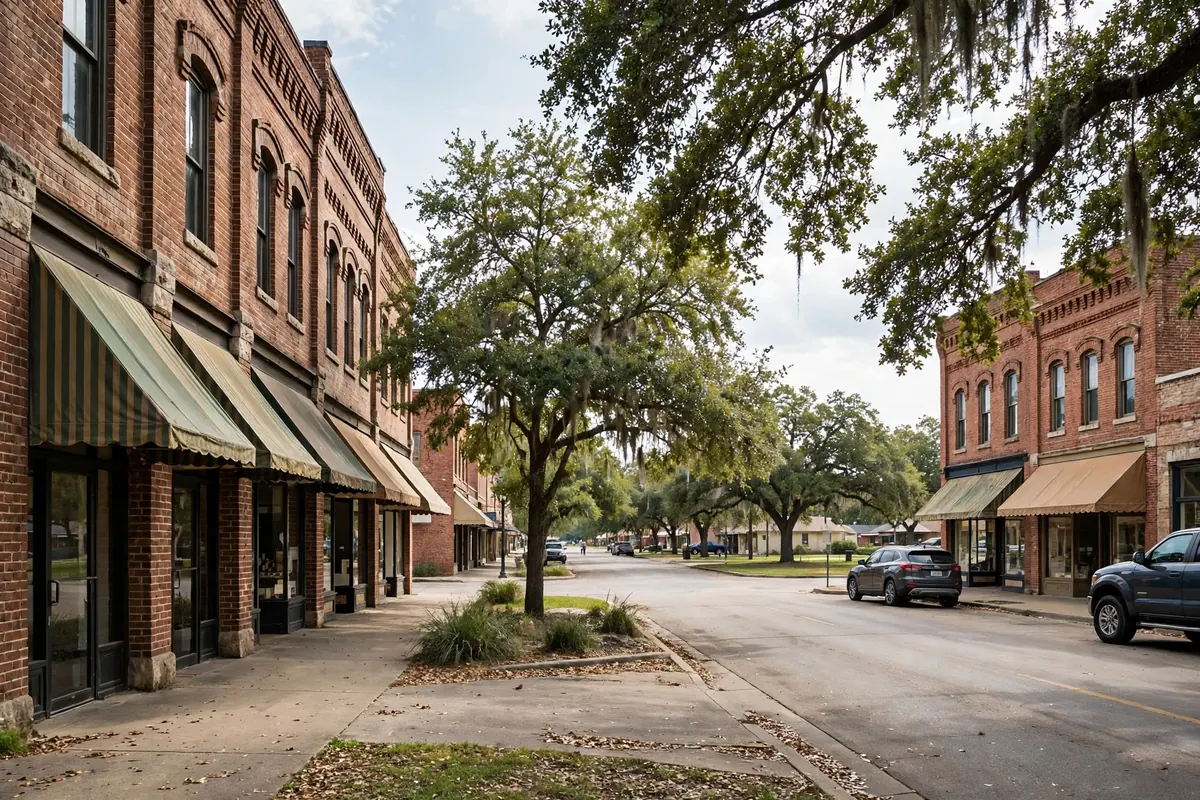
The historic core around the downtown square, in the 75069 ZIP code, holds homes from the early 1900s onward. Some of those sit on pier and beam foundations with crawl spaces underneath, built long before slab-on-grade became the standard. Those homes move in their own way: beams sag, piers settle, and floors slope toward the middle of the house. The streets around the square also carry the oldest brick in the city, and a stair-step crack in a hundred-year-old wall needs a different eye than a crack in a ten-year-old one.
South and west McKinney, in the 75070 and 75072 ZIP codes, is Stonebridge Ranch, Craig Ranch, and Adriatica Village in 75070: master-planned communities built from the 1990s through the 2010s on graded lots. The slabs are newer and the footings are deeper, but the lots were cut and filled before the homes went up, and a house that sits half on undisturbed clay and half on fill can settle unevenly in its first few seasons. North McKinney, in the 75071 ZIP code, is the newest ring, with Tucker Hill, Trinity Falls, and fresh subdivisions along US-380 where the grading is still settling in.
Our guide to what causes foundation problems in Collin County covers the clay, the fill, and the tree roots in more detail. In McKinney, all three show up, and which one is driving your home depends on where in the city you are. That is why the inspection looks at the lot and the soil as well as the house, and why soil stabilization is sometimes part of the answer on a graded lot.
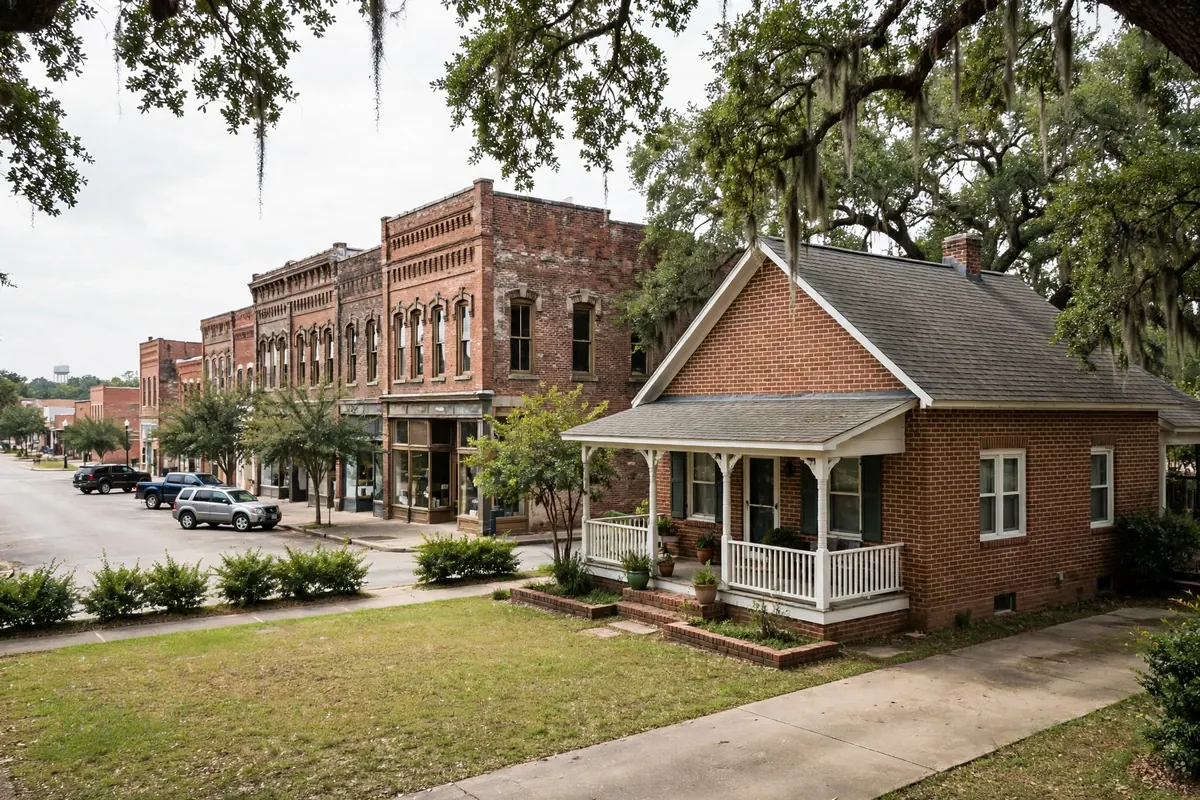
In the historic district, the signs are usually in the floors. A pier and beam home that has settled shows a floor that slopes toward the center of a room, doors that swing on their own, and a gap where the baseboard has pulled away from the floor. Under the house, the beams may have sagged between piers, or a pier may have sunk into soft soil. Our pier and beam foundation repair page covers how those homes are re-leveled.
In Stonebridge Ranch, Craig Ranch, and the newer north side, the signs are usually in the brick. Stair-step cracks at the corners, cracks above door frames, and windows that stick on the second floor all point to one corner of a slab dropping while the rest holds. The cracks tend to show up after a dry summer, when the clay has shrunk the most, and they are the first thing owners point to when we arrive. Our guide to signs your Plano home's foundation is moving covers the same signs, and they read the same way on a McKinney slab.
Driveways and patios tell their own story. A driveway slab that has dropped at the garage, a patio that slopes toward the house instead of away from it, or a sidewalk section that has sunk below its neighbor all point to the same clay movement under a thinner slab. Those are often fixed with lifting rather than piers, and the concrete lifting work is a smaller job than a full pier plan.
One sign matters less than the pattern. A single hairline crack in a new home can be normal settling. Several signs on the same corner, or signs that keep getting worse through the dry season, point to movement that is still active. A foundation crack repair visit looks at the crack and the floor readings together, so the fix matches the cause.
An inspection maps your floors and shows what moved, so the repair fits the cause.
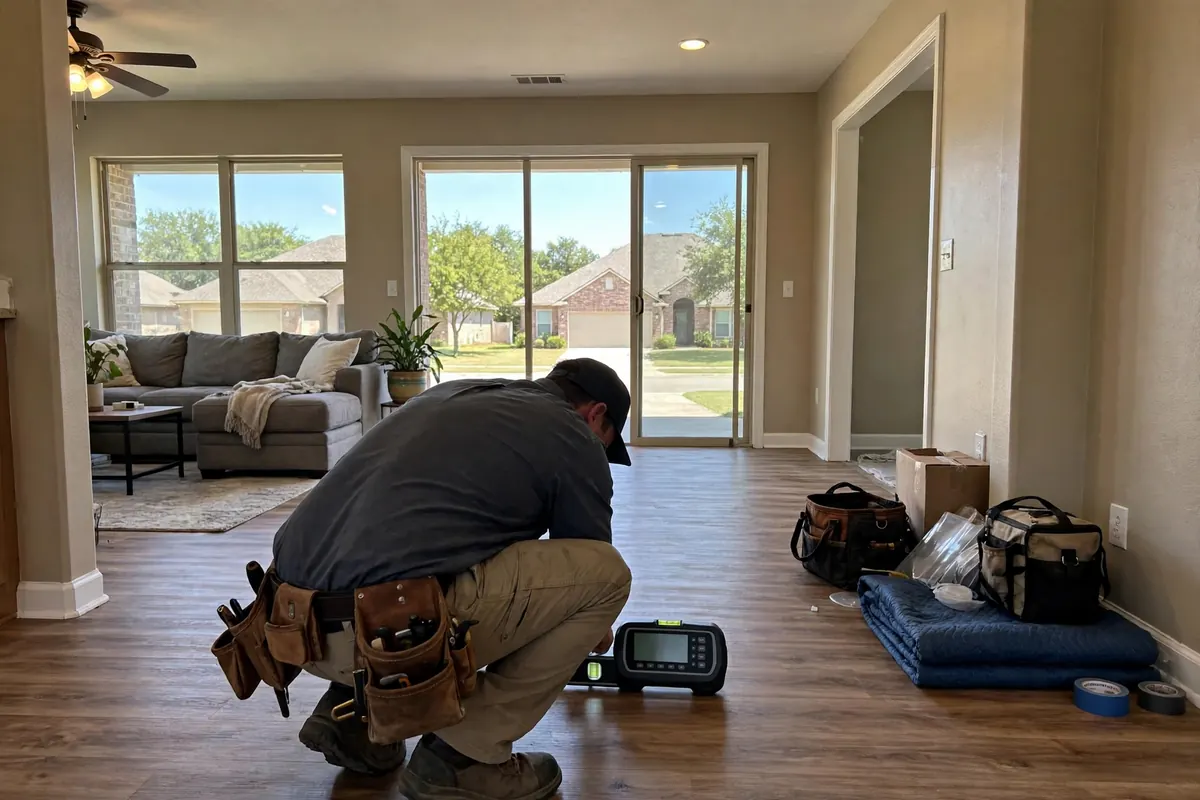
We start by walking the property. The outside tells us where the water goes, where the grade falls, and where the big trees stand. The inside tells us how the floors read, room by room, with a digital level. Those readings become an elevation map, and the map becomes the plan: where the piers go, how far the slab needs to come back, and what drainage work the lot needs. Our foundation inspection page explains what the visit checks, and our guide to foundation repair methods explained compares piers, pilings, and foam in plain words.
On a slab home, the piers go in beside the footing at the points the map calls for. Each steel pier is driven down to firm ground, a bracket is set under the footing, and the home is lifted back toward level in small steps while we watch the readings. On a pier and beam home, the work happens in the crawl space: failed piers are replaced, beams are shimmed and re-leveled, and moisture problems in the crawl space are dealt with so the repair holds. The method follows the foundation type, not the other way around.
Water comes next. A pier repair holds best when the clay around the house stays even, so the grade, the downspouts, and any low spots get attention in the same job. In McKinney, that often means a French drain along the side where water collects, or re-grading a bed that has been holding water against the brick. Our drainage correction page covers that work, and our steel pier installation page covers the piers themselves.
We finish with a walkthrough. The doors and windows you pointed out at the start get checked again, the cracks get measured again, and you get the elevation readings from before and after. If the job was a pier and beam home, we show you the work under the house as well, so you can see the new piers and the leveled beams for yourself.
McKinney covers four ZIP codes. The 75069 side holds the historic downtown square, Chestnut Square Historic Village, and the older streets east of US-75. The 75070 side holds the southern half of Stonebridge Ranch, Craig Ranch, Adriatica Village, and the shopping corridors along the Sam Rayburn Tollway. The 75071 side holds the north side along US-380, with Tucker Hill, Trinity Falls, and the Villages of Lake Forest. The 75072 side holds the western half of Stonebridge Ranch and the Eldorado Parkway corridor.
The neighborhoods tell the age of the city at a glance. Downtown McKinney has brick storefronts, a courthouse square, and homes that predate the slab era. Stonebridge Ranch has lakes, trails, and golf courses, with homes from the 1990s through the 2010s. Craig Ranch has the same master-planned feel with its own golf course and town center. Adriatica is built to look like a Croatian fishing village, with cobblestone streets and a lakeside chapel. Tucker Hill and Trinity Falls are the newer north side, with traditional architecture and new construction.
The roads that tie McKinney together are US-75, the Sam Rayburn Tollway, US-380, Virginia Parkway, Eldorado Parkway, and Custer Road. The landmarks owners use to place a street are the historic downtown square and the McKinney Performing Arts Center, Chestnut Square Historic Village, Adriatica Village, Bonnie Wenk Park, and Towne Lake. If your home sits near one of those, we know the streets around it.
We work across all four McKinney ZIP codes, and across the border into Allen to the south, Frisco to the southwest, and Prosper to the west, so a home near the city line is covered the same as one in the middle of town.
| Neighborhood | ZIP | What to know |
|---|---|---|
| Historic Downtown McKinney | 75069 | The square and the streets around it, with the oldest homes in the city. |
| Adriatica Village | 75070 | Mediterranean-style village with townhomes, condos, and single-family homes. |
| Tanglewood | 75069 | Mix of older homes and new building east of US-75. |
| Stonebridge Ranch | 75070 | Large master-planned community with lakes, trails, and golf courses. |
| Craig Ranch | 75070 | Master-planned community along the tollway with a golf course and town center. |
| Eldorado | 75070 | Established streets along Eldorado Parkway with 1990s and 2000s homes. |
| Tucker Hill | 75071 | Traditional-style neighborhood on the north side along US-380. |
| Trinity Falls | 75071 | Newer master-planned community with parks, trails, and a clubhouse. |
| Villages of Lake Forest | 75071 | North McKinney homes near the lake and trails. |
| Westridge | 75070 | Family neighborhood on the west side with parks and trails. |
Yes, and the method depends on what is under it. A pier and beam home is leveled from the crawl space, by replacing failed piers and shimming the beams back to level. The difference is care: old brick and old plaster show stress more easily, so the lift goes slowly and the walls are watched as it moves.
Stonebridge Ranch was built on graded lots, and many homes sit partly on undisturbed clay and partly on fill. The fill compacts and the clay shrinks in dry weather, and the two sides of a lot can move at different rates. The brick at the corner is where that uneven movement shows, in steps that follow the mortar joints. An elevation map shows which corner dropped and by how much.
Newer homes start out in better shape, with deeper footings and newer slabs, but they sit on the same clay and on lots that were recently graded. Fill settles in the first few seasons, and the clay still swells and shrinks with the weather. A small crack in a two-year-old home is worth a look, because catching settlement early is simpler than correcting it later.
The inspection walks the outside for brick cracks, grade, gutters, and tree placement, then takes floor elevation readings inside, room by room. It notes the foundation type, slab or pier and beam, and whether the signs point to active movement or old settling. You get a written plan with the readings and the options, so you can decide with measurements instead of worry.
The signs differ, though the clay is the same. Tucker Hill and Trinity Falls sit on the north side along US-380, where newer homes rest on graded lots and fill settlement is the usual story. Stonebridge Ranch is older, with mature trees that pull moisture from one side of a home. An inspection reads each home on its own floors and walls, whatever the neighborhood.
Last updated November 24, 2026
Call or book an inspection and we will walk the property with you, show you the readings, and talk through the options.