Foundation Repair Methods Explained: Piers, Pilings, and Foam
Foundation repair in Plano comes down to a small set of methods, and each one fits a different problem. Steel piers lift and hold a settling slab, helical piers anchor into stable soil where driving is hard, foam lifts sunken concrete, and shimming re-levels a pier and beam floor from underneath.
By Plano Foundation Repair · Last updated November 24, 2026
No single method fits every house, and the right choice follows the inspection readings, the soil, and the foundation type. This guide explains each method in plain words, so you can follow the conversation when a crew talks through your repair plan.
Steel piers driven to stable soil
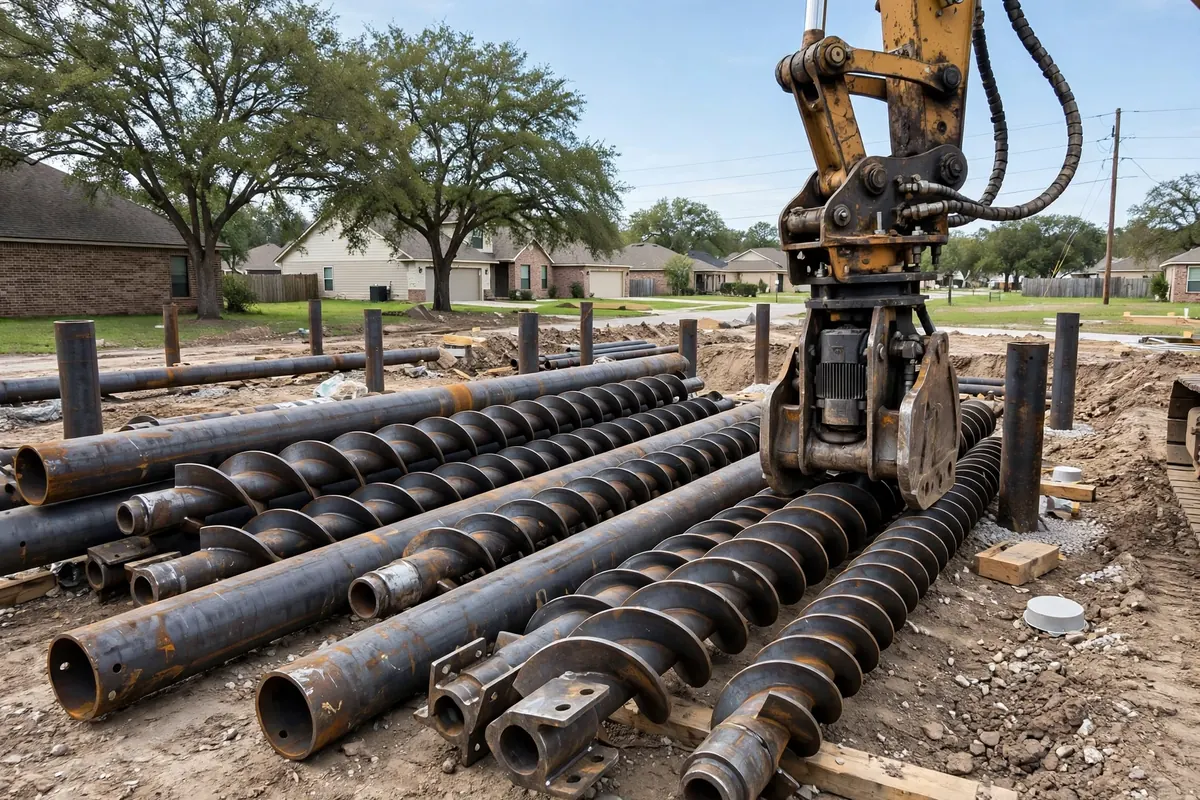
Steel piers are the most common fix for a settling slab in Plano. The crew digs a small hole beside the foundation at each pier location, attaches a steel bracket under the footing, and drives sections of steel pipe down through the clay with a hydraulic ram. The pipe keeps going until it reaches soil firm enough to hold the weight of the house, or rock, and then the crew lifts the slab with the bracket and locks the pier in place.
The strength of a steel pier is that it bypasses the active clay entirely. The top few feet of soil under a Plano home swell and shrink with the seasons, and a pier that ends in that layer will move with it. A pier driven down to stable soil holds still while the clay moves around it, which is why the lift it gives tends to last. The work is done from outside the house, one pier at a time, and the holes are backfilled when the lift is done. Steel pier installation walks through the job step by step, and concrete slab foundation repair covers how piers fit into a full slab repair.
Steel piers are not a fit for every problem. They lift a slab that has settled, but they do not fix a slab that has heaved upward from swelling clay, and they do not fix drainage or a plumbing leak. The inspection readings show whether settlement is the problem, and the pier plan follows the readings.
Helical piers and where they fit
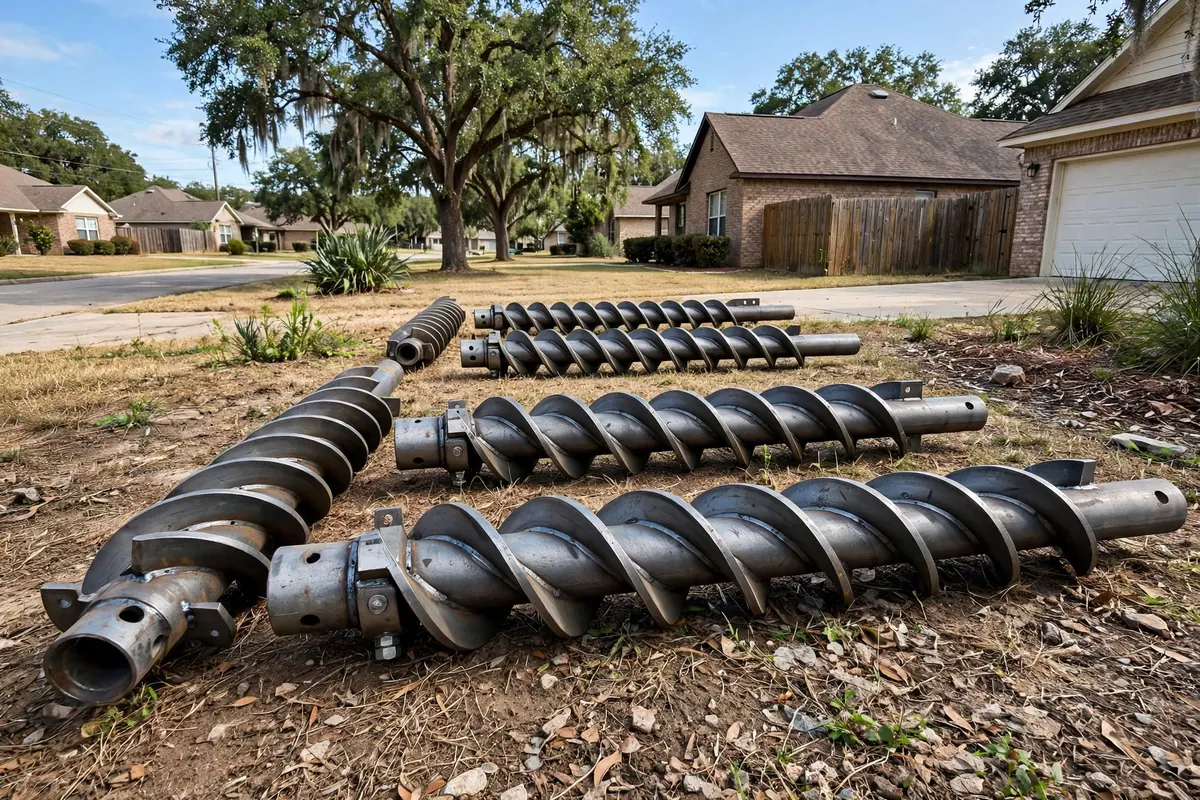
A helical pier looks like a steel shaft with screw plates welded along its lower end, and it is turned into the ground the way a screw turns into wood. A hydraulic drive head rotates the pier, and the plates pull it down through the soil until the torque reading shows it has reached firm ground. The bracket under the footing is then attached the same way as a steel pier, and the house is lifted and locked.
Helical piers fit jobs where driving a straight pier is difficult. Lighter structures, porches, and additions often suit them, and they work well in soils where a driven pier might deflect or stop short. They also go in with less vibration than a driven pier, which matters close to an older brick wall or a swimming pool. The crew reads the torque as the pier goes in, so the depth is set by the soil, not by a guess. Steel pier installation also covers helical work, since the two methods share the same bracket and lifting step.
The choice between a driven steel pier and a helical pier is a soil question, not a brand question. The inspector looks at the soil, the load on the footing, and the access around the house, and the plan names the pier that fits those facts. A homeowner does not need to pick the pier type in advance, but knowing the difference makes the plan easier to follow.
A closer look. Helical pier with screw plates ready for installation beside a house.
Foam lifting for sunken concrete slabs
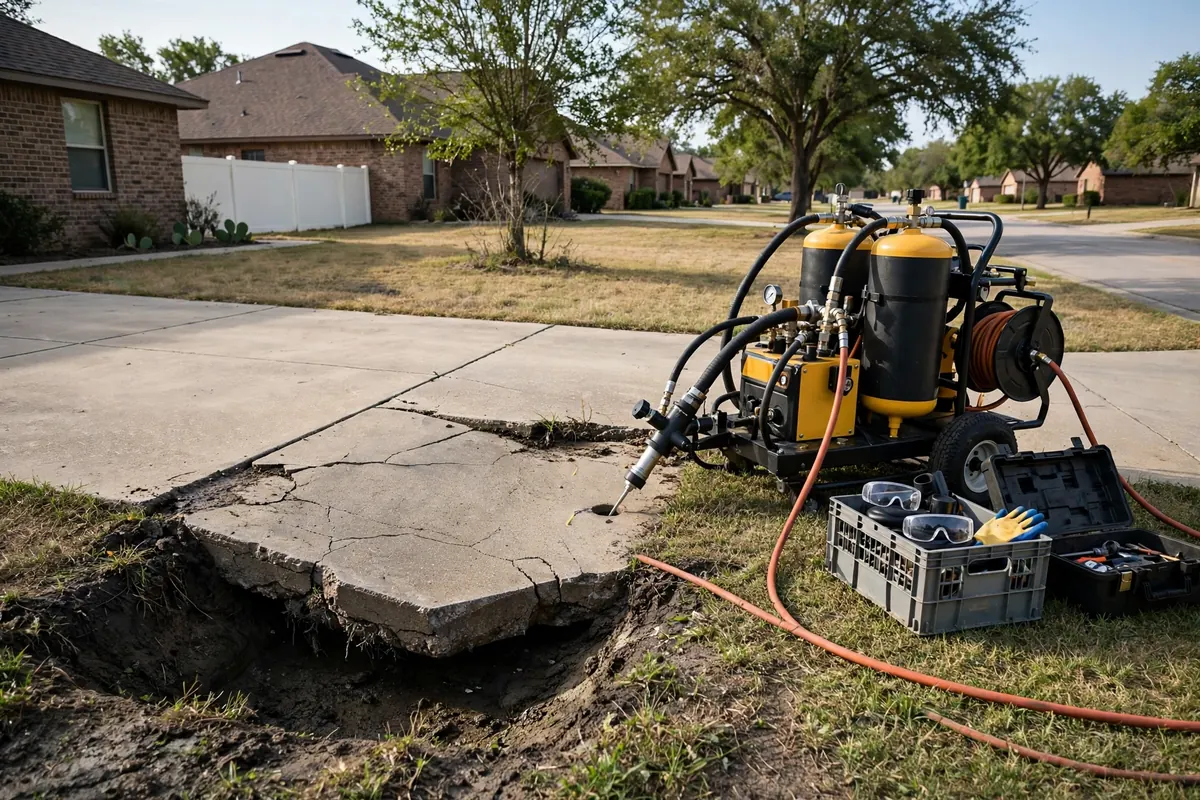
Foam lifting, also called polyurethane injection, raises sunken concrete without digging it up. The crew drills small holes through the slab, about the width of a fingertip, and injects a two-part foam that expands under the slab, fills the hollow beneath it, and lifts the concrete back toward level. The foam hardens in minutes, and the holes are patched the same day.
Foam lifting for flatwork, not houses
Foam fits flatwork best: driveways, patios, walkways, and porch slabs that have sunk because the soil under them washed out or settled. It is a good fit for a slab that needs to come up an inch or two and for a job where the homeowner wants the concrete back in use quickly. It is not a fix for a house foundation that has settled, because a house needs the deep support of a pier, not a foam pad under the slab. Concrete lifting and leveling covers foam work in detail, including the void filling that goes with it.
One caution matters with foam. If the soil under the slab is still washing away, from a leak or bad drainage, the foam will lift the slab and the soil will keep leaving, and the slab will sink again. The crew should check the water first, and the homeowner should fix the water problem alongside the lift.
Not sure what you are seeing?
An inspection measures the floors and the brick, so you get readings and a written plan instead of guesses. Call (972) 430-3826 or book an inspection.
Pier and beam adjustments and shimming
A pier and beam home is re-leveled from underneath, in the crawl space. The crew jacks the beams up in small steps, a fraction of an inch at a time, and slides steel shims between the beam and the pier to hold the new height. A pier that has settled or crumbled is replaced with a new concrete pier, and a beam that has sagged or rotted is sistered with new lumber or replaced. The floor comes back toward level as the beams are adjusted, and the doors and windows above them start to close cleanly again.
The slow pace matters. Lifting a house too fast cracks drywall and brick, so the crew lifts in stages and lets the frame settle between steps. The work is quiet and mostly out of sight, and the yard is barely touched, which is one of the real advantages of a pier and beam home. Pier and beam foundation repair explains the full job, and house leveling and lifting covers the lifting sequence for both foundation types.
Shimming is also the method that shows whether the crawl space is healthy. A crew working under the house sees the moisture, the wood, and the piers directly, and a damp crawl space with soft beams needs attention before any leveling will hold. Crawl space repair covers the moisture and ventilation work that keeps a re-leveled floor level.
What it looks like. Foam injection equipment beside a sunken concrete slab.
Matching the method to the problem
The inspection decides the method, and the order is always the same: measure first, then match. Elevation readings show whether the house has settled, heaved, or tilted, and the pattern of the readings points at the cause. A slab that has settled on one side calls for piers on that side. A sunken driveway calls for foam. A pier and beam floor that slopes toward a settled pier calls for shimming and a new pier. A house with a plumbing leak calls for the leak to be fixed before any lifting starts.
A good repair plan names the method, the number of piers or lift points, and the order of the work, and it explains the water and drainage steps that go with it. If a plan names a method without explaining why it fits your readings, ask for the explanation, because the why is the part that tells you the plan is built for your house. How to choose a foundation repair company in Plano covers the questions that separate a careful plan from a quick one, and how long does foundation repair take? covers the schedule once the plan is set.
Repair methods compared
Method
What it fixes
Best fit
Steel piers
Settling slab or footing
Slab homes on deep clay
Helical piers
Settlement, lighter loads
Porches, additions, tight access
Foam lifting
Sunken flatwork
Driveways, patios, walkways
Shimming and pier replacement
Sloping pier and beam floors
Raised homes with crawl space access
Questions we hear before a repair starts
Plain answers to the questions Plano homeowners ask us most about this topic.
?
How do crews know how deep to drive a pier?
The pier is driven until it reaches soil firm enough to hold the house, and the crew reads the resistance as it goes down. The depth is set by the soil under your house, not by a standard number, which is why pier counts and depths differ from one home to the next.
?
Can a house be lifted back to perfectly level?
A house can usually be brought much closer to level, but the goal is a stable, even foundation rather than a perfect number on a level. Lifting too far or too fast can crack drywall and brick, so crews lift in small steps and stop when the readings look right.
?
Does foam lifting work under a house slab?
Foam is the right tool for driveways, patios, and walkways, not for a house foundation that has settled. A house needs piers driven to stable soil, because foam under a house slab cannot carry the load the way a pier can.
?
Which repair method lasts the longest?
The method that matches the cause lasts longest, not any one method on its own. Piers hold when the problem is deep settlement, foam holds when the problem is a void under a slab, and drainage holds when the problem is water. A repair that ignores the cause will move again, so the inspection matters more than the method name.
Related guides
More reading on the same ground, written for Plano homeowners.