Pier and Beam vs Slab Foundations: Which Holds Up Better in Plano?
On Plano clay, neither foundation type wins outright, and the better choice depends on the house, the soil under it, and how it was built. Pier and beam foundations reach below the most active soil and are easier to get under for repairs, while slab foundations are simpler, cheaper to build, and very common across the city.
By Plano Foundation Repair · Last updated November 24, 2026
The real difference shows up when something goes wrong. A pier and beam home can be re-leveled from underneath, and a slab home usually needs piers driven beside it. This guide compares the two types side by side, on the ground that matters in Plano, so you can judge the house in front of you instead of the idea of it.
How a pier and beam foundation carries a house
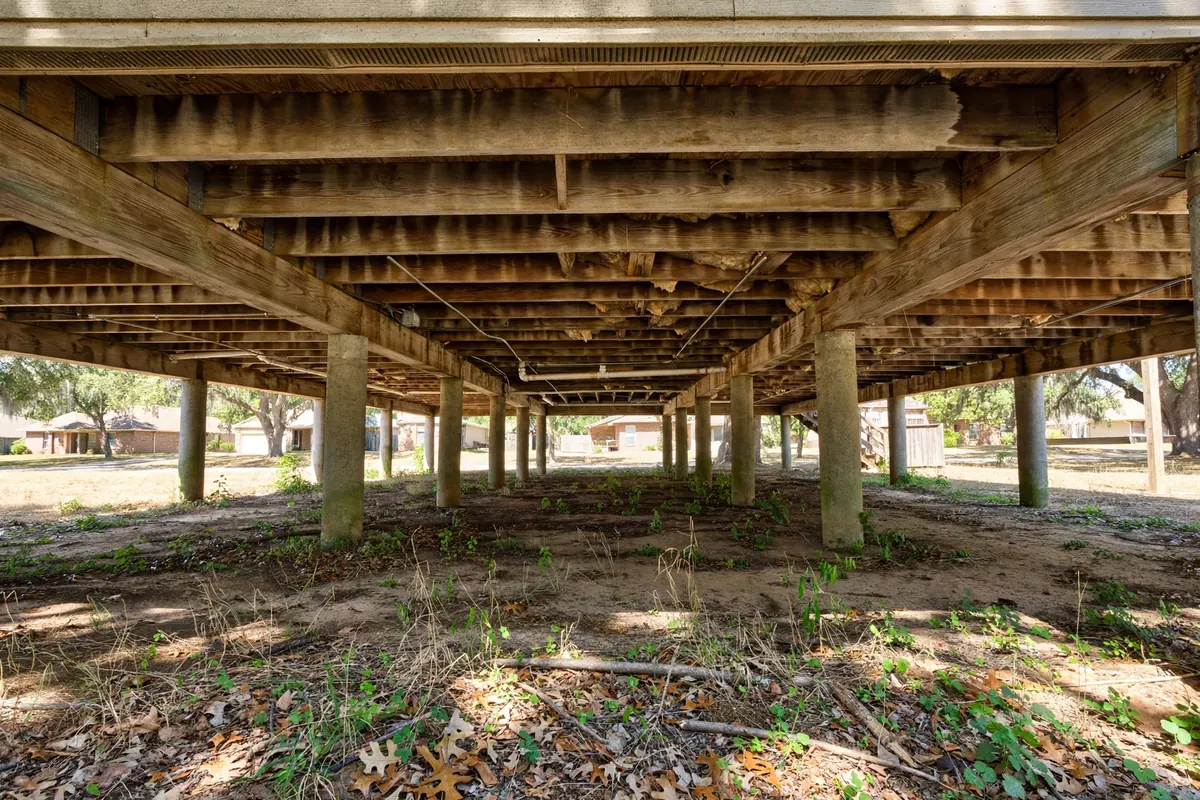
A pier and beam foundation lifts the house off the ground on a grid of concrete piers, with wooden beams spanning between them and the floor framing sitting on the beams. The space under the house, the crawl space, gives access to plumbing, wiring, and the structure itself. The piers are meant to reach down through the soil layer that swells and shrinks with the seasons, so the house rests on ground that moves less.
That design has a clear strength in Plano. When one pier settles, a crew can get under the house, add shims, replace a pier, or adjust the beam, and the floor comes back toward level without digging around the outside of the house. The crawl space also makes a plumbing leak easy to find and fix, because the pipes are visible instead of buried in concrete. Pier and beam foundation repair covers the common fixes, and crawl space problems in pier and beam homes covers what goes wrong underneath.
The trade off is the crawl space itself. It needs to stay dry and ventilated, because damp air under a house rots beams, invites pests, and leaves a musty smell in the rooms above. A pier and beam home with a dry, clean crawl space is a strong house. One with standing water under it is a house with a slow problem.
How a slab foundation carries a house
A slab foundation is a single thick plate of concrete poured on the ground, with steel bars inside it and thicker edges where the walls sit. The house is built directly on the plate, and the plumbing runs under the concrete or through it. There is no crawl space and no basement, which is the standard for most homes built in Plano since the 1970s.
Slabs are popular for good reasons. They are straightforward to build, they keep the house low to the ground, and they have no crawl space to flood or ventilate. A well built slab on steady soil can serve a house for decades with no trouble at all, and most of the slab homes in Plano do exactly that. The steel inside the concrete lets the slab flex a little when the soil moves, which is why a slab can ride out a normal wet and dry cycle without cracking.
The weakness of a slab shows up when the soil movement is uneven. A slab cannot be adjusted from underneath the way a pier and beam floor can, so a slab that bends needs piers driven beside the foundation to lift and hold it. Plumbing under a slab is also harder to reach, because a leak means cutting through concrete to get at the pipe. Concrete slab foundation repair explains how pier work steadies a slab, and how a water leak under your slab damages the foundation covers the leak problem in detail.
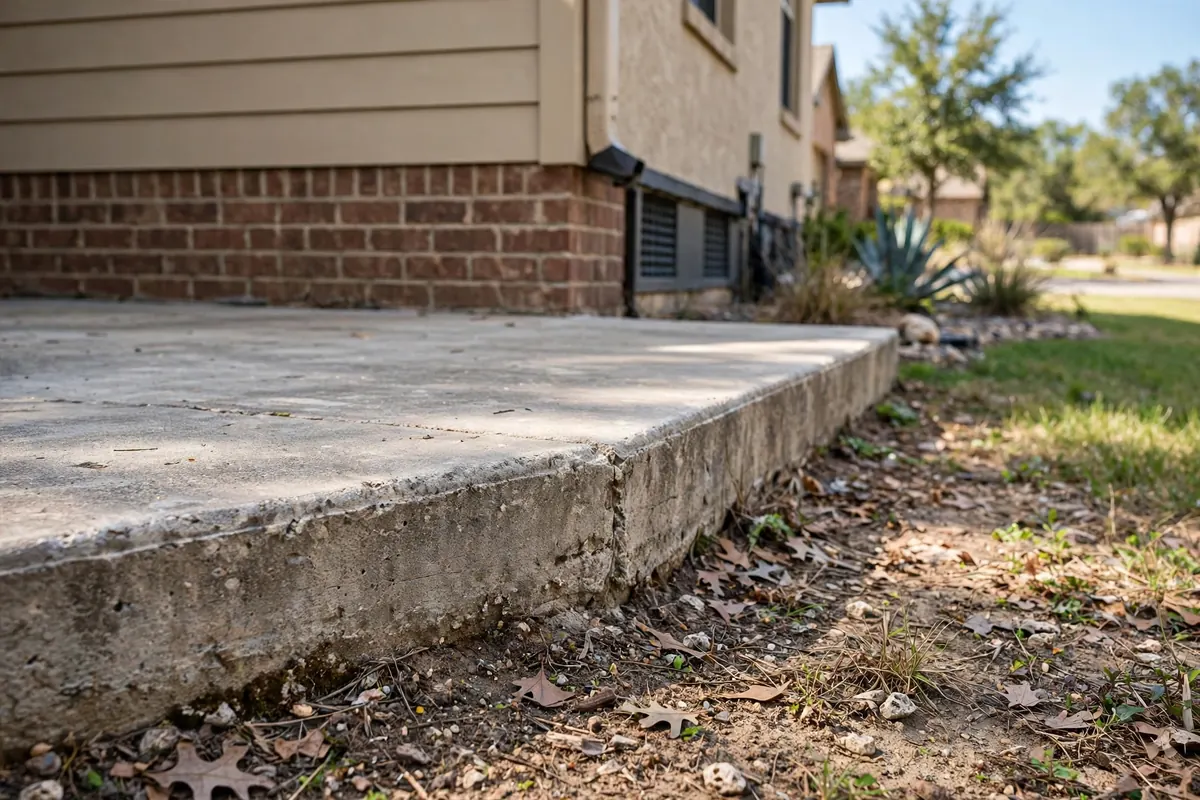
A closer look. Concrete slab edge of a house at ground level.
Repair access and plumbing: where the two differ
Repair access is the biggest practical difference between the two types. Under a pier and beam home, a crew works in the crawl space, lifting beams with jacks, shimming piers, and replacing damaged wood, all from underneath the house. The yard stays mostly untouched, and the work is often done in a few days with the house still lived in. Under a slab home, the crew digs holes around the outside of the foundation, drives steel piers down to stable soil, and lifts the slab from the brackets, which means excavation in the yard and a longer job.
Plumbing leaks under each type
Plumbing follows the same split. A leak under a pier and beam home shows up in the crawl space, where it can be seen and fixed without touching the structure. A leak under a slab hides under concrete, and finding it takes listening equipment and sometimes a camera, then cutting the slab to reach the pipe. That is why a slab leak that runs for months can wash out soil under the slab and leave a hollow that the concrete then sags into. Steel pier installation is the usual fix for a slab that has settled, and foundation repair methods explained compares piers, foam, and other methods side by side.
Neither difference makes one type bad and the other good. It makes them different to own, and a buyer who knows the difference can look at the right things during a showing instead of guessing.
Pier and beam vs slab at a glance
Feature
Pier and beam
Slab
How it carries the house
Piers and beams, house raised off the ground
One thick concrete plate on the ground
Repair access
From the crawl space underneath
Piers driven beside the foundation
Plumbing access
Pipes visible in the crawl space
Pipes under concrete, harder to reach
Main weakness in Plano
Damp crawl space, settling piers
Uneven clay movement bending the plate
Common in Plano
Older homes, some newer custom builds
Most homes built since the 1970s
Not sure what you are seeing?
An inspection measures the floors and the brick, so you get readings and a written plan instead of guesses. Call (972) 430-3826 or book an inspection.
Which type holds up better on Plano clay
On the deep clay in the older parts of Plano, a pier and beam home has a small edge, because its piers reach below the soil that moves most, and because it can be re-leveled from underneath when it does move. That edge disappears fast if the crawl space stays damp, because rot and pests can do more damage than the clay ever would. On the graded fill soil in some newer subdivisions, a well built slab often does just as well, because the fill was placed and compacted with the clay in mind.
The honest answer is that the build quality and the water habits around the house matter more than the foundation type. A slab with clean gutters, steady watering, and soil sloping away from the walls will outlast a pier and beam home with a wet crawl space and a big oak drinking from one side. A pier and beam home with a dry crawl space and even moisture will outlast a slab with a downspout dumping water at one corner. The house in front of you, its soil, its trees, and its drainage, decides the question, not the category it belongs to.
If you are choosing between two houses, look past the foundation type and look at the signs. Check the doors, the brick, the floors, and the ground around the house, and read signs your Plano home's foundation is moving before the showing. Then order an inspection and let the readings settle the question.
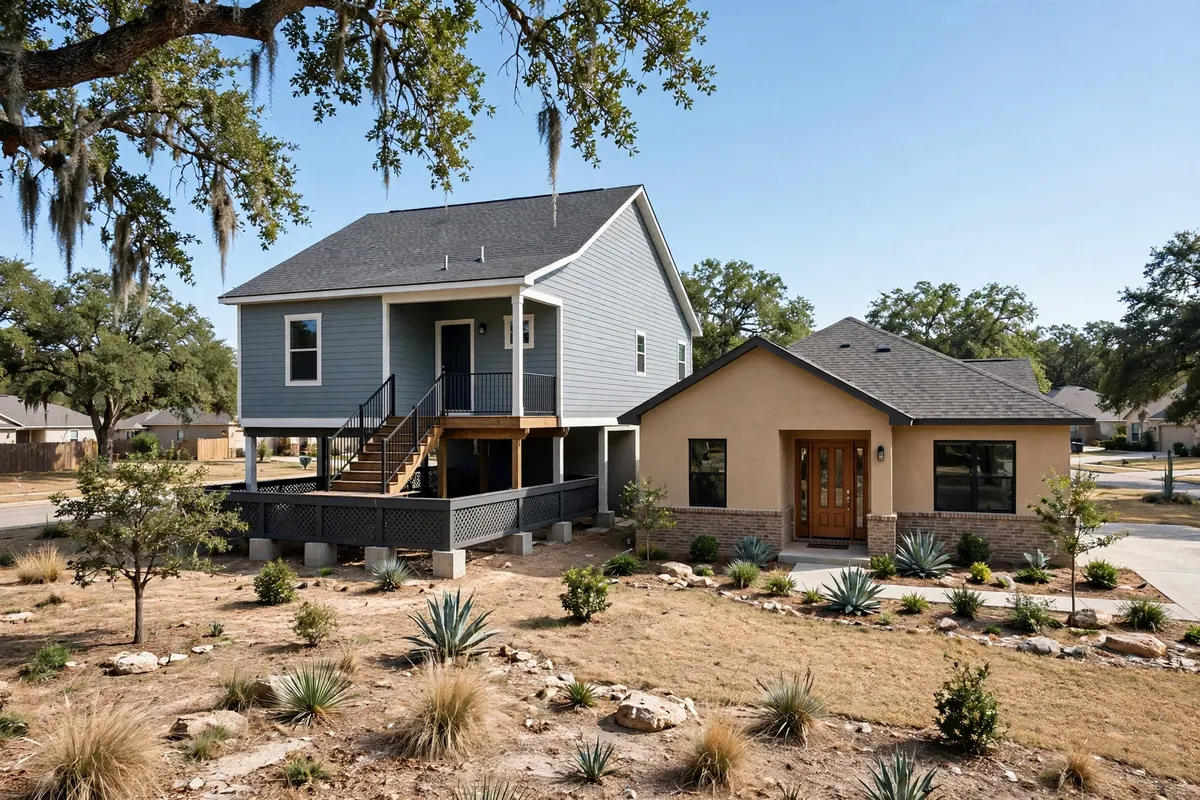
What it looks like. Raised pier and beam house beside a slab-on-grade house on the same street.
What to check before you buy either type
For a pier and beam home, ask to see the crawl space, or have the inspector go in with a light. Look for standing water, damp soil, sagging beams, and piers that lean or crumble. Check the floor inside for slope and bounce, and open and close every door. A dry crawl space with straight beams and level floors is a good sign, and a wet one with soft wood is a reason to pause and get a closer look. Buying a home in Plano: how to check the foundation first walks through the full buyer checklist.
For a slab home, walk the outside and look at the brick for stair-step cracks, check the soil line for gaps where dry clay has pulled away, and look at the garage floor for cracks that run across the slab. Inside, check doors and windows on every wall, and look for drywall cracks above door frames. Ask the seller about any past foundation work and any plumbing leaks, and read the disclosure with care. Foundation inspection covers what the inspector measures on either type, and the readings matter more than the label on the foundation.
What homeowners ask next
Three questions Plano homeowners ask us most, answered in plain words.
?
Is a pier and beam house easier to repair?
Usually, yes. A crew can work in the crawl space to shim piers and adjust beams without digging around the outside of the house, and plumbing is visible and reachable. The work still needs a proper inspection and a written plan first.
?
Do slab homes crack more on Plano clay?
Slab homes show clay movement as cracks in brick and drywall and as sloping floors, because the slab bends when the soil under it moves unevenly. A well built slab on steady, evenly watered soil can go decades without trouble.
?
Can a slab home be converted to pier and beam?
That is a major structural job, not a routine repair, and it is rarely the right answer to a settling slab. Steel piers driven beside the foundation usually steady a slab with far less disruption, and an inspection can show whether that fits your house.
Related guides
More reading on the same ground, written for Plano homeowners.