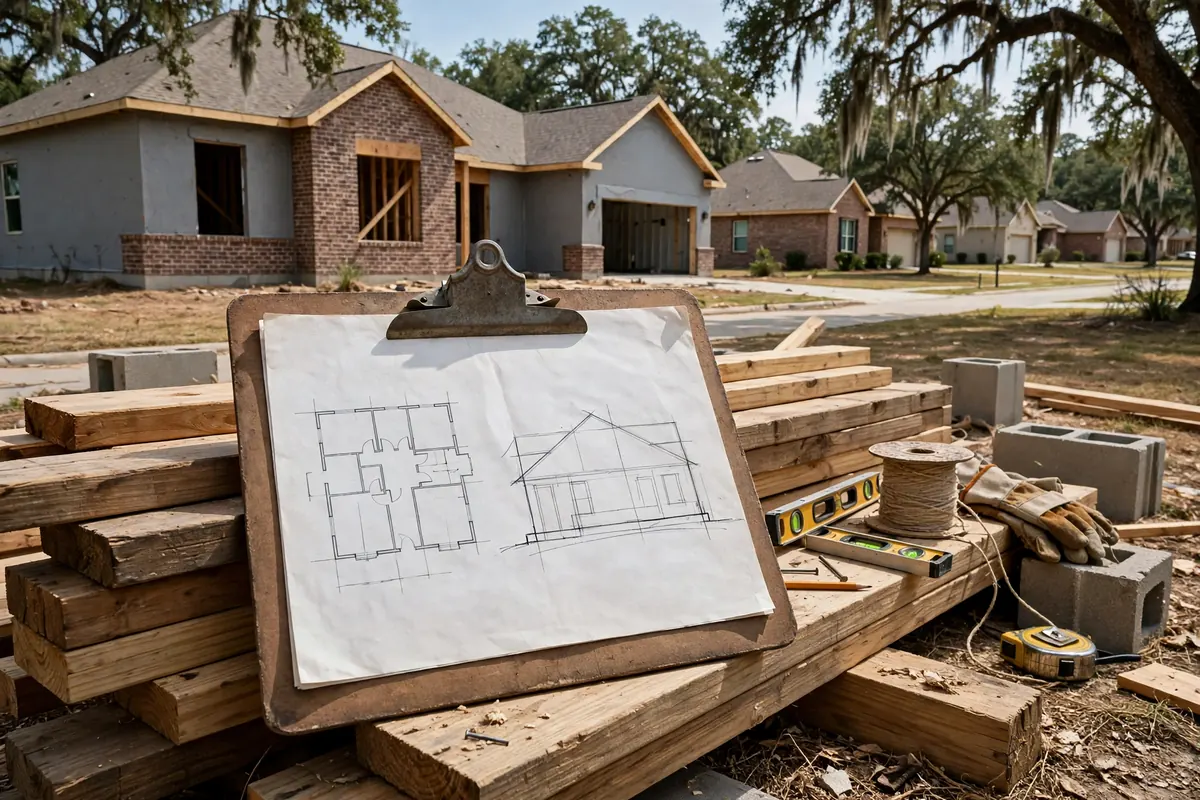
Foundation Inspection
Every repair starts with a reading. We take floor elevations in every room, measure the cracks, walk the outside of the house, and leave you a written plan with the numbers in it.
Learn more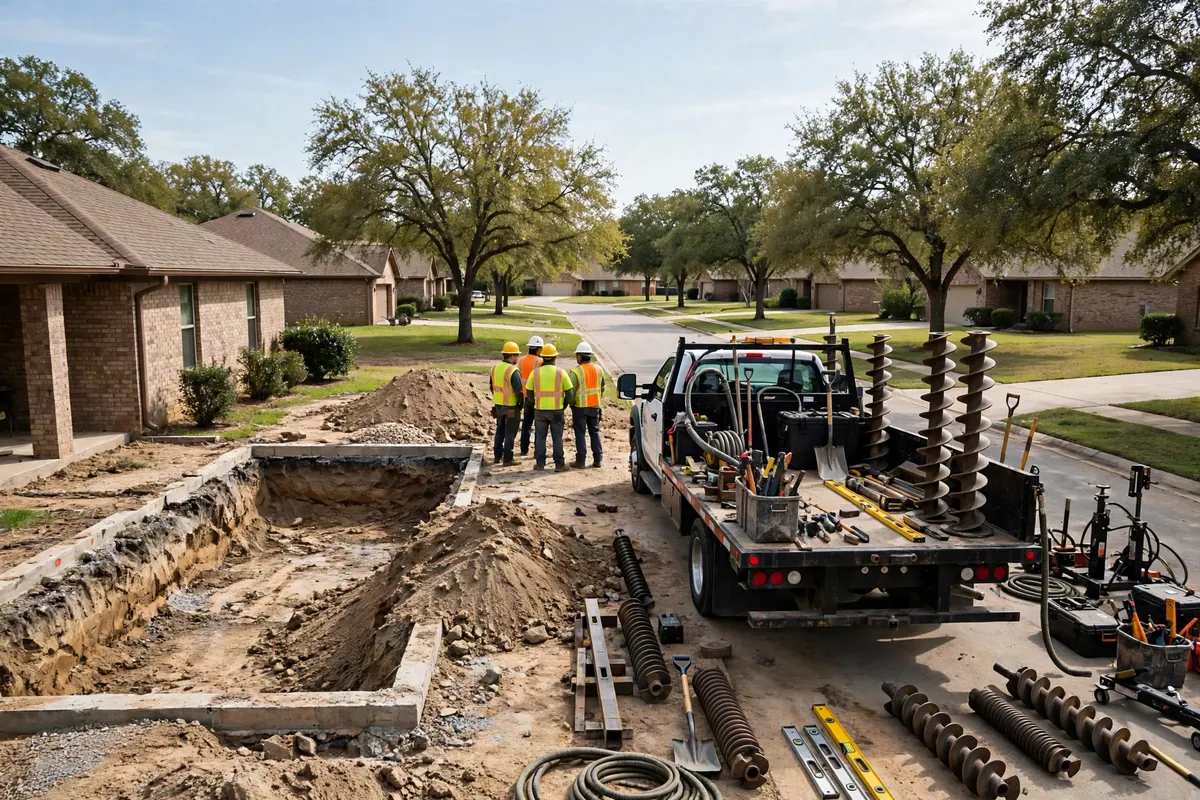
Every service below starts the same way: with floor readings, crack measurements, and a written plan. The list covers the whole job, from the first inspection to the last patch of drywall, and each page explains its own service in full.
One way of working, whatever the job.
Every service on this page is built for the same ground: the Houston Black clay under Plano, a soil that swells when it is wet and shrinks when it is dry. That clay is the reason a slab cracks, a pier settles, a floor slopes, and a door sticks, and it is the reason every job here starts with a reading rather than a guess. A foundation inspection takes floor elevations in every room, measures the cracks, and walks the outside of the house, so the plan that follows is written from numbers, not from a feeling. The same reading shapes a pier job, a leveling job, and a drainage job, because the house is one structure and the ground below it is one soil.
The services also share a sequence. Readings come first, the cause comes second, and the repair comes third. A crack is sealed after the movement behind it has stopped, not before. A house is lifted after the piers are set, not before. Drainage is fixed so a repair holds, not as an afterthought once it has failed. That order is what makes each step last, and it is why the pages below link to each other so often: a slab job that needs piers points to steel pier installation, a pier job that needs dry ground points to drainage correction, and a lift that leaves cracks behind points to foundation crack repair. The links are the sequence, written out.
Choosing between the services is really choosing between two questions: what has moved, and what is making it move? A slab that has dropped needs concrete slab foundation repair. A raised frame that has sagged needs pier and beam foundation repair. A house that has settled on one side needs house leveling and lifting. Water pooling at the wall needs drainage correction, and a damp space under the house needs crawl space repair. The inspection answers both questions, and the pages below explain each answer in full, with the method, the process, and what to expect after.
Each card links to its own full page.
Every repair starts with a reading. We take floor elevations in every room, measure the cracks, walk the outside of the house, and leave you a written plan with the numbers in it.
Learn more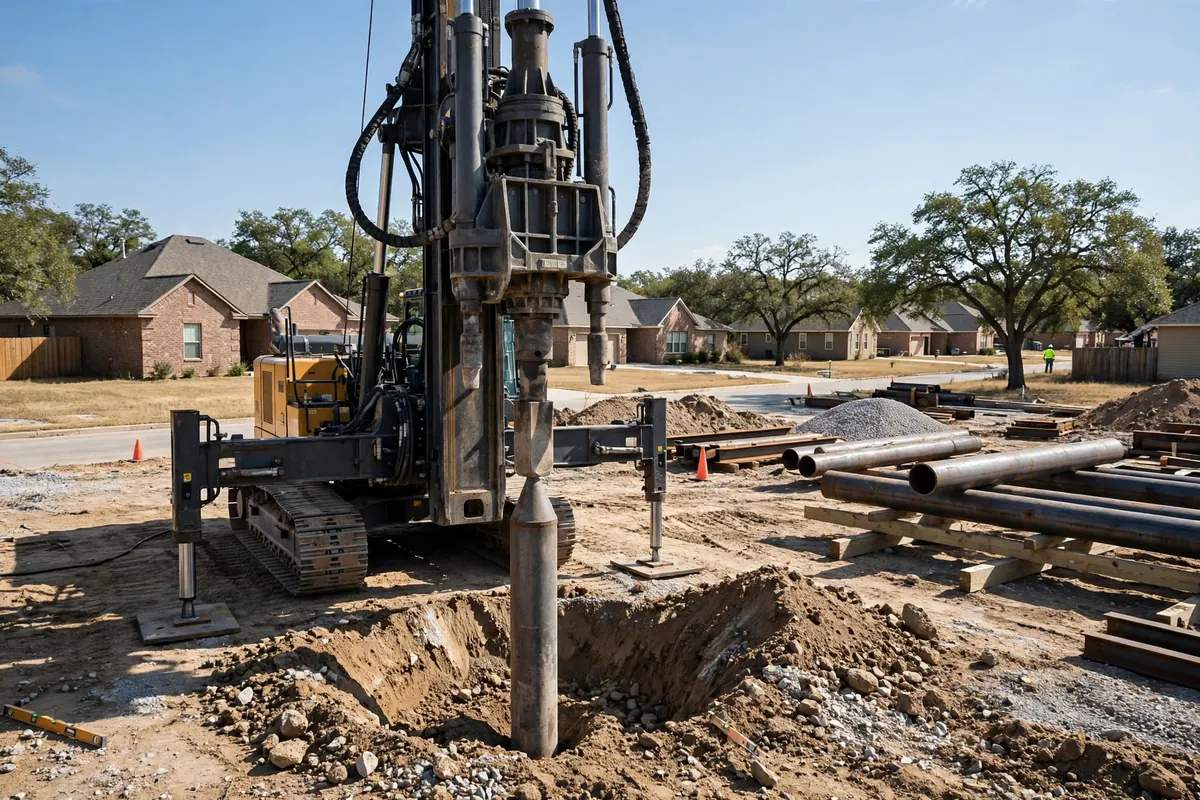
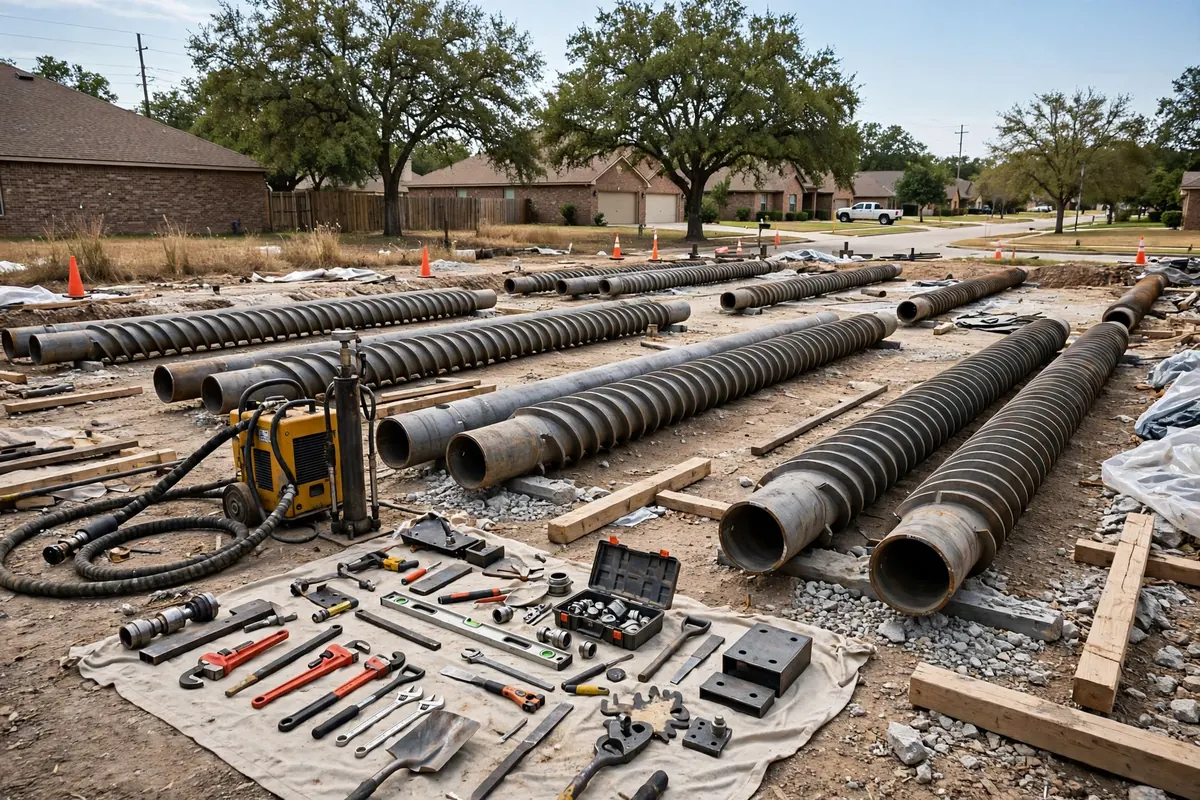
Steel piers carry the weight of a house past the moving clay and down to ground that does not move. Sections are driven hydraulically, bracketed under the footing, and used to lift the house a little at a time.
Learn more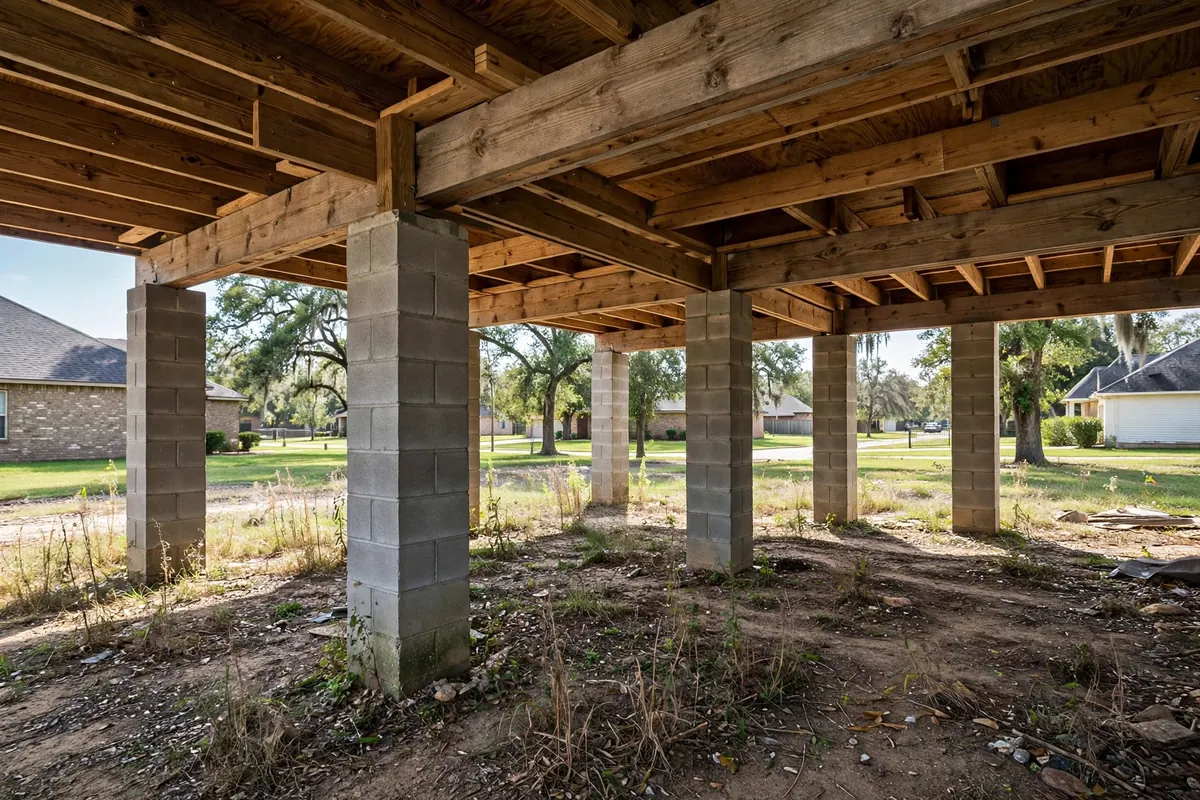
Raised homes move in their own way, pier by pier, as the clay below dries and swells. We read the floors, check each pier and beam under the house, and lift the frame a little at a time until it sits level again.
Learn more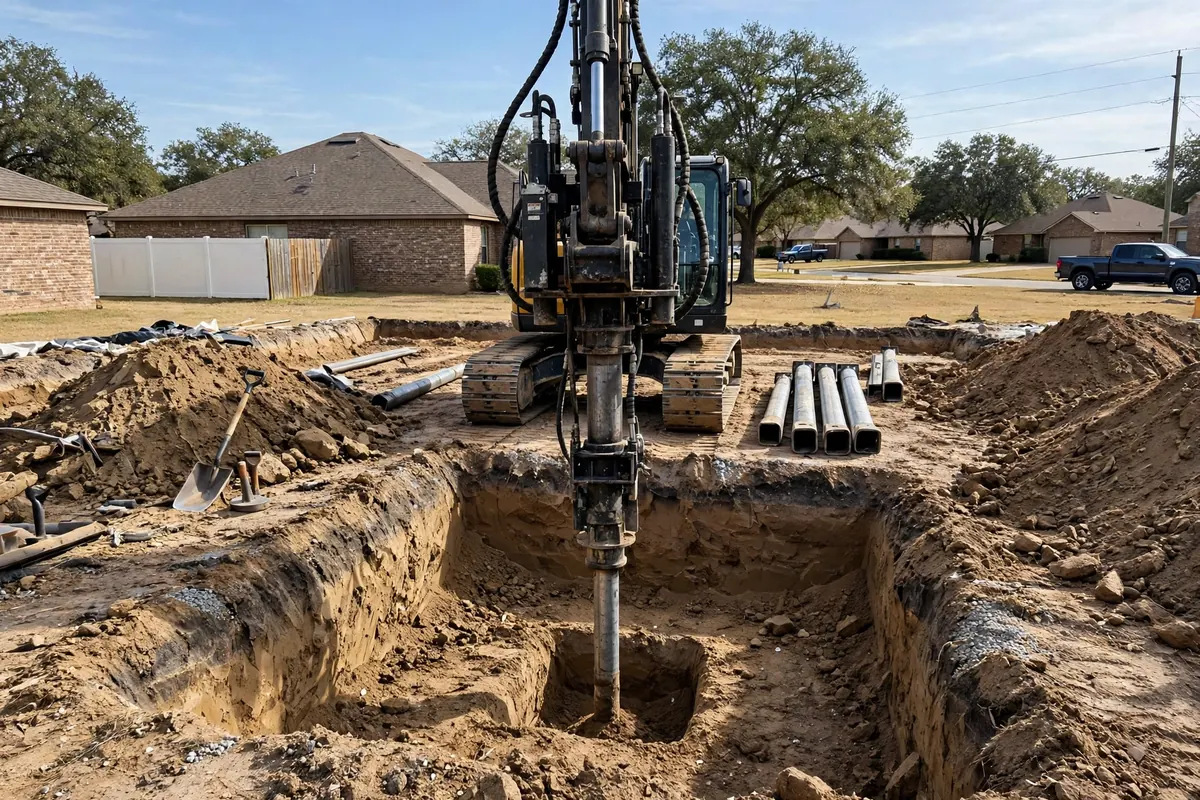
Most Plano homes sit on a single concrete plate, and when one corner of that plate drops, the whole house shows it. Steel piers driven to firm ground carry the slab back toward level and hold it there.
Learn more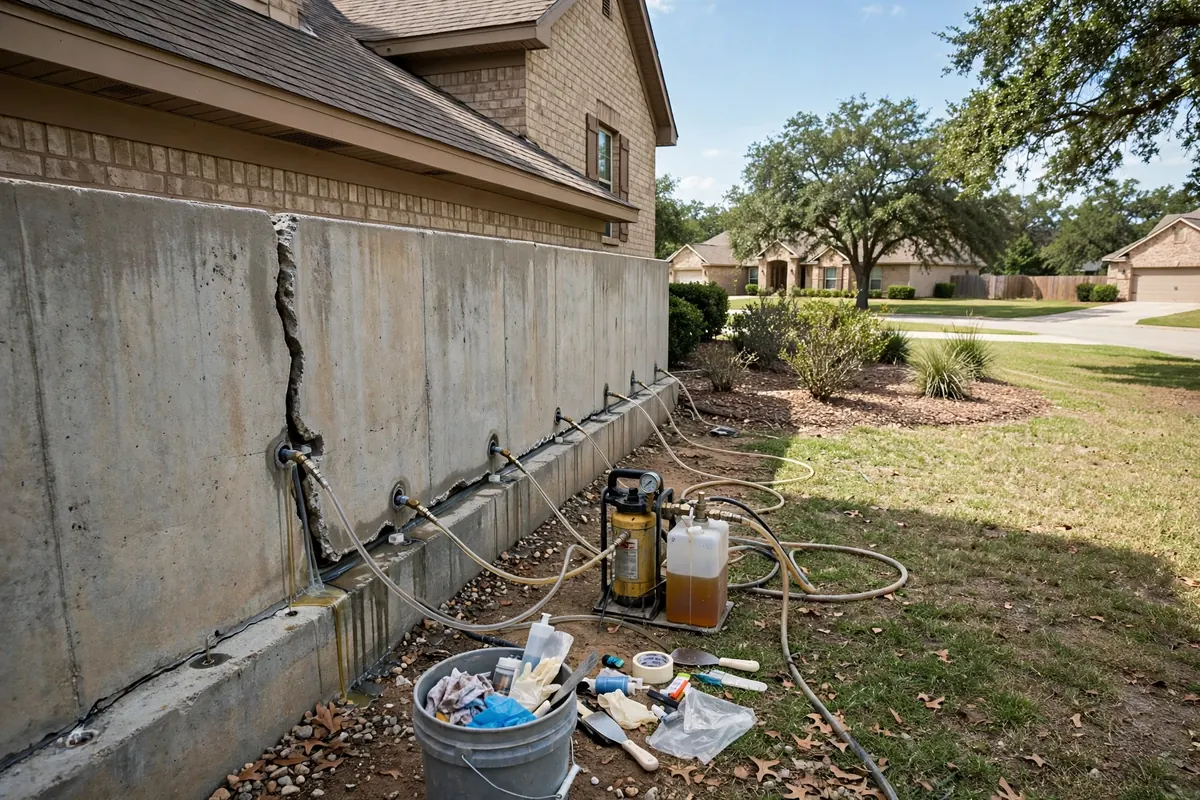
A crack is a message, and the job is to read it before sealing it. We measure each crack, seal the ones that have stopped moving, and watch the ones that are still growing.
Learn more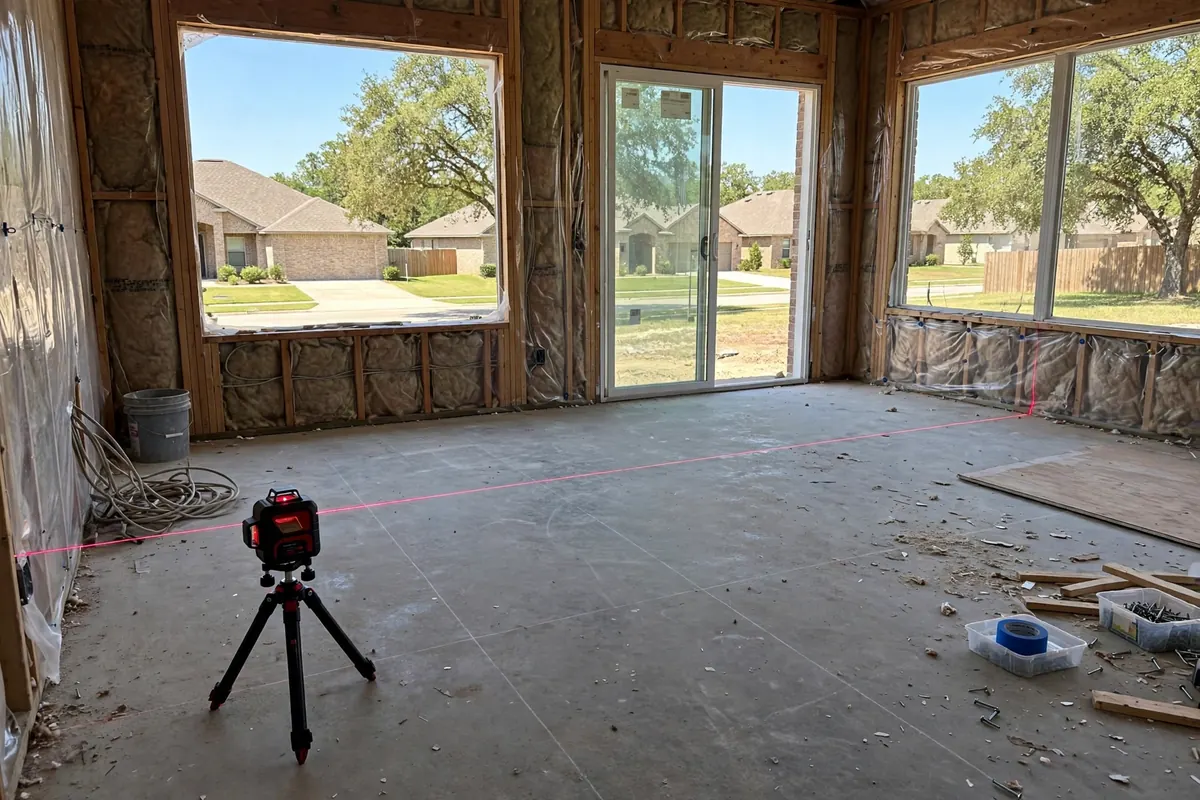
A house that has settled does not have to stay settled. We raise the low side back toward level with piers and jacks, guided by floor readings at every step, so doors work and floors sit flat again.
Learn more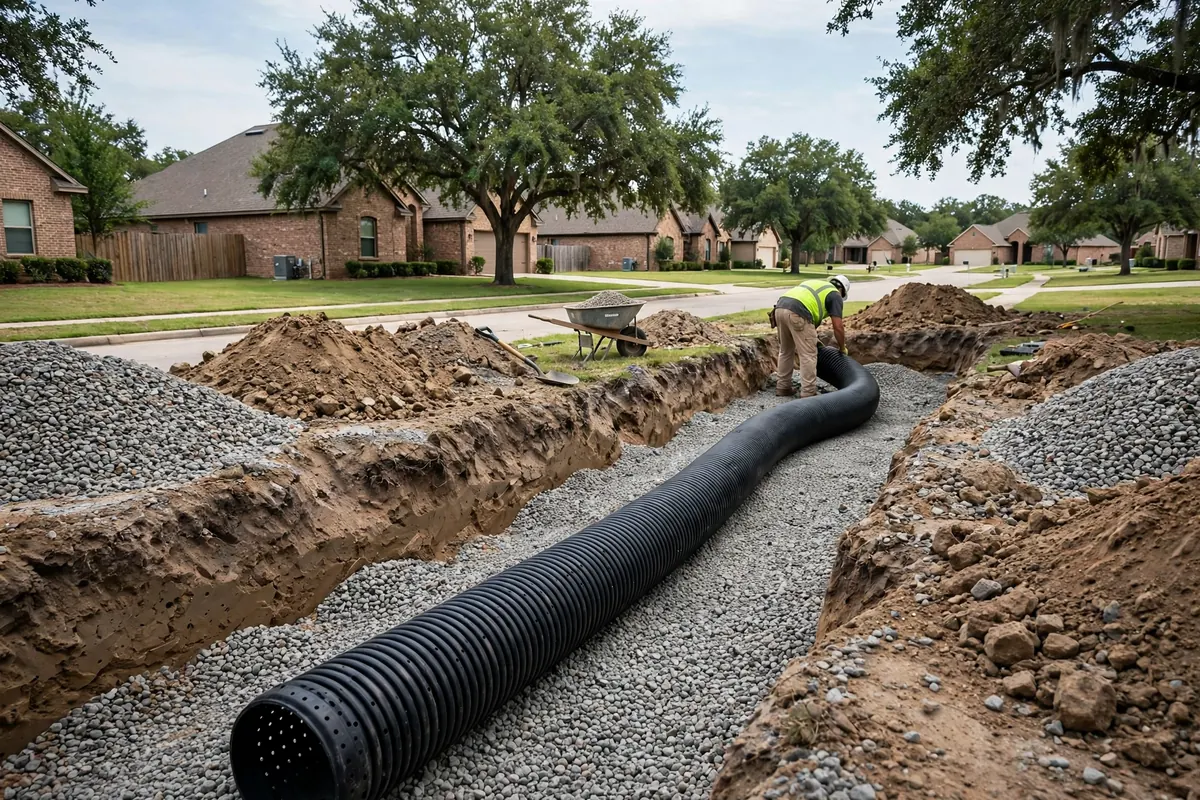
Water is the quiet force behind most foundation trouble in Plano. Grading, gutters, and French drains send it away from the walls, so the clay under your house stays as even as the seasons allow.
Learn more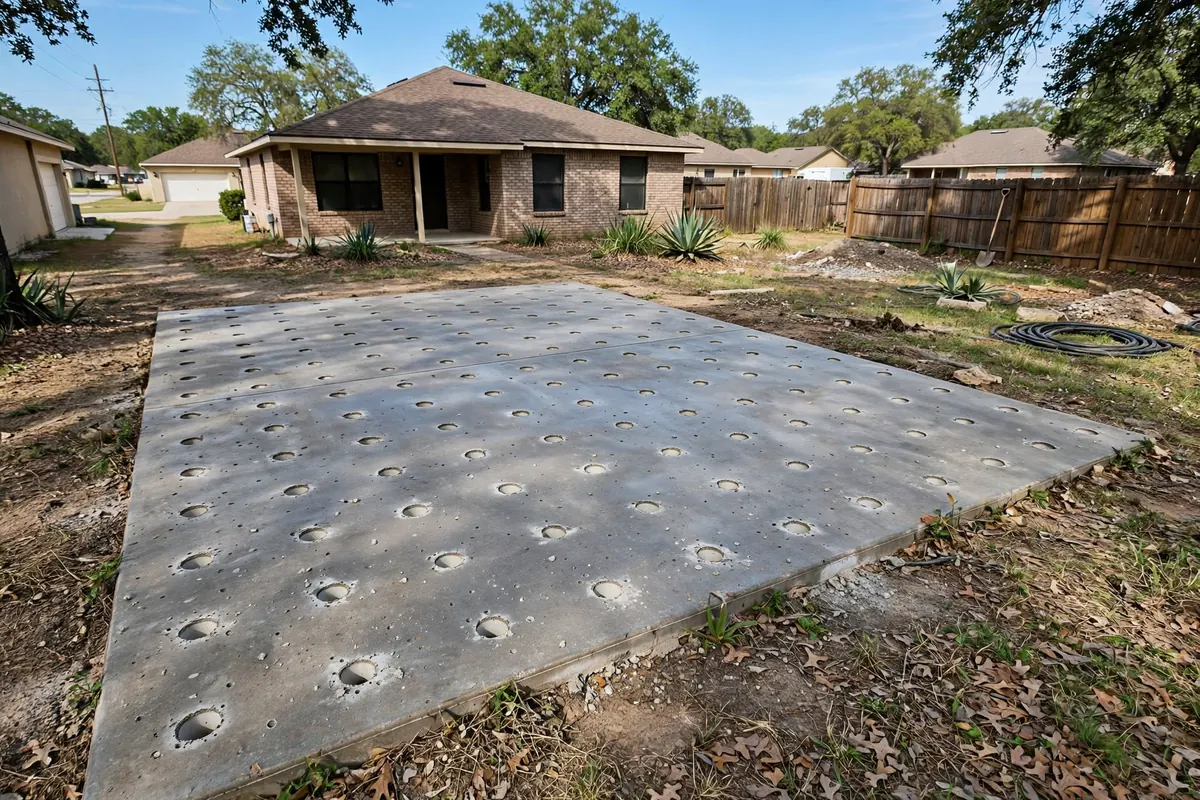
A sunken driveway, patio, or walkway does not need piers. Foam injected under the flat fills the void below it and lifts the concrete back to level, with small drill holes and no digging.
Learn more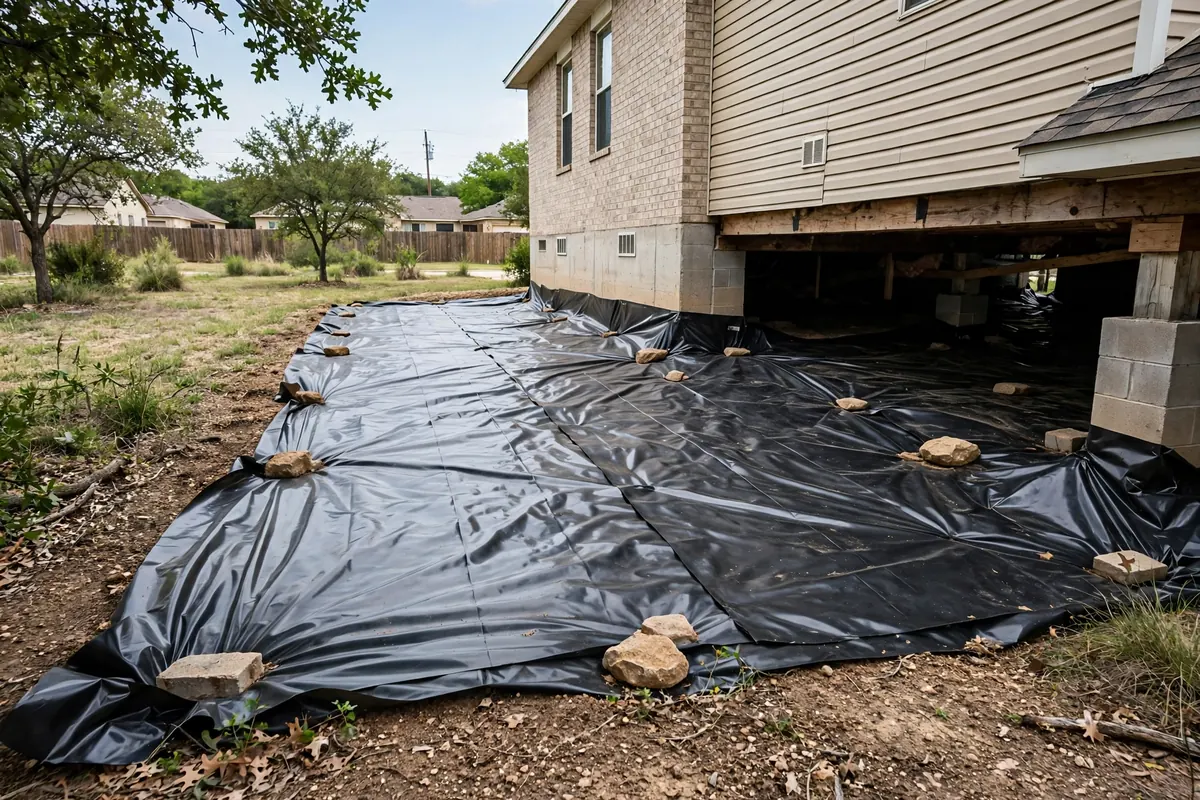
A damp crawl space rots beams, softens the soil under piers, and fills the house with musty air. We dry the space out, protect the wood, and lay a moisture barrier over the soil.
Learn more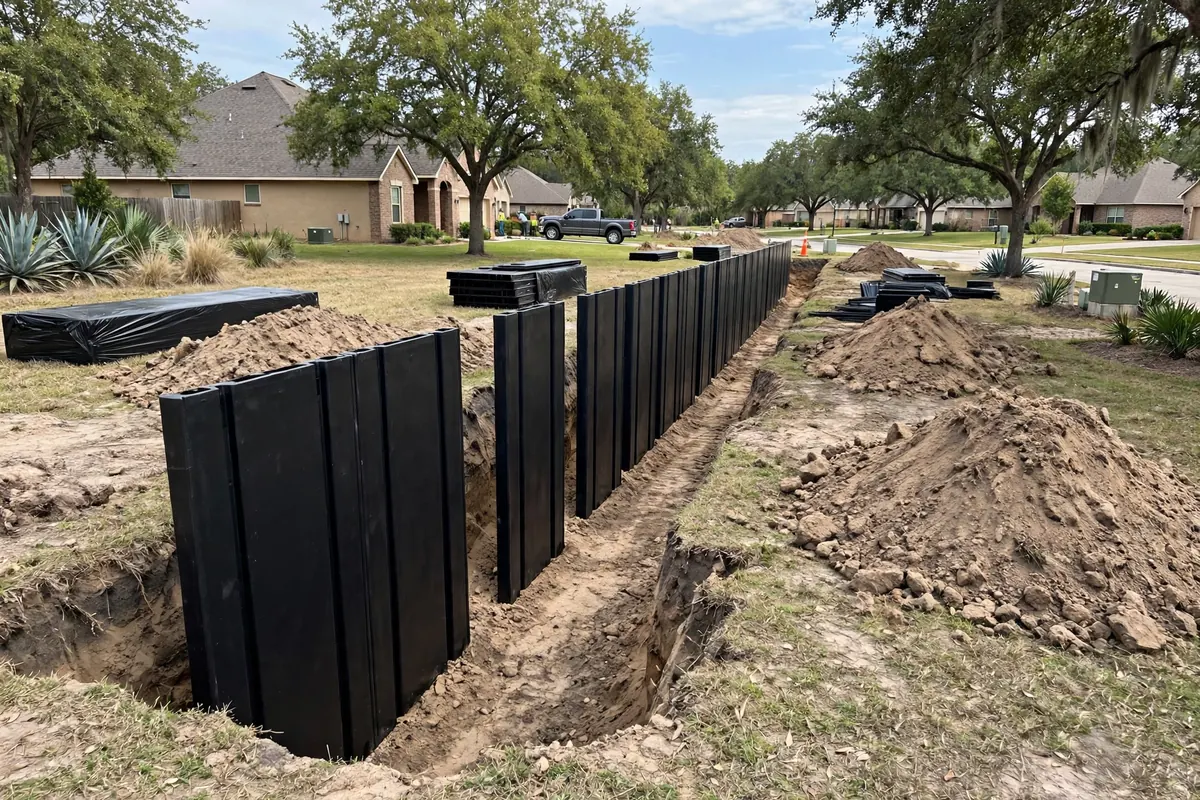
Large trees drink the moisture from the clay all summer, and the soil on the tree side of the house shrinks more than the rest. A deep barrier between the tree and the house slows the roots and steadies the ground.
Learn more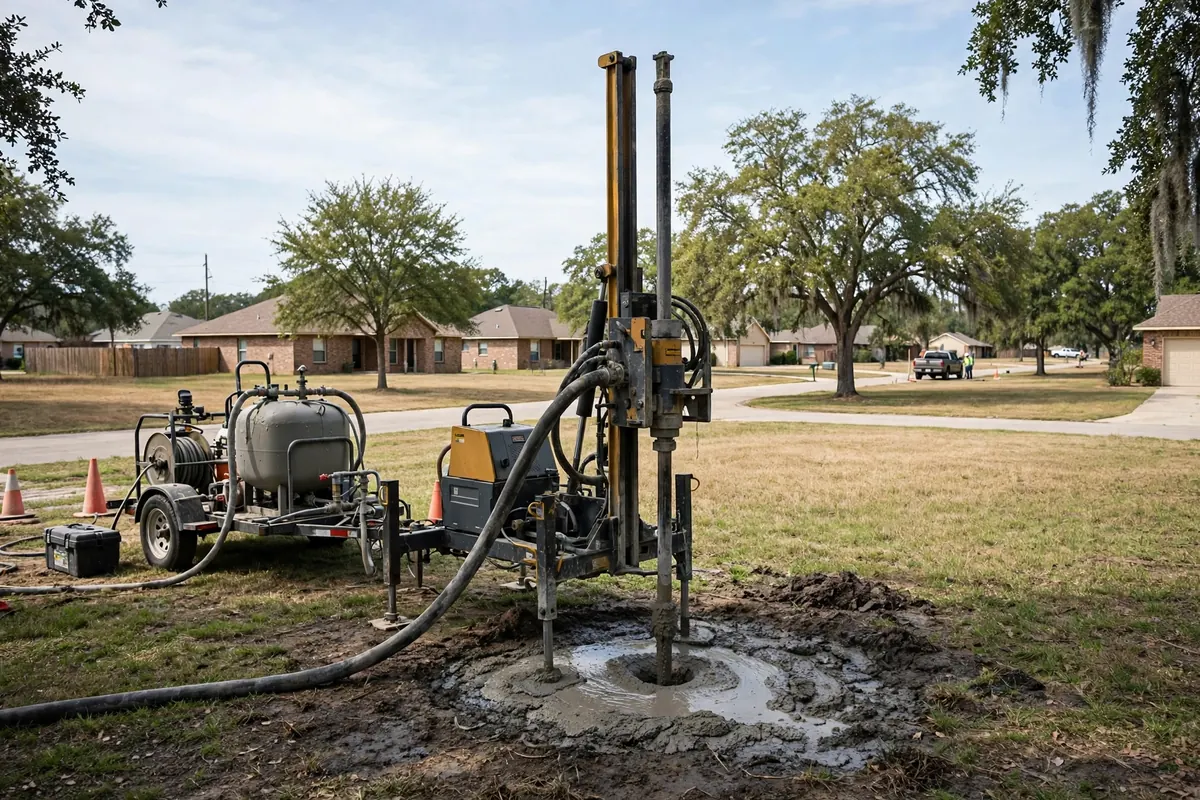
Some ground keeps moving no matter what is built on it. Stabilizing grout injected into the soil firms the clay below the footing, so piers and lifts have steady ground to work with.
Learn more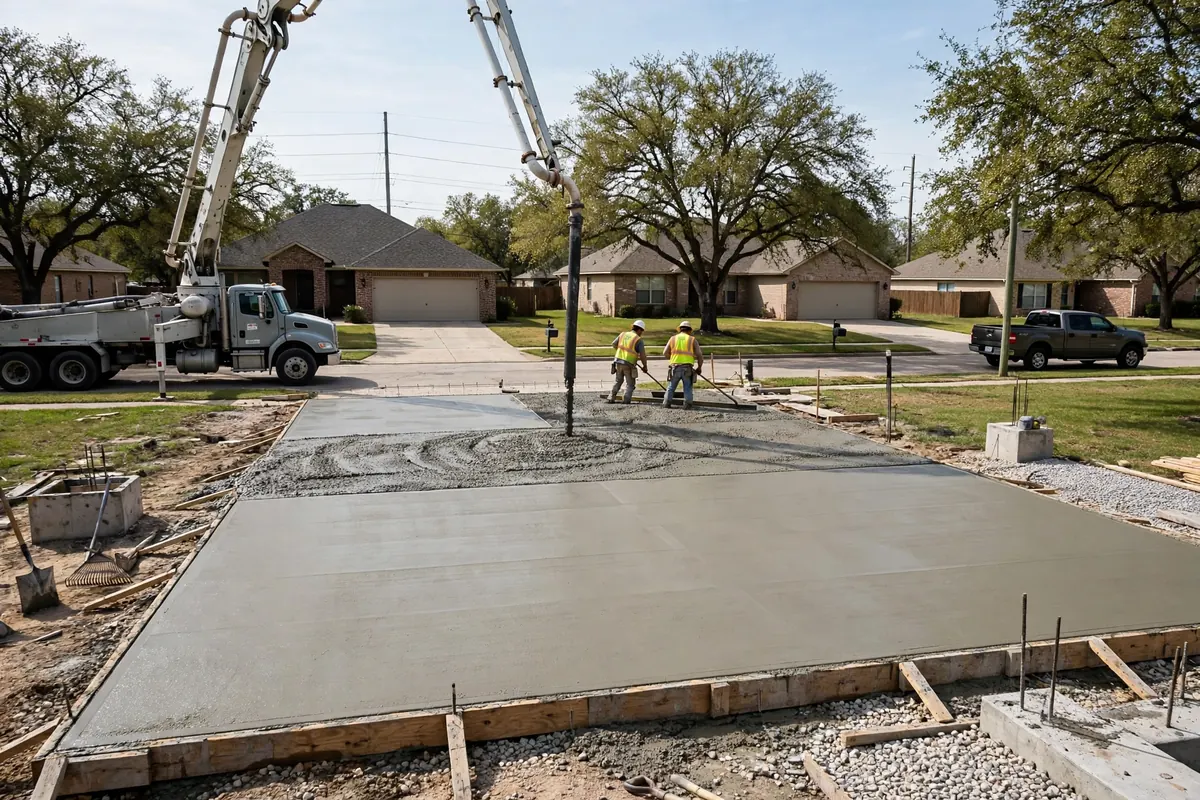
A few slabs are too far gone to lift, cracked through and broken beyond what piers can carry. In those cases the old slab is removed and a new one is poured, with steel and a footing built for the clay below.
Learn more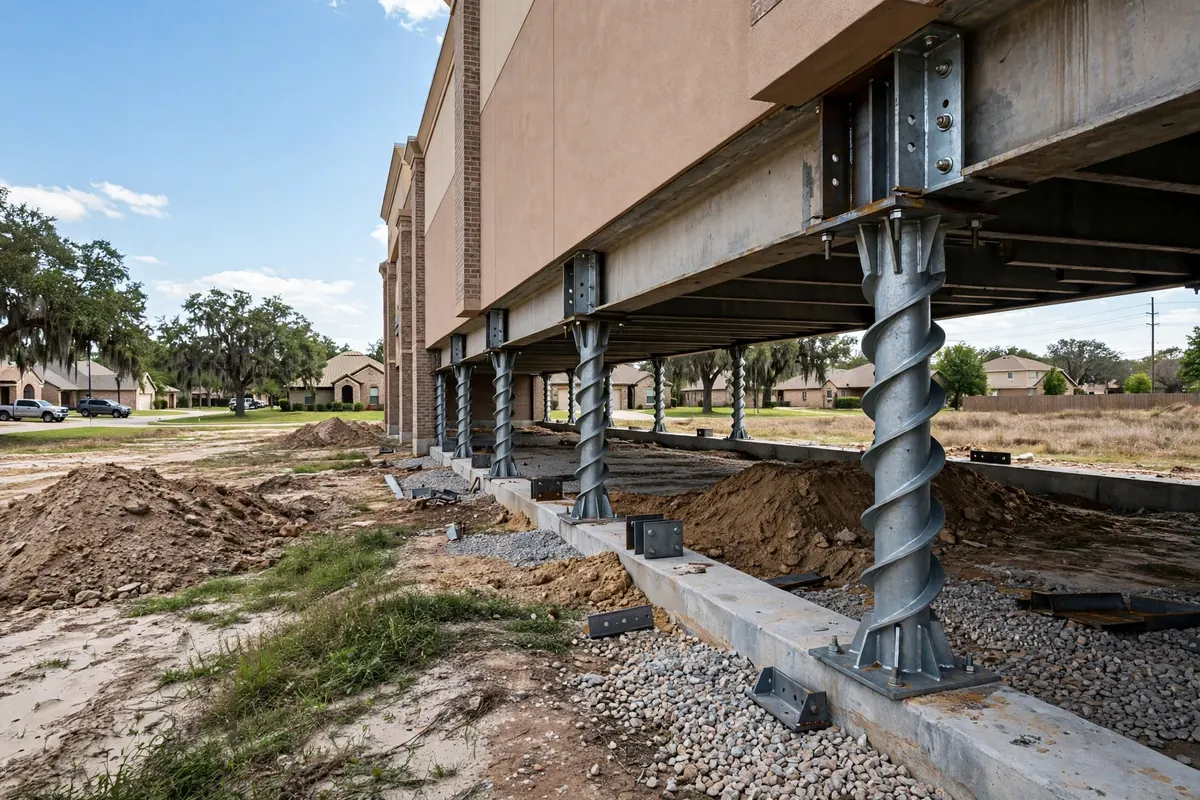
Offices, shops, and low-rise buildings sit on the same clay as Plano homes, and they move the same way. We read the floors, set piers under the structure, and work around the business so it can stay open.
Learn moreA foundation inspection reads the floors and writes the plan, so you choose from facts instead of guesses.
Match the sign you see to the service that fixes it.
Start with what you can see. A floor that slopes toward one corner, a door that rubs its frame, and a stair-step crack in the brick all point to a house that has dropped, and the service that answers that is piers and leveling. A single crack that has stayed the same width for a year points to sealing and watching, and the service that answers that is crack repair. Water standing against the wall after rain points to drainage, and a musty smell from below the floor points to the crawl space. The table below lines the signs up with the services, so you can see the match before you call. Our guide to signs your Plano home's foundation is moving lists the same signs in the order homeowners usually notice them, and the guide to repair methods explains piers, pilings, and foam in plain words for anyone weighing the options.
The second step is the reading. Signs point, but readings decide, and two houses with the same crack can need different work. A crack that is widening needs piers, while a crack that has sat still for a year needs sealing, and only a gauge read over a season tells you which one you have. A floor that slopes a little across a wide room needs a different lift from a floor that drops sharply in one corner. That is why the inspection comes before any service is booked, and why the plan it produces lists the services in order, with the cause first and the finish work last. Homes in Richardson, Allen, and Frisco get the same reading, because the clay belt runs across the whole area and the same signs show up in every town we serve.
| What you notice | Service to look at first | What it does |
|---|---|---|
| Sloping floors, sticking doors | House leveling and lifting | Raises the low side back toward level on piers and jacks |
| Stair-step brick cracks | Concrete slab foundation repair | Pins the slab to firm ground with steel piers |
| A crack that keeps growing | Foundation crack repair | Measures, seals, and watches the crack with gauges |
| Water pooling at the wall | Drainage correction | Grades, gutters, and French drains send water away |
| Musty air, damp wood below | Crawl space repair | Dries the space and protects the beams and piers |
| Sunken driveway or patio | Concrete lifting and leveling | Foam under the flat lifts it back to level |
When two signs show up together, the house usually needs two services in sequence, and the inspection plan lists them in the order that makes each one last.
The third step is the plan itself. It lists the findings in plain words, the work in order, and what can wait, and it is left with you in writing, with the sketch and the readings. You can sit on it for a season and have the floors read again, or you can book the work and watch each step happen in the order the plan set out. Either way, the choice is yours, and it is made from the readings rather than from a sales pitch. If you are buying a home, the same plan works as a record for the purchase, and our post on checking the foundation before buying a home in Plano explains how to use it. If you are selling, our post on foundation problems and your home's value in Plano explains how a documented repair reads to a buyer.
Book an inspection and we will read the floors, measure the cracks, and leave a written plan with you.
Straight answers before you book.
A foundation inspection, in almost every case. The readings show what has moved, by how much, and whether it is still moving, and the plan that follows lists the services your house actually needs, in the order they should happen. Booking a repair before the reading is guessing, and the reading is what turns the guess into a plan.
Yes, and they often are. Piers and drainage work go together, crack sealing follows a lift, and a crawl space is dried out while the piers below it are being set. The plan lists the work in the order that makes each step last, so nothing is done twice and nothing is undone by the step that follows it.
Yes. The service area covers the towns around Plano, including Richardson, Allen, McKinney, Frisco, Garland, Carrollton, The Colony, and Wylie, with more towns listed on the service areas page. The same clay belt runs across the whole area, so the same readings and the same methods apply.
Piers carry the walls of a house, and foam lifts flat concrete like driveways and patios. If the house itself has dropped, it needs piers under the footing. If only the driveway or the patio has sunk, foam under the flat is the right tool. The inspection readings decide which one your home needs.
Yes. Sellers book inspections to learn what a buyer will find, and the written plan with floor readings lets you decide what to fix before listing. Bring the report to the sale, since a documented reading with a plan answers a buyer's questions before they are asked.
Book a foundation inspection and we will read your home, write the plan, and talk it through with you, room by room.
Book a Foundation Inspection