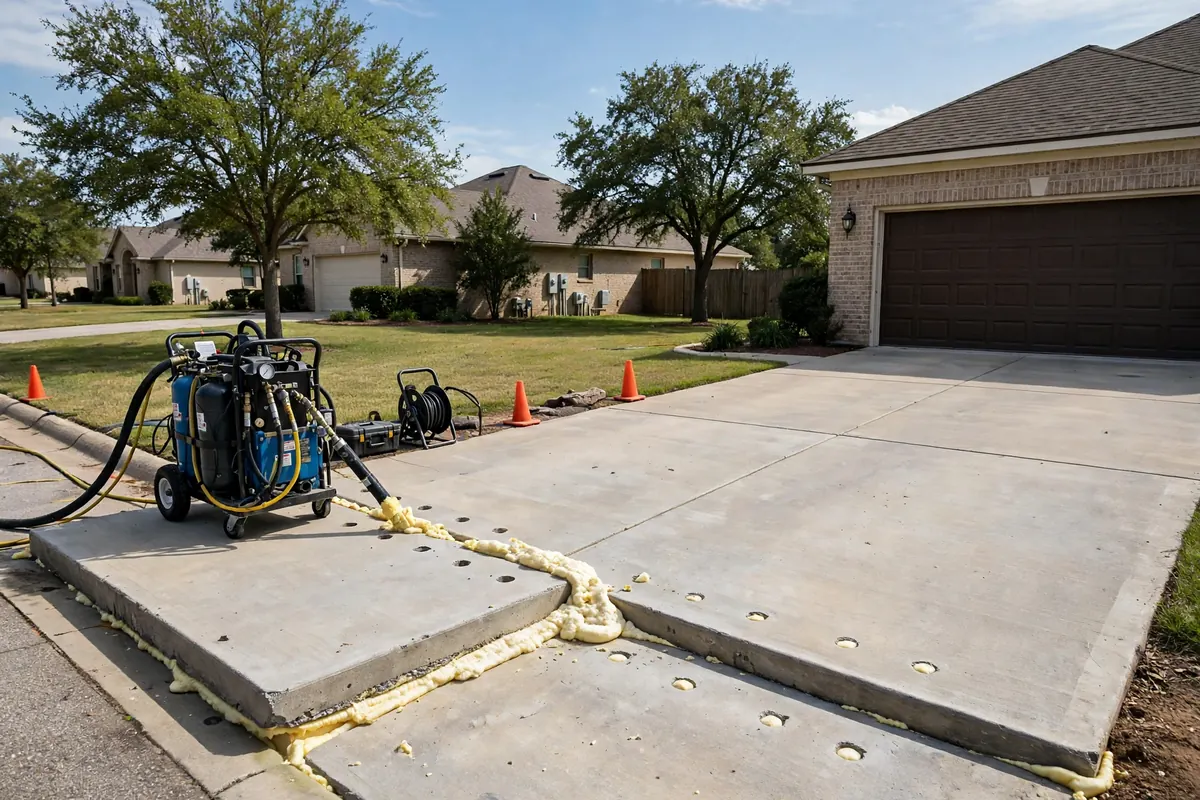
Concrete Lifting and Leveling in Plano, TX
A driveway slab that has dropped two inches does not have to be torn out and poured again. Foam lifting fills the empty space under the concrete, raises it back toward level in small controlled steps, and leaves the slab ready to use again the same day in most cases.
Lifting choices for sunken concrete around Plano homes
Not every sunken slab needs the same fix. The right choice depends on how far it has dropped, what sits under it, and how the slab is used.
Most of the lifting work we do in Plano uses polyurethane foam. Small holes are drilled through the slab, a two-part foam is injected underneath, and the foam expands to fill voids and push the slab upward. The crew watches a level the whole time and stops the lift at the planned height. Because the foam is light and cures fast, the slab can usually carry foot traffic within a few hours and vehicles the same day. Foam works well on driveways, sidewalks, patios, pool decks, and garage floors, and it suits the clay soil here because it does not add heavy weight to ground that already moves with moisture.
Slab jacking with a cement grout mix is the older method, and it still has a place. Grout is pumped under the slab through larger holes, and its weight helps it settle into wide voids under thick slabs. It cures more slowly and the holes it leaves are bigger, so it fits jobs where the slab is thick, the void is broad, and the surface can stay out of use for longer. A foundation inspection with elevation readings helps decide between foam and grout, because the readings show whether the problem is a settled slab or a foundation that has moved with it. The full list of foundation repair services in Plano shows how a lift fits beside pier work and crack repair.
Some slabs are past lifting. A slab that has broken into many small pieces, a slab with steel reinforcement that has rusted through, or a slab whose base has washed away over a long run may hold its shape better after partial replacement than after a lift. In those cases we say so plainly and explain what replacement would involve, including how the new section is tied to the old slab. The table below compares the common choices side by side so you can see the trade-offs before anyone drills a hole.
Void filling under a settled slab
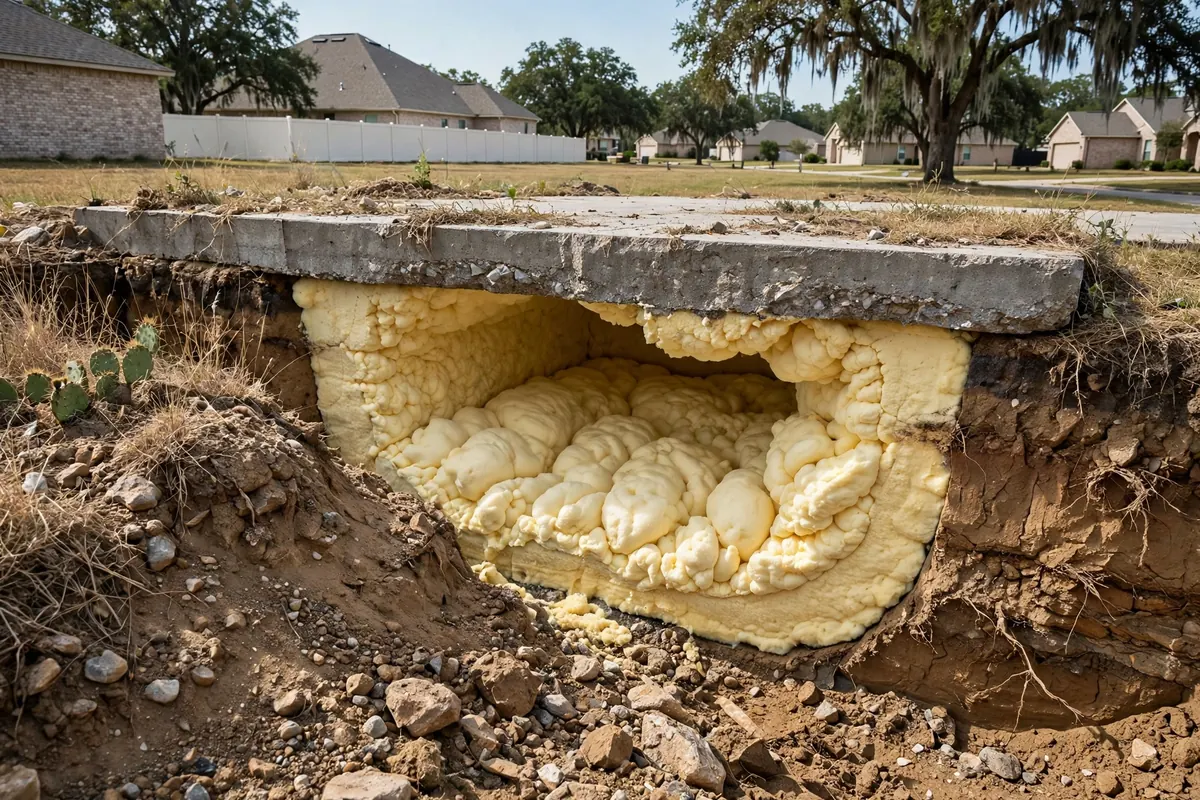
Voids open up under Plano concrete for a few plain reasons. Clay soil shrinks in dry spells and leaves gaps, water from a leaking pipe or a misdirected downspout washes fine soil out from under the edge, and backfill around a new home settles in its first years. A void is not just empty space. It lets the slab rock under weight, and rocking turns a hairline crack into a broken corner. Void filling is the quiet half of a lift: the foam or grout first spreads sideways to fill those pockets, and only then does the slab start to rise. Filling the void matters more than the lift itself, because a slab that rises on a foam pad with empty pockets beside it will settle again at the next dry spell. During a lift we inject in stages, starting at the lowest corner, so the material chases the voids outward instead of piling up in one spot. If the void runs under a joint or along a plumbing line, we adjust the injection points rather than forcing material through a single hole.
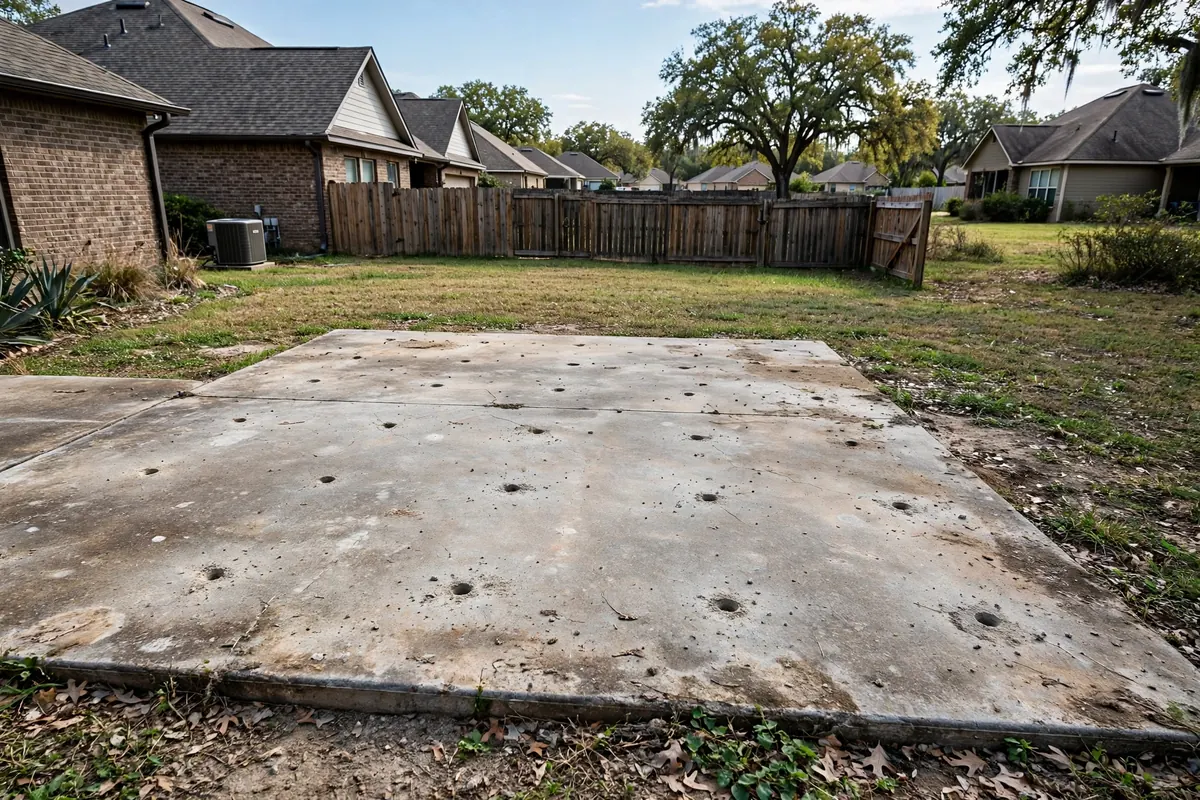
Foam also seals small paths where water used to travel under the slab. It is not a drainage fix on its own, and a slab that keeps getting washed out from underneath needs its water problem solved too, which is where drainage correction comes in. After the lift, the drill holes are patched with a cement mix that is tinted to sit close to the surrounding concrete. The patches stay visible up close, so we point that out before work starts rather than after.
| Method | Best for | Hole size | Ready to use |
|---|---|---|---|
| Polyurethane foam lift | Driveways, patios, sidewalks, pool decks | Small, about the width of a fingertip | Same day in most cases |
| Cement grout slab jacking | Thick slabs and wide voids | Larger, about the width of a coin | After a longer cure |
| Partial slab replacement | Slabs broken into many pieces | No injection holes | After the new concrete cures |
| Void filling only | Slabs that rock but have not dropped far | Small, foam or grout | Same day in most cases |
The method is chosen after elevation readings and a look underneath the slab edge, not from a photo alone.
Signs a slab has settled and needs lifting
Sunken concrete usually announces itself at the joints and edges first. These are the signs we check on a visit.
A trip edge is the clearest sign. When one side of a sidewalk joint sits higher than the other by enough to catch a shoe, the lower slab has settled. Run a straight edge or a long level across the joint to measure the step. A step that keeps growing between visits means the soil under the low side is still moving, and lifting alone will not hold unless the cause is found. We also look at where a driveway meets the garage floor. A gap that opens at that joint, or a slab that has dropped away from the garage apron, points to settlement under the driveway rather than movement in the house foundation itself.
Water tells the same story from a different angle. A patio that ponds after rain where it used to drain, a walkway that sends water toward the house instead of away from it, or a driveway that holds a puddle for days after a storm all suggest the slab has tilted. Tilted slabs also show it in the cracks. A crack that runs across a slab and has one side lower than the other is a settlement crack, and it behaves differently from a surface shrinkage crack that stays level on both sides. Inside the garage, a floor that has dropped away from the stem wall leaves a shadow gap along the edge, and stored items start to lean toward the low corner.
Some signs point to a deeper problem than the slab. If the house itself shows sticking doors, stair-step cracks in the brick, or floors that slope toward one corner, the slab movement may be tied to the foundation, and a concrete slab foundation repair plan is the right next step rather than a lift on its own. Our guide explaining foundation repair methods compares piers, foam, and other options side by side. We say that on the visit when we see it, because lifting a driveway does not fix a foundation that is still moving. The same visit also checks the soil at the slab edge for washout, the downspouts for discharge points that dump water beside the slab, and the trees nearby whose roots may be drawing moisture from one side only.
A sunken slab usually gets worse, not better
Voids under concrete grow each time water washes soil out or clay shrinks in a dry spell. A lift fills the void and raises the slab in one visit.
How a foam lift runs on your property
A lift is a short, tidy job compared with replacement. Here is the order of work, in the order it happens.
The visit starts with readings. We measure the slab surface with a level and mark the high and low points with chalk, then we look at the joints, the edges, and the soil beside the slab. Those marks become the lift plan: which corners rise first, how far each one should move, and where the injection holes go. Holes are drilled in a pattern that spreads the lift across the slab instead of pushing from one spot. On a driveway the pattern usually follows the low corner and works outward; on a patio it follows the settled edge.
Injection is done in short bursts. The foam is mixed at the nozzle and flows under the slab as a liquid for a few seconds before it expands and sets. The crew watches the level after every burst, and the slab moves in small increments, often a fraction of an inch at a time. Rushing the lift is how a slab cracks, so the pace is deliberately slow near the end, when the last small adjustments bring the surface back to the chalk line. When the surface reads level, the crew stops, even if foam is still available in the hose. Overlifting is harder to undo than underlifting, and a slab that sits a little low drains better than one that sits a little high against a door threshold.
Cleanup is part of the job. Drill holes are filled with a patching mix and smoothed flush, the chalk marks are wiped away, and the work area is swept. We walk the slab with the homeowner at the end and point out the patched holes, the new joint alignment, and any place where the slab still sits slightly low by design, such as a corner kept low so water drains away from the house. If the readings during the lift showed that the foundation itself had moved, we note it on the same visit and suggest a foundation inspection for the house, so the two problems are not confused with each other.
Measure and mark
Level readings map the high and low points, and chalk marks set the lift target.
Drill the pattern
Small holes are drilled where the foam can spread under the settled area.
Inject in bursts
Foam fills voids first, then raises the slab in small increments under a watchful level.
Check the joints
Each joint is rechecked so no edge sits proud and no threshold binds.
Patch and sweep
Holes are patched flush, marks are wiped, and the area is left clean.
Walk it together
A final walkthrough shows the new levels and any corner kept low for drainage.
Looking after lifted concrete through Plano seasons
A lift holds longest when the soil under the slab stays at a steady moisture level. That is mostly a water and drainage routine.
The first week after a lift is simple: keep heavy loads off the slab while the foam finishes curing, and keep water from pooling on the fresh patches. After that, the routine is the same one that protects every slab in Plano. Keep downspouts discharging well away from the slab edge, and keep the soil beside the slab graded so rain runs away from the concrete rather than under it. A slab that is lifted and then washed out again from underneath will settle a second time, and the second lift is rarely as tidy as the first.
Summer drought is the other season to watch. Clay soil shrinks as it dries, and a slab that sits on clay will follow the soil down if one side dries faster than the other. A soaker hose laid a foot or two from the slab edge, run on a steady schedule during dry spells, helps keep the moisture even. The goal is even moisture, not wet soil: soaked ground swells and pushes up, dry ground shrinks and drops, and the slab suffers in both cases. Trees near a driveway or patio complicate this, because their roots pull moisture from one side only. That is a matter for root barrier installation or for watering that compensates on the dry side, and we will say which fits when we see the tree and the slab together. Homeowners in Allen, TX see the same clay and the same tree patterns, and the watering routine works the same way there.
Check the slab twice a year, in spring and in fall. Look at the joints for new steps, watch for ponding after the first heavy rain of the season, and note any crack that has widened since the lift. A small change caught early is a small repair. If the house shows new signs at the same time, such as a door that starts to stick or a crack that opens in the brick, bring that to the inspection rather than treating the slab alone. A guide to foundation problems after heavy rain explains how rain changes clay soil and what to watch for after a storm. The lifted slab and the house foundation share the same ground, and they should be read together.
A note on cracks after lifting
Old cracks in a lifted slab do not close. The lift brings the two sides back to the same height, and the crack itself is then sealed so water cannot get under the slab through it. Sealing is part of aftercare, not a sign the lift failed.
Not sure if it is the slab or the foundation?
A level reading tells the difference in minutes. We measure the slab and the house floor on the same visit.
Questions about concrete lifting in Plano
Straight answers on foam lifts, grout lifts, timing, and what a lift cannot fix.
How long does a foam lift take?
Most driveway and patio lifts finish within a day, and smaller sidewalk sections often finish in a few hours. The crew measures first, drills the injection pattern, then lifts in short bursts while watching a level. Foot traffic is usually fine within a few hours, and vehicles can return the same day in most cases.
Will the drill holes show after the lift?
The holes are patched with a cement mix and smoothed flush with the surface. They stay faintly visible up close, especially on older concrete that has weathered to a different shade. We point out the patches during the final walkthrough so there are no surprises.
Can a foam lift fix a cracked slab?
A lift brings the two sides of a crack back toward the same height, but it does not close the crack itself. After the lift, the crack is sealed so water cannot reach the soil underneath. A slab broken into many small pieces is usually a better candidate for partial replacement than for lifting.
Does foam lifting work on clay soil?
Yes, and it suits clay ground well because the foam is light and does not add heavy weight to soil that already swells and shrinks with moisture. The foam also fills voids that clay leaves behind when it dries. Steady moisture around the slab after the lift helps the result hold.
How do I know if the problem is the slab or the house foundation?
A slab problem shows up at the slab itself: trip edges, ponding, and gaps at the garage apron, while the house doors and windows still work normally. A foundation problem shows up in the house: sticking doors, stair-step brick cracks, and sloping floors. Elevation readings on the same visit tell the two apart.
What happens if the slab settles again after a lift?
A second settlement usually means water is still washing soil out from under the slab or one side is drying much faster than the other. We look for the cause, such as a downspout discharging beside the slab or a leak, and fix that alongside any further lift. Lifting the same slab twice without fixing the cause rarely holds.
Questions we hear on lifting jobs
Short answers to the things homeowners ask while the crew is working.
Can you lift just one corner of a driveway?
Yes. Foam is injected in stages, so the crew can raise a single low corner and leave the rest of the slab untouched. The level is checked after each burst so the corner stops at the planned height and does not overshoot.
Will lifting change how water drains off my patio?
It should improve it. A settled patio often tilts toward the house, and the lift restores the fall away from the wall. One corner is sometimes kept slightly low on purpose so rain still runs away from the house. The crew checks the fall with a level before leaving, so you can see the water run the right way.
Is foam lifting safe around plumbing under the slab?
The injection points are chosen after checking where pipes run, and the foam is placed in small bursts at low pressure. If a leak is suspected under the slab, we say so before any lifting and suggest the leak is found first, because lifting over a live leak does not fix the washout.
Can foam lifting fix a sunken pool deck?
Yes, pool decks are a common lift because the foam is light and cures fast, so the deck is ready to use the same day in most cases. The crew checks the deck joints and the coping first, since a deck broken into separate pieces may need a different fix. Water lines under the deck are marked before drilling starts.
More services that pair with a concrete lift
A lifted slab often sits beside another job: drainage, a crack, or a foundation reading.
Lift the slab. Fill the void. Keep the water out.
A sunken slab is a small job when it is caught early and a bigger one when the void under it grows. Start with readings, see the lift plan in chalk on the concrete, and decide with the facts in front of you.
Book a Foundation Inspection