Foundation Repair in Parker, TX
Parker borders Lucas to the southwest, with large-lot estate homes on the same clay.
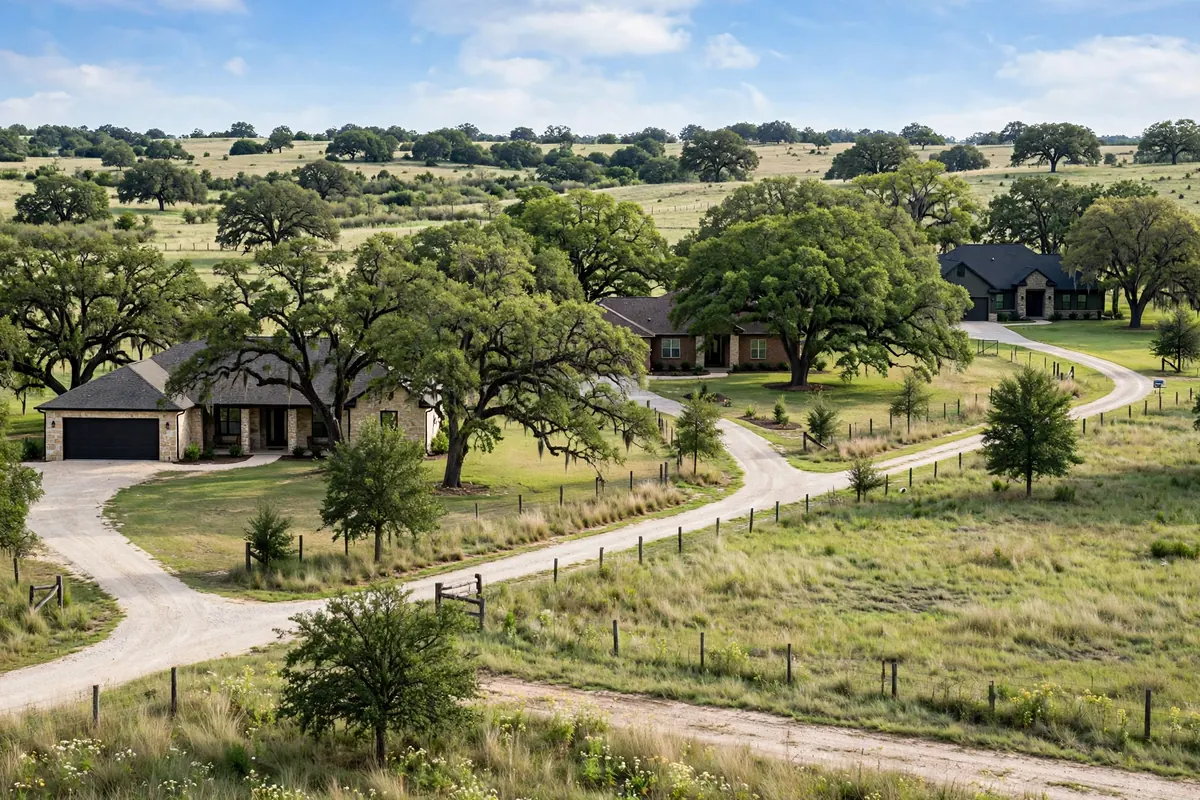
Lucas sits about fourteen miles northeast of Plano, on the western shore of Lake Lavon, and it is a town of estate lots rather than subdivisions. Most homes stand on one to two acres, many of them custom built from the 1990s through the 2020s, with older ranch houses from the 1970s and 1980s mixed in. The ground is the same expansive Blackland Prairie clay found across Collin County, and on a large lot it moves unevenly, one corner at a time.
Last updated November 24, 2026
Lucas covers about sixteen square miles of south central Collin County, bordered by Fairview to the north, Allen to the west, Parker to the southwest, Wylie to the south, and Lake Lavon to the east. The main road is FM 1378, known here as Country Club Road, and City Hall, Lucas Community Park, and the fire station all sit along it. The town has no shopping center and no historic square, by design, and residents drive to Allen, Fairview, or Wylie for everyday needs. That quiet, spread-out character is part of what people come here for, and it is also why a foundation problem can go unnoticed: there is no neighbor ten feet away comparing cracks. Homeowners just over the line in Fairview, TX and Parker, TX get the same inspection and the same crew, and each town has its own page with local soil and ZIP details.
Lucas homes fall into a few clear groups. The largest group is custom and semi-custom estate homes on one and two acre lots, built mainly in the 2000s and 2010s, with a third of the town's homes built since 2010. Subdivisions such as Saddlebrook Estates, Huntwick Addition, Bristol Park, and Stinson Highlands hold most of these, with lots of about one and a half to two acres and Lovejoy schools. The second group is older ranch houses from the 1970s and 1980s, about 460 of them, many on the west side of town near Allen. The third group is agricultural tracts and the estate district, where six acre lots and four acre averages put homes well back from the road, with barns, shops, and long fence lines.
Nearly all Lucas homes sit on concrete slab foundations, and most are brick, one or two stories. Slab construction suits the flat ground, but it also means the whole house rides on the clay. A slab that spans sixty or seventy feet across a large lot crosses more soil variation than a slab on a small lot, so one end can settle while the other holds, and the result shows up as a crack at the far end of the house or a floor that slopes from one side to the other. Our guide to pier and beam vs slab foundations explains why slab homes show movement the way they do, and what the readings tell us about it.
The east side of Lucas faces Lake Lavon, and homes there deal with a different mix of ground. Soils near the shore run sandier and drain faster, while the interior of town holds the heavier clay. A home near Brockdale Park and the Trinity Trail may sit on ground that dries quickly after rain, while a home a mile inland stays wet longer, and the two behave differently through a dry summer. Drainage matters on both sides, because water that collects against a foundation swells the clay, and water that runs off too fast leaves it dry and cracked.
The most common call from Lucas is a crack that has been watched for a year and has finally grown. Stair-step cracks in brick mortar, diagonal cracks above doors and windows, and separation where the chimney meets the house are the usual signs, and they often appear on the side of the house nearest a large tree. Oaks and pecans pull moisture from the soil all summer, and on a two acre lot the trees are often closer to the house than they look, because the canopy spreads wide. Our post on tree roots and your foundation covers how to tell whether a tree is part of the problem, and when a root barrier is worth adding.
The second pattern is floors that slope or feel uneven, usually in the newest part of town. Lakeview Downs, the newest large subdivision on the east side, and Bristol Park, built from 2015 to 2021, sit on ground that was graded and filled during construction. Where a slab crosses from undisturbed clay onto engineered fill, the two sides settle at different rates, and the floor tells the story. House leveling and lifting corrects that slope by lifting the low side on piers, and the elevation readings taken before the work show exactly how far each corner has moved.
The third pattern is water. Lucas homes rely on septic systems, and a leak or a soggy patch near the house can soften the clay under one corner of the slab. A water leak under a slab is easy to miss on a large lot, because the wet spot may be twenty feet from the house, and the first sign is often a door that stops latching. Drainage correction and a careful look at gutters, grading, and downspouts are part of every Lucas inspection, because a repair that ignores water will not hold.
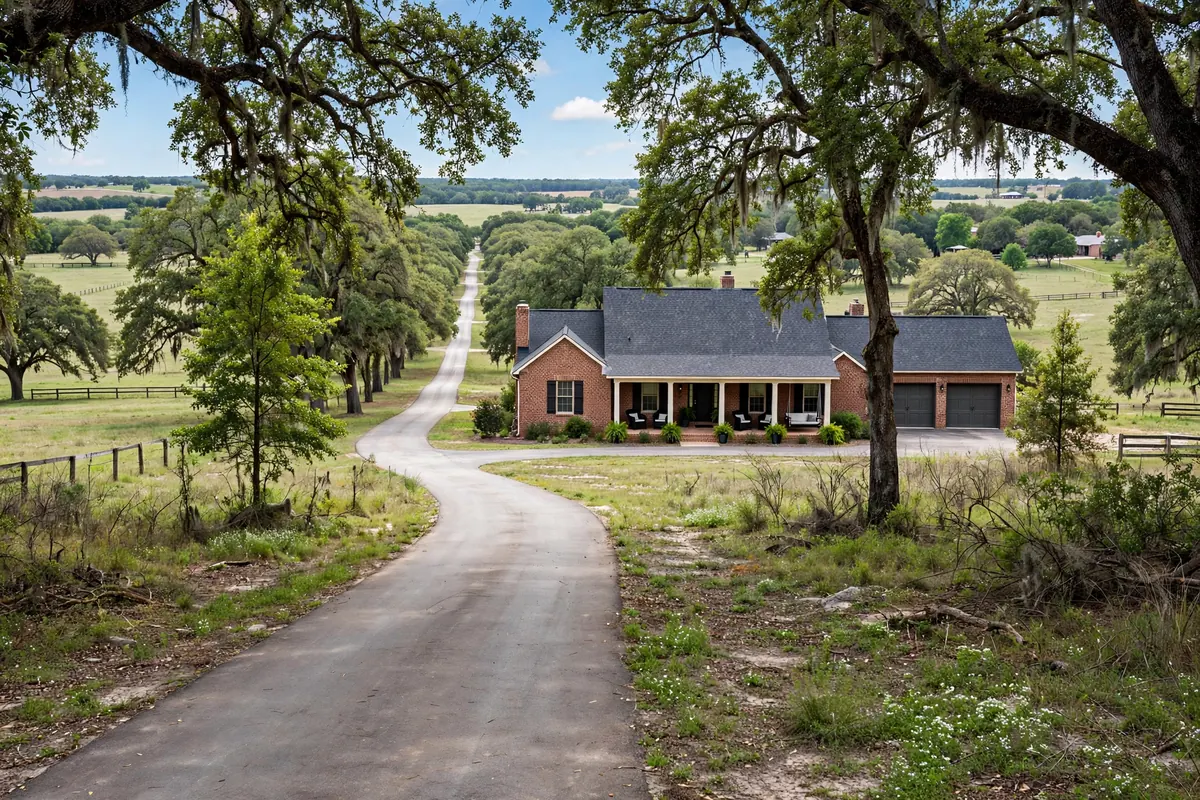
Work in Lucas starts with a foundation inspection. We take floor elevation readings in every room, walk the outside of the house, and note the trees, the grade, and the way water leaves the roof. On a large lot that walk takes longer, because the ground around the house is part of the diagnosis, and the written plan that follows names the piers, the drainage work, and the order of the job. Our post on what a foundation inspection covers describes the same steps, so you know what to expect before we arrive.
For a settled slab, steel pier installation is the standard repair. Piers are driven beside the footing down to load-bearing soil, bracketed to the slab edge, and the house is lifted in small increments while we watch the readings. Concrete slab foundation repair covers the whole job, and where a concrete driveway or patio has sunk, concrete lifting and leveling raises it with foam injection so the walkway drains away from the house instead of toward it. Older ranch houses on raised floors get pier and beam foundation repair, with new footings and shims under the beams.
After the piers are in, the yard is put back. Excavations are dug by hand, the soil is set aside and returned, and the lawn and beds near the work are restored. On a Lucas lot the access is usually easy, because there is room to stage equipment away from the house, and the work rarely touches the driveway. Foundation crack repair finishes the visible signs, with monitoring gauges where a crack needs watching, and soil stabilization is added where the clay itself is the problem.
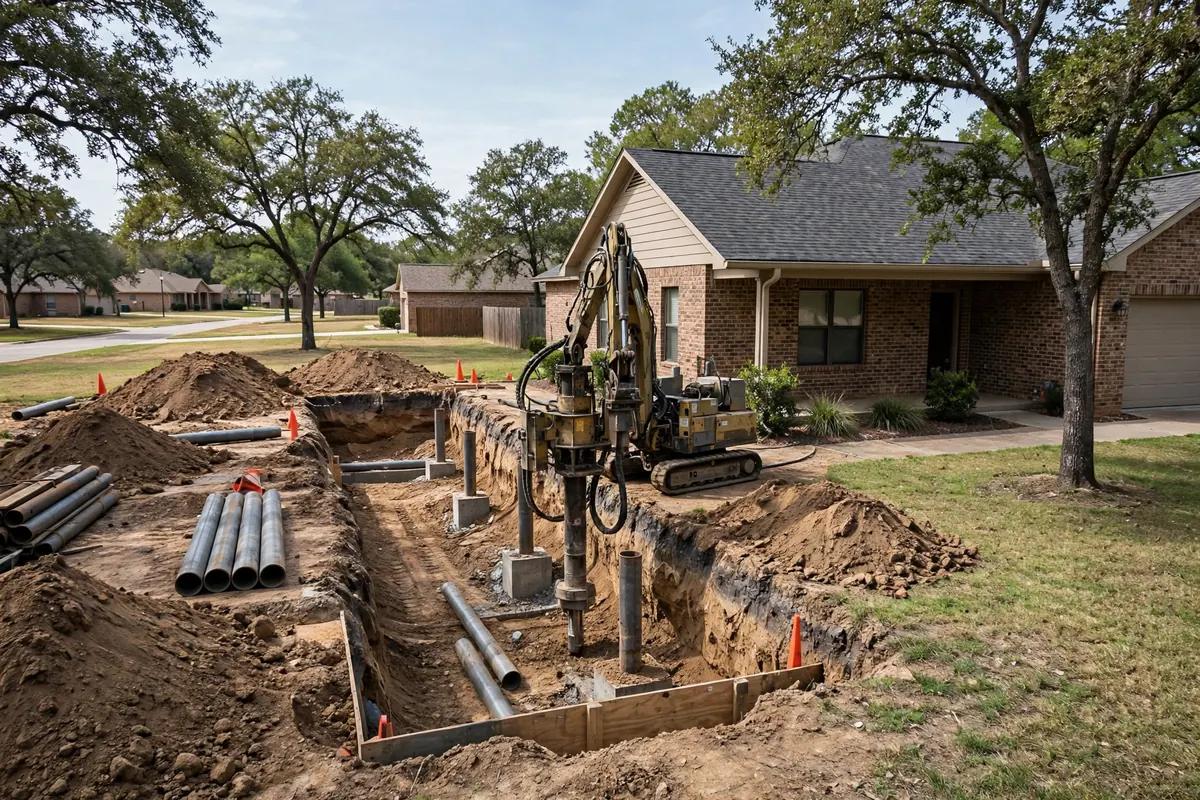
In Lucas, the inspection starts with floor elevation readings in every room and a walk around the outside of the house, and the written plan follows from those numbers.
Most Lucas addresses carry the 75002 ZIP code, shared with Allen and Parker, and a smaller number on the east side use 75098. The ZIP on your mail follows the postal route, not the town line, so a Lucas home can carry an Allen or Wylie mailing address, and the table below lists the ZIP codes with the part of town each one covers.
Lucas is easier to describe by lot size and age than by subdivision name, but the named communities are real and distinct. Saddlebrook Estates holds 67 homes on Saddlebrook and Briardale drives, built from 2002 to 2006 on lots of about an acre and a half. Huntwick Addition is the largest two acre subdivision in town, with 78 homes on Estelle Lane and Ramsay Drive. Bristol Park holds 69 homes built from 2015 to 2021, and Stinson Highlands is the largest subdivision inside the city limits, with 128 homes near Stinson Road on lots of about an acre. Lakeview Downs, on the east side toward the lake, is the newest large subdivision, mostly completed from 2020 to 2023.
| ZIP code | Area |
|---|---|
| 75002 | Most of Lucas, including Saddlebrook Estates, Huntwick Addition, and the Country Club Road corridor |
| 75098 | Eastern Lucas, toward Lake Lavon and the Wylie side of town |
Nearly all Lucas homes sit on concrete slab foundations, including the custom estate homes and the newer subdivisions. A small number of older ranch houses from the 1970s and 1980s stand on raised floors, and those get pier and beam repair instead.
A slab on a one or two acre lot crosses more soil variation than a slab on a small lot. One corner may sit over damp clay under trees while another bakes in open sun, and cut-and-fill grading can leave part of the slab on fill and part on undisturbed clay.
Yes, a little. Soils near the shore run sandier and drain faster, while the interior of town holds heavier clay. Both need the same inspection, but the drainage plan is different, because fast-draining ground dries out sooner in a drought.
Less than most homeowners expect. Access is usually easy on a large lot, excavations are dug by hand beside the footing, and equipment is staged away from the house. The yard is restored as part of the job. Most of the work happens beside the footing, so the driveway and the main walk stay open while the crew is on site.
They do, though the clay is the same across town. The east side, where addresses carry the 75098 ZIP, holds newer homes on graded fill that settles in the first seasons. Saddlebrook Estates, built from 2002 to 2006 on lots of about an acre and a half, has older homes with mature trees that dry one side faster. An inspection reads each home on its own.
We work across the towns around Plano, so if your home sits just over the line from Lucas, the same crew and the same inspection process cover it. These nearby service areas each have their own page with local soil, housing, and ZIP details.
Call (972) 430-3826 or send an email, and we will set up a foundation inspection for your Lucas home.
Book a Foundation Inspection1 Call or email2 Inspection and readings3 Written repair plan