How a Water Leak Under Your Slab Damages the Foundation
A water leak under a slab can quietly wash away the soil that holds the house up. The leak may run for weeks before anyone notices, and by then one corner of the slab can settle while the rest stays put.
By Plano Foundation Repair · Last updated November 24, 2026
Most Plano homes have water and sewer lines running under the slab, and when one of those lines leaks, the water has nowhere to go but into the soil beneath the house. A small leak can run for a long time before anyone sees a sign of it, because the water spreads through the clay under the concrete and only reaches the surface slowly. All the while it is softening the soil, washing fine particles away from under the slab, and leaving voids where solid ground used to be. The slab above those voids loses support, and one section of the house settles while the rest stays put. By the time a door sticks or a crack opens, the leak may have been running for weeks. That is why the warning signs matter, and why a leak should be found and fixed before any foundation work begins. A foundation inspection can show whether the movement lines up with a leak, and a plumber confirms it.
How a small leak moves a great deal of soil
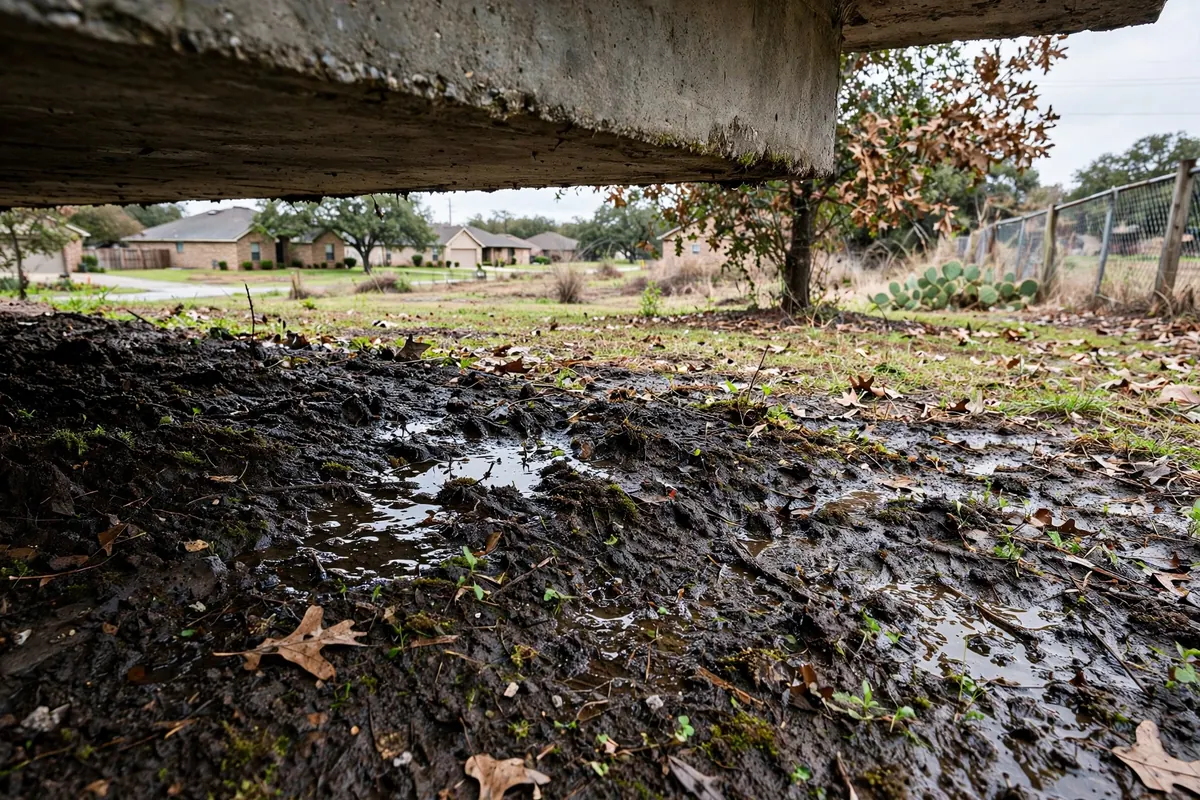
Water under a slab does its damage in two ways. First, it softens the clay, turning firm ground into a soft bed that can no longer carry the weight of the house. Second, as the water moves through the soil, it carries fine particles with it, slowly washing away the ground under the slab and leaving small voids behind. The slab above a void has nothing under it, so it bends down into the gap, and the bend shows up as a crack in the floor, a sloping room, or a stair-step crack in the brick above.
The leak does not need to be large to do this. A pinhole in a copper water line can release a steady trickle day and night, and over weeks that trickle adds up to a great deal of water moving through a small patch of soil. A cracked sewer line is worse in a different way: it leaks waste water into the soil, which softens the ground and brings a smell that rises through the floor. In both cases the damage is worst right where the leak sits, so the settlement is local, one corner or one room, rather than spread across the whole house. That local pattern is itself a clue, and it is one reason concrete slab foundation repair starts with finding the cause, not just lifting the low spot.
The warning signs of a leak under your slab
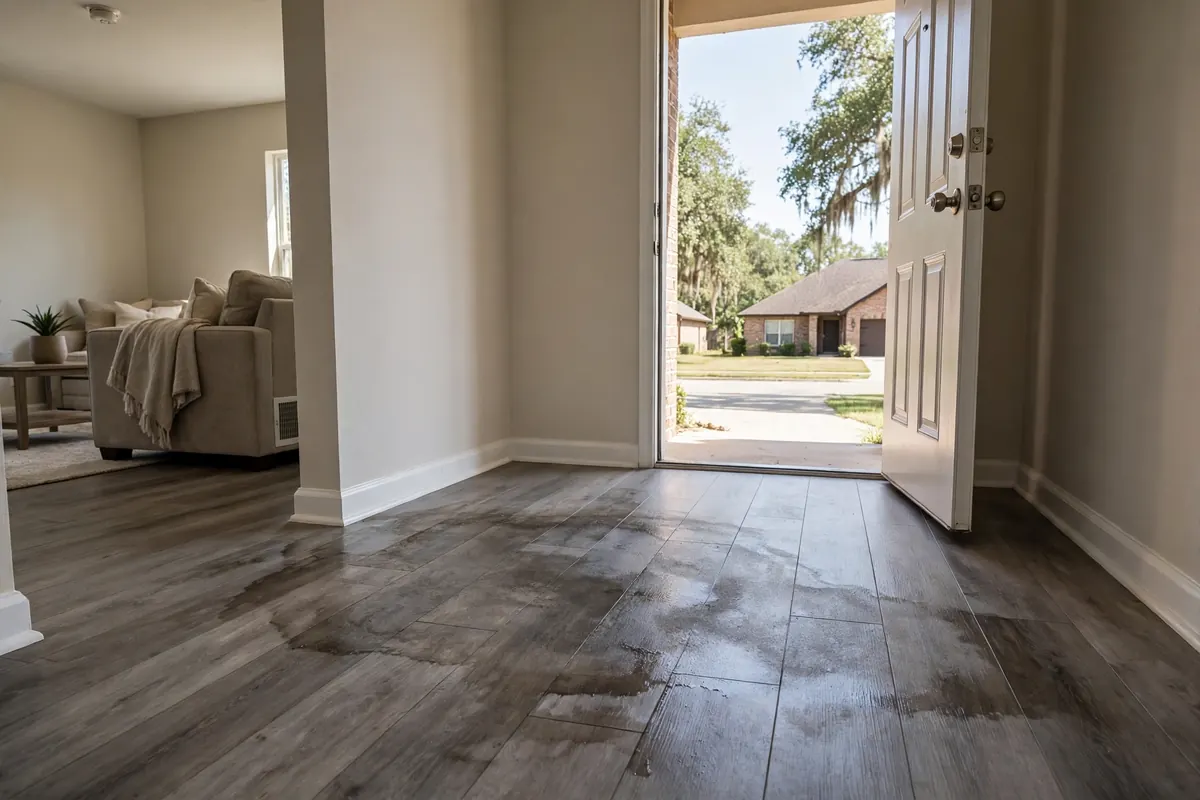
A slab leak leaves a trail of signs, and most of them show up inside the house before they show outside it. A water bill that jumps without any change in use is often the first sign, since a leak under the slab runs around the clock. A warm spot on the floor, or a patch of flooring that feels warm under bare feet, can mean a hot water line is leaking below. A damp spot on the floor or carpet that never dries, a musty smell in one room, or the sound of running water when every tap is off are all signs worth taking seriously.
Slab leak warning signs and what to check
Sign
What to check
What it may mean
Water bill jumps with no change in use
The meter, with all taps off
Water running somewhere unseen
Warm spot on the floor
Whether the spot stays warm day and night
A hot water line leaking below
Damp patch that never dries
Whether it grows after rain or stays steady
Water rising from under the slab
Sound of running water, taps off
Whether the sound stops when the main is shut
A pressurized line leaking under the house
Outside, the signs are subtler: a patch of lawn that stays green and lush while the rest dries out, or a spot beside the foundation that stays damp long after rain. The U.S. Environmental Protection Agency's WaterSense program notes that household leaks waste a large amount of water each year, and a leak under a slab is one of the hardest to spot because it never shows on the surface. If you see two or more of these signs together, turn off the water at the main, watch the meter, and call a plumber first, then a foundation inspector. A guide to rain damage can help you tell a leak from storm water, since the two can look alike at first.
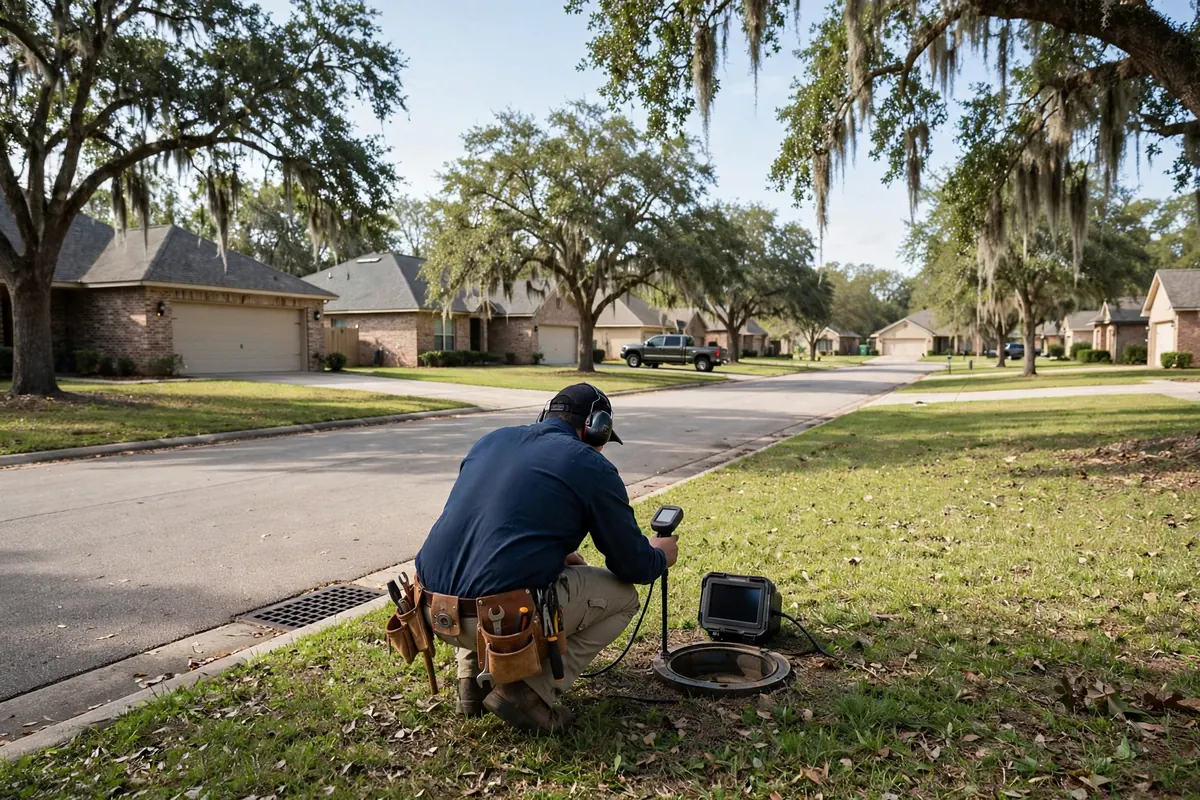
Listening for the leak. A leak under concrete is found by sound and by pressure readings, not by tearing up the floor, so the search itself leaves the house intact.
How a leak is found without tearing up the floor
Finding a leak under concrete sounds destructive, but the search is usually done without opening the floor at all. A plumber will start at the meter, shutting off the water and watching whether the meter still moves, which confirms that water is going somewhere it should not. Then comes listening: sensitive microphones placed on the floor pick up the sound of water escaping from a pipe, and the loudest point marks the leak. Pressure tests on each line narrow it further, and in some cases a small camera run through a sewer line shows a crack directly.
Only once the leak is located does anyone open the floor, and then only a small section above the leak, not a whole room. The pipe is repaired or rerouted, the soil is allowed to dry, and the floor is patched. The key point is the order: the leak is found and fixed first, and the foundation is dealt with after, because lifting a slab over a leak that is still running would only let the water wash the soil away again. A guide to what a foundation inspection covers explains how the inspector and the plumber work from the same set of signs.
Repairing the leak and the foundation, in the right order
The order of the work matters more than the speed of it. First the leak is fixed, whether that means repairing a section of pipe or rerouting a line above the slab so it no longer runs under the house. Then the soil is given time to dry out, which can take weeks, since wet clay under a slab dries slowly. Only then does the foundation work begin, with floor readings taken to map how far the slab has settled and where the voids sit.
The foundation repair itself depends on what the leak left behind. Where the slab has settled over a washed-out patch, steel pier installation can pin the low section to stable ground and lift it back toward level. Where the concrete itself has cracked, foundation crack repair seals the break so water cannot get in again. Where a void sits under the slab, concrete lifting and leveling fills the gap and supports the concrete from below. The repair is planned from the readings, not from a guess, and it is done after the leak is gone, so the ground under the repair stays dry and firm.
A damp patch that never dries. A dark, damp spot on the floor that stays wet for days is one of the clearest signs of water moving under the slab.
Keeping a new leak from starting under your slab
Leaks under a slab are often a matter of age: copper lines corrode, joints loosen, and soil movement stresses the pipes a little more each year. There is no way to make old pipes new again without replacing them, but a few habits lower the risk. Watch the water bill every month, since a sudden jump is the earliest warning most homes get. Listen for running water when the house is quiet, and note any warm spot on the floor or damp patch that appears without rain. Keep the soil moisture around the house steady, since clay that swings between dry and soaked moves the slab and stresses the pipes under it, and a steady watering routine helps with that.
When a leak has been fixed once, ask the plumber whether the other lines under the slab are the same age and material, and whether rerouting the most exposed lines above the slab makes sense for your house. In Richardson and other older suburbs, many homes still have their original lines under the slab, and the owners who catch a leak early are the ones who watch the bill and the floor. A foundation inspection after any leak repair is worth doing, since it confirms that the slab has stopped moving and that the ground under it has dried out.
Water bill up for no clear reason?
A jump in the bill with no change in use can mean a leak under the slab. Call and we will check the movement and help you find the cause.
Plain answers to the questions Plano homeowners ask us most about this topic.
?
How do I know if the leak is under the slab or somewhere else?
Turn off all the taps and watch the water meter. If it keeps moving, water is going somewhere unseen. A plumber then tests each line and listens through the floor to find the spot. Warm spots on the floor and the sound of running water when every tap is off are two more signs worth checking.
?
Can a slab leak wait until next month?
It should not wait. A leak runs day and night, washing soil away the whole time. A few weeks can turn a small void into a settled corner, and the repair grows with it. Call a plumber first to stop the water, then book a foundation reading to see what the leak has already done.