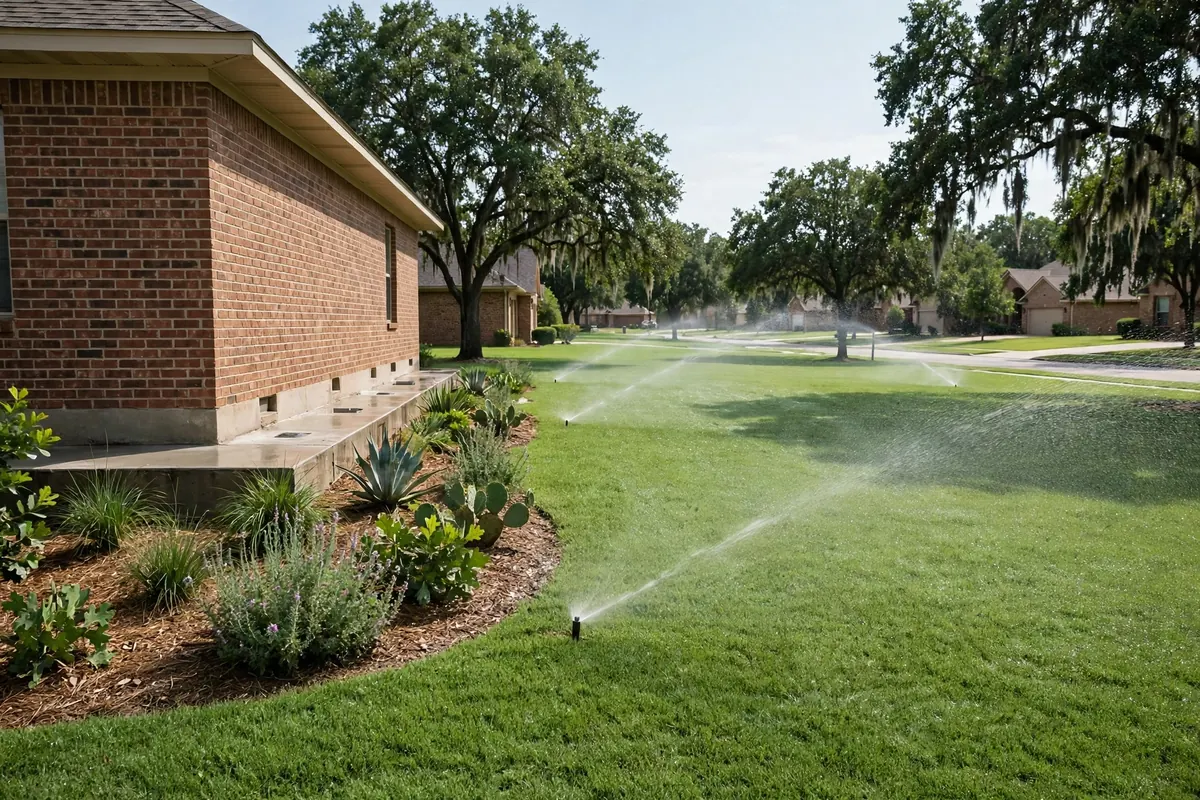
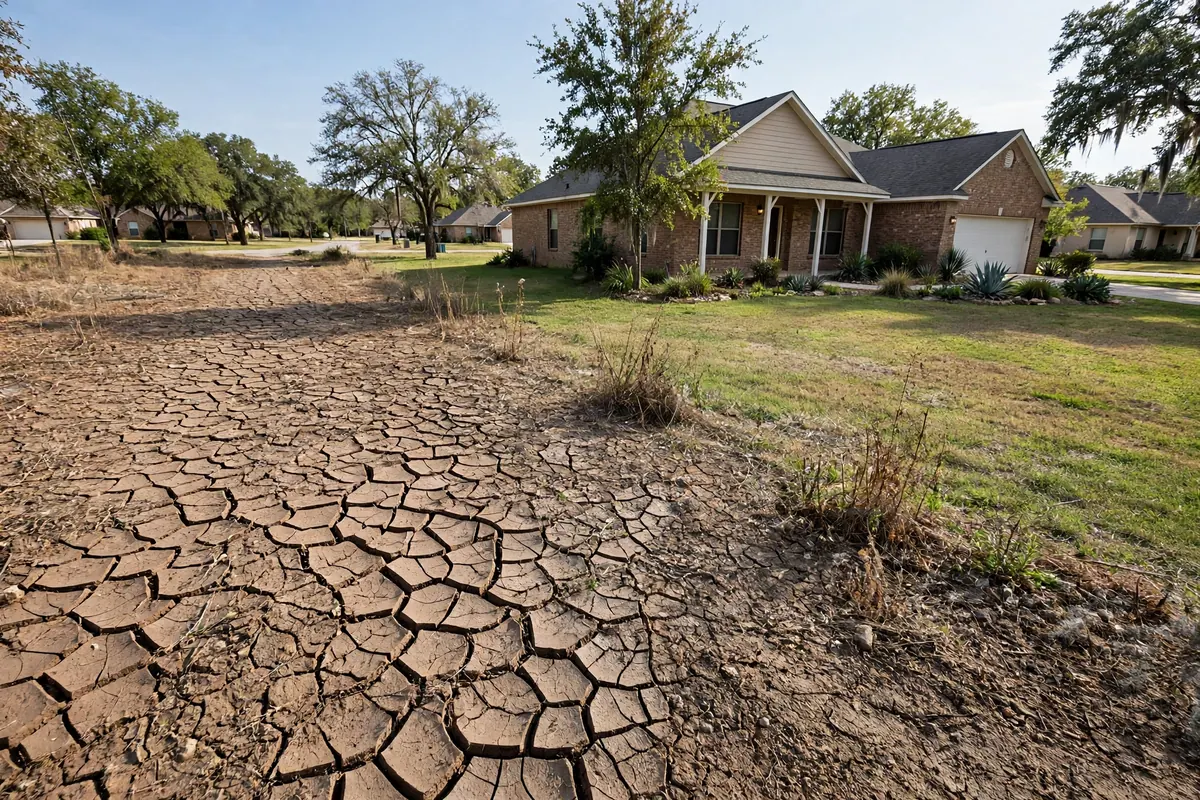
Yes, watering your foundation can help in a dry Plano summer, if you water the soil and not the slab. Steady, even moisture keeps the clay from shrinking away from the edges of the house.
By Plano Foundation Repair · Last updated November 24, 2026
Every dry summer in Plano brings the same question from homeowners: should I water the ground around my house? The short answer is yes, and the longer answer is that how you water matters more than whether you water. Plano homes sit on heavy clay that shrinks as it dries, and the edges of a slab lose support when the soil beside them dries out. A steady watering routine keeps that clay damp and steady through the hottest months, and it is one of the simplest things an owner can do for a foundation. Done badly, though, watering can make moisture uneven, and uneven moisture is itself a cause of movement. This guide covers the routine that works, the tools that suit it, and the mistakes to avoid, so the water you add helps the whole house instead of one side of it. If you have already seen cracks or a sloping floor, start with a foundation inspection and floor readings before you change the watering.
Why even soil moisture matters under a slab
A slab foundation rests on clay, and clay changes size with its water content. When the soil is evenly damp, the slab sits evenly, and the house above it stays square. When one side dries out, that side of the slab drops, the house bends toward the dry side, and the bend shows up as a stair-step crack in the brick, a door that sticks, or a floor that slopes. The aim of watering is not to soak the ground but to keep the moisture even, so no side of the house dries much faster than the others.
The edges of the slab are the weak point, because the soil there is open to sun and air and dries first. The soil under the middle of the house stays damp longer, shaded by the house itself, so the rim drops while the center holds. Watering the perimeter replaces the moisture the sun and any nearby trees take away, and it does so where the slab needs it most. Drought and Foundation Damage in Plano explains what happens when that moisture is left to go, and Why Plano's Clay Soil Cracks Foundations explains the clay itself. The two guides together are the reason watering works: clay that stays damp stays still.
Soaker hoses, sprinklers, and hand watering compared
Three tools do most foundation watering in Plano, and they are not equal. A soaker hose is the best of the three for this job: it lies on the ground a foot or so out from the slab, releases water slowly along its whole length, and lets the water soak down into the clay instead of running off. A sprinkler can work, but it throws water into the air, where much of it is lost to the sun, and it often waters the walls and windows as much as the soil. Hand watering with a hose is fine for a small patch, but it is hard to keep even across a whole house, and it depends on the owner remembering to do it the same way every time.
Watering methods for a Plano foundation
Method
How it works
Best for
Soaker hose
Slow release along the whole length, soaks deep
The full perimeter, all summer
Sprinkler
Sprays water over a wide area, some lost to sun
Lawns, used early or late in the day
Hand watering
Hose held in one place, uneven by nature
Small dry patches, short term only
Drip line
Steady drops at set points along a tube
Beds and shrubs near the slab
A soaker hose with a timer is the combination that works best for most homes, because it keeps the routine regular without depending on memory. Lay the hose in a loop around the house, about a foot out from the slab, and run it long enough for the water to soak in rather than pool. A drainage correction check is worth doing first if your yard already ponds water, since a hose cannot fix a yard that holds water against the slab.
Even moisture, all around. The goal is damp soil on every side of the house, not a wet patch on one side and dry clay on the other.
A simple watering routine for a dry summer
Start when the rain stops, not when the cracks appear. Once Plano goes two weeks without a good rain in summer, begin watering the perimeter. Run the soaker hose for a few hours at a time, early in the morning or in the evening, and water all four sides of the house on the same schedule. A good check is to push a screwdriver into the soil a few inches down beside the slab: if it goes in easily, the soil is damp enough, and if it will not go in, the clay is dry and needs water. Keep the routine steady through the dry months, and ease off when the rain returns.
Watering trees and beds too
Water the trees and beds near the house as part of the same routine, since a thirsty tree or a dry bed will pull moisture from the soil beside the slab. Texas A&M AgriLife Extension publishes watering guidance for North Texas lawns and trees, and its advice on deep, slow watering fits a foundation routine well. Do not water every day in short bursts: clay takes water in slowly, so a long slow soak twice a week does more than a daily sprinkle. And watch the ground as you go: if water pools on the surface or runs off toward the street, slow the flow down and give it time to soak in.
Mistakes that make watering do more harm than good
The most common mistake is watering one side only. A homeowner sees a crack on the west side and waters the west side hard, while the east side stays dry, and the slab ends up with wet clay on one side and dry clay on the other, which is exactly the uneven moisture that causes movement. The second mistake is watering right against the brick or letting water stand in a puddle beside the slab, which swells the clay at the rim and can lift the edge while the rest of the house stays put. The third is watering the lawn with a sprinkler that throws water onto the walls, soaking the brick while the soil below stays dry.
Two more mistakes are worth naming. The first is starting too late, after the soil has already pulled away from the slab in a wide gap, and expecting a hose to close it in a week; watering helps prevent drying, and it can ease a seasonal crack, but it will not lift a slab that has settled. The second is forgetting the gutters: a downspout that dumps roof water beside the house while the owner waters the other side creates the same uneven moisture as watering one side only. If the slab has already moved, concrete slab foundation repair or steel pier installation is the step that restores the level, and watering protects the repair after it is done.
One dry side is enough. When one side of a house dries out while the rest stays damp, that side settles and the slab bends toward it.
When watering is not enough and an inspection is the next step
Watering is care, not repair, and there are signs that mean care is no longer enough. A crack wider than about a quarter inch, a crack that keeps growing through the summer, a door that will not latch, or a floor slope you can feel underfoot all mean the slab has moved and needs measuring. The same goes for a soil gap along the slab that stays open even after weeks of steady watering, or for several signs showing up on the same side of the house at once.
An inspection at that point is simple and useful: floor readings through the house, a look at the slab edge and the soil, and a written plan that says what the house needs and what it does not. The plan may call for piers at the settled corners, or it may say the house only needs steady watering and watching, and either answer is worth having in writing. In Garland and across the metro, the homes that come through a dry summer best are the ones where the owner watered evenly and got readings when the signs changed. A guide to tree roots is worth reading alongside this one if a large tree stands near your house, since the tree and the hose are working on the same soil.
Soil dry beside your slab?
A gap along the slab edge means the clay has dried and shrunk. Call and we will measure the floors and talk through watering and the next step.
Plain answers to the questions Plano homeowners ask us most about this topic.
?
How often should I water around my foundation?
Through a dry summer, a long slow soak a couple of times a week, on all four sides, is the usual routine. Check the soil with a screwdriver: if it goes in easily a few inches down, the clay is damp enough.
?
Can I overwater my foundation?
Yes. Water standing against the slab swells the clay at the rim and can lift the edge, and watering one side only makes moisture uneven. Slow, even watering on all sides is the safe pattern. Check the soil with your finger a few inches down: damp is right, muddy means you should stop for a few days.