Tree Roots and Your Foundation: What Plano Homeowners Should Know
Yes, tree roots can shift a Plano foundation. A large tree drinks a great deal of water from the clay around it, the clay shrinks, and the slab settles unevenly toward the dry side.
By Plano Foundation Repair · Last updated November 24, 2026
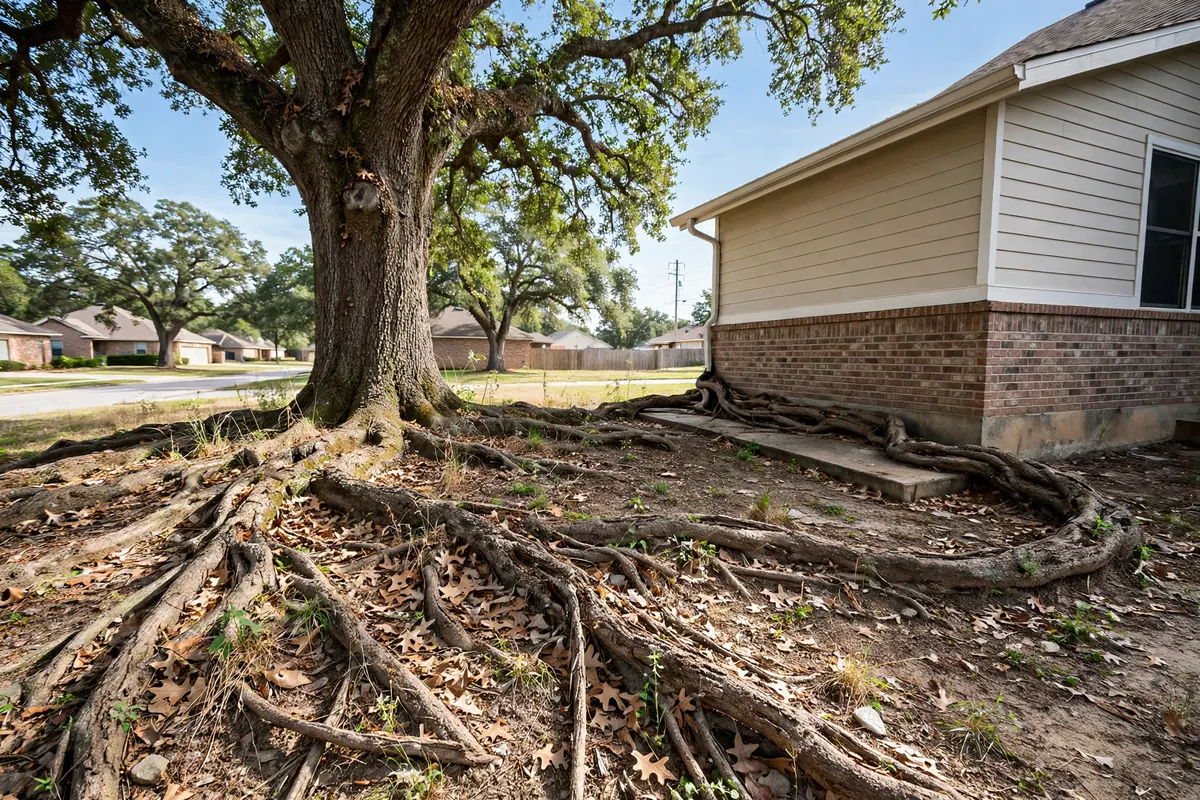
Older parts of Plano, especially the east and central neighborhoods, have a thick canopy of live oaks, red oaks, pecans, and elms planted decades ago. Those trees are part of what makes the streets attractive, and they are also one of the most common causes of uneven settlement we see on inspections. The roots themselves rarely push a slab upward. The trouble comes from the water they take out of the ground. Blackland Prairie clay holds a great deal of water, and when a big tree pulls that water away through a long dry summer, the clay shrinks in a wide ring around the trunk. A slab sitting on that ring drops a little on the tree side, doors start to stick, and a stair-step crack can open in the brick. A foundation inspection with floor readings shows whether the movement lines up with the tree, and that reading is what turns a worry into a plan.
How a thirsty tree pulls moisture from Plano clay
A mature oak can pull hundreds of gallons of water from the soil on a hot day, and its roots spread well past the edge of its branches. In Plano the soil under most homes is heavy clay that swells when wet and shrinks when dry, so a tree acts like a slow pump working on one side of the house. The slab above the dried soil loses support in small amounts, and because the rest of the slab stays put, the house bends a little across its width. That bending is what opens cracks in brick and drywall and makes a door frame go out of square.
The effect is strongest in late summer, after weeks without rain, and it is strongest on the side of the house nearest the tree. A house with a large tree ten feet from one corner and open lawn on the other three sides will often show the most movement at that one corner. The clay under the far side stays damp longer, while the clay near the tree dries first and shrinks hardest. This is also why the problem can look seasonal: cracks may open a little wider in August and close slightly after autumn rain, even while the slab itself has settled a little more each year. Why Plano's Clay Soil Cracks Foundations explains the soil side of this in more detail, and Drought and Foundation Damage in Plano covers what long dry spells do on their own.
Which trees near a Plano home cause the most trouble
Not every tree is a risk. Small ornamental trees and shrubs with shallow, modest root systems rarely pull enough water to move a slab. The trees that cause the most trouble in Plano are the large ones with wide, aggressive root systems and a high thirst for water. Live oaks and red oaks top the list because they are common, long-lived, and huge at maturity, with roots that can reach two or three times the width of the canopy. Pecans grow tall and drink heavily through the summer. Elms, cottonwoods, and willows are also heavy water users, and a willow near a house is a poor match for clay soil. By contrast, a crepe myrtle or a small desert willow near the foundation is a much lighter load on the soil.
Distance matters as much as species. A large oak planted five feet from a bedroom wall is a different matter from the same tree forty feet away in the back corner of the lot. Age matters too: a young tree that is still growing will take more water each year as its canopy spreads, so a tree that was harmless when it was planted can become a problem fifteen years later. When we walk a property, we note the species, the height, the distance from each corner of the house, and which rooms sit on the tree side. That map, together with floor readings, tells us whether the tree is a suspect or just a neighbor. Texas A&M AgriLife Extension publishes guidance on tree watering and root care for North Texas yards, and it is a useful check before you change anything around a large tree.
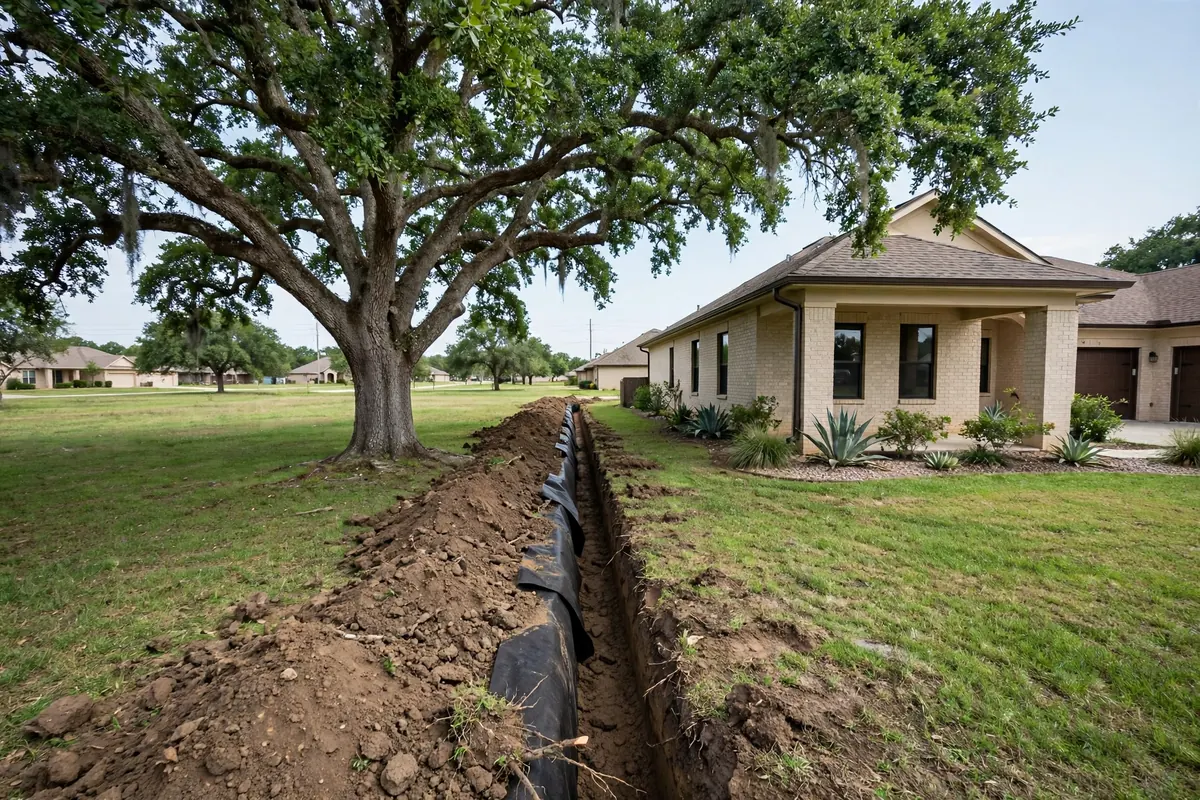
A root barrier trench. The trench sits between the tree and the house, and rigid panels inside it guide roots downward instead of toward the slab.
Signs tree roots are drying out the soil under your home
The signs of root-related drying look much like other foundation movement, which is why readings matter, but a few patterns point toward a tree. Cracks that are widest on the tree side of the house, a floor that slopes toward the nearest large tree, and a gap where the soil has pulled away from the slab edge on one side only are the classic clues. You may also see the lawn itself change: grass thins and the ground feels hard and dry under the canopy, while the far side of the yard stays softer. Inside, a door on the tree side may stick in late summer and ease off after rain, while doors on the other side work fine all year.
Tree-related warning signs and what they usually mean
What you see
What it usually means
What to do first
Soil gap along the slab on one side only
Clay shrinking where roots pull water
Note the side and the nearest tree, then watch it after rain
Stair-step crack in brick near the tree corner
That corner settling as soil dries
Measure the crack and photograph it each month
Doors sticking only on the tree side
Frame going out of square from uneven settlement
Check whether the sticking eases after wet weather
Sloping floor that falls toward the tree
Slab dropping where the clay has dried most
Get floor elevation readings to confirm the direction
Reading the pattern, not one sign
One sign on its own is rarely enough to blame a tree, and that is a good thing. A hairline crack can come from normal seasonal movement, and a sticking door can come from humidity in the wood. The pattern is what counts: several signs on the same side, all pointing toward the same large tree, and all worse in dry weather. If you see that pattern, write down the dates and take photos from the same spot each month. A short record like that is worth more than a single worried look, and it helps any inspector separate a tree problem from a drainage correction problem or a water leak under the slab.
How far should a large tree stand from a house?
There is no single safe distance that fits every tree, because species, soil, and mature size all change the answer, but a useful rule is to keep a large tree at least as far from the house as its mature height. A live oak that will reach fifty feet tall belongs fifty feet from the slab, not fifteen. For a medium tree that will reach thirty feet, thirty feet of space is a sensible target. That sounds like a lot on a typical Plano lot, and it is, which is why so many older homes have a large tree closer than the rule allows. In those cases the goal is not to meet a perfect number but to manage the tree that is already there.
When a big tree already stands close to the house, three options exist, and they work best in combination. A root barrier installation puts a rigid panel in a trench between the tree and the foundation, guiding roots downward and cutting off the closest water uptake. Steady watering of the soil on the tree side through dry months keeps the clay from shrinking as hard, and a guide to watering your foundation explains how to do that without soaking the slab. Pruning the canopy back reduces how much water the tree needs, though it should be done by someone who knows the species, since heavy topping can stress the tree and make it grow back harder. Removing a healthy mature tree is the last step, not the first, and it brings its own risk: once the roots stop pulling water, the clay can swell back and lift the slab slightly. A tree that comes down should come down as part of a plan, with readings taken before and after.
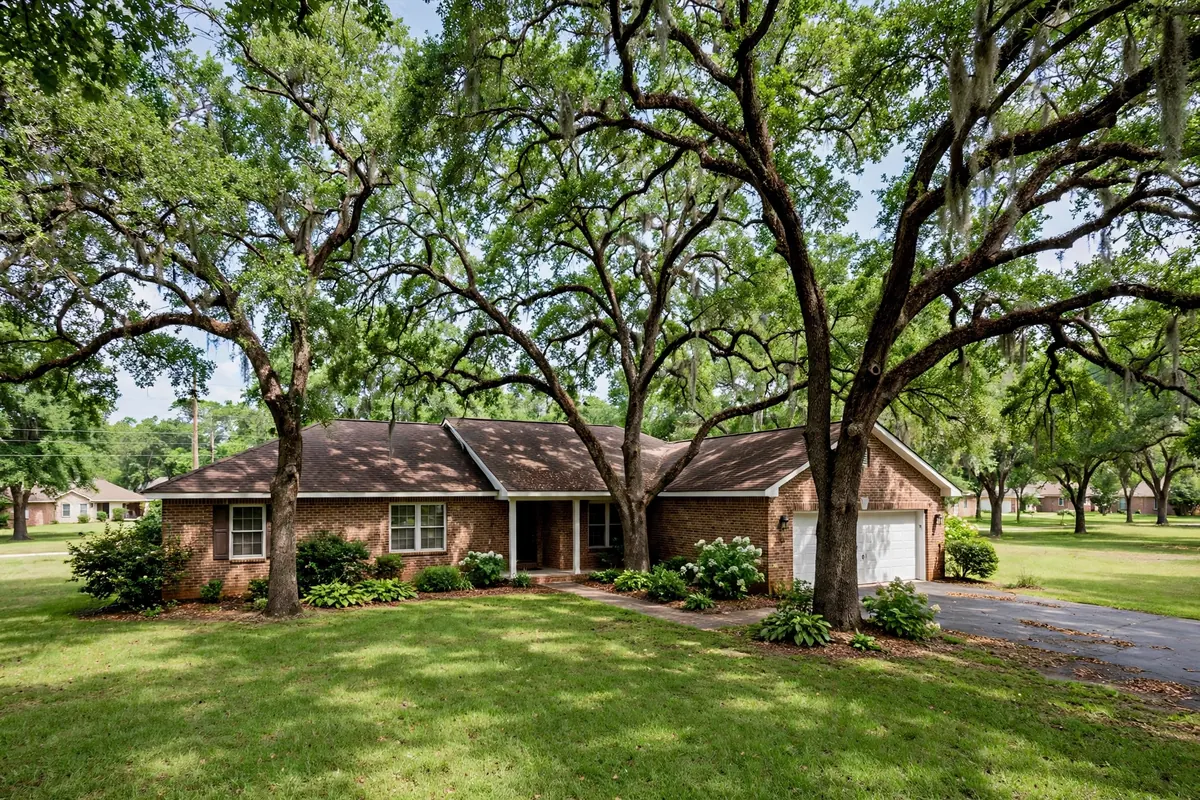
Shade with a trade-off. Mature trees keep a home cooler in summer and pull hard on soil moisture at the same time, so the slab on the tree side needs watching.
Root barriers, watering, and other ways to protect the slab
A root barrier is the most direct fix when a tree is already close to the house. The work starts with a trench dug between the tree and the foundation, usually about three feet deep, and rigid panels set into the trench to block roots from growing toward the slab. The trench is then backfilled and the soil is watered in so it settles. The barrier does not harm the tree when it is placed at a sensible distance from the trunk, and it does not stop the tree from drinking, it only keeps the closest roots from drying the soil right under the house. A barrier works best when it is paired with concrete slab foundation repair or pier and beam foundation repair where the slab has already settled, because the barrier protects the repair from the same drying that caused the problem.
Watering is the everyday half of the job. A soaker hose run around the dry side of the house during a rainless stretch keeps the clay at a steadier moisture level, and watering the tree itself, out at the drip line rather than at the trunk, keeps the tree from reaching further toward the house for water. Keep gutters and grading in order too, since a downspout that dumps water beside the tree can make one patch of soil swell while the rest shrinks. In Richardson and other older suburbs with the same mature canopy as east Plano, we see the same pattern every summer, and the homes that hold up best are the ones where the owner waters steadily, watches the slab edge, and gets readings when a crack changes. That routine is simple, and it is the difference between a tree you enjoy and a tree that moves your house.
A big tree close to the house?
Floor readings show whether the tree side of your slab has settled, and a written plan lays out the fix. Call and we will talk through what we find.
Plain answers to the questions Plano homeowners ask us most about this topic.
?
Can tree roots crack a slab directly?
Rarely. Roots almost never push hard enough to crack a concrete slab on their own. The damage comes from the water they remove, which makes the clay shrink and leaves the slab without support on one side. A root barrier between the tree and the house slows the drying, and even watering on the tree side helps too.
?
Should I cut down a large oak near my house?
Only as a last step, and only with a plan. Removing a tree stops the drying, and the clay can swell back and lift the slab slightly. Get floor readings before and after, and consider a root barrier first. If the tree stays, a root barrier and steady watering on that side can keep the drying from getting worse.
?
Will watering the tree help my foundation?
Yes, when the water goes where the roots drink, out at the drip line, and when the soil on the house side stays evenly damp. Watering the trunk or flooding one spot does not help and can make moisture uneven.