Concrete Slab Foundation Repair in Plano, TX
Most Plano homes sit on a concrete slab, one stiff plate that has to ride out every swell and shrink of the clay below it. When one corner of that plate drops, doors stick, floors slope, and cracks run across brick and drywall. We pin the slab to firm ground with steel piers and lift it back toward level, a little at a time.
What slab repair fixes in a Plano home
Cracks, slopes, and sticking doors all trace back to the same plate moving.
A concrete slab is poured as a single plate, with thickened edges that carry the walls. In Plano that plate sits on Houston Black clay, a soil that swells when it is wet and shrinks when it is dry. When the clay under one corner dries out in August, that corner of the slab drops. When the clay under the opposite corner swells after a wet spring, that corner rises. The plate cannot bend far, so it cracks, and the house above it shows the movement in a dozen small ways at once. A foundation inspection reads the floor elevations and maps exactly where the slab has dropped and where it has held.
The signs are easy to spot once you know them. Stair-step cracks run through the brick mortar outside, usually below a window or near a corner. Inside, drywall cracks run from the top of a door frame toward the ceiling, and the same crack often shows up in the same place on the other side of the wall. Floors slope toward the low corner, and a door in that part of the house rubs its frame or will not latch. Gaps open where the baseboard meets the floor, and in the kitchen, the countertop pulls away from the wall by a hair. Each sign on its own could mean many things, but together, in a slab home on Plano clay, they point to the plate moving.
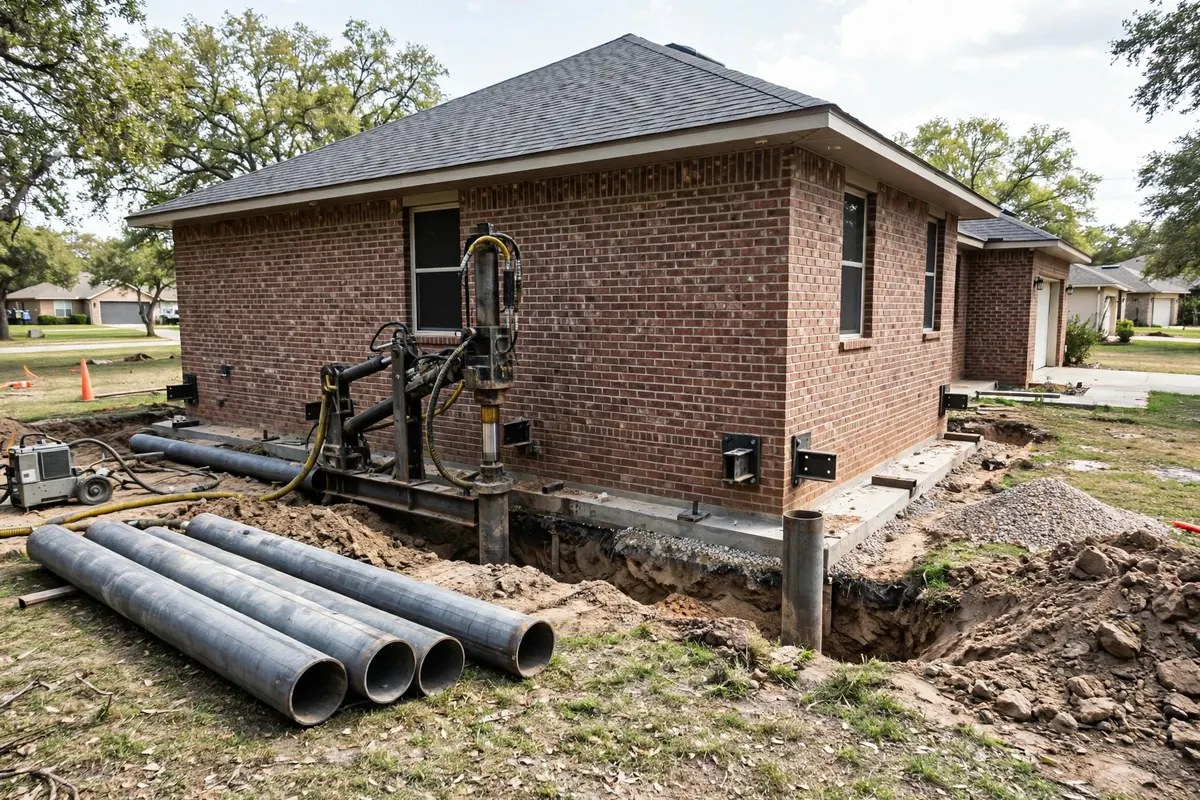
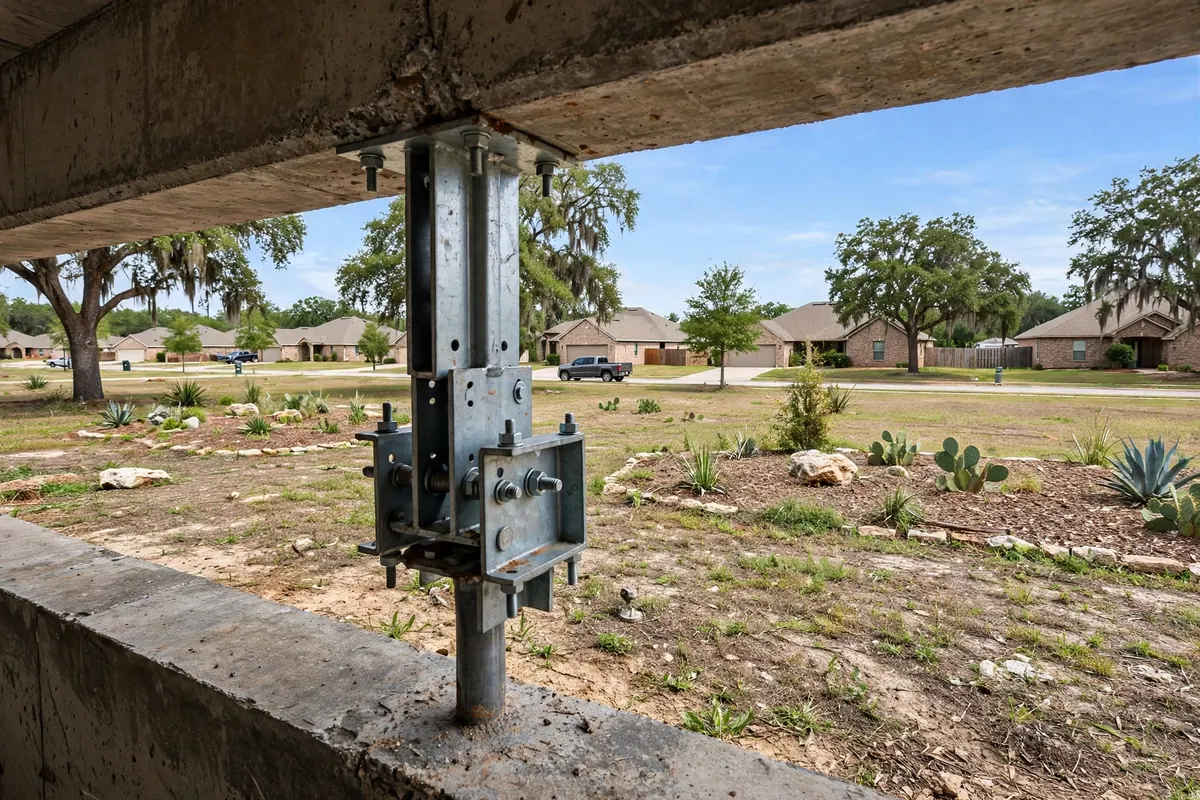
Slab repair fixes the support under the plate, not the plate itself. Steel piers are driven down beside the footing until they reach firm, stable ground, then a bracket under the footing takes the weight of the house and the pier holds it there. Where the slab has dropped, the pier is used to lift the footing back toward its original height, in small increments, with floor readings checked after each lift. The crack in the brick does not vanish, but it stops growing, and the door that stuck starts to close again. Our guide to signs your Plano home's foundation is moving lists these signs in the order homeowners usually notice them.
Not every slab problem needs piers. A hairline crack in a garage floor, a single drywall crack after a dry summer, or a door that sticks only in August may need watching and a reading rather than a lift. That is why the inspection comes first and the plan follows the readings. Homes in west Plano, where lots were cut and filled, sometimes need piers on the fill side only, while the side on undisturbed clay holds steady. Homes in Richardson and Allen sit on the same clay belt, so the same signs show up across the whole north Dallas area, and the same careful reading applies there too.
- Stair-step brick cracks: the wall is following the corner of the slab as it drops.
- Drywall cracks above doors: the frame above the opening is being pulled by the moving plate.
- Sloping floors: the slab has dropped on one side and the floor follows it.
- Doors that stick or will not latch: the door frame has twisted with the slab below it.
- Gaps at baseboards and counters: the wall and the floor are no longer sitting together.
Slab repair methods, compared side by side
Steel piers, concrete piers, and foam each suit a different kind of slab problem.
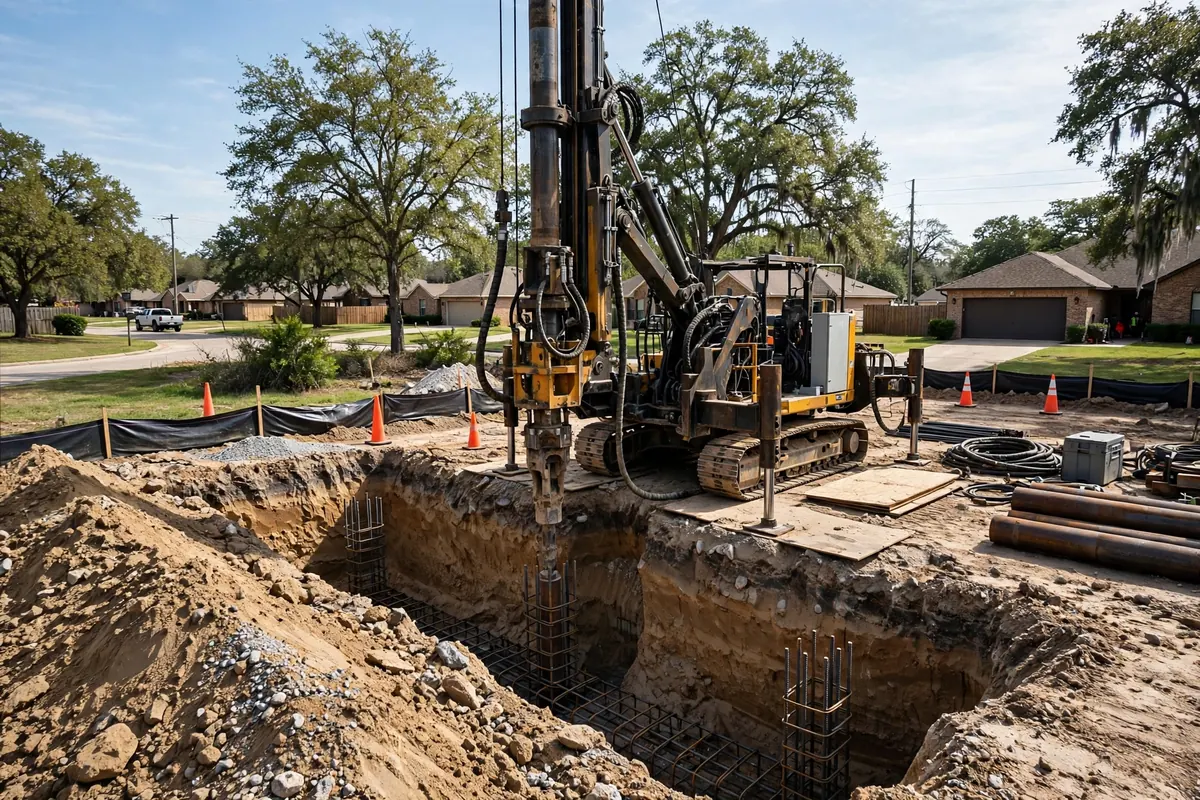
Steel piers are the workhorse for a slab that has dropped. Sections of steel pipe are driven hydraulically into the ground beside the footing, one section after another, until the pier reaches soil firm enough to carry the house. A steel bracket is then bolted under the footing, and the weight of the house transfers from the moving clay to the pier. The pier can also lift the footing, a little at a time, until the floor readings come back toward level. Steel piers reach deep, they are installed with small equipment, and they leave a small excavation that is backfilled the same day. See steel pier installation for the full picture of how these piers are driven and set.
Concrete piers work on the same idea with a different material. Poured concrete cylinders are pressed into the ground under the footing, and they carry the load once they reach firm soil. They suit homes where the firm layer is not deep and where the soil holds a pressed pier well. Foam lifting, by contrast, does not carry the house at all in the structural sense. Polyurethane foam is injected under a sunken concrete flat, like a driveway or patio, and it expands to fill the void and lift the flat back to level. It is the right tool for a sunken walkway or a tilted driveway slab, and our concrete lifting and leveling page covers it in detail. Foam is not a substitute for piers under the walls of a house.
| Method | Best for | How it works | What to know |
|---|---|---|---|
| Steel piers | A slab corner that has dropped and needs lifting | Driven to firm ground, bracketed under the footing, then lifted | Deepest reach, small excavations, the standard choice for house walls |
| Concrete piers | Shallower firm soil under a settled footing | Pressed cylinders carry the footing once they reach firm soil | Suits homes where the firm layer sits close to the surface |
| Foam lifting | Sunken driveways, patios, and walkways | Foam fills the void under the flat and lifts it back to level | For flatwork, not for carrying the walls of a house |
| Crack sealing | Cracks that are stable and not growing | Epoxy or sealant closes the crack and keeps water out | Seals the crack; it does not lift or support the slab |
The inspection readings decide which method fits your home. A slab that has dropped on one side needs piers. A flat that has sunk needs foam. A crack that is stable needs sealing, and our foundation crack repair page explains how we judge whether a crack is stable or still moving.
Choosing between methods is really choosing between two questions: has the slab moved, and is it still moving? A slab that moved once, years ago, and has sat still since may need only sealing and watching. A slab that is still dropping needs piers, because sealing a crack on a moving slab is like painting over a leak. The readings taken months apart tell the story, which is why a second reading after a dry season is often the most useful number in the whole job.
Has your slab dropped on one side?
Floor readings map the low corner, and the map decides where the piers go.
Step by step: how slab repair happens at your home
From the first reading to the final walkthrough, in order.
Day one is reading, not digging. We walk the outside of the house and note every crack in the brick, the grade around the walls, and where water runs in a storm. Inside, we take floor elevation readings in every room and mark them on a sketch, so the low corner shows up as a number. We check doors, windows, and baseboards, and we look in the garage and at the slab edge where it meets the ground. That map is the plan, and nothing is dug until the map is drawn. The full reading is described on our foundation inspection page, and the same steps apply here.
Next, the crew marks the pier spots along the footing, usually at the corners and at intervals along the settled wall. Small excavations are dug at each spot, just wide enough to reach the footing and set a bracket. Steel pier sections are then driven hydraulically, one after another, until each pier reaches firm ground and the driving resistance tells the crew it has found its bearing layer. A bracket is bolted under the footing at each pier, and the load of the house is transferred onto the piers. If you want the mechanics in detail, our guide to foundation repair methods explains piers, pilings, and foam in plain words.
Lifting comes last, and it comes slowly. The crew raises each pier a little, checks the floor readings, and raises again, working around the settled wall so the slab rises evenly. A fast lift can crack drywall and pop tile, so the crew watches the inside of the house as the outside rises, and stops the lift at the point where the readings look right and the doors start to work again. A slab that has dropped a long way may not come all the way back, and we say so before the lift starts, so the goal is a level floor and doors that work, not a perfect number on a gauge.
When the lift is done, the excavations are backfilled, the soil is tamped down, and the sod is put back. We walk the house with you, show the before and after readings, and point out the cracks that should now stay still. We also talk about the water habits that keep the slab steady: gutters that run clear, downspouts that send water away from the walls, and soil moisture kept even around the house. Drainage correction often follows a slab lift, because the same water that softened the clay under the slab will keep working on it unless it is sent elsewhere. A water leak under the slab is a different problem with the same symptom, and our post on how a water leak under your slab damages the foundation explains how to tell the two apart.
Read the floors
Elevation readings in every room map the low corner before anything is dug.
Mark the pier spots
Piers go at the corners and along the settled wall, where the footing needs support.
Drive the piers
Steel sections are driven hydraulically until each one reaches firm ground.
Set the brackets
Each bracket is bolted to the slab edge at the footing line, so the settled concrete bears on the pier below it.
Lift in small steps
The slab rises a little at a time, with readings checked after every lift.
Backfill and walk through
Excavations are filled, sod is replaced, and the readings are shown to you.
What to expect after a slab repair
The house settles into its new position over the weeks that follow.
The first thing most homeowners notice is the doors. A door that rubbed its frame for a year starts to close with a light push, and a window that stuck slides again. The floor feels level underfoot, and the gap at the baseboard closes up. Those changes show up on the day of the lift. The cracks are slower: a stair-step crack in the brick does not close, but it stops growing, and a drywall crack that is patched after the lift stays patched instead of reopening in the next dry season.
Some small finish work usually follows. Drywall cracks that opened during the lift get patched and painted, and a door that was trimmed to fit a sloping floor may need its edge adjusted now that the floor is level. Tile that cracked while the slab was low stays cracked, and it is replaced rather than repaired. We point out each of these during the walkthrough, so you know what is part of the lift and what belongs to a painter or a tile setter. A home that also has a raised section may need house leveling and lifting for that part, and that work is planned in the same visit.
The ground around the house needs watching for a season. The backfilled excavations settle a little after the first rain, and we come back to top up the soil and reset the sod if it dips. The slab itself is read again after a dry summer, and that second reading is the one that proves the repair is holding. If the readings move again, it usually means water is still reaching the clay under one corner, and that is when drainage correction or a look at the gutters earns its place. Keeping the soil moisture even around the house, as described in our guide on watering your foundation in Plano, is the simplest habit that keeps a lifted slab level.
One more thing to watch is the plumbing. A slab that has moved can stress the pipes that run through it, and a lift can shift them again. If a drain runs slow after the work, or a damp spot appears on the floor, tell us right away so the pipes can be checked. Most lifts cause no plumbing trouble at all, but a quick check beats a slow leak under a slab, and our post on water leaks under the slab explains the signs to watch for in the months after a repair.
Not sure which repair method fits?
Piers lift a dropped slab, foam lifts a sunken flat, and sealing suits a crack that has stopped moving.
Questions about slab repair in Plano
Straight answers before you book a visit.
How do I know if my slab needs piers or just crack sealing?
It comes down to whether the slab is still moving. A crack that has stayed the same width for a year, with level floors and doors that work, usually needs sealing and watching. A crack that is widening, floors that slope, and doors that stick all point to a slab that is still dropping, and that needs piers under the footing. Floor readings taken months apart give the clearest answer.
Will steel piers lift my slab back to where it was?
In many cases the slab comes most of the way back, and the floors read close to level with doors working again. A slab that has dropped a long way over many years may not return fully, because the house above it has settled into its shape. We set the goal before the lift starts, based on the readings, so you know what to expect.
How long does slab repair take?
Most slab jobs take two to four workdays, depending on how many piers the footing needs and how far the slab has to rise. The first day is usually driving piers, the next days are lifting and backfilling. Rain can slow the digging, and we will tell you in advance if the weather is likely to stretch the schedule.
Will the work damage my yard or driveway?
Each pier needs a small excavation beside the footing, usually about the size of a wheelbarrow, and the soil and sod are put back when the work is done. The excavations settle a little after the first rain, and we return to top up the soil if it dips. Driveways and patios are not dug up for pier work.
Can I stay in the house during slab repair?
Yes. The work happens outside, along the footing, and the noise is mostly from the hydraulic drive equipment during the day. Water and power stay on, and the rooms inside stay usable. We will tell you which side of the house will be noisiest on which day.
What if the slab moves again after the repair?
Piers carry the house down to firm ground, so the slab is far less likely to drop again than it was on the moving clay. If the readings move after a dry season, it usually means water is still reaching the clay under one corner. A follow-up reading shows where, and drainage work or a gutter fix usually answers it.
Questions we hear on slab repair visits
Short answers to the questions homeowners ask most while we are on site.
Why does Plano clay crack slabs more than other soils?
Plano sits on Houston Black clay, a soil with very high shrink and swell. It can swell by a large amount when wet and shrink hard when dry, and that cycle pulls and pushes a stiff slab year after year. Most other soils move far less, which is why slab trouble is so common across Collin County.
Are post-tension slabs repaired the same way as older slabs?
The piers work the same way, but a post-tension slab has steel cables running through it, so the crew locates the cables before any drilling or cutting near the slab. The inspection notes the slab type first, and the plan is written around it, because cutting a cable would do real harm to the plate.
Should I fix drainage before or after slab piers?
Both orders work, and the readings decide. If water is pooling against the wall and softening the clay, drainage work first keeps the pier excavations dry. If the slab has dropped badly, piers first stop the movement, and drainage follows to keep it stopped. Many jobs do the two together, in the same visit.
Related services that go with concrete slab foundation repair
Other work that often goes with this repair.
Start with readings across your slab.
Book a foundation inspection and we will read the floors and write a plan for your slab.
Book a Foundation Inspection