Yes, most foundation movement in Plano shows itself long before it becomes a serious problem, and the signs are easy to spot once you know what to look for. Doors that stick, cracks that step through brick mortar, and floors that slope a little are the usual first clues, and they point to soil under the house shifting with moisture changes.
By Plano Foundation Repair · Last updated November 24, 2026
Plano sits on Blackland Prairie clay, a soil that swells when it rains and shrinks when it dries out. That cycle lifts one corner of a house while another corner settles, and the frame, brick, and drywall show the strain. This guide walks through each sign in plain words, explains what it usually means, and tells you which signs call for an inspection soon.
The City of Plano publishes homeowner guidance on drainage and grading around a house, which is a useful starting point for the water habits in this guide.
Sticking doors and windows that used to close cleanly
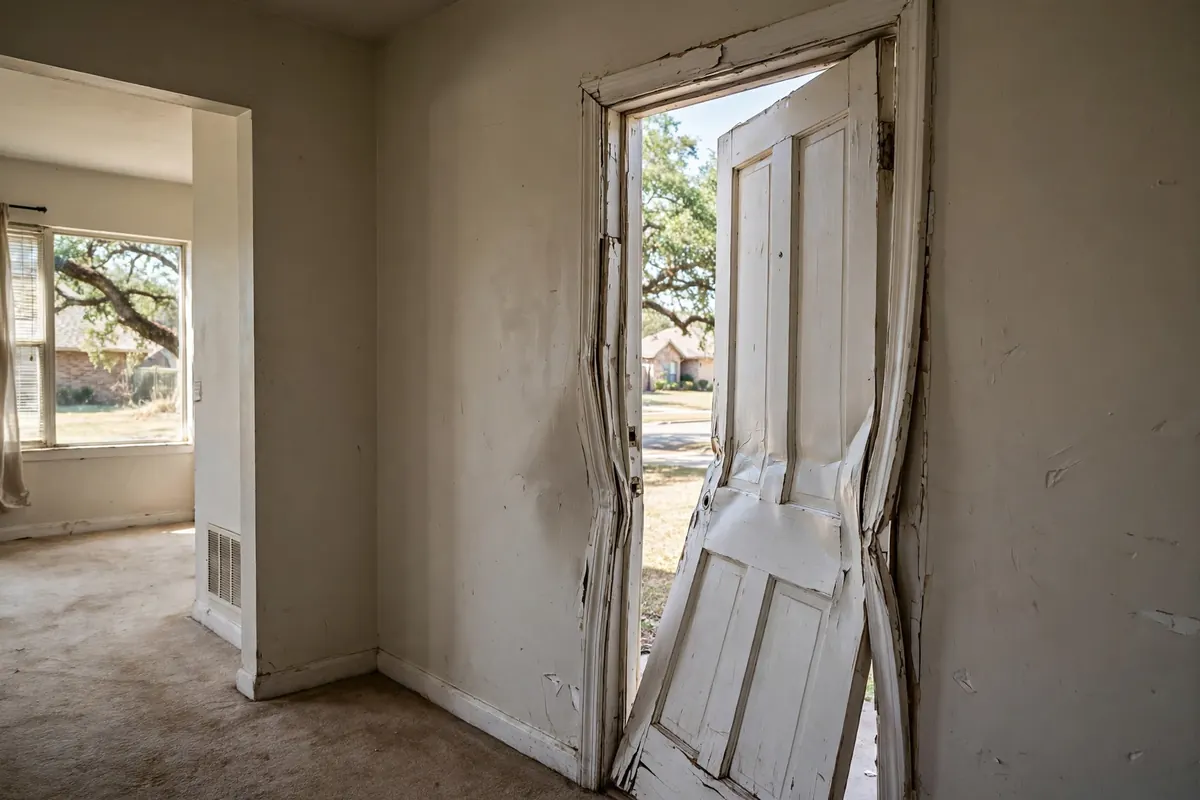
A door that suddenly rubs at the top or will not latch is one of the most common early signs of movement in a Plano home. The frame twists a fraction of an inch when the foundation under it shifts, and the door leaf no longer lines up with the latch plate. One door acting up after a dry summer or a wet spring is worth noting, and two or more doors on the same side of the house is a stronger signal.
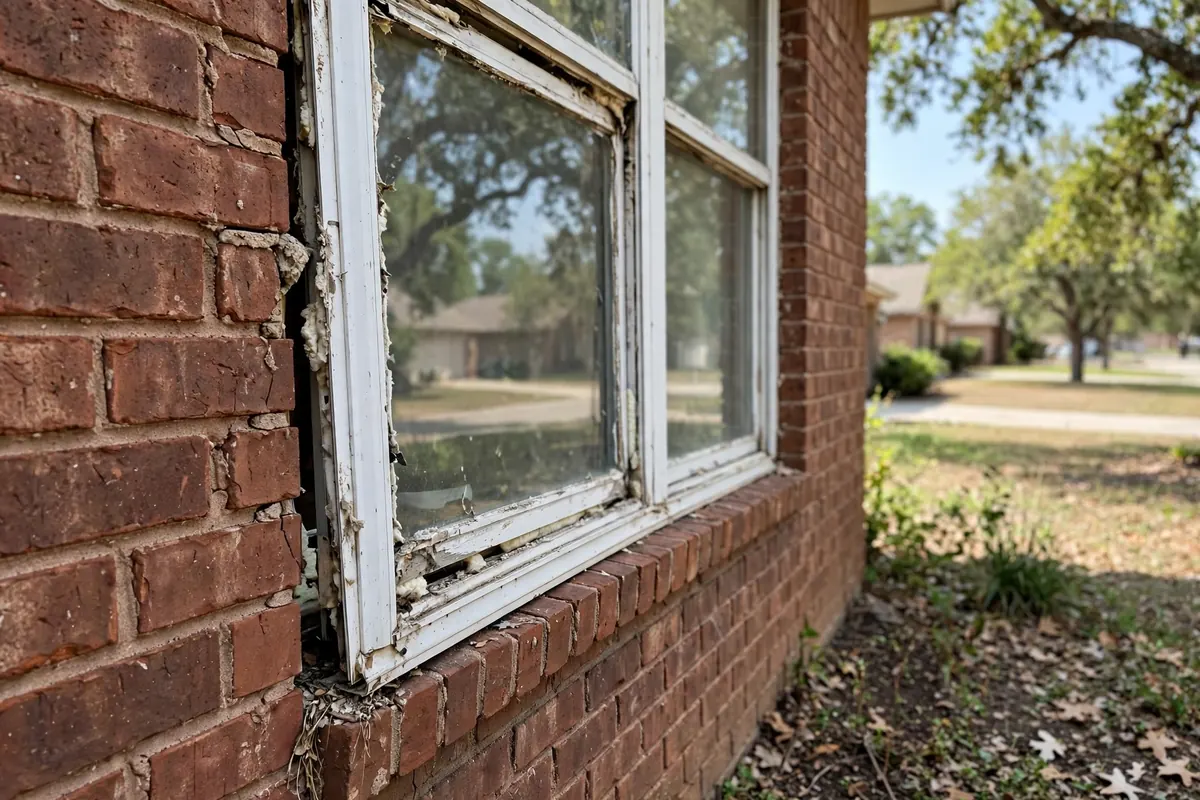
Windows tell the same story in a different way. A window that used to slide open with one hand and now needs a firm push, or a sash that leaves a gap at one corner when it is closed, is often riding on a frame that has moved. Check the corners of the frame for small cracks in the paint or drywall, and look at the brick outside the window for cracks that run from the corners. A foundation inspection measures floor elevations across the whole house, so it can show whether the sticking doors sit over a low spot or a high spot.
Seasonal sticking can come and go with the weather, and that pattern itself is useful information. Doors that bind in August and ease off in October are reacting to dry soil shrinking under one side of the slab. Write down which doors stick, when the trouble started, and whether it is getting worse, because that record helps the inspector find the pattern faster.
Cracks in brick, drywall, and concrete that tell a story
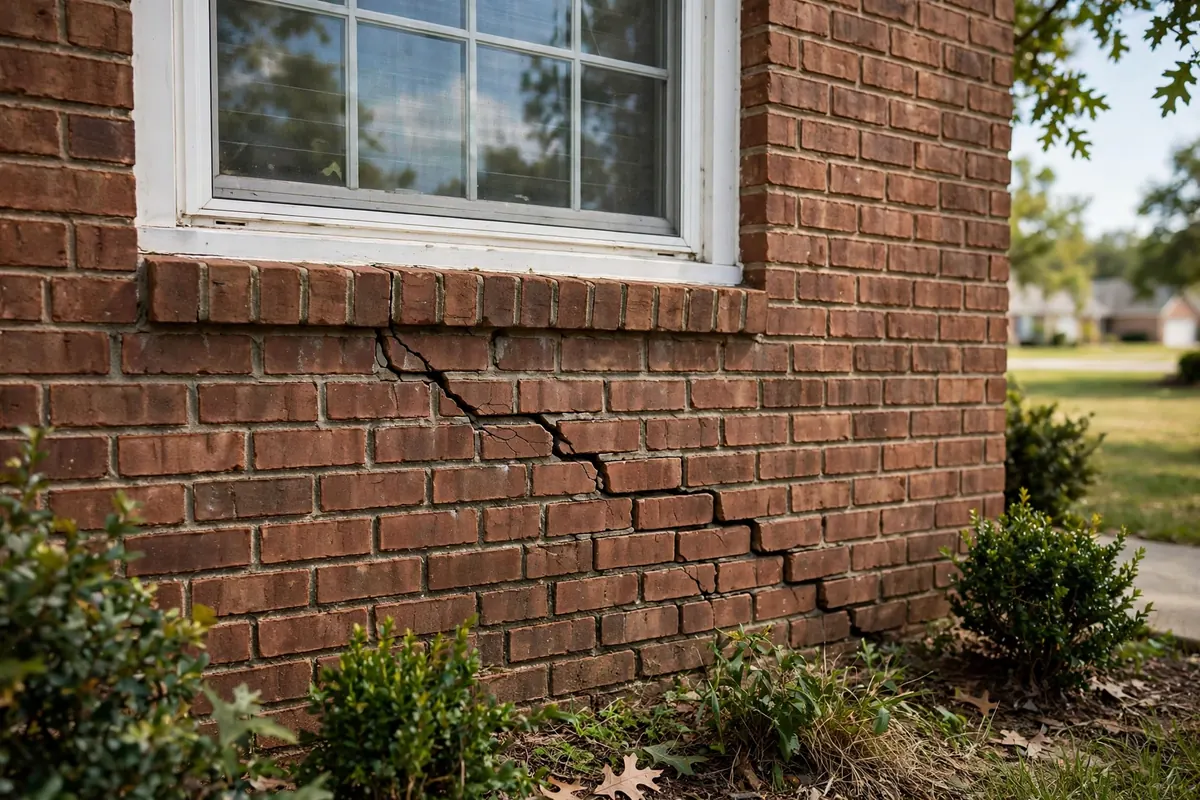
Cracks are the sign most Plano homeowners notice first, and not every crack means the same thing. Thin hairline cracks in drywall above a door or window are common as a house ages, and a single one that has not changed in a year is usually just the house settling into its soil. Stair-step cracks that follow the mortar joints in brick, especially cracks that run from a window corner toward the roofline, point more directly at foundation movement.
The width and direction of a crack matter more than its length. A crack that is wider at one end than the other, or one that keeps growing month by month, shows that one part of the foundation is moving relative to another part. Cracks in the concrete of a garage floor or a porch slab can also signal movement, though slabs near the house often crack from heat and drying alone. Our guide to how to tell if a foundation crack is serious walks through the differences in more detail, and foundation crack repair covers how cracks are sealed and watched once the cause is known.
Take a photo of any crack you find, with a coin beside it for scale, and date the photo. A second photo a month later shows at a glance whether the crack is still moving. That simple record is one of the most useful things you can bring to an inspection, because it turns a worry into a measurement.
Signs at a glance: what each one usually means
Sign you see
What it often points to
How soon to act
One door sticking
Small frame shift, seasonal soil change
Watch it, note the date
Several doors sticking, same side
Foundation movement under that side
Book an inspection
Stair-step crack in brick
One section of foundation moving
Book an inspection
Sloping floor or baseboard gaps
Slab or pier settlement
Book an inspection
Crack widening month by month
Movement still active
Call soon, do not wait
A closer look. Interior door sticking in a warped frame inside a home.
Floors that slope and gaps along baseboards
A floor that slopes enough to feel underfoot, or a marble that rolls toward one wall, is a sign that the slab or the pier and beam structure under the floor has shifted. In slab homes the slope often shows up near the center of the house or along one outside wall, where the soil has dried and pulled away. In pier and beam homes a sloping floor can point to a pier that has settled or a beam that needs re-shimming.
Gaps along floors, walls, and trim
Gaps tell the same story from another angle. A gap opening between the baseboard and the floor, or between a kitchen counter and the wall behind it, means the floor and the wall are no longer moving together. Crown molding that separates at a corner, or a tile floor with grout lines that crack in a straight run, adds to the picture. One small gap in one room may be trim drying out, but gaps in several rooms on the same side of the house deserve a closer look. House leveling and lifting is the work that brings a shifted floor back toward level, and it starts with elevation readings that map the slope.
Walk the house slowly and feel for the slope with your feet, then confirm it with a long level or a ball on a hard floor. Note where the slope starts and which direction it runs, because the low side usually sits over soil that has lost moisture or a pier that has settled. That direction often matches the side of the house where the doors stick and the brick cracks, and the three signs together make a clear pattern.
Not sure what you are seeing?
An inspection measures the floors and the brick, so you get readings and a written plan instead of guesses. Call (972) 430-3826 or book an inspection.
What to do when you spot more than one sign
One sign on its own is a reason to watch, and two or three signs pointing the same way is a reason to act. Start by writing down every sign you have found, where it is, and when you first noticed it. Photos with dates make the record stronger, and they cost nothing but a few minutes. Keep watering and drainage steady while you watch, because a sudden change in soil moisture can make a slow problem move faster.
Do not try to fix the symptoms before you know the cause. Filling a brick crack or planing a sticking door makes the house look better for a month, and it hides the very clues an inspector needs to read the movement. Patching is fine after the foundation has been measured and a plan is in place, and that is the order that keeps the repair holding. Reading what causes foundation problems in Collin County helps you see which cause fits your house, and how drainage protects your foundation covers the water habits that slow movement down.
If the signs are changing fast, a door that will not close at all, a crack that widens week by week, or a floor that drops noticeably, call sooner rather than later. Movement that is caught early is usually a smaller job than movement left to run for a year, and an inspection gives you readings and a written plan instead of guesses.
What it looks like. Gap where a window frame pulls away from brick on a house exterior.
How an inspection turns signs into readings
An inspection replaces worry with numbers. The inspector walks the outside of the house first, looking at brick, grading, gutters, and the soil line around the foundation, then moves inside with a digital level to take elevation readings across every room. Those readings draw a map of the floor, high spots and low spots, and the map shows whether the signs you found sit over real movement or over a spot that has always been a little uneven.
The written report lists what was measured, what it means, and what should happen next, in that order. Some houses need piers or leveling, some need drainage work first, and some need nothing more than watching and steady watering. Foundation inspection explains the visit step by step, and what to expect from a foundation inspection covers the questions homeowners ask before the visit. The point of the inspection is not to sell a repair, it is to give you a clear picture of your house so you can decide with facts.
Questions we hear on inspections
Plain answers to the questions Plano homeowners ask us most about this topic.
?
How many signs mean my foundation is moving?
One sign is a reason to watch and record what you see. Two or more signs on the same side of the house, like sticking doors plus a stair-step brick crack, point much more strongly at movement and are a good reason to book an inspection.
?
Do cracks in drywall always mean foundation trouble?
No. Thin hairline cracks above doors and windows are common as a house ages and the framing dries out. Cracks that are wide, that grow over time, or that appear with sticking doors and sloping floors are the ones that point at the foundation.
?
Can foundation movement stop on its own?
Movement often slows when the soil moisture steadies, for example after a wet season follows a dry one, but the house rarely returns to where it was. An inspection shows whether the movement is still active and whether anything needs to be done.
?
Should I photograph the cracks I find?
Yes, photos with a coin or ruler beside the crack give you a dated record of its width, and a second photo months later shows whether it grew. Keep the photos in one folder with the date in the file name. Bring them to the inspection, because they show the inspector how fast the movement has been.
Related guides
More reading on the same ground, written for Plano homeowners.