Foundation problems in Collin County come from a short list of causes, and clay soil sits at the top of it. The Blackland Prairie clay under most of the county swells when it rains and shrinks when it dries, and that cycle alone moves more houses than any other single cause.
By Plano Foundation Repair · Last updated November 24, 2026
Water, trees, and the way a lot was graded add to the clay, and the worst cases are usually two or three causes working together. This guide walks through each cause, shows the signs it leaves, and explains which ones a homeowner can influence.
The Collin County website lists county services and local information that homeowners in the area use when they research their property.
Expansive clay under most of the county
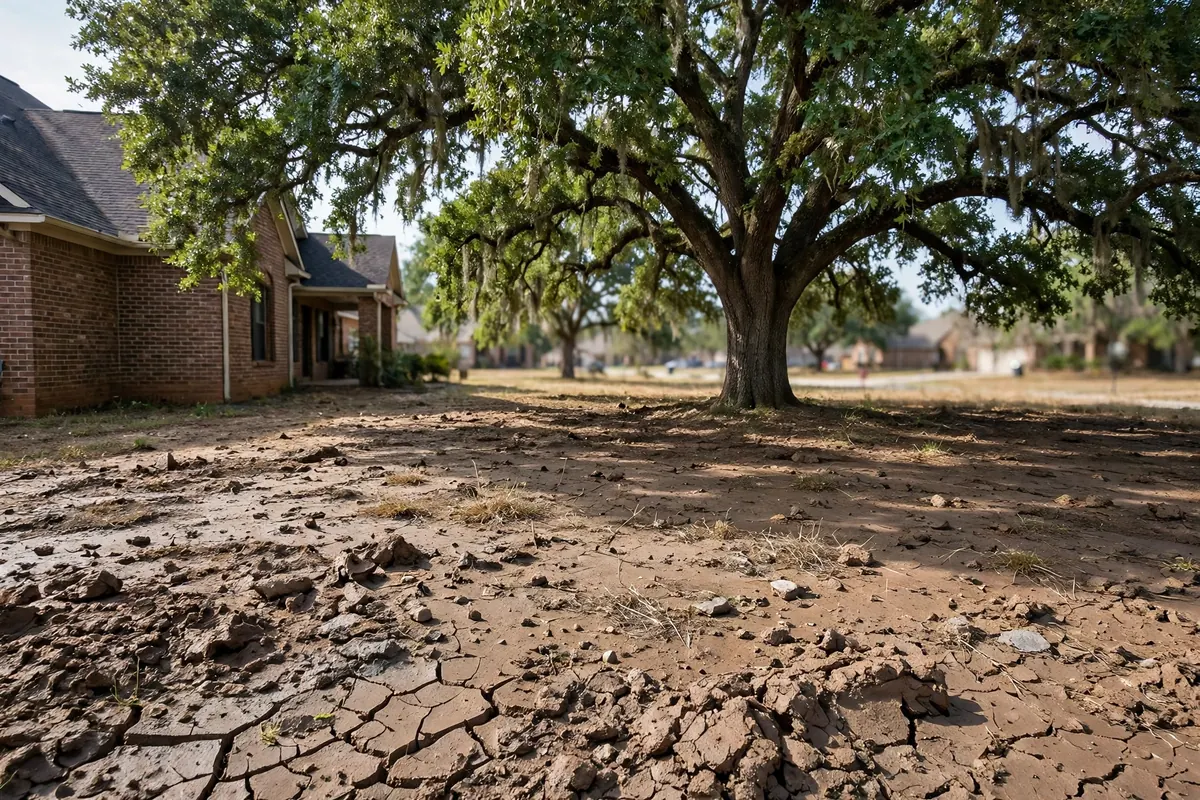
Collin County sits on a band of dark, heavy clay that runs across North Texas, and Plano sits near the middle of it. The clay is rich in minerals that absorb water, so a dry summer leaves it shrunken and cracked at the surface, and a wet spring swells it back up. A house built on that soil rides the cycle, and the foundation bends a little each time one side of the house gets wetter or drier than the other side.
The depth of the active clay matters. In some parts of the county the soil that moves with the seasons reaches several feet down, and in others it is shallower, which is why two houses a mile apart can behave differently. The U.S. Geological Survey describes expansive soils and the damage they cause to homes, and the description matches what inspectors see across Collin County every year. Why Plano's clay soil cracks foundations explains the cycle in detail, and soil stabilization is the work that firms up soil that moves too much.
Clay is the one cause a homeowner cannot remove. The soil under the house is the soil under the house, and the work is to keep its moisture even, so the swelling and shrinking stays small and balanced.
Water that pools, leaks, or drains the wrong way
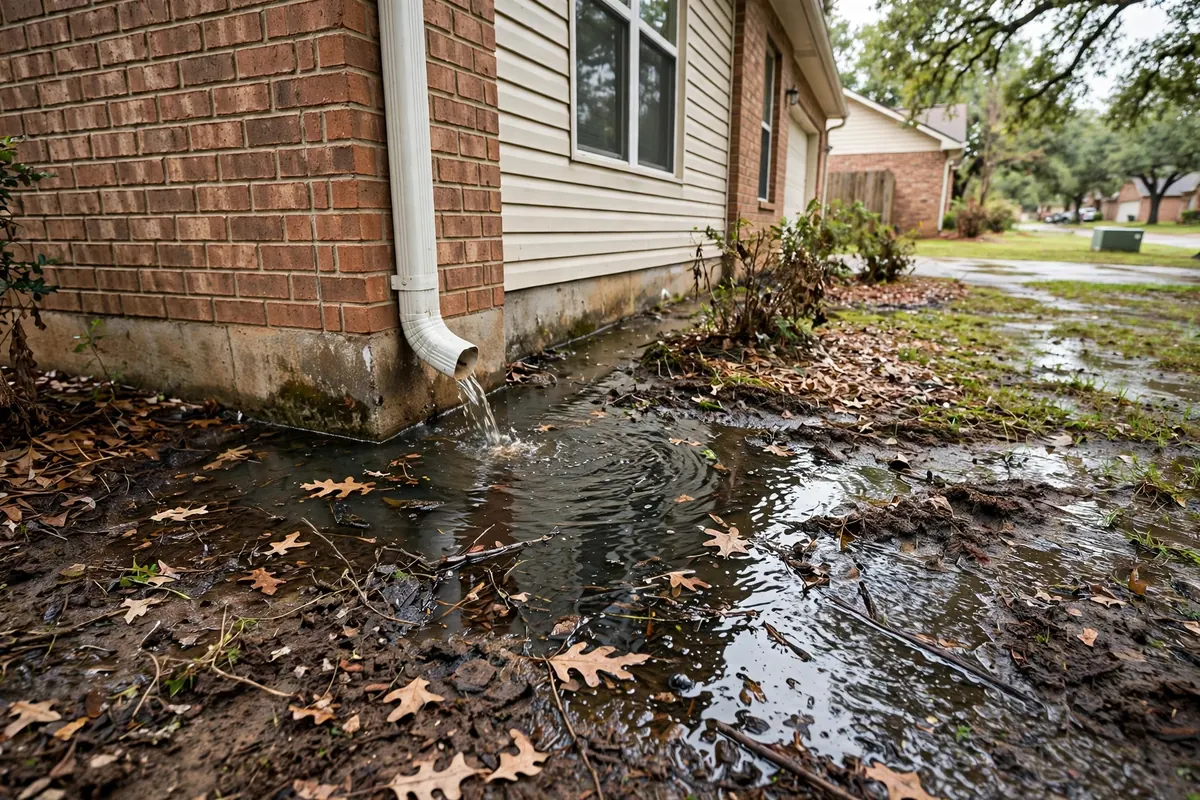
Water is the second cause, and it works by changing the clay. Rain that pools against a foundation soaks one side of the soil while the other side stays dry, and the wet side swells and lifts. A downspout that dumps water at a corner does the same thing in a smaller area, and a flower bed watered daily on one side of the house does it all summer long. The result is the same in every case: uneven moisture, uneven movement, and a foundation that bends.
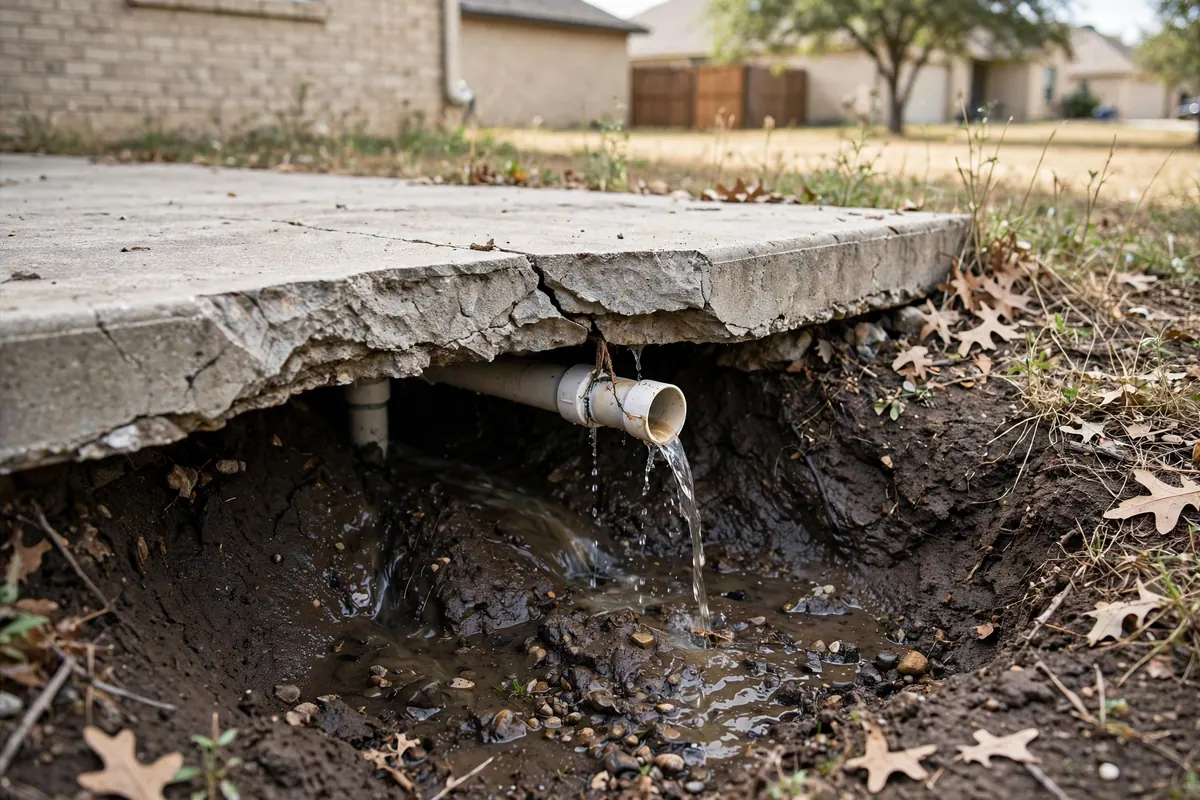
Plumbing leaks work from underneath. A slow leak under a slab washes soil away grain by grain, and the slab above the hollow sags into it. A leak in a yard line can soak the soil on one side of a house for months before anyone notices, because the water never reaches the surface. How a water leak under your slab damages the foundation covers the signs of a hidden leak, and how drainage protects your foundation covers the grading and gutter habits that keep rainwater away from the walls.
Drainage is the part of the water story a homeowner controls most directly. Soil that slopes away from the house, gutters that run clear, and downspouts that carry water several feet from the wall keep the moisture around the foundation even, and even moisture is the best defense the clay has. Drainage correction fixes the patterns that let water work against a house.
Causes and the signs they leave
Cause
Sign it leaves
What helps
Expansive clay
Seasonal cracks, sticking doors
Even watering, steady moisture
Pooling water
Cracks and lift on the wet side
Grading, gutters, drainage work
Plumbing leak
Sagging floor, damp spots
Leak repair, then foundation work
Large tree close by
Cracks on the tree side
Watering, root barrier
Poorly compacted fill
Uneven settlement, new cracks
Inspection readings, pier plan
A closer look. Poor drainage with water pooling against a house foundation.
Trees and roots pulling moisture from soil
A large tree near a house is a pump. In a dry week an oak can draw a large volume of water from the soil around its roots, and the clay on the tree side of the house shrinks faster than the clay on the other side. The foundation follows the soil down, and the brick above it cracks in a stair-step pattern on the tree side. The effect is strongest in a drought, when the tree drinks hardest and the rain is not replacing the water.
Roots pressing against the foundation
Roots themselves can also push against a foundation, though the moisture effect is usually the bigger problem in Collin County. A root growing against a footing can lift a corner or crack a wall, and roots in a sewer line can back water up into the yard. The fix is rarely to remove a healthy tree. Root barriers, steady watering on the tree side, and keeping new trees planted well away from the house usually keep the balance. Tree roots and your foundation covers the pattern in full, and root barrier installation is the work that blocks roots from reaching the foundation.
When you look at a house with foundation trouble, check the trees first. The side with the biggest tree is often the side with the cracks, the sticking doors, and the low floor readings.
Not sure what you are seeing?
An inspection measures the floors and the brick, so you get readings and a written plan instead of guesses. Call (972) 430-3826 or book an inspection.
Building age, fill soil, and past grading
The age of a house and the ground it was built on shape its risk. Homes built in the 1970s and 1980s in the older parts of the county often sit on slabs poured to the standards of the time, and those slabs bend more easily than a modern slab with heavier steel. Pier and beam homes from the same era can have piers that have settled or wood that has softened in a damp crawl space.
Fill soil is the quieter factor. When a subdivision is graded, some lots get soil brought in and compacted, and if the fill was not compacted well, it settles unevenly under the slab for years after the house is built. A house on fill can show foundation signs even when the natural clay around it is behaving, and the pattern of the signs often follows the fill, not the weather. Past grading changes matter too: a lot that was regraded for a pool, a patio, or a neighbor's new house can end up with water running toward a foundation that used to drain well.
These causes are harder for a homeowner to see, which is why the inspection matters. Elevation readings show the pattern of the movement, and the pattern usually points at the cause, whether it is clay, water, trees, or the ground the house was built on. Foundation repair in McKinney, TX and foundation repair in Frisco, TX show how the same causes play out in the towns around Plano.
What it looks like. Plumbing leak wetting soil under a concrete slab edge.
The combination that causes the most movement
The worst foundation problems in the county are rarely one cause alone. They are a combination, and the most common one is clay plus water plus a tree: a dry summer shrinks the clay, a big oak drinks from one side, and a downspout dumps rain at the same corner when the storms return. Each cause alone would move the house a little, and together they move it a lot, and the signs show up fast.
That combination is also why a repair that fixes only one cause often does not hold. Piers can lift a slab, but if the downspout still dumps water at the corner and the tree still drinks from the same side, the soil will keep moving and the repair will be tested every season. A plan that pairs the structural fix with drainage work and steady watering gives the repair a fair chance. Foundation maintenance tips for Plano homeowners lists the habits that keep the causes in balance, and foundation inspection is the visit that sorts out which causes are at work under your house.
When you read your own house, look for the combination, not just one cause. The side with the tree, the wet corner, and the cracks is telling you the story, and the fix follows the story.
County questions, answered plainly
Three questions Plano homeowners ask us most, answered in plain words.
?
Is Collin County worse for foundations than other parts of Texas?
Collin County sits on deep Blackland Prairie clay, which moves more with moisture than the sandy soils in some other parts of the state. That does not mean every house here has trouble, but it does mean steady moisture and good drainage matter more here.
?
Can a new home in Collin County have foundation problems?
Yes. A new home on poorly compacted fill soil, or on a lot where the grading sends water toward the foundation, can show signs within a few years. Age is not the only factor, and a new house deserves the same careful inspection as an old one.
?
Does the county or city inspect foundations?
The city inspects new construction while it is being built, but an existing home is the owner's responsibility. A private foundation inspection with elevation readings is the way to get a clear picture of a home that already stands. Ask for the inspection records before you buy, and book a private reading if the paperwork is thin.
Related guides
More reading on the same ground, written for Plano homeowners.