Most foundation trouble in Plano starts with water in the wrong place, either too much of it or too little. A short routine through the year keeps soil moisture steady and catches small changes before they grow.
By Plano Foundation Repair · Last updated November 24, 2026
A foundation does not need much attention, but it does need regular attention, and the routine is shorter than most homeowners expect. A few checks each season, a look at the gutters, a walk around the slab edge, and a glance at the doors and floors add up to a house that is watched instead of worried over. The routine in this guide is built around the Plano year: wet springs, hot dry summers, and the mild winters in between, with the clay under the house moving through each season in its own way. None of it needs special tools or skills, only a habit of looking, and the habit pays for itself the first time it catches a small change early. If you have already seen cracks or a sloping floor, start with a foundation inspection and floor readings, and use this routine to protect the house after that.
A seasonal routine that fits the Plano year
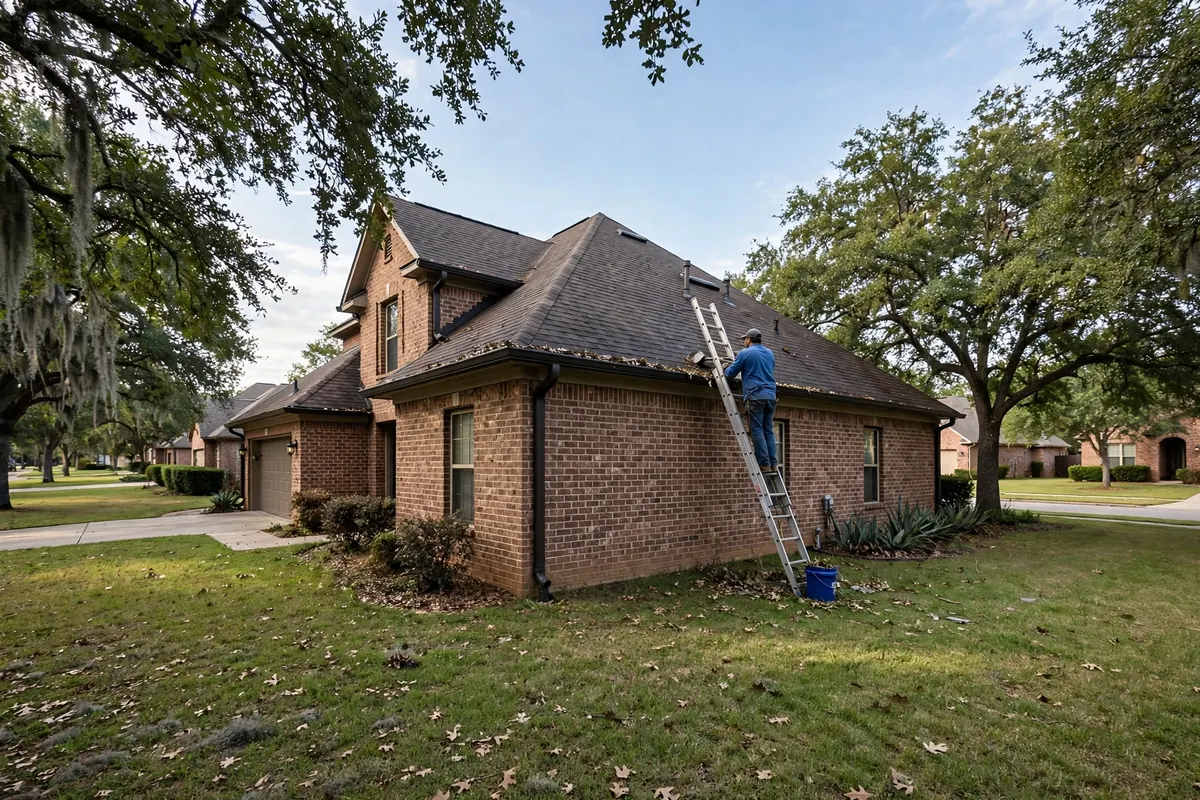
Plano has two seasons that matter most to a foundation: the wet spring, when heavy rain swells the clay, and the long dry summer, when heat pulls the moisture back out. Spring is the season for drainage: clear the gutters, check the downspouts, and look for water standing near the foundation after a storm. Summer is the season for watering: run a soaker hose around the perimeter when the rain stops, and keep the soil damp on all four sides. Autumn is the season for trees and leaves: clear the gutters again, trim back any branches over the roof, and check the slab edge for gaps that opened through the summer. Winter is the season for watching: walk the house once, note any doors that stick or cracks that have changed, and keep the notes for spring.
A seasonal maintenance routine for a Plano home
Season
What to do
What to watch for
Spring
Clear gutters, check downspouts and grading
Standing water near the foundation after rain
Summer
Water the perimeter steadily with a soaker hose
Soil gaps along the slab edge, sticking doors
Autumn
Clear leaves, trim trees, check the slab edge
Cracks that grew through the summer
Winter
Walk the house, note changes, keep records
Doors, floors, and cracks that differ from autumn
The routine works because it matches the clay: drainage when the water comes, watering when it goes, and watching in between. A guide to checking a home after heavy rain and a guide to drought damage cover the two hard seasons in more detail, and this routine is the short version you can keep on the fridge.
Gutters, grading, and the ground around your home
Gutters are the first line of care, because a whole roof worth of water lands in them and has to go somewhere. Clean them twice a year, in spring and again in autumn after the leaves fall, and check that every downspout carries its water several feet away from the house. A downspout that ends at the foundation dumps a roof worth of water into one spot, and that spot is where the clay swells hardest and the slab edge lifts. Extensions are simple, and they are the cheapest drainage fix a house can have.
Grading is the second line. The ground beside the house should fall away from the slab for the first several feet, so rain runs out into the yard instead of back toward the brick. Over the years the soil settles into a shallow trench along the foundation, and that trench ponds water against the slab every time it rains. Fill it with soil sloped away from the house, and keep flower beds from piling soil high against the brick, since a bed that acts like a dam holds water against the slab long after the rain stops. A drainage correction visit can fix grading and add a French drain where the yard will not drain on its own, and a guide to drainage explains each fix in plain terms.
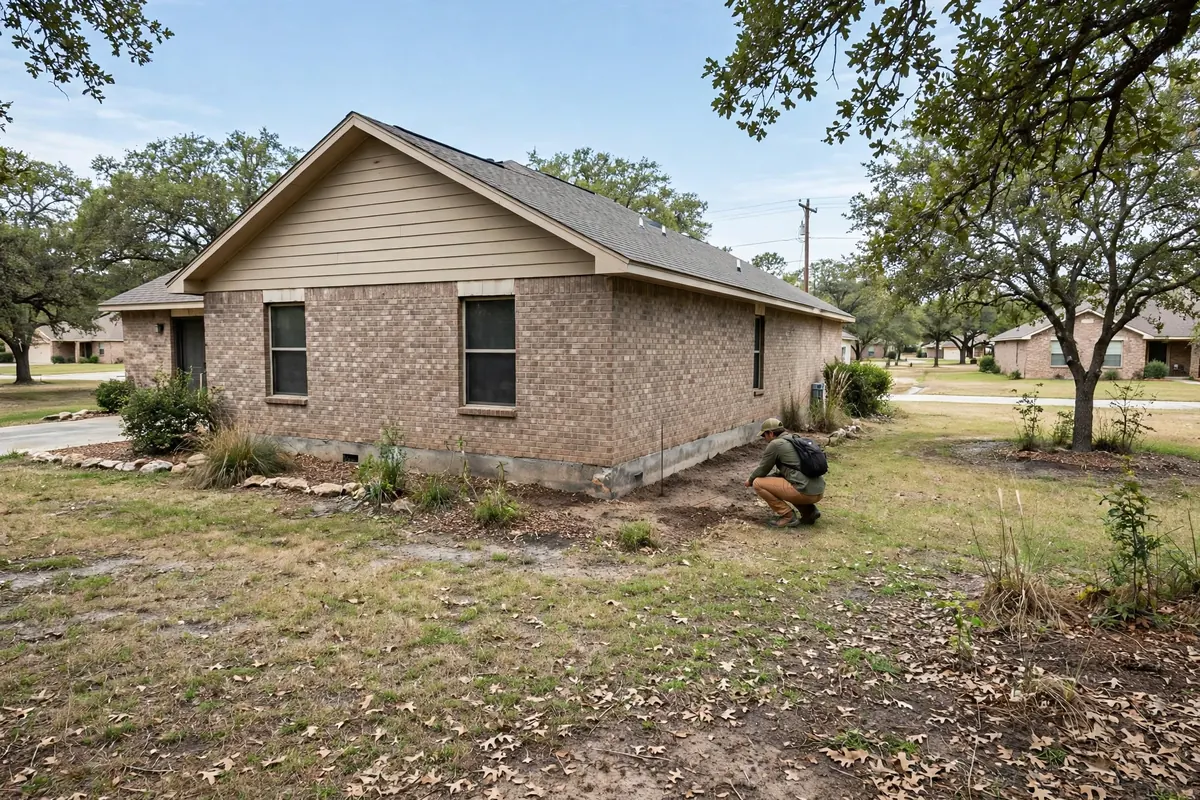
A simple moisture check. A screwdriver pushed a few inches into the soil beside the slab tells you in seconds whether the clay is damp or dry.
Trees, shrubs, and beds near the slab
Trees near a house need the same steady care as the gutters. A large tree close to the slab pulls water from the soil all summer, and the clay on the tree side dries first. Water the tree at its drip line, out where the roots drink, and keep the soil on the house side damp through dry months. Prune the canopy back when branches reach over the roof, since a smaller canopy needs less water, and have the pruning done by someone who knows the species. A guide to tree roots and foundations covers which trees cause the most trouble and how far they should stand from a house.
Beds and mulch against the slab
Shrubs and beds near the slab need a lighter touch. Keep shrubs a little away from the brick so air can move and the soil can dry evenly, and do not pile mulch high against the foundation, since wet mulch holds moisture against the slab and can hide the soil gap that tells you the clay is drying. Water the beds with a drip line rather than a sprinkler that throws water onto the walls, and keep the watering even on all sides of the house. The City of Plano publishes watering guidance for residents, and its advice on watering times and amounts fits a foundation routine well.
A monthly walk-around that takes ten minutes
Once a month, walk the house slowly, inside and out, and it will take ten minutes. Outside, look at the slab edge for a soil gap, at the brick for new or widened cracks, and at the ground for water standing near the foundation. Inside, open and close the doors and windows, and note any that stick or gap. Look at the ceiling and the tops of door frames for new hairline cracks, and walk the floors slowly, feeling for a slope or a soft spot. In a pier and beam home, look into the crawl space once a year for standing water and sagging wood, as a guide to crawl space problems explains.
Keep a short written record: the date, what you saw, and a photo of any crack with a coin beside it for scale. The record is worth more than memory, because a crack that has grown a little each month tells a different story from one that has stayed the same, and a dated set of photos is the simplest way to show an inspector what has changed. If a door that worked last month now sticks, or a crack has grown since the last walk, that change is the signal to get readings, not to wait another month. A guide to telling whether a crack is serious will help you judge what you find on the walk.
Pruning with a purpose. Trimming back a canopy over the house cuts how much water the tree pulls from the soil beside the slab.
When routine care turns into a call for an inspection
Routine care has its limits, and knowing them is part of the routine. A crack wider than about a quarter inch, a crack that keeps growing through the seasons, a door that will not latch at all, or a floor slope you can feel underfoot are all signs that care is no longer enough and measuring is the next step. The same goes for a soil gap along the slab that stays open even after weeks of steady watering, for water standing under the house, or for several signs showing up on the same side of the house at once.
An inspection at that point is simple: floor readings through the house, a look at the slab edge and the soil, and a written plan that says what the house needs and what it does not. The plan may call for steel pier installation at the settled corners, for concrete slab foundation repair, or for nothing more than steady watering and watching, and either answer is worth having in writing. In Frisco and across the metro, the homes that hold up best are the ones where the owner keeps the routine, keeps the record, and gets readings when the signs change. That is the whole job, and it fits in ten minutes a month.
Not sure where your routine should start?
Start with readings. Call and we will measure the floors, walk the yard with you, and help you set a routine that fits your home.
Plain answers to the questions Plano homeowners ask us most about this topic.
?
How often should I clean my gutters?
Twice a year, in spring and again in autumn after the leaves fall. A clogged gutter spills a roof worth of water beside the foundation, which is where it does the most harm. After a storm, check them again, since a single branch can block a downspout and send water straight down beside the wall.
?
Do I really need to water in a normal summer?
Yes, when the rain stops for two weeks or more. Steady watering keeps the clay damp on all four sides, so no side of the slab dries faster than the rest. Start watering when the grass pulls away from the slab edge, and keep it even on all four sides of the house.
?
What is the one check that matters most?
The monthly walk-around: the slab edge outside, the doors and floors inside. It takes ten minutes, and it catches small changes while they are still small. Write the date on each note, so you can see whether a crack or a sticking door is new, growing, or holding steady.
?
Should I check my foundation after a big storm?
Yes, a quick walk after heavy rain is one of the most useful checks you can do. Look for water pooling near the walls, new cracks in the brick, doors that stick when they closed fine before, and gutters that overflowed. Note what you see with the date, and call for an inspection if two signs show up at once.