Foundation Repair in Carrollton, TX
Carrollton lies west of Addison, with greenbelt neighborhoods and a mix of older and newer homes.
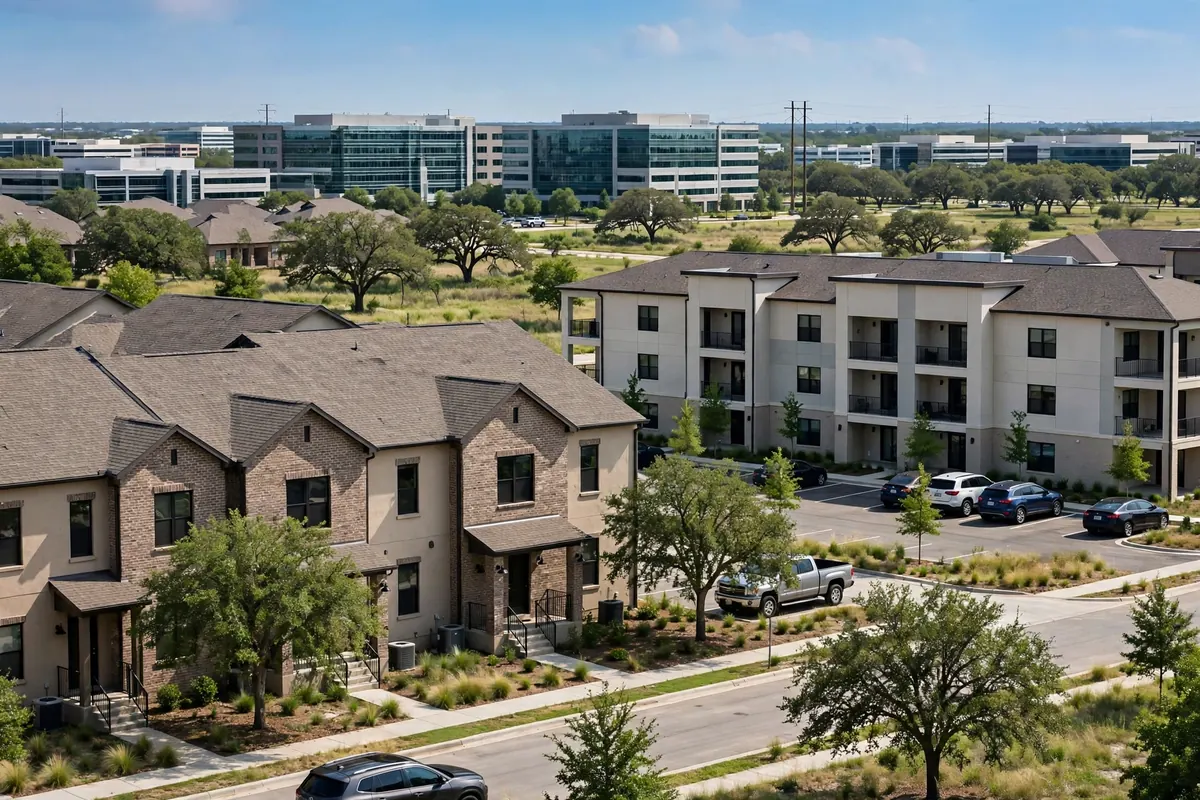
Addison sits about thirteen miles southwest of Plano, just north of Dallas, and it is the most compact town we serve. The whole town covers under four square miles, and most of its homes are townhomes, condos, and apartments around Addison Circle and Vitruvian Park, with a smaller pool of single-family homes off Marsh Lane and Midway Road. The ground here is Dallas County clay over Austin Chalk, and the tight lots and shared walls change how foundation work is planned.
Last updated November 24, 2026
Addison is a small incorporated town completely surrounded by Dallas, with the Dallas North Tollway running along its west side and Belt Line Road crossing through the middle. The town is known for its restaurants and its office corridor, and the Addison Airport sits in the north of town. Most residents live in the Addison Circle mixed-use development, in Vitruvian Park, or in townhome communities such as Les Lacs and the Oaks of Addison. Single-family homes are a small share of the housing here, about one home in eight, and they sit on compact lots where staging equipment and protecting a neighbor's yard need a plan before the work starts. Homeowners just over the line in Farmers Branch, TX and Carrollton, TX get the same inspection and the same crew, and each town has its own page with local soil and ZIP details.
Addison stands on the same Austin Chalk and Eagle Ford geology that underlies North Dallas, with clay soils that swell when wet and shrink when dry. The town is almost fully built out, so much of the ground has been graded, filled, and re-graded over decades of development, and a slab in Addison may sit on a mix of native clay and older fill. That mix is what makes readings matter: the soil under one end of a townhome row can behave differently from the soil under the other end, and the movement shows up as a crack that runs across several units.
Drainage is the other half of the Addison story. The town is flat, the lots are small, and a downspout that dumps water beside a foundation has nowhere to go but against the slab. Shared walls and shared driveways mean water from one unit can reach the next, and a clogged gutter over a townhome can soak the clay under two homes at once. Our guide to how drainage protects a foundation covers the grading and gutter habits that matter most on a tight lot, and drainage correction in Addison often means re-grading a narrow side yard and extending downspouts to the street or the alley.
The clay here is not as deep or as uniform as the Blackland Prairie clay east of Plano, but it still moves enough to crack brick and bind doors. Summer drought pulls moisture from the soil around a slab, and the corners dry first, so the slab drops at the corners and lifts in the middle. A foundation inspection with floor elevation readings shows that pattern clearly, and our post on drought and foundation damage explains why the driest corners of a house move first.
In Addison townhomes and condos, the first signs are usually inside. A door that rubs its frame, a window that will not latch, a crack that runs diagonally from a door corner, or a gap where the baseboard has pulled from the wall are the usual calls. Because units share walls, a crack in your living room may line up with a crack in your neighbor's unit, and that shared pattern is useful information, because it points to movement under the whole building rather than one room.
Outside, look at the brick and the mortar. Stair-step cracks below windows, cracks that run through brick and mortar together, and separation where a chimney or a porch meets the main wall all deserve a measured look. In the single-family streets off Marsh Lane and Midway Road, where brick ranches from the 1960s and 1970s still stand, the signs look more like the rest of North Dallas: sloping floors, sticking doors, and cracks that open wider in August and close a little after rain. Our post on how to tell if a foundation crack is serious walks through the checks we use, including a monitoring gauge that shows whether a crack is still moving.
Water signs matter in Addison too. A damp spot on a ground-floor slab, a musty smell in a ground-floor unit, or a patio that holds water against the wall can point to a leak or to poor drainage, and both soften the clay under the slab. A water leak under a slab is worth ruling out before any piers are planned, because a repair that ignores a leak will not hold, and foundation crack repair includes sealing and monitoring so the crack can be watched over time.
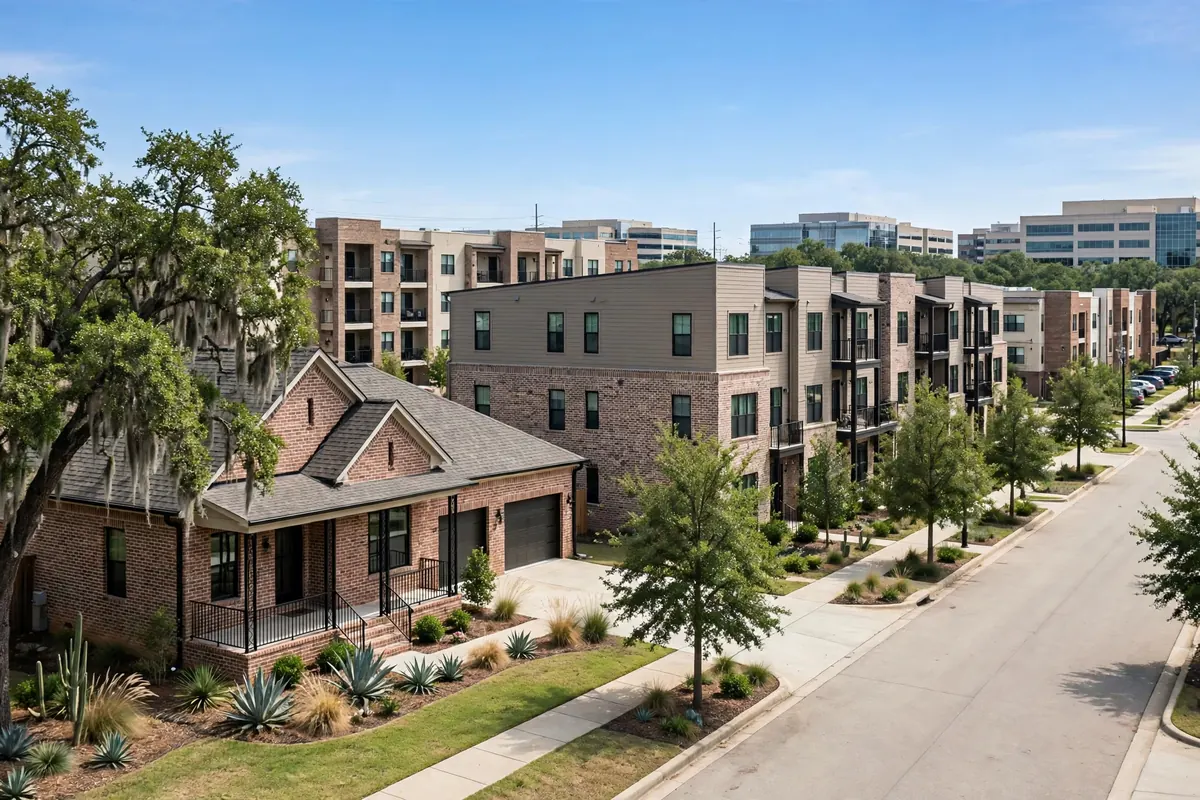
Work in Addison starts with a foundation inspection. We take floor elevation readings room by room, check doors, windows, and floors, and walk the outside of the building, including the side yards and the shared walls. For a townhome or condo, the readings are taken across the unit and, where access allows, in the adjoining unit, because the pattern across the building tells us more than one room alone. The written plan that follows names the piers, the drainage work, and the order of the job.
For a settled slab, steel pier installation is the standard repair. Piers are driven beside the footing down to load-bearing soil, bracketed to the slab edge, and the home is lifted in small increments while we watch the readings. Concrete slab foundation repair covers the full job, and where a driveway or patio has sunk, concrete lifting and leveling raises it so water drains away from the building. Some Addison buildings are commercial or mixed-use, and commercial foundation repair covers those, with the same readings and the same written plan.
Access is planned before the work starts, because Addison lots are tight. Equipment is staged to keep driveways and shared walks clear, excavations are dug by hand beside the footing, and the soil is set aside and put back when the piers are in. For condos and townhomes, the homeowners association is part of the conversation, because common walls and common ground are involved, and the plan is written so the association can see what will happen and where. Our methods guide, Foundation Repair Methods Explained, compares the options in plain language.
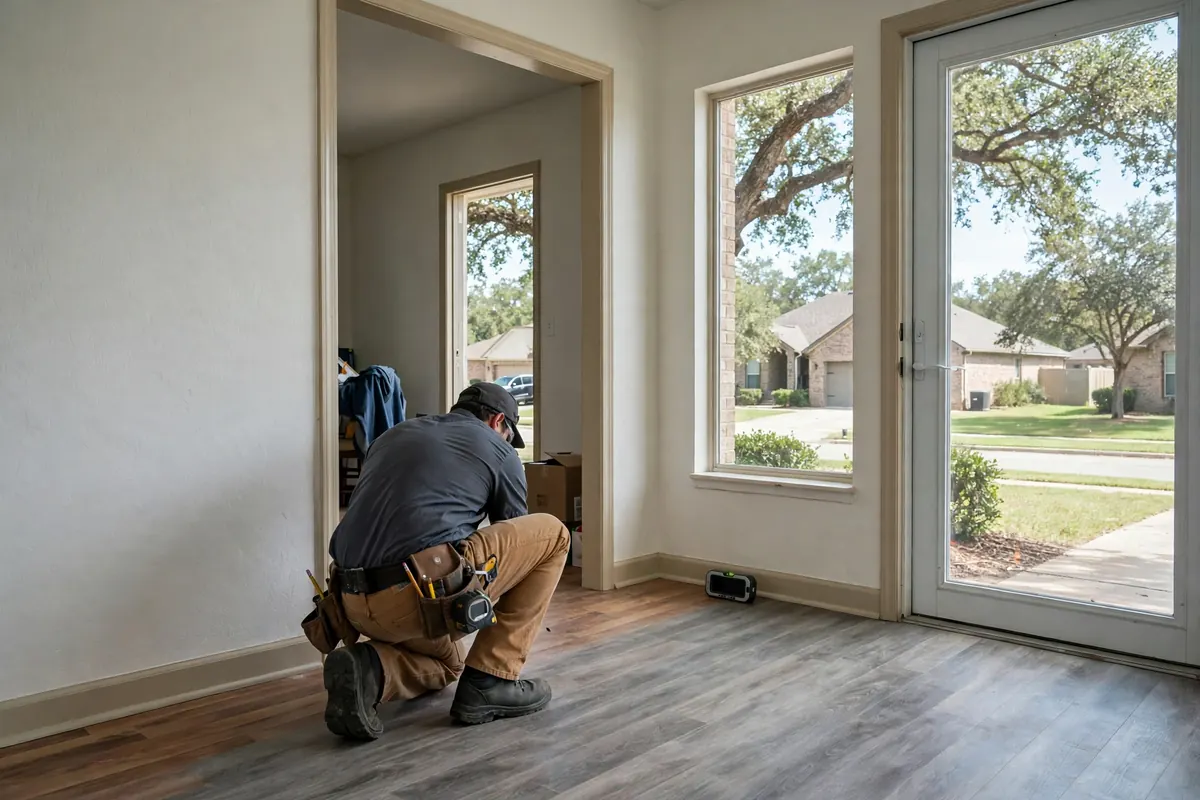
An Addison inspection begins with floor elevation readings and a careful walk around the outside of the building, so the plan is built on measurements rather than a guess.
Addison has a single ZIP code, 75001, and it covers the whole town. That makes the address simple, but the neighborhoods inside it are very different from one another, and the table below lists the ZIP code with the areas it covers. Homes near the Tollway, homes around Addison Circle, and homes off Midway Road all share the same five digits, so the subdivision name matters more than the ZIP when you are describing a home here.
Addison Circle is the town's best-known residential area, a mixed-use development of townhomes, condos, and apartments around a central green, with shops and restaurants a short walk away. Vitruvian Park, on the west side of town near the Tollway, holds mid-rise condos and townhomes around a park and a pond. Les Lacs, the Oaks of Addison, and Prestonwood Place hold townhomes and smaller single-family homes, while Midway Meadows and the streets off Marsh Lane hold the town's older single-family stock. The Quorum area, along the Tollway, is mostly offices and hotels, with townhomes tucked between the commercial buildings.
| ZIP code | Area |
|---|---|
| 75001 | All of Addison, including Addison Circle, Vitruvian Park, Les Lacs, and Midway Meadows |
Yes. Most Addison homes are townhomes or condos, and the inspection takes readings across the unit and, where access allows, in the adjoining unit, because shared walls mean shared movement. The homeowners association is part of the conversation where common walls or common ground are involved.
Addison has one ZIP code, 75001, and it covers the whole town. Homes near the Tollway, around Addison Circle, and off Midway Road all share the same five digits. One ZIP for the whole town also means the town line and the postal line match, which is not true in every nearby city.
The ground is Dallas County clay over Austin Chalk, and much of it has been graded and filled over decades of development. The clay still swells when wet and shrinks when dry, and tight lots mean drainage water has nowhere to go but against the slab.
We plan access before the work starts, keep shared walks and driveways clear, and dig excavations by hand beside the footing. The work is usually quieter than homeowners expect, and the yard is restored when the piers are in. Most of the work happens beside the footing on your own lot, and the crew works in the daytime, so the noise stays within normal daytime hours.
Often, yes. Townhomes share walls and often share a slab or adjoining footings, so movement on one side can show up as cracks or sticking doors in the unit next door. An inspection reads the whole row, not just one unit, and the plan notes where the shared slab ends. Check the association documents first, since the HOA decides who arranges the work.
We work across the towns around Plano, so if your home sits just over the line from Addison, the same crew and the same inspection process cover it. These nearby service areas each have their own page with local soil, housing, and ZIP details.
Call (972) 430-3826 or send an email, and we will set up a foundation inspection for your Addison home.
Book a Foundation Inspection1 Call or email2 Inspection and readings3 Written repair plan