Foundation Repair in Lewisville, TX
Lewisville sits east of Flower Mound, with Old Town, Castle Hills, and the lake shore.
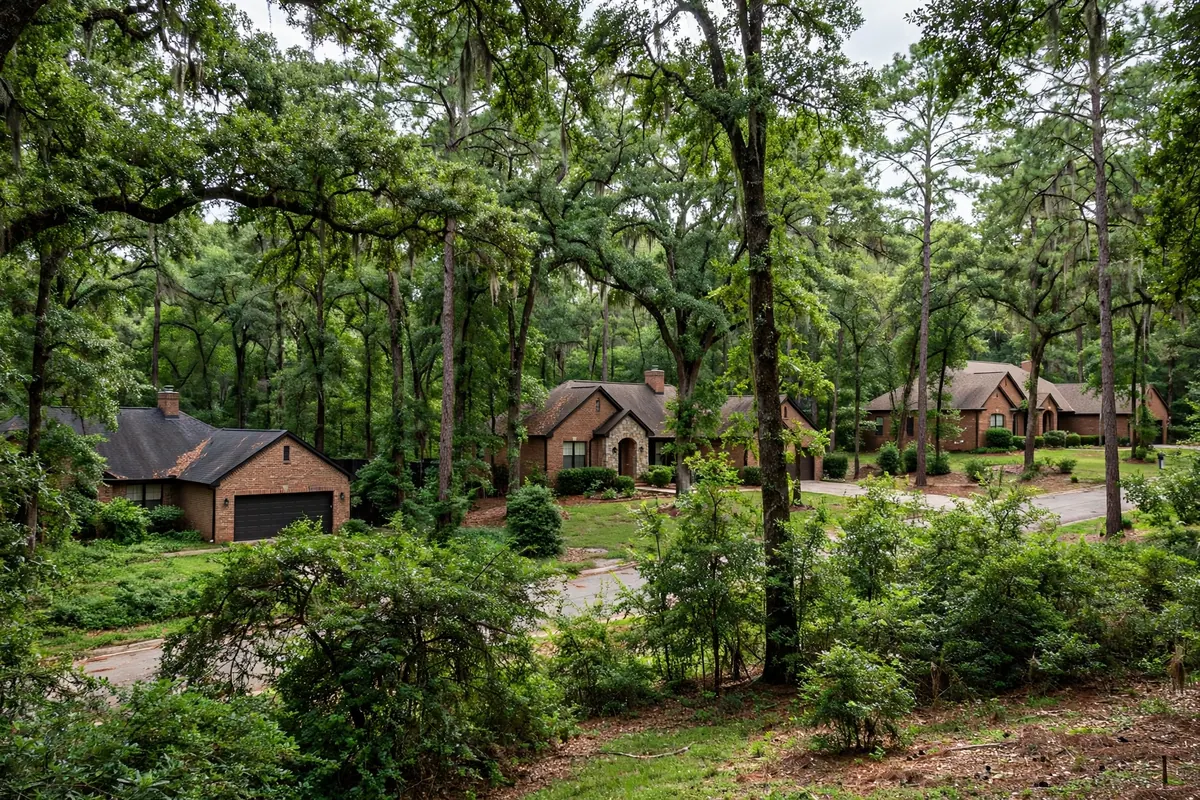
Flower Mound sits about twenty-four miles west of Plano, on the south shore of Lake Grapevine, and it is the most wooded town we serve. The town takes its name from a mound of wildflowers on the prairie, and the Cross Timbers oaks still cover much of the ground. Bridlewood and Wellington hold the best-known master-planned neighborhoods, Canyon Falls holds the newest growth on the west side, and Lakeside DFW sits on the lake shore. The soil is Cross Timbers sandy loam over clay, and the slopes and the trees decide how a slab moves.
Last updated November 24, 2026
Flower Mound covers the ground between Lewisville Lake on the east and Grapevine Lake on the south, about thirty miles from downtown Dallas and thirty miles from Fort Worth. FM 1171, known as Cross Timbers Road, runs east and west through the middle of town, and FM 2499 runs north and south. The town is mostly 1990s and 2000s construction, with larger homes and two to three car garages, and most subdivisions run mandatory homeowners associations that maintain the common areas and enforce architectural standards. The Lakeside DFW district sits on the lake shore, with townhomes and condos, and the west side holds larger lots and the Cross Timbers woods. Homeowners just over the line in Lewisville, TX and The Colony, TX get the same inspection and the same crew, and each town has its own page with local soil and ZIP details.
Flower Mound stands on Cross Timbers ground, sandy loam over clay, with Denton County clay that shifts with every wet and dry cycle. The sandy top layer drains faster than the clay beneath it, so water moves through the top and then sits on the clay, and the slab rides the swelling and shrinking that follows. On a sloped lot the effect is uneven, because water runs to the low side of the house and the clay there stays wet longer, while the high side dries first. Our guide to why Plano's clay soil cracks foundations explains the clay behavior, and the Cross Timbers ground adds its own twist, because the sandy loam dries out sooner in a drought.
Most Flower Mound homes are master-planned houses from the 1990s and 2000s, mostly slab-on-grade brick, one or two stories, with larger floor plans than the older towns to the east. Bridlewood is a golf course community with parks and community pools, Wellington is the other name every buyer hears, and Canyon Falls is the newer master-planned community on the west side, with trails and community pools, zoned for Argyle schools rather than Lewisville schools. Highland Shores, Lake Forest, and Lakeside DFW round out the well-known options, and the luxury and estate communities include the Estates at Tour 18, the Peninsula, and Point Noble on the lake shore. Our post on signs your home's foundation is moving covers the signs we look for on a Flower Mound inspection.
Trees are a large part of the Flower Mound story. The town's woods hold mature oaks, and the lots in the older neighborhoods are heavily treed, so the canopy is part of what people buy here. Those oaks pull water from the soil all summer, and when a grove stands close to a house, that side of the slab dries first and drops first. Our guide to tree roots and your foundation covers how to tell whether a tree is part of the problem, and when a root barrier is worth adding.
The signs we see most on Flower Mound homes start small. A stair-step crack in the brick mortar below a window, a hairline crack that runs diagonally from a door corner, or a gap where the baseboard has pulled away from the wall are all worth a look. Doors that stick in summer and swing easily in winter, windows that need a push to latch, and floors that slope enough to feel underfoot are the next stage, and they usually mean one part of the slab has moved more than the rest.
Because Flower Mound lots are sloped and wooded, drainage patterns matter more than on a flat lot. A driveway that runs downhill toward the house, a downspout that dumps roof water in one spot beside the foundation, and a low corner of the yard that holds water after a storm can all soak the clay under one side of the slab, while the high side dries in the sun. Standing water softens the clay and lets it swell, and then a dry spell shrinks it back, so the slab rocks through the year. Our guide to how drainage protects a foundation covers the grading and gutter habits that keep that cycle gentle, and drainage correction is often the first work we do before any piers go in.
A crack on a sloped, wooded Flower Mound lot deserves a measured answer rather than a guess. A crack wider than about a quarter inch, a crack that keeps growing, or a crack that runs through brick and mortar together should be measured and watched, not just patched. Foundation crack repair includes a monitoring step, so we can tell whether the crack is stable or still moving, and our post on how to tell if a foundation crack is serious walks through the same checks we use on an inspection. If the readings show the slab is still moving, piers are the repair that pins it to stable soil.
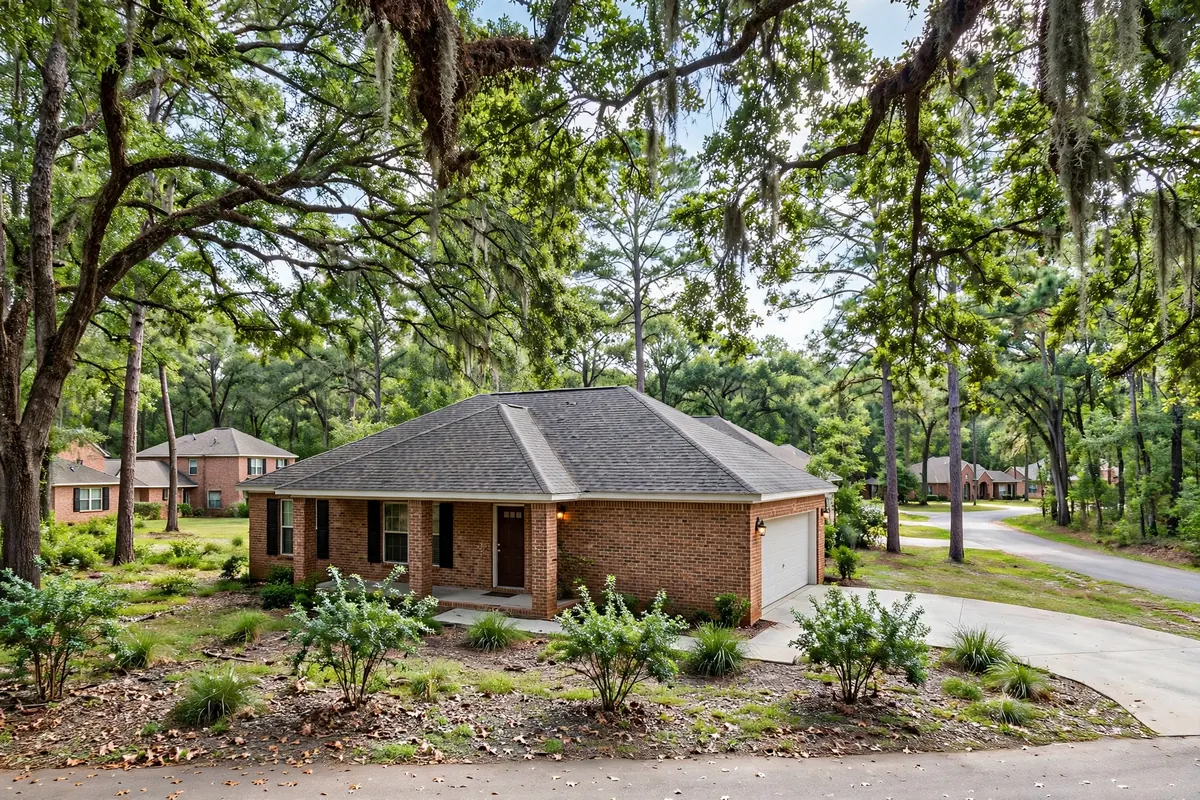
Every Flower Mound job starts with a foundation inspection. We take floor elevation readings room by room, walk the outside of the house looking at brick, mortar, and grade, and check doors, windows, and floors for the pattern of movement. On a sloped, wooded lot that walk takes longer, because the ground around the house is part of the diagnosis, and the written plan that follows names the piers, the drainage work, and the order of the work, with nothing hidden.
For slab homes that have settled, steel pier installation is the usual repair. Piers are driven beside the footing down to load-bearing soil or rock, bracketed to the slab edge, and the home is lifted in small increments while we watch the elevation readings. concrete slab foundation repair covers the full job, from the first excavation to the final backfill and yard restoration, and house leveling and lifting is the part of the work where floors come back toward level. Where a driveway or patio has sunk, concrete lifting and leveling raises it so water drains away from the house instead of toward it.
Drainage and soil work keep a Flower Mound repair holding. Drainage correction re-grades soil away from the house, extends downspouts, and adds French drains where water collects, while soil stabilization treats the clay itself where it swells and shrinks the most. Most Flower Mound subdivisions have active homeowners associations, so the plan is written to fit the community's rules, and the work is scheduled to keep the common areas clear. Our methods guide, Foundation Repair Methods Explained, compares piers, pilings, and foam in plain language.
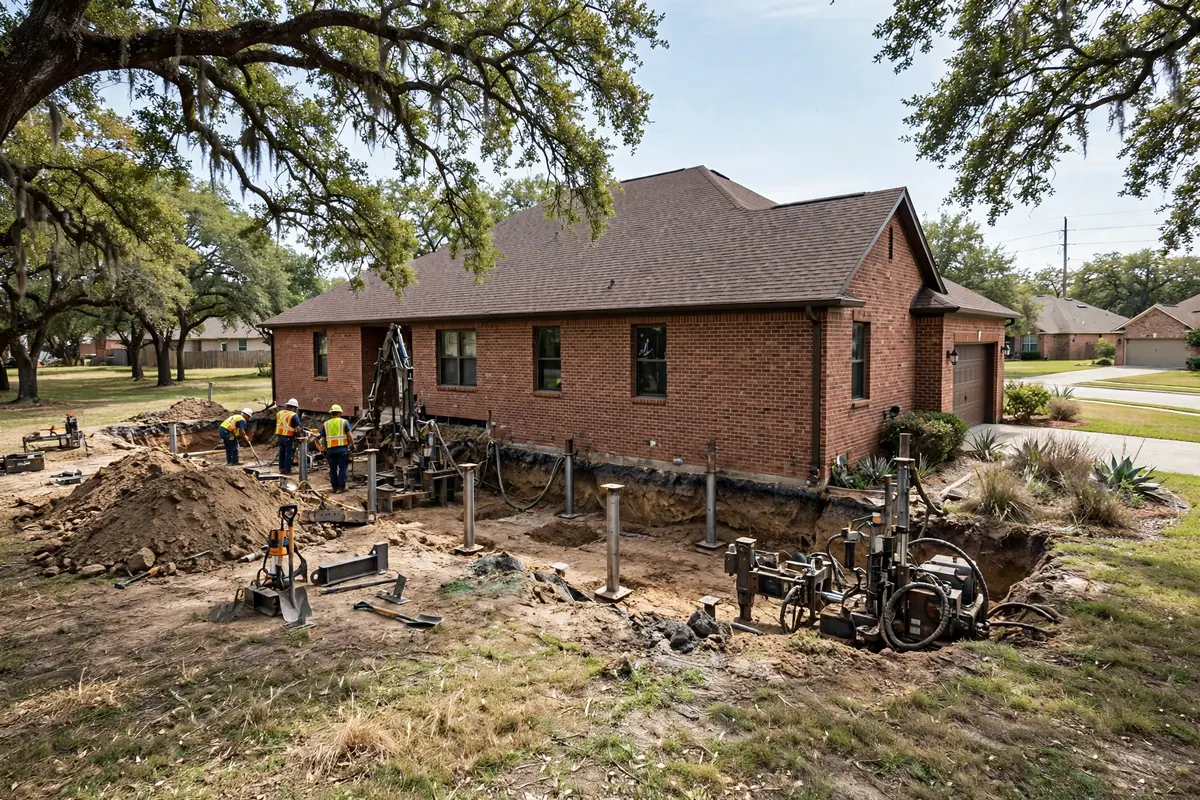
An inspection in Flower Mound starts with floor elevation readings and a walk around the outside of your home, including the slope and the trees, so you get a written plan based on measurements.
Flower Mound is served by two ZIP codes, 75022 and 75028, and the table below lists them with the part of town each one covers. The character of each part of town is genuinely different: the west side holds larger lots and the Cross Timbers woods, the east side holds the master-planned communities, and the lake shore holds Lakeside DFW. Some Canyon Falls addresses carry a Northlake 76247 or Argyle 76226 designation, so check the address rather than the ZIP alone.
Bridlewood and Wellington are the names buyers hear most. Bridlewood is a golf course community with multiple parks and community pools, and Wellington holds the other large master-planned streets. Canyon Falls is the newer master-planned community on the west side, with extensive trails and community pools. Lakeside DFW, on the lake shore, holds townhomes and condos, and the Estates at Tour 18, the Peninsula, and Point Noble hold the lakefront and estate homes. Flower Mound Woods is quieter, with tree-lined streets and larger lots, and Stone Hill Farms, Wichita Trails, and Chimney Rock round out the central neighborhoods.
| ZIP code | Area |
|---|---|
| 75022 | Western Flower Mound, including Canyon Falls and the Cross Timbers woods |
| 75028 | Central and eastern Flower Mound, including Bridlewood, Wellington, and Lakeside DFW |
Flower Mound uses 75022 for the west side and 75028 for the central and eastern neighborhoods. Some Canyon Falls addresses carry a Northlake or Argyle designation, so check the address rather than the ZIP alone. Give the full street address when you call, since the ZIP alone does not always settle which side of town a home sits on.
Most Flower Mound subdivisions have active homeowners associations, and the plan is written to fit the community's rules. The work is scheduled to keep common areas clear, and the yard is restored when the piers are in. It is worth checking your association's rules before the work starts, so the schedule and the access plan fit them from the first day.
The sandy loam drains fast, but the clay beneath it swells when wet and shrinks when dry. On a sloped lot, water runs to the low side of the house, so one side of the slab moves more than the other.
On a wooded Flower Mound lot the crew digs by hand beside the footing and works around root zones where possible. A root barrier is sometimes added where a large oak stands close to the house, so the tree and the repair can live side by side.
They do, because the water is different on each side of town. Lakeside DFW sits on the lake shore, where the ground stays damper and washout near the shore is the bigger worry. Bridlewood is a golf course community, where fairway irrigation keeps one side of a home wetter than the other. Both need even moisture, and an inspection checks the whole perimeter.
We work across the towns around Plano, so if your home sits just over the line from Flower Mound, the same crew and the same inspection process cover it. These nearby service areas each have their own page with local soil, housing, and ZIP details.
Call (972) 430-3826 or send an email, and we will set up a foundation inspection for your Flower Mound home.
Book a Foundation Inspection1 Call or email2 Inspection and readings3 Written repair plan