Foundation Repair in Addison, TX
Addison borders Farmers Branch to the north, with townhomes and condos around Addison Circle.
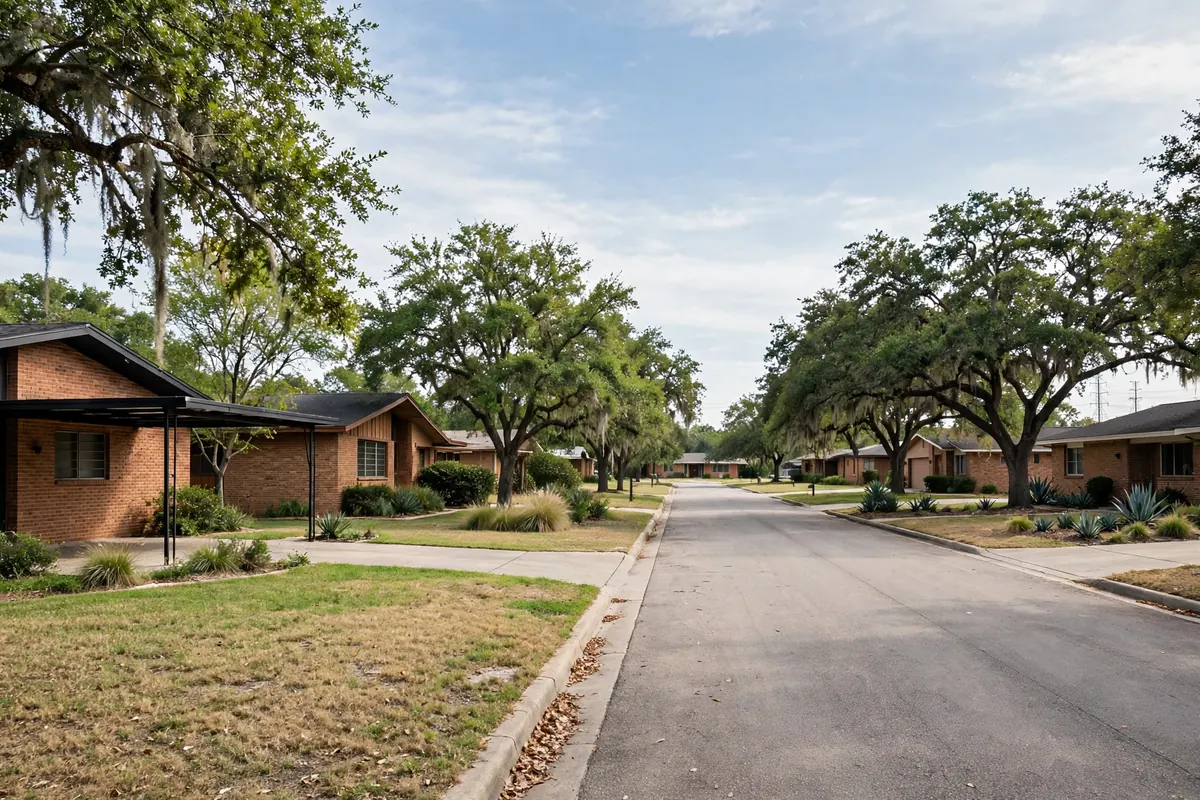
Farmers Branch sits about eighteen miles southwest of Plano, just northwest of Dallas, and it is an inner-ring suburb with the oldest housing stock in our southwest service area. Much of the town's housing was built in the 1950s and 1960s, brick ranches on modest lots with mature trees, and the newer townhomes of Mercer Crossing sit alongside them near I-35E and I-635. The ground is Blackland Prairie clay, and sixty years of wet springs and dry summers have moved a lot of slabs.
Last updated November 24, 2026
Farmers Branch is a Dallas County city of about 36,000 people, directly northwest of Dallas, with Valwood Parkway running east and west through the middle of town and Marsh Lane running north and south. The Farmers Branch Historical Park, 27 acres with Venue 1842, the Grove, and the Manske Library, sits near the center of town, and Oran Good Park holds sports fields, a pool, and playgrounds. Brookhaven College, now part of Dallas College, brings students and staff to the north side of town, and the Mercer Crossing district, at I-35E and I-635, is the city's busiest building area, with luxury townhomes, green spaces, and offices. Most of the town's homes are in the Carrollton-Farmers Branch school district. Homeowners just over the line in Addison, TX and Carrollton, TX get the same inspection and the same crew, and each town has its own page with local soil and ZIP details.
Farmers Branch homes fall into three clear groups. The largest group is the mid-century brick ranches built in the 1950s and 1960s, in neighborhoods such as Brookhaven Estates, Oakbrook Estates, and the central streets around Verwood, with mature trees and larger lots than the newer suburbs. Many of these homes have been remodeled, with opened floor plans and new kitchens, but the slabs underneath are original, and the clay has been moving under them for sixty years. The second group is the newer townhomes and single-family homes in Mercer Crossing, the master-planned district at I-35E and I-635, with luxury townhomes, green spaces, and proximity to the city's lakes and trails. The third group is the townhome communities such as Cambridge Crossing, for buyers who want lower-maintenance living, and the homes near Mustang Station, within walking distance of the Historical Park.
Most Farmers Branch homes sit on concrete slab foundations, and most are brick, one story, with attached garages. Slab construction was standard for the 1950s and 1960s building boom, and it suits the flat ground, but the clay under the city still moves with the seasons, and a slab that has been in place for sixty years has been through sixty wet springs and sixty dry summers. The result shows up as stair-step cracks in the brick, doors that bind, and floors that slope toward the low corner. Our guide to signs your home's foundation is moving covers the same signs we look for on a Farmers Branch inspection.
The age of the plumbing matters here too. Homes from the 1950s and 1960s may have cast iron or galvanized pipes under the slab, and a leak under the slab softens the clay and lets one corner settle. A water leak under a slab is worth ruling out before any piers are planned, because a repair that ignores a leak will not hold, and our post on foundation problems and your home's value covers why a written inspection matters when a mid-century home changes hands.
The most common call from Farmers Branch is a crack that has been watched for years and has finally grown. Stair-step cracks in brick mortar, diagonal cracks above doors and windows, and separation where the chimney meets the house are the usual signs, and they often appear on the side of the house nearest a large tree. Mature oaks and pecans are common in Brookhaven and Oakbrook, and they pull moisture from the soil all summer. Our post on tree roots and your foundation covers how to tell whether a tree is part of the problem, and when a root barrier is worth adding.
The second pattern is floors that slope in the mid-century ranches. These homes were built on ground that was graded for the subdivision, and where a slab crosses from undisturbed clay onto fill, the two sides settle at different rates. The floor tells the story, and house leveling and lifting corrects the slope by lifting the low side on piers, with the elevation readings taken before the work showing exactly how far each corner has moved. Our guide to how long foundation repair takes describes what a typical job looks like from the first excavation to the final backfill.
The third pattern is water. Farmers Branch is flat, the lots are modest, and a downspout that dumps beside the foundation has nowhere to go but against the slab. A low corner of the yard can hold water after a storm, and a patio that slopes toward the house can send water under the slab. Standing water softens the clay and lets it swell, and then a dry spell shrinks it back, so the slab rocks through the year. Drainage correction re-grades the yard, extends downspouts, and adds French drains where water collects.
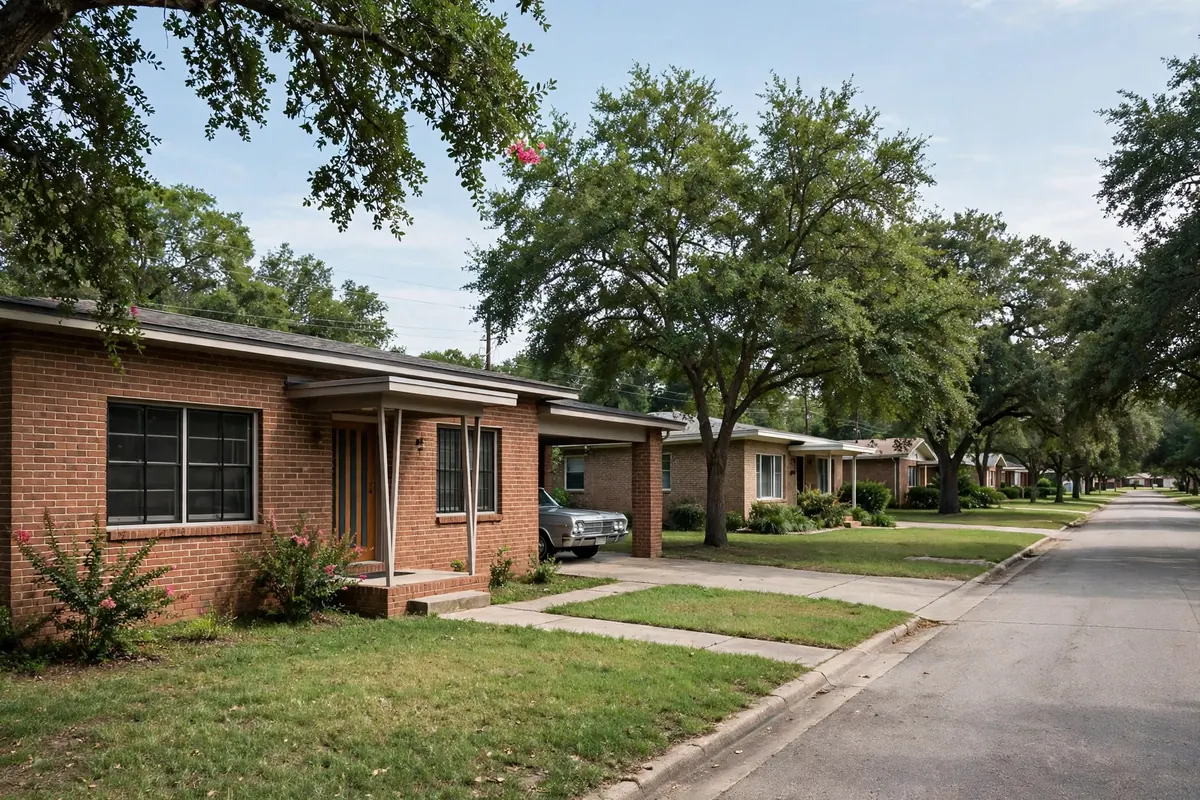
Work in Farmers Branch starts with a foundation inspection. We take floor elevation readings in every room, walk the outside of the house, and note the trees, the grade, and the way water leaves the roof. The readings go on a simple floor plan sketch, so you can see which corners are high and which are low, and the written plan that follows names the piers, the drainage work, and the order of the job. Our post on what a foundation inspection covers describes the same steps, so you know what to expect before we arrive.
For a settled slab, steel pier installation is the standard repair. Piers are driven beside the footing down to load-bearing soil, bracketed to the slab edge, and the house is lifted in small increments while we watch the readings. Concrete slab foundation repair covers the whole job, and where a concrete driveway or patio has sunk, concrete lifting and leveling raises it so the walkway drains away from the house instead of toward it. Some Farmers Branch homes stand on raised floors, and those get pier and beam foundation repair, with new footings and shims under the beams.
After the piers are in, the yard is put back. Excavations are dug by hand, the soil is set aside and returned, and the lawn and beds near the work are restored. The work is usually quieter than homeowners expect, and the crew stages equipment to keep the driveway and the shared walks clear. Foundation crack repair finishes the visible signs, with monitoring gauges where a crack needs watching, and soil stabilization is added where the clay itself is the problem.
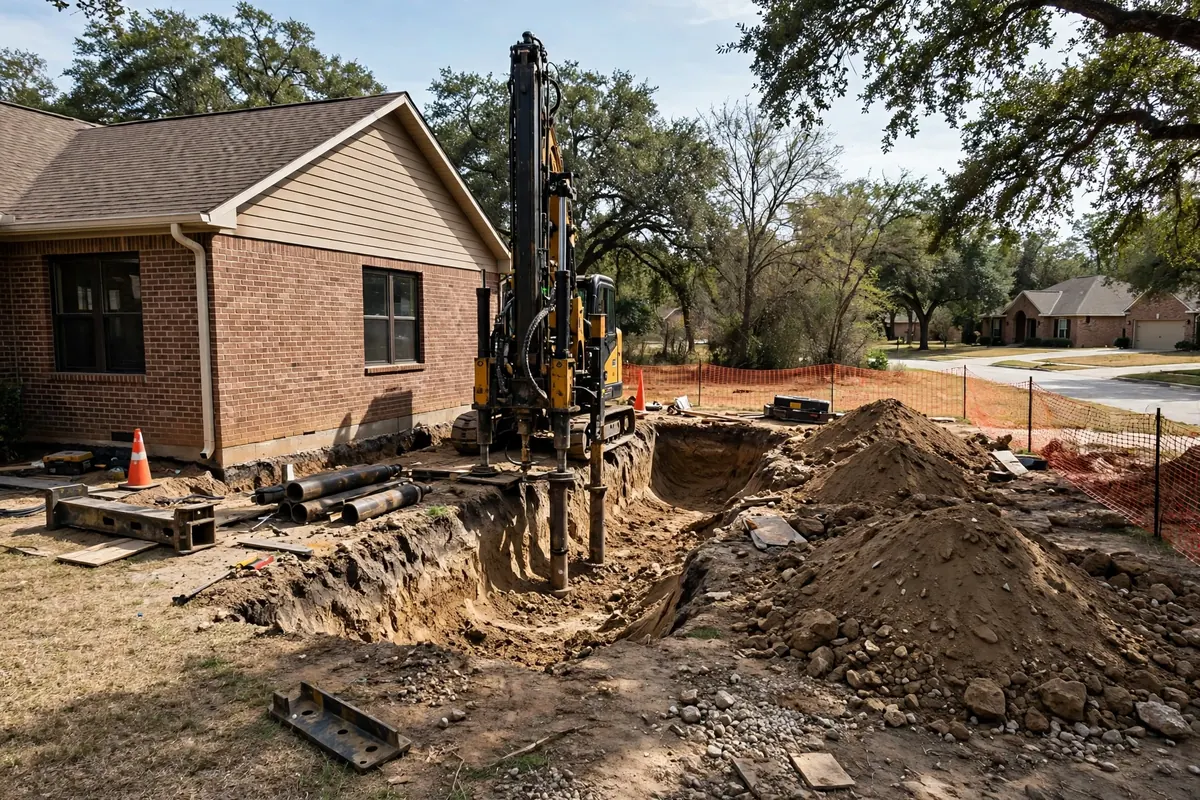
In Farmers Branch, the inspection starts with floor elevation readings in every room and a walk around the outside of the house, and the written plan follows from those numbers.
Farmers Branch is served by two ZIP codes for street addresses, 75234 and 75244, and the table below lists them with the part of town each one covers. The 75234 ZIP covers the central and northern portions of town, including the Historical Park, Oran Good Park, and the Brookhaven College campus, while 75244 covers the southern edge, along Valley View Lane and Marsh Lane, toward the Galleria district. Parts of both ZIP codes lie inside the City of Dallas, so check the address rather than the ZIP alone, and 75381 is a post office box ZIP, not a street address.
Brookhaven Estates and Oakbrook Estates are the established neighborhoods with mature trees and larger lots, popular with buyers who want space close to Dallas. Verwood and the central neighborhoods hold mid-century homes, many remodeled, with quick access to the highways and the city's parks. Mercer Crossing is the newer mixed-use development along I-35E, with townhomes and single-family homes, and Cambridge Crossing is the townhome community for lower-maintenance living. Valwood Park, Oakbrook, and the streets near Mustang Station, within walking distance of the Historical Park, the Grove at Mustang Station, and Liberty Plaza, round out the residential areas.
| ZIP code | Area |
|---|---|
| 75234 | Central and northern Farmers Branch, including the Historical Park, Oran Good Park, and Brookhaven College |
| 75244 | Southern Farmers Branch, along Valley View Lane and Marsh Lane, toward the Galleria district |
Farmers Branch uses 75234 for the central and northern parts of town and 75244 for the southern edge. Parts of both ZIP codes lie inside the City of Dallas, so check the address rather than the ZIP alone. When you call or write, give the full street address so the visit is planned for the right side of town.
Yes. Most Farmers Branch homes were built in the 1950s and 1960s, and the inspection checks the slab, the plumbing under it, and the pattern of movement. The repair is usually steel piers under the low corner, with drainage work to keep it holding.
Age does not stop clay from moving. The Blackland Prairie clay under Farmers Branch swells when wet and shrinks when dry, and mature trees pull moisture from one side of a house faster than the other, so a slab can keep moving for decades.
The crew digs each excavation by hand beside the footing, steering around the roots of the mature oaks in the yard, and a root barrier is sometimes added where a large tree stands close to the house, so the tree and the repair can live side by side.
The ground is the same clay on both sides of town, but the houses are not the same age. The 75234 side near Brookhaven College holds older mid-century slabs, while the 75244 side along Valley View Lane and Marsh Lane holds homes closer to the Galleria district with more graded fill. An inspection reads each home itself, since age and fill shape the signs more than the ZIP code does.
We work across the towns around Plano, so if your home sits just over the line from Farmers Branch, the same crew and the same inspection process cover it. These nearby service areas each have their own page with local soil, housing, and ZIP details.
Call (972) 430-3826 or send an email, and we will set up a foundation inspection for your Farmers Branch home.
Book a Foundation Inspection1 Call or email2 Inspection and readings3 Written repair plan