Foundation Problems and Your Home's Value in Plano
Foundation problems lower a Plano home's value when buyers can see them and cannot tell how bad they are. A visible crack, a sticking door, or a sloping floor makes a buyer guess at the worst, and the guess is usually worse than the reality.
By Plano Foundation Repair · Last updated November 24, 2026
A repair with a written plan and elevation readings changes that picture completely, because the buyer is no longer guessing. This guide explains what buyers notice, how repairs and records affect the sale, and what to do before you list.
What buyers notice first about foundation trouble
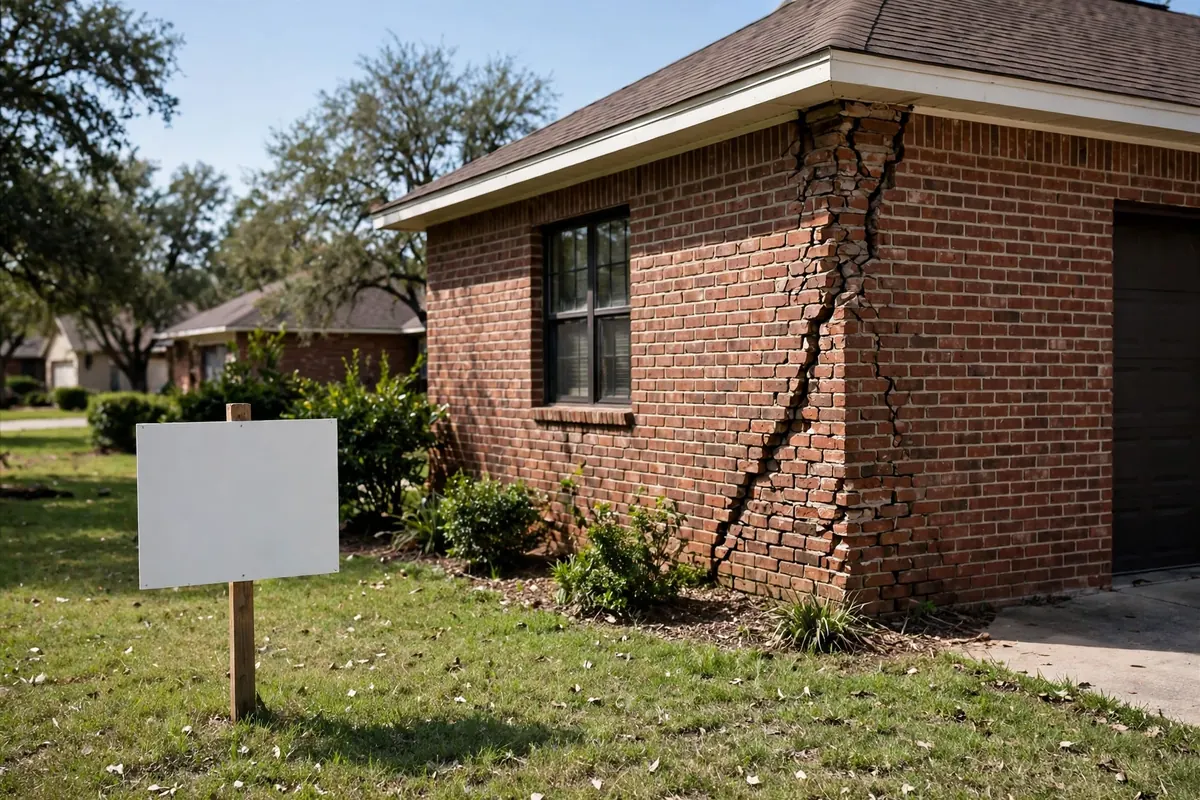
Buyers notice foundation trouble with their hands and feet before they notice it with their eyes. A door that sticks, a floor that slopes underfoot, and a window that will not close are the first things a buyer feels during a showing, and they set the tone for the rest of the visit. A stair-step crack in the brick is the first thing they see, and it is the detail they remember when they talk about the house later.
An inspector will find the rest. The buyer's inspector walks the same ground a foundation inspector walks, takes elevation readings, and writes the movement into the report. A buyer who walks into a showing with no information and walks out with an inspection report full of movement is a buyer who either walks away or asks for a large reduction. The information gap is what hurts the value, more than the movement itself. Signs your Plano home's foundation is moving lists the signs a buyer will spot, and buying a home in Plano: how to check the foundation first shows the buyer side of the same visit.
The houses that hold their value best are the ones where the seller has already closed the information gap. A written inspection, a repair plan, and readings that show the house is stable give a buyer facts instead of guesses, and facts are what a buyer can accept.
Repairs, records, and the story they tell a buyer
A completed repair tells a buyer that the problem was found, measured, and fixed by a crew that knew what it was doing. The record that matters is the paper trail: the inspection readings before the work, the pier plan with the number and location of each pier, and the readings after the lift. That trail shows the buyer that the house was lifted to a measured position, not just patched and painted.
An unrepaired problem tells a different story. A crack that was filled and painted over, with no readings and no plan behind it, tells a buyer that someone wanted the problem hidden, and a buyer who feels that will assume the worst. Honesty about a past repair, with the records to back it, is worth more than a clean-looking wall with no story behind it. Selling a home with foundation problems in Plano covers the seller side of disclosure and timing in detail.
Keep every record the repair produces, and keep it with the house. The readings, the plan, and the walkthrough notes are the documents a future buyer, agent, or inspector will ask for, and a thick file is a sign of a careful owner. Foundation inspection is the visit that starts the record, and the report it produces is the first page of the file.
How foundation history affects a sale
Situation
What the buyer sees
What helps the sale
No known problem
Clean inspection, level floors
Steady maintenance, good records
Repaired, with records
Fixed problem, paper trail
Readings before and after, pier plan
Repaired, no records
Patched cracks, no proof
New inspection, fresh readings
Problem visible, no plan
Cracks, sticking doors, questions
Inspection and written plan first
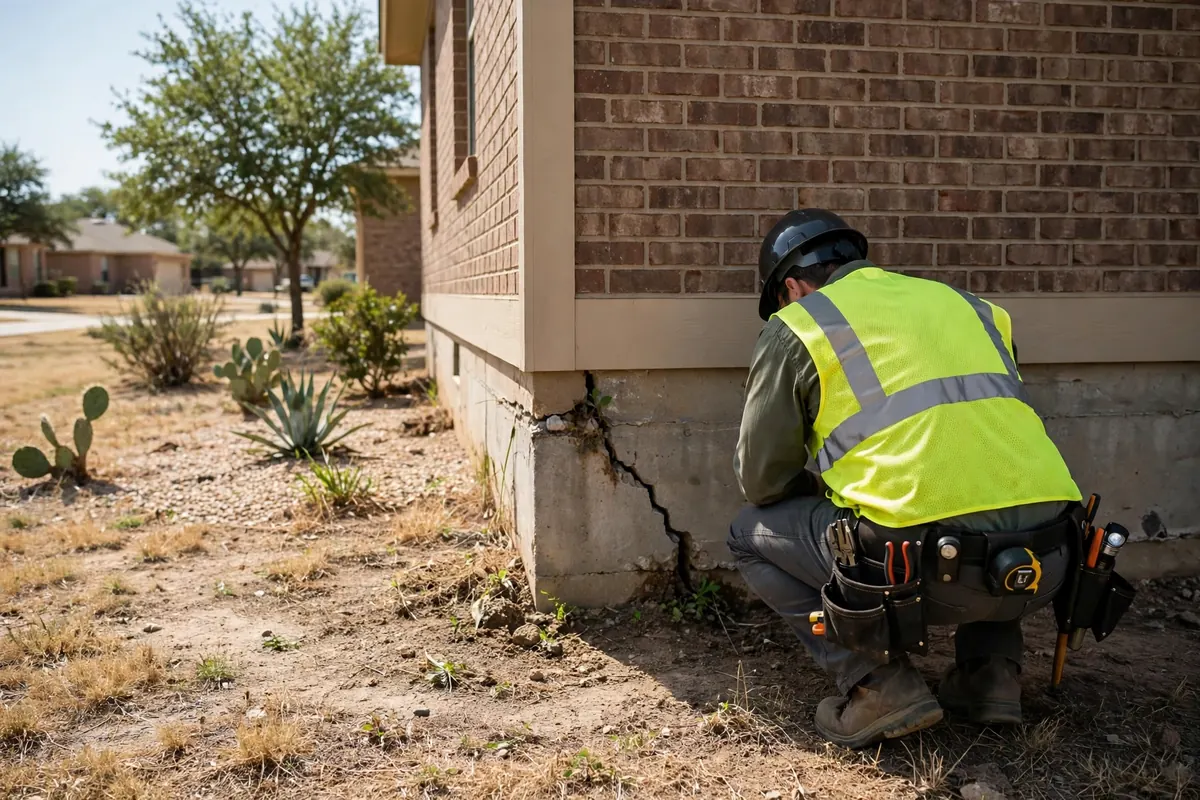
A closer look. Home inspector examining a foundation crack on a house.
Disclosure in Texas and why honesty helps
Texas sellers fill out a disclosure form that asks about foundation problems directly, and the form is a legal document. A seller who knows about a foundation problem and does not disclose it risks a dispute after the sale, and a dispute after a sale is far more expensive than a repair before it. The honest path is also the practical one, because the buyer's inspector will find the movement anyway, and a problem found by the buyer's inspector is a problem the seller can no longer shape.
Disclosure as a selling strength
Disclosure does not mean the house cannot sell. It means the seller controls the story: here is the problem, here are the readings, here is the repair, and here is the house stable afterward. A buyer can accept that story, because it has a beginning, a middle, and an end. A buyer cannot accept a story with a missing middle, and that is what an undisclosed problem looks like. How long does foundation repair take? helps a seller plan the repair before the listing goes live.
Talk with your agent about the disclosure early, before the listing is written. The agent has seen foundation disclosures before, and they know how to present a repaired foundation as a strength rather than a worry.
Not sure what you are seeing?
An inspection measures the floors and the brick, so you get readings and a written plan instead of guesses. Call (972) 430-3826 or book an inspection.
Stabilizing the home before listing it
The best time to fix a foundation problem is before the house goes on the market, not after a buyer finds it. A repair done before listing lets the seller choose the crew, choose the timing, and keep the records, and the house shows with level floors, doors that close, and brick that has been repaired. A repair done after a buyer finds the problem is done on the buyer's schedule, under the buyer's inspector, and with the buyer watching every step.
Stabilizing first also lets the house settle before the showings start. A lift moves the frame, and the drywall and brick need a few weeks to settle into the new position before they are patched and painted. A house listed the week after a lift still shows the fresh patches, and a buyer will ask about them. A house listed a month after a lift shows a finished job, and the buyer sees a house, not a repair. Concrete slab foundation repair and house leveling and lifting cover the work that steadies a home before a sale.
If the repair cannot be finished before listing, disclose it and show the plan. A buyer who sees a written plan with a start date is a buyer who can plan, and a buyer who can plan is a buyer who stays in the deal.
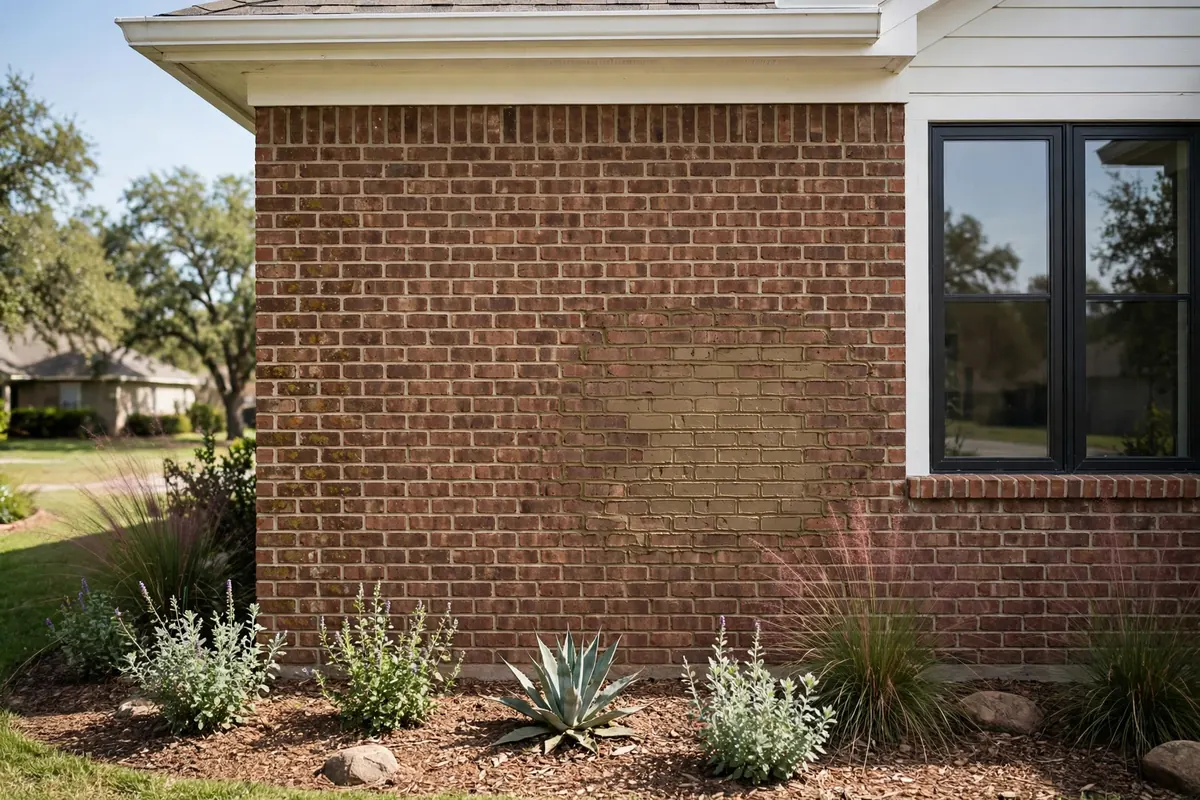
What it looks like. Neatly repaired brick wall on a suburban home.
Talking with your agent about timing
Your agent is the person who knows the local market, and the timing question belongs to them. In a fast market, a repaired foundation with records can be a selling point, because buyers know the clay in Plano and they respect a house that has been looked after. In a slow market, the same repair can be the difference between a showing and a pass, because buyers have time to be picky and they will pick the house with the clear record.
Ask your agent how foundation history is received in your neighborhood, and whether the buyers looking at your price range expect a clean inspection or accept a house with a repair history. The answer shapes the timing: repair first and list later, or list with the plan in hand and the repair scheduled. Either path works when the disclosure is honest and the records are complete. Foundation repair in Richardson, TX and foundation repair in Allen, TX show how the same questions play out in the towns around Plano.
The worst timing is no timing: listing a house with visible foundation signs and no plan, no readings, and no disclosure. That house gets the lowest offers and the longest time on the market, because every buyer who walks through it leaves with the same unanswered question.
Value questions, answered plainly
Plain answers to the questions Plano homeowners ask us most about this topic.
?
Does a past foundation repair scare buyers away?
A past repair with a full paper trail usually does not scare buyers, because the records show the problem was found and fixed properly. What scares buyers is a problem with no records, because they cannot tell whether it was fixed or hidden.
?
Should I repair the foundation before I sell?
In most cases, yes, because a repaired house with readings sells more smoothly than a house with visible signs and no plan. The repair lets you control the timing and the story, instead of letting the buyer's inspector control it.
?
Will an inspector find a foundation problem I missed?
A good inspector measures floor elevations and walks the brick and grading, and that finds movement a homeowner can miss. If you suspect a problem, ordering your own inspection before listing is the way to know what the buyer's inspector will find.
?
Does a foundation repair add value to a Plano home?
A documented repair with a written plan and a clean follow-up reading removes the doubt that holds buyers back, and that is where the value sits. Buyers pay for certainty, not for piers. Keep the inspection report, the repair record, and the readings together so the next buyer can see the whole story at a glance.
Related guides
More reading on the same ground, written for Plano homeowners.