Buying a Home in Plano: How to Check the Foundation First
Check the foundation before you fall in love with the house, because a Plano home can look perfect in photos and still carry movement under its floors. The check takes less than an hour, it costs nothing, and it can save you from buying a problem you did not see coming.
By Plano Foundation Repair · Last updated November 24, 2026
Walk the outside, test the doors and floors inside, read the seller disclosure with care, and then order an inspection before you commit. This guide walks through each step in order, so you know what to look for at the showing and what to ask before you sign.
Start outside: brick, grading, and drainage
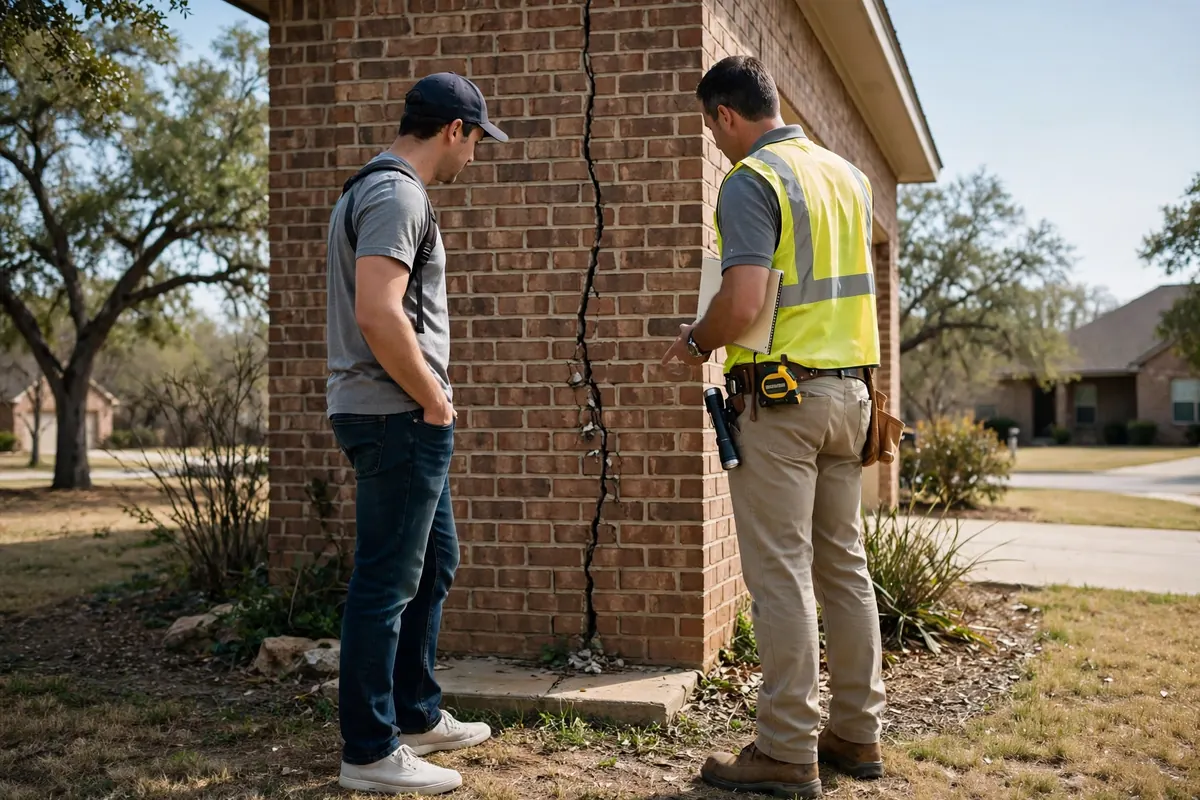
Begin at the curb and walk slowly around the house. Look at the brick for stair-step cracks that follow the mortar joints, especially cracks that run from window corners toward the roofline. Check the corners of the house for cracks that run diagonally, and look at the chimney to see whether it is pulling away from the wall. A single thin crack may be old and settled, but a wide crack or a crack that runs the full height of a wall is a reason to look closer.
Next, look at the ground. The soil should slope away from the house on every side, and the downspouts should carry water several feet from the wall. A low spot beside the foundation, a downspout that dumps water at a corner, or a gap where dry clay has pulled away from the concrete edge are all signs that water has been working against the soil. How drainage protects your foundation explains the water patterns to look for, and signs your Plano home's foundation is moving lists the visible clues in one place.
Look at the trees as well. A large oak close to the house drinks from the soil on its side, and the cracks, if there are any, are often on the tree side. Note the age of the house too, because a home built in the 1970s or 1980s sits on a slab poured to older standards, and that is worth knowing before you buy.
Inside the house: doors, floors, and drywall
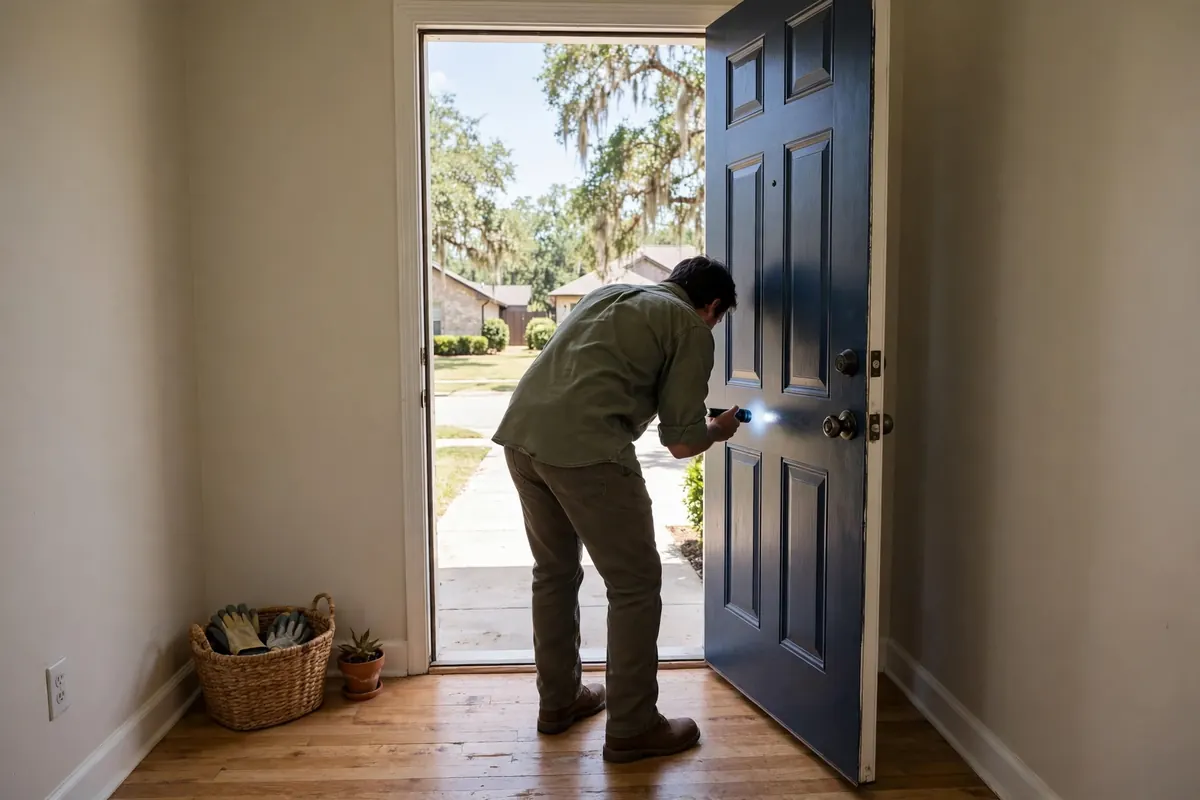
Inside, open and close every door. A door that sticks, rubs at the top, or will not latch is the most common sign of movement, and two or more doors sticking on the same side of the house is a stronger signal than one. Do the same with the windows, and look for gaps at the corners of the frames and cracks in the paint where the frame meets the wall.
Feel the floors with your feet as you walk from room to room, and roll a ball on a hard floor if you have one handy. A floor that slopes toward one wall, or a tile floor with grout lines cracked in a straight run, points at the slab or the piers underneath. Look at the drywall above every door and window for cracks, and at the ceiling corners for separation. A foundation inspection will measure all of this properly, but your own walkthrough tells you whether an inspection is urgent or routine.
Check the garage floor for cracks that run across the slab, and look at the baseboards for gaps where the floor and the wall have separated. In a pier and beam home, ask whether you can see the crawl space, or have the inspector go in with a light. A dry crawl space with straight beams is a good sign, and a wet one with soft wood is a reason to pause.
Buyer foundation checklist for a Plano showing
Where to look
What to check
Why it matters
Brick outside
Stair-step cracks, corner cracks
Points at foundation movement
Ground and gutters
Slope, downspouts, soil gaps
Water drives the clay cycle
Doors and windows
Sticking, gaps, latch problems
Frame twist from movement
Floors
Slope, cracked grout lines
Slab or pier settlement
Disclosure
Past work, leaks, records
Shows what was fixed and how
A closer look. Checking a door frame for gaps inside a home.
Reading the seller disclosure with care
Texas sellers fill out a disclosure form that asks about foundation problems directly, and the form is the first document to read after the showing. Look for any mention of past foundation work, past plumbing leaks, or past drainage problems, and look for the records behind the mention. A disclosure that names a past repair is a good sign when it comes with the pier plan and the readings, and it is a warning sign when it names a repair with no paper trail at all.
Past repair records and disclosures
Ask the seller's agent for the records of any past foundation work, and ask whether the house has ever had a slab leak or a sewer line repair. Those two events shape the soil under a house for years, and a seller who can show the records is a seller who has looked after the home. If the disclosure is blank on foundation questions and the house shows signs of movement, treat the blank as a question, not as an answer. Foundation problems and your home's value in Plano explains how repairs and records change the picture for a buyer.
Do not rely on the disclosure alone. The seller discloses what they know, and a problem that developed slowly may not be known to them. Your own walkthrough and your own inspection are the checks that fill the gaps.
Not sure what you are seeing?
An inspection measures the floors and the brick, so you get readings and a written plan instead of guesses. Call (972) 430-3826 or book an inspection.
Ordering an inspection before you commit
A foundation inspection is the step that turns your walkthrough notes into measurements. The inspector takes elevation readings across every room, walks the brick and the grading, and writes a report that lists what was measured and what it means. The report is the document you, your agent, and the seller can all work from, and it is far stronger than a guess made during a showing.
Order the inspection during the option period, when you still have the right to walk away or to ask for a repair. Bring your own notes and photos to the visit, because the inspector will want to see the cracks and doors you found. Foundation inspection: what to expect covers the visit in detail, and foundation inspection explains the readings and the report.
If the inspection finds movement, you have three options: ask the seller to repair it before closing, ask for a reduction that reflects the repair, or walk away. The readings tell you which option fits, because a small, stable settlement is a different decision from active movement that needs piers. Your agent can help you weigh the options, and the inspection report is the evidence that supports the ask.
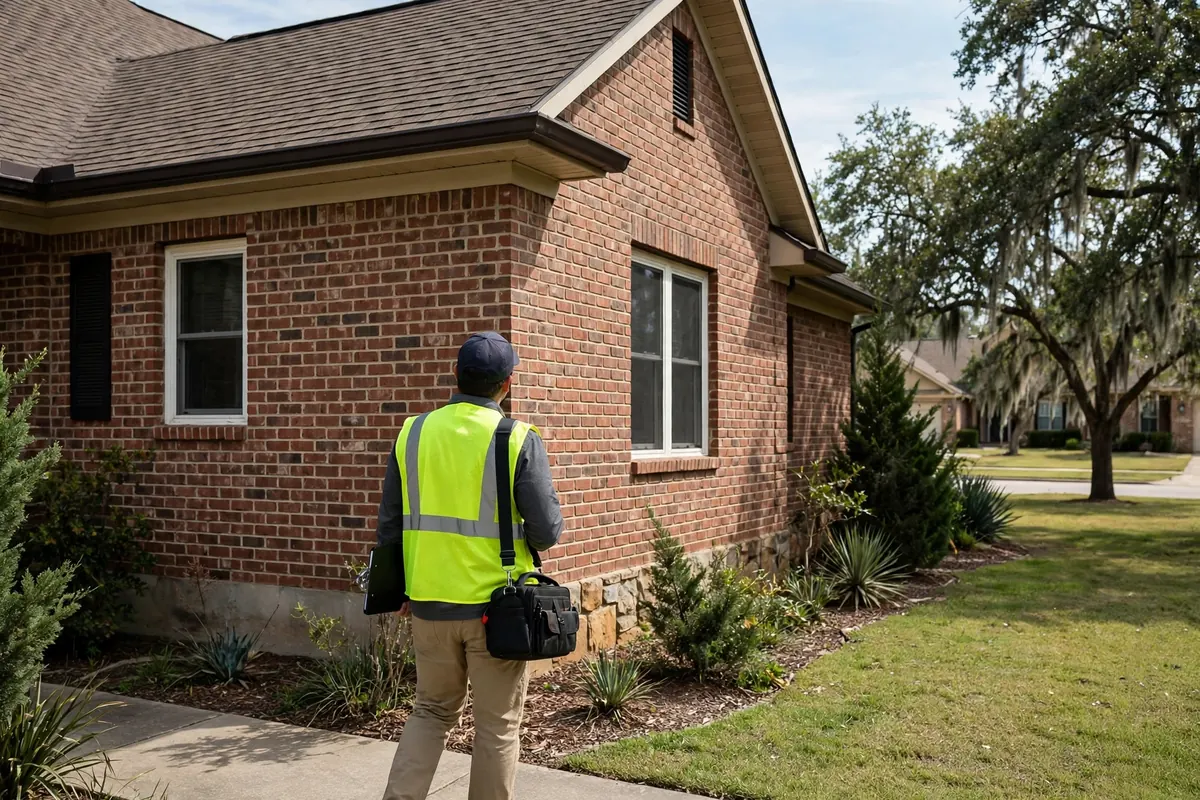
What it looks like. Walking the exterior of a brick home during an inspection.
What to do if the inspection finds movement
First, do not panic. Movement is common in Plano, and a measured amount of settlement with a clear repair plan is a problem with a known fix. Get the repair plan in writing, with the method, the number of piers or lift points, and the drainage steps that go with it, and ask the crew how long the work will take. Foundation repair methods explained helps you follow the plan, and how long does foundation repair take? covers the schedule.
Second, decide who does the work. A repair done by the seller before closing, with the readings checked after the lift, is usually the cleanest path, because the seller pays and the buyer gets a stable house. A reduction in the sale price, with the buyer doing the work after closing, works when the buyer wants to choose the crew. Either path needs the written plan and the after readings, because those are the records that protect the buyer later.
Third, keep the records. The inspection report, the pier plan, and the after readings go into the file you keep with the house, and they are the documents that will answer the next buyer's questions when you sell. A house with a full foundation file is a house that sells more smoothly, and the file starts with the inspection you ordered before you bought it.
Buyer questions we hear most
Plain answers to the questions Plano homeowners ask us most about this topic.
?
Should I buy a house that already had foundation work?
A house with a past repair and a full paper trail can be a good buy, because the problem was found and fixed and the records prove it. Ask for the inspection readings before and after the work, and the pier plan, before you decide.
?
Does a general home inspection cover the foundation?
A general inspector looks at the foundation and notes visible signs, but a foundation inspection takes elevation readings across every room and writes a report on the movement itself. For a Plano home, the foundation inspection is the deeper check.
?
Can I ask the seller to fix the foundation before closing?
Yes, and it is a common request when the inspection finds movement. The repair is done before closing, the readings are checked after the lift, and the buyer gets a stable house with the records to prove it. A credit instead of a repair should wait for the readings, so the amount matches the work the house needs.
?
What foundation records should I ask the seller for?
Ask for past inspection reports, repair invoices, pier layout drawings, and any warranty paperwork from earlier work. Those records show what was done, where the piers went in, and whether the movement was watched afterward. If the seller has nothing, a fresh inspection with floor readings gives you the same picture before you sign.
Related guides
More reading on the same ground, written for Plano homeowners.