Sachse, TX
West along Highway 78, sharing the Woodbridge golf community.
East Collin County Foundation Repair
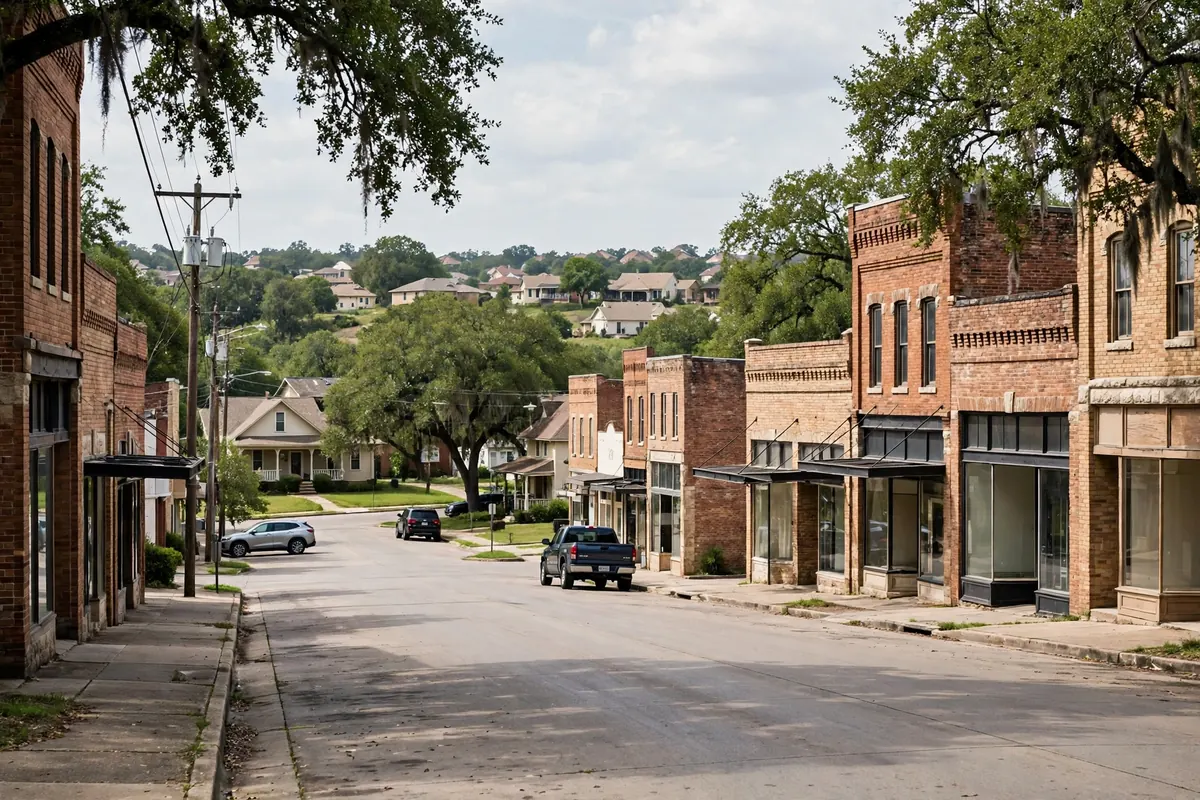
Wylie sits about twelve miles east of Plano, a small-town city that has grown fast without losing its downtown core. The streets around Woodbridge Golf Club, the 1990s and 2000s resale neighborhoods, and the new subdivisions going up on the edges all sit on the same Blackland clay, with Lake Lavon just to the east and the old town center still standing on Ballard Avenue.
The most common Wylie call starts with a stair-step crack in the brick of a two-story home. The crack usually runs through the mortar near a corner, often starting at a second-floor window, and it shows up after a dry summer when the clay has shrunk the most. The slab underneath is usually a conventional slab from the 1990s or 2000s, and it is rigid enough to crack rather than flex when one corner loses support. The cause is the same clay that moves the rest of the metro, and the fix starts the same way, with floor readings.
Garage separation is the second common fix. The garage slab is poured apart from the house slab, so it settles on its own schedule, and the gap at the doorway between the garage and the house tells you how far it has dropped. On a Wylie home, that gap can open over a few seasons as the fill under the garage compacts. It is a separate slab with a separate fix, and it is worth checking at the same time as the house.
Drainage problems show up on the sloped lots that Wylie is built on. The city sits on rolling ground, and a lot that slopes toward the house can hold water against the brick after a storm. A downspout that dumps at the foundation, a flower bed that holds water, or a swale that has filled in over the years can all soak one side of a slab while the other side stays dry, and that uneven moisture is what makes one corner move. Our guide to how drainage protects your foundation explains the grading and gutter fixes that matter most on a sloped lot.
Driveways and patios are the fourth common call. Those slabs are thinner than a house slab and sit on the same clay, so they show settlement first. A driveway section that has dropped, or a patio that slopes toward the back door, is often fixed with lifting rather than piers, and our concrete lifting and leveling page covers that work. When the house slab itself has moved, the fix is piers, and our steel pier installation page covers that method.
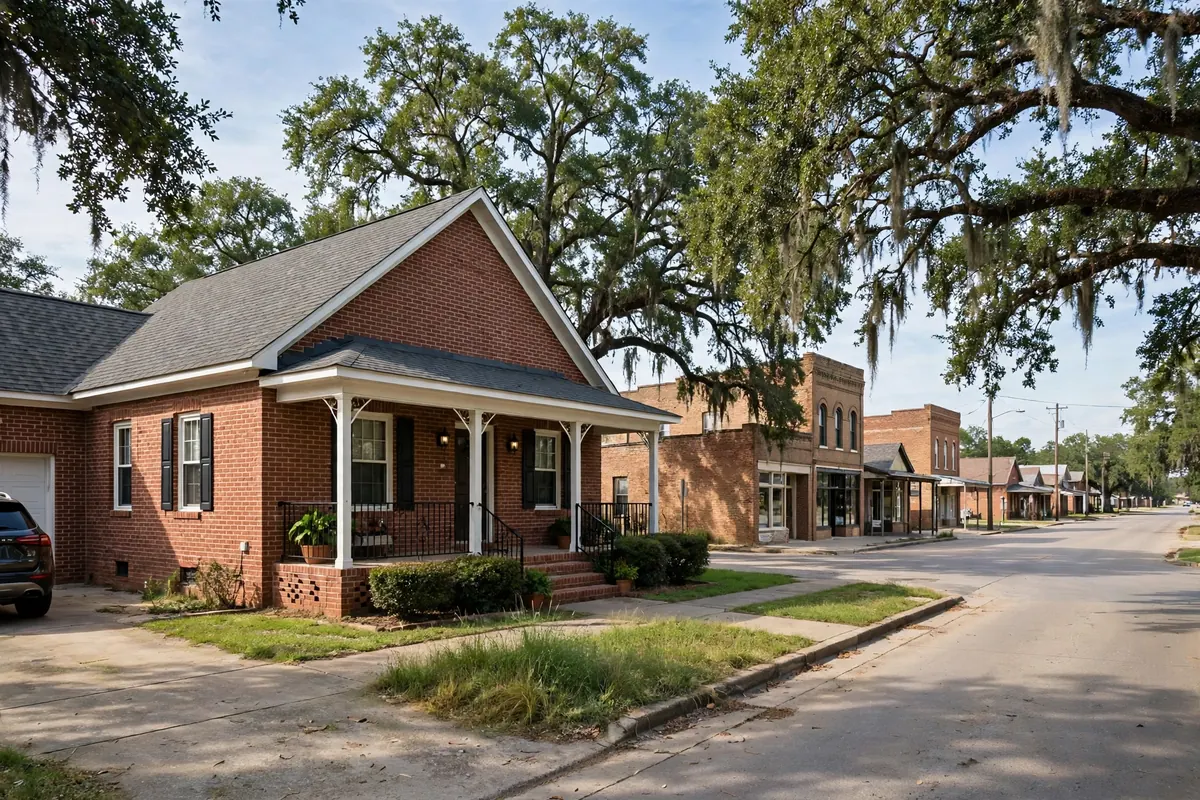
Woodbridge is the best-known neighborhood in Wylie, a golf course community that straddles the Wylie and Sachse line, with pools, trails, and a wide range of home sizes. The homes around the golf course are mostly 1990s and 2000s brick, many of them two-story, with mature trees now and lots that back onto the fairways or the greenbelts. The clay under Woodbridge is the same heavy clay as the rest of the city, and the golf course irrigation keeps the ground damper on the fairway side, which can make one side of a lot move differently from the other.
The resale streets around Woodbridge hold the bulk of Wylie housing: Stone Ranch, Birmingham Farms, Creek Hollow, Sage Creek, Park Place, and the neighborhoods off Ballard Avenue and Brown Street. These are 1990s and 2000s homes, mostly brick, with a mix of single-story and two-story floor plans. They have had twenty or thirty seasons of wet and dry, and their slabs carry that history in hairline cracks, sticking doors, and floors that slope a little toward one corner.
Downtown Wylie still stands on Ballard Avenue, with brick storefronts, the old town center, and the streets around it. The homes near downtown are the oldest in the city, some of them pier and beam, and they need a different eye. Our guide to pier and beam vs slab foundations explains the two types, and our pier and beam foundation repair page covers the older homes.
The newest Wylie homes are going up on the edges of the city, on lots that were farmland or open prairie a few years ago. Those lots were graded before the homes went up, and the fill under them is still settling. A small crack in a new home is worth a look, because catching settlement early is simpler than correcting it after several more seasons. Our foundation inspection looks at the grading and the fill before anything else.
A crack in a 1990s or new home is worth measuring. Book an inspection and get the readings before it grows.
The elevation map decides how much work the job needs. A slab that has dropped at one corner calls for fewer piers than a slab that has settled along a whole side, and the map comes from floor readings taken room by room. An inspection gives you that map before any work starts, so the scope follows measurements instead of guesses.
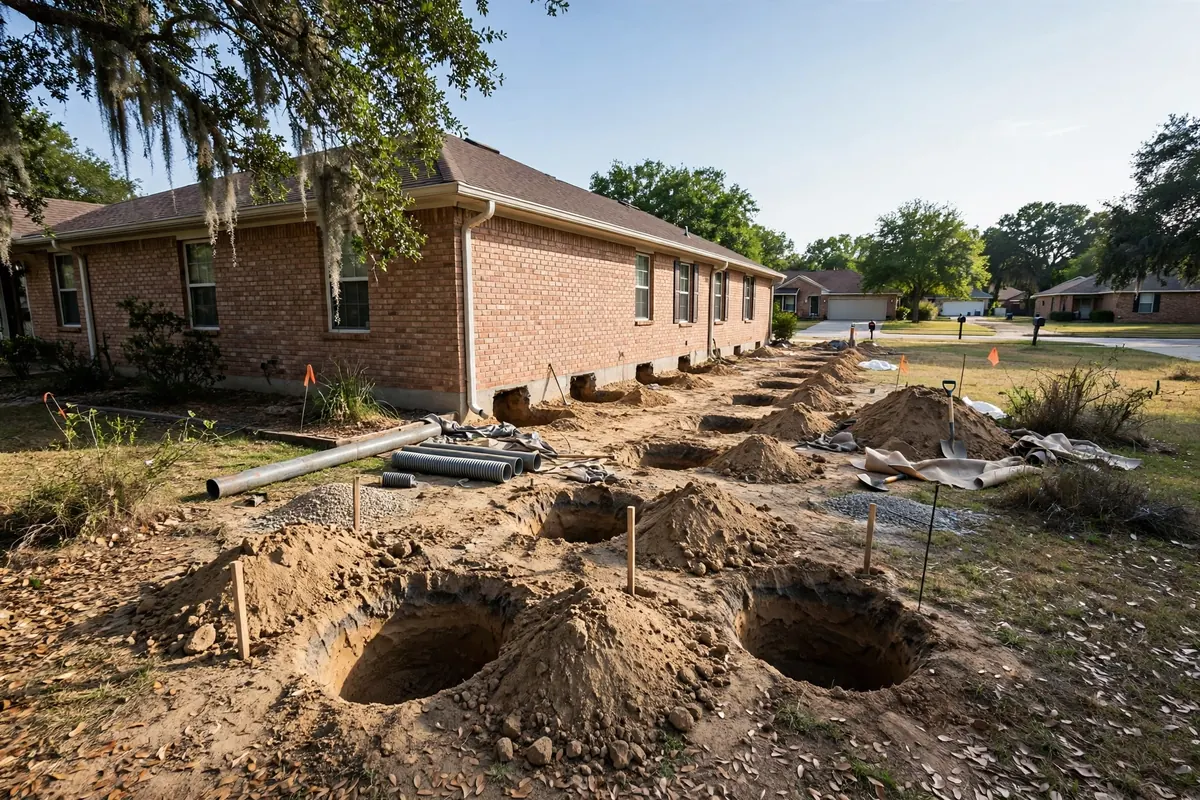
Access is the second factor. Each pier needs a small excavation beside the footing, and patios, decks, air conditioning units, and landscaping can sit over a pier point. A home with a clear footing line is simpler to work on than one where the footing is buried under a built-out patio, and working around those takes more care.
Drainage is the third factor. A lot that holds water against the house needs drainage work alongside the piers, or the clay will keep moving after the piers are in. That can mean re-grading a bed, moving a downspout, or adding a French drain where water collects, and our drainage page covers that work.
The slab type is the fourth factor. A conventional slab from the 1990s is rigid and cracks rather than flexes, so the lift is done in small steps while the readings are watched, and the doors and windows are checked as the slab moves. A home that needs leveling as well as support is covered on our house leveling page, with the same slow, measured lift.
Wylie shares a single ZIP code, 75098, across the whole city, from downtown to the golf course and out to the new subdivisions on the edges. That one code covers a lot of ground, so the neighborhood tells you more about a home than the ZIP does. The code also reaches into unincorporated areas outside the city limits, so a Wylie mailing address does not always mean a Wylie city address.
Woodbridge is the largest community, with the golf course, pools, trails, and homes that range from townhomes to large two-stories. Stone Ranch holds larger two-story homes near the lake and the golf course. Birmingham Farms is an established resale neighborhood with mature trees. Creek Hollow, Sage Creek, and Park Place are family streets with parks and trails. The Preserve and Waterford hold newer homes on the edges. Downtown Wylie, around Ballard Avenue, has the brick storefronts, the old town center, and the oldest homes in the city.
The roads that tie Wylie together are State Highway 78, Farm to Market 544, Farm to Market 1378, Ballard Avenue, and Brown Street. The landmarks owners use to place a street are Woodbridge Golf Club, downtown Wylie, Breckenridge Park, Lake Lavon to the east, and the Wylie Municipal Complex. If your home sits near one of those, we know the streets around it.
We work across the whole 75098 ZIP code, and across the border into Sachse to the west, Murphy to the southwest, and Rowlett to the south, so a home near the city line is covered the same as one in the middle of town.
| Neighborhood | ZIP | What to know |
|---|---|---|
| Woodbridge | 75098 | Golf course community with pools, trails, and a wide range of home sizes. |
| Stone Ranch | 75098 | Larger two-story homes near the lake and the golf course. |
| Birmingham Farms | 75098 | Established resale neighborhood with mature trees. |
| Creek Hollow | 75098 | Family streets with parks and trails on the west side. |
| Sage Creek | 75098 | Established homes near Sage Creek and the trails. |
| Park Place | 75098 | Neighborhood with parks and family streets. |
| The Preserve | 75098 | Newer homes on the edges of the city. |
| Waterford | 75098 | Newer subdivision with two-story brick homes. |
| Downtown Wylie | 75098 | The old town center on Ballard Avenue with the oldest homes. |
| Lake Park Villas | 75098 | Low-maintenance homes near the lake side of town. |
A small crack in a 1990s home can be normal settling that happened years ago and has stayed quiet since. A hairline crack that looks the same month after month is usually old settling. A crack that widens, runs in steps through the brick, or shows up alongside a sticking door points to movement that is still active, and that is when floor readings are worth having.
The garage slab is poured apart from the house slab, on its own base, and the fill under it compacts over the seasons. The slab drops a little, and the slope follows the lowest point. A garage slab that has dropped can often be lifted back, and it is worth checking at the same time as the house, because the same clay and fill are moving under both.
The golf course irrigation keeps the ground damper on the fairway side, which can make one side of a lot move differently from the other. A home that backs onto the course may show its first crack on the side nearest the fairway, where the soil stays wetter. Drainage work on that side is usually part of the fix, along with piers if the slab has already dropped.
A sloping Wylie lot was usually cut on one side and filled on the other before the home went up, and the fill side is where the trouble shows. Settlement on one side, a crack at the corner on the fill side, or a patio that slopes toward the house all point the same way. An inspection confirms it from the elevation map and the grading around the lot.
The signs differ, though the clay is the same. Stone Ranch holds larger two-story homes near the lake and the golf course, where the soil stays damper on the lake side. Woodbridge is the largest community, with the golf course, pools, and trails, and fairway irrigation keeps one side of a home wetter than the other. An inspection reads each home on its own floors and walls.
Last updated November 24, 2026
Call or book an inspection and we will measure your floors, check the sloped lot, and lay out the options.