Foundation Repair in Carrollton, TX
Carrollton lies north of Irving, with greenbelt neighborhoods and a mix of older and newer homes.
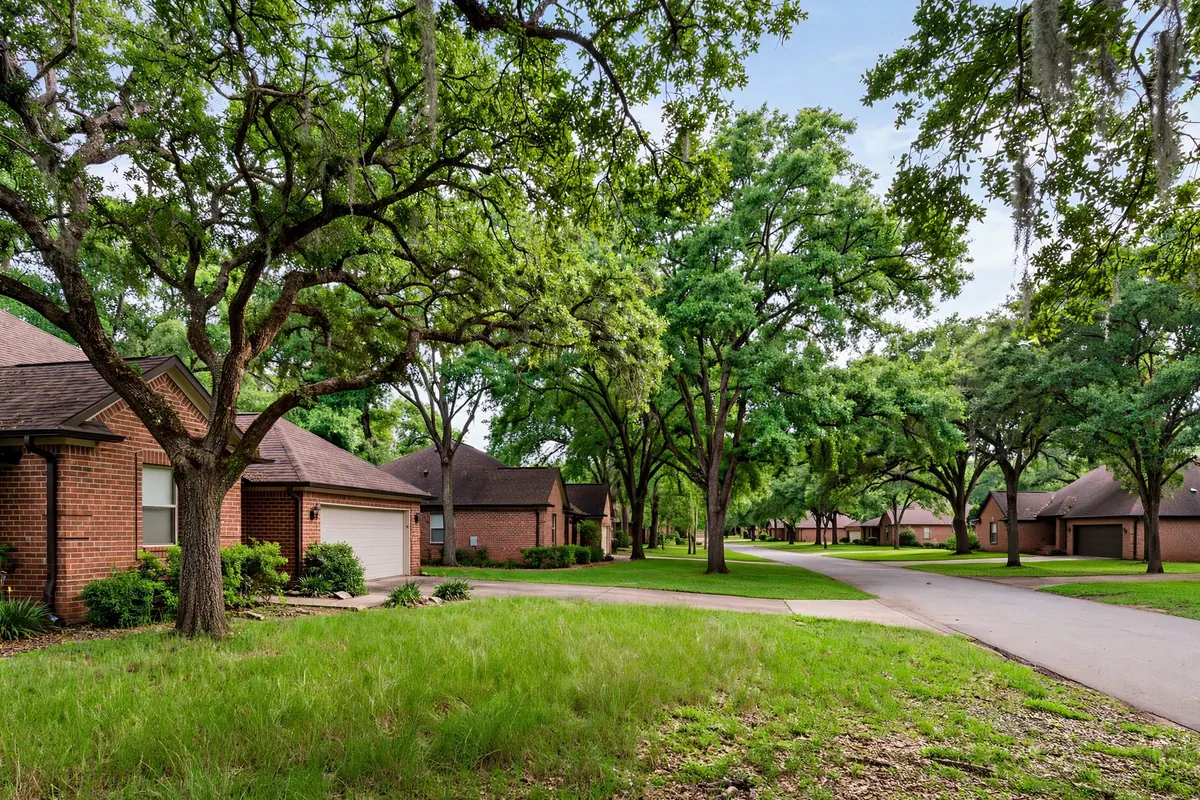
Irving sits about twenty-six miles southwest of Plano, between Dallas and Fort Worth, and it is the largest city we serve. Las Colinas, the 12,000 acre master-planned district around Lake Carolyn and the Mandalay Canal, holds offices, condos, and townhomes, while Valley Ranch, in the northwest, holds planned single-family streets with canals and trails, and central and south Irving hold older ranches and the Heritage District around downtown. The ground runs from Trinity River floodplain soil to the clay of Las Colinas, and the repair has to match the ground.
Last updated November 24, 2026
Irving covers the ground from the DFW Airport border on the west to the Dallas line on the east, with SH 114 and SH 183 crossing through the middle and I-635 along the north edge. Las Colinas began in the early 1970s on the former Carpenter ranch, and the Urban Center wraps around Lake Carolyn, with the Irving Convention Center and the Toyota Music Factory nearby. Valley Ranch sits north of Highway 114, next to Coppell, and the Heritage District around Downtown Irving and Heritage Crossing Station holds the Irving Civic Center and the city's historic downtown. Homes range from 1950s ranches in south Irving to 1980s and 1990s houses in Valley Ranch, and the soil changes just as much. Homeowners just over the line in Carrollton, TX and Farmers Branch, TX get the same inspection and the same crew, and each town has its own page with local soil and ZIP details.
Irving stands on a mix of soils, and the mix is the story. The Trinity River floodplain runs through the city, and the alluvial soils near the river run sandier and drain faster, while the upland neighborhoods sit on clay that swells when wet and shrinks when dry. Las Colinas was built on ground that was graded, filled, and re-graded for offices, canals, and the lake, so a slab there may sit on a mix of native clay and engineered fill. That mix is what makes readings matter: the soil under one end of a house can behave differently from the soil under the other end, and the movement shows up as a crack that runs across the house.
Water is the other half of the Irving story. The canals and Lake Carolyn keep the Las Colinas ground wet, while the flat streets of central and south Irving can hold water after a storm. A downspout that dumps beside a foundation, a low corner of the yard, or a patio that slopes toward the house can all soak the clay under one side of the slab, and then a dry summer shrinks it back, so the slab rocks through the year. Our guide to foundation problems after heavy rain covers how a wet spring moves a slab, and drainage correction re-grades the yard, extends downspouts, and adds French drains where water collects.
The clay here is not as uniform as the Blackland Prairie clay east of Plano, but it still moves enough to crack brick and bind doors. Summer drought pulls moisture from the soil around a slab, and the corners dry first, so the slab drops at the corners and lifts in the middle. A foundation inspection with floor elevation readings shows that pattern clearly, and our post on drought and foundation damage explains why the driest corners of a house move first.
In Las Colinas, the first signs are usually inside. University Hills, the first Las Colinas village, holds homes from the 1970s, and Country Club Place, Cottonwood Valley, and Hackberry Creek date largely from the 1980s, so the slabs have had decades to move. A door that rubs its frame, a window that will not latch, a crack that runs diagonally from a door corner, or a gap where the baseboard has pulled from the wall are the usual calls. Because the ground was graded for the district, the movement is often uneven, with one corner dropping more than the rest.
In Valley Ranch, the signs look different. The planned streets hold mostly single-family homes from the 1980s and 1990s, with canals and trails running through the neighborhood, and the ground near the canals stays wet longer after rain. Stair-step cracks in the brick, floors that slope toward the low corner, and separation where a chimney meets the house are the usual signs, and they often appear on the side of the house nearest the water. Our post on how to tell if a foundation crack is serious walks through the checks we use, including a monitoring gauge that shows whether a crack is still moving.
In central and south Irving, the homes are older, and the signs are older too. Ranches and two-story houses from the 1950s through the 1970s in the Heritage District, Plymouth Park, and the neighborhoods along Irving Boulevard have had sixty or seventy years on the ground, and the slabs have settled, lifted, and settled again through the seasons. A water leak under a slab is worth ruling out before any piers are planned, because older plumbing under the slab can soften the clay, and foundation crack repair includes sealing and monitoring so the crack can be watched over time.
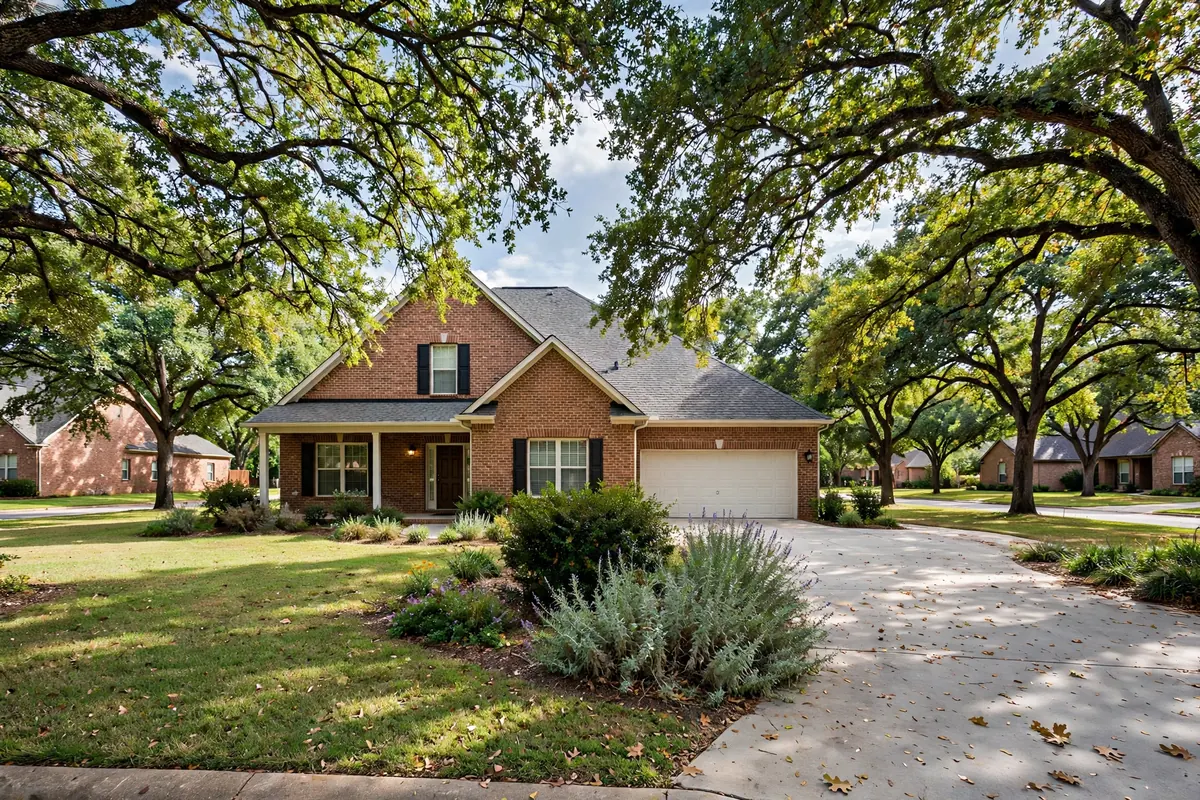
Work in Irving starts with a foundation inspection. We take floor elevation readings room by room, check doors, windows, and floors, and walk the outside of the house, including the side yards, the grade, and the way water leaves the roof. The readings go on a simple floor plan sketch, so you can see which corners are high and which are low, and the written plan that follows names the piers, the drainage work, and the order of the job. Our post on what a foundation inspection covers describes the same steps, so you know what to expect before we arrive.
For a settled slab, steel pier installation is the standard repair. Piers are driven beside the footing down to load-bearing soil, bracketed to the slab edge, and the house is lifted in small increments while we watch the readings. Concrete slab foundation repair covers the full job, and where a driveway or patio has sunk, concrete lifting and leveling raises it so water drains away from the house instead of toward it. Some Irving buildings are offices and low-rise commercial properties, especially in Las Colinas, and commercial foundation repair covers those, with the same readings and the same written plan.
After the piers are in, the yard is put back. Excavations are dug by hand, the soil is set aside and returned, and the lawn and beds near the work are restored. Access is planned before the work starts, because Las Colinas townhomes and Valley Ranch streets have tight side yards and shared walks, and the equipment is staged to keep driveways clear. Our methods guide, Foundation Repair Methods Explained, compares piers, pilings, and foam in plain language, and it is the same comparison we talk through with Irving homeowners before any work is agreed.
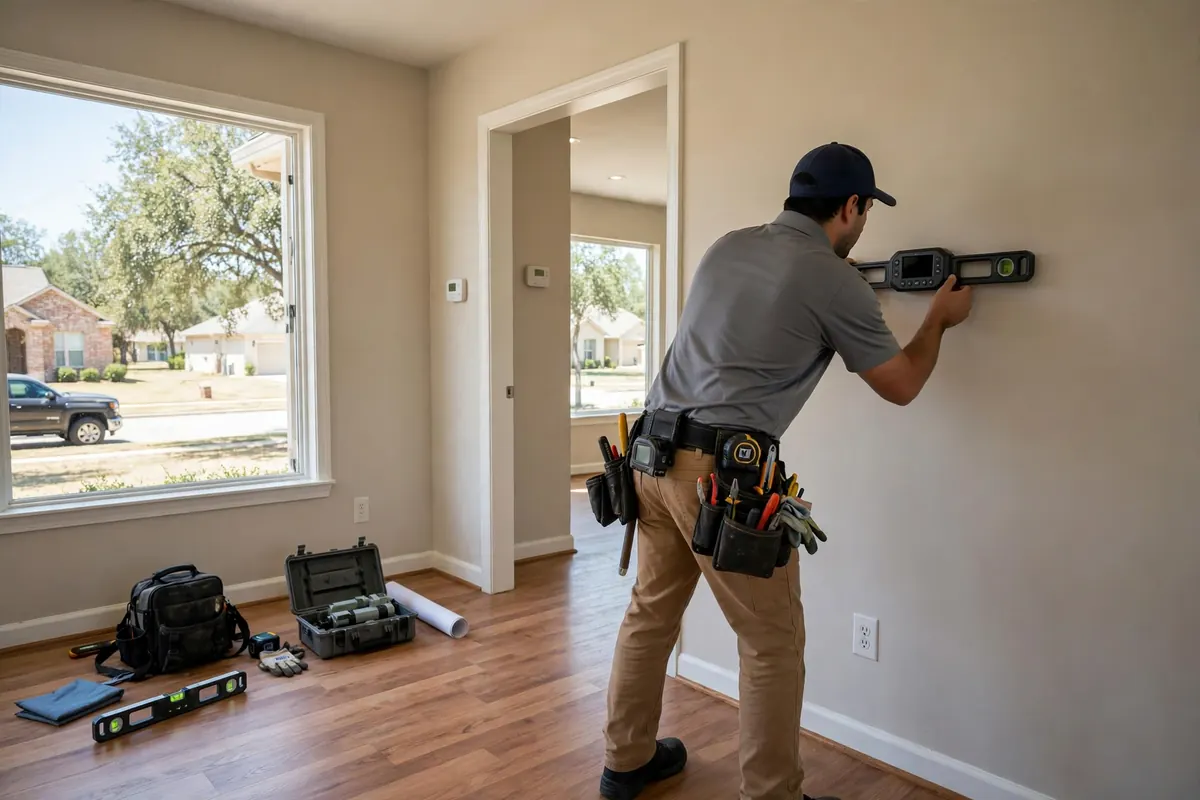
An Irving inspection begins with floor elevation readings and a careful walk around the outside of the house, so the plan is built on measurements rather than a guess.
Irving is served by six ZIP codes, and the table below lists them with the area each one covers. Las Colinas uses 75038 for the north-central neighborhoods and 75039 for the Urban Center around Lake Carolyn, Valley Ranch uses 75063 in the northwest, and central and south Irving use 75060, 75061, and 75062. The ZIP on your mail follows the postal route, not the city line, so a Valley Ranch address can carry 75019, and the street matters more than the ZIP.
Las Colinas is the best-known district, a 12,000 acre master-planned area that began in the early 1970s, with the Urban Center around Lake Carolyn and the Mandalay Canal, and residential villages such as University Hills, Country Club Place, Cottonwood Valley, and Hackberry Creek. Valley Ranch, in the northwest, is a planned area with canals, trails, and mostly single-family homes, next to Coppell. The Heritage District around Downtown Irving and Heritage Crossing Station holds the Irving Civic Center and the city's historic downtown, and Plymouth Park, Bear Creek, and the neighborhoods along MacArthur Boulevard hold the older ranch homes of central Irving.
| ZIP code | Area |
|---|---|
| 75038 | Las Colinas north-central and north Irving |
| 75039 | Las Colinas Urban Center and Lake Carolyn |
| 75063 | Valley Ranch and northwest Irving |
| 75060 | Central and south Irving, including the Heritage District |
| 75061 | Central and west Irving, including Bear Creek |
| 75062 | Central and north Irving, near SH 183 |
Yes. Las Colinas is a large part of our Irving work, including the Urban Center, University Hills, Country Club Place, Cottonwood Valley, and Hackberry Creek. The ground there was graded for the district, so the inspection looks closely at fill and drainage.
Valley Ranch uses 75063. Some Valley Ranch addresses on the Coppell side carry 75019, because the ZIP follows the postal route rather than the city line, so we serve by address. Give the full street address when you call, and the visit will be planned for the right side of the neighborhood.
Flat ground does not mean still ground. The Trinity floodplain soils and the clay under Las Colinas both move with moisture, and graded fill settles at a different rate than undisturbed soil, so one part of a slab moves more than the rest.
Yes. Las Colinas holds offices and low-rise commercial buildings, and commercial foundation repair uses the same readings and the same written plan as a home, with piers sized for the building. The plan covers the building's load and its floor readings, and the work is scheduled to fit the tenants who use the building each day.
The water is the difference. Homes around Lake Carolyn in the Las Colinas Urban Center sit on ground that stays damper, so washout and swelling near the shore are the worries. Valley Ranch homes in the northwest sit on former ranch land with more graded fill, so early settlement is the usual story. Both sit on the same clay, and an inspection reads each home on its own.
We work across the towns around Plano, so if your home sits just over the line from Irving, the same crew and the same inspection process cover it. These nearby service areas each have their own page with local soil, housing, and ZIP details.
Call (972) 430-3826 or send an email, and we will set up a foundation inspection for your Irving home.
Book a Foundation Inspection1 Call or email2 Inspection and readings3 Written repair plan