Yes, drought is one of the hardest seasons for a Plano foundation. As clay soil dries it shrinks and pulls away from the slab, and the edges of the house lose support first.
By Plano Foundation Repair · Last updated November 24, 2026
A Plano summer can go weeks with little rain and daily heat, and the clay under a house feels every dry day. Blackland Prairie clay holds a great deal of water when it is wet, and it gives that water up slowly through the summer, shrinking as it dries. The shrinkage is not even: the soil at the edges of the slab dries first, because it is open to sun and air, while the soil under the middle of the house stays damp longer. The result is a slab that drops at the corners and edges while the center holds, and a house that shows the strain in its doors, its brick, and its floors. Drought damage is rarely sudden. It builds through a long summer, and the homes that show it worst are usually the ones where the soil on one side dried much faster than the soil on the other. A foundation inspection with floor readings in late summer shows exactly how far the edges have dropped, and that reading is the honest starting point for any fix.
How dry clay shrinks and pulls away from the slab
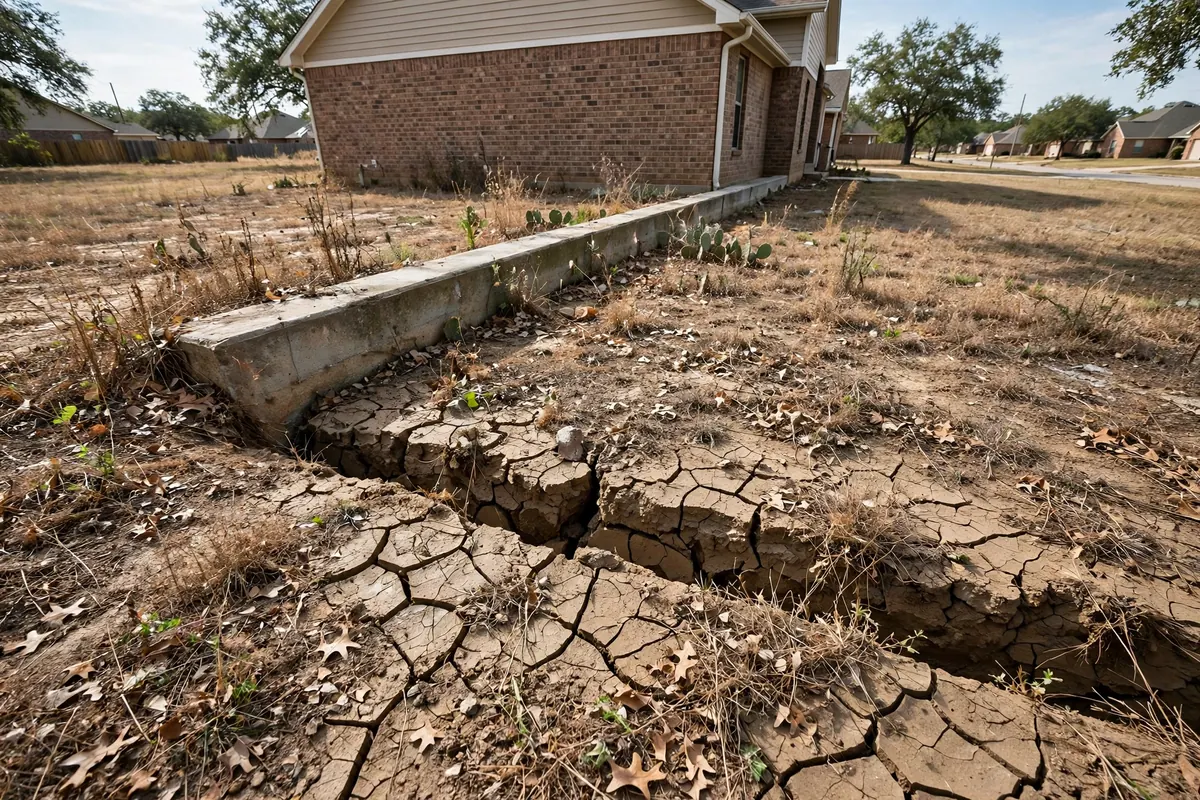
Clay shrinks because its fine particles are held apart by water, and when the water leaves, the particles draw together and the soil volume falls. In a Plano yard the top few feet of clay can lose enough moisture in a drought to shrink by a visible amount, and the shrinkage shows first as a gap between the soil and the slab edge. That gap is the most telling sign of a dry summer: the ground has pulled away from the house, and the outer edge of the slab is now carrying its load with less soil under it. The middle of the slab, shaded by the house and sealed from the sun, stays damp and stays up, so the slab bends down at the rim.
The drying is worst on the south and west sides, where the sun hits the ground longest, and worst where a large tree is also pulling water from the soil. A guide to tree roots and foundations explains how a big oak can double the drying on one side. The U.S. Geological Survey tracks drought conditions across Texas, and its records show that North Texas droughts often last long enough for the clay to dry several feet down, not just at the surface. That depth is what makes drought damage real: it is not a thin dry crust, it is a deep loss of moisture under the edges of the house.
The signs drought leaves around a Plano home
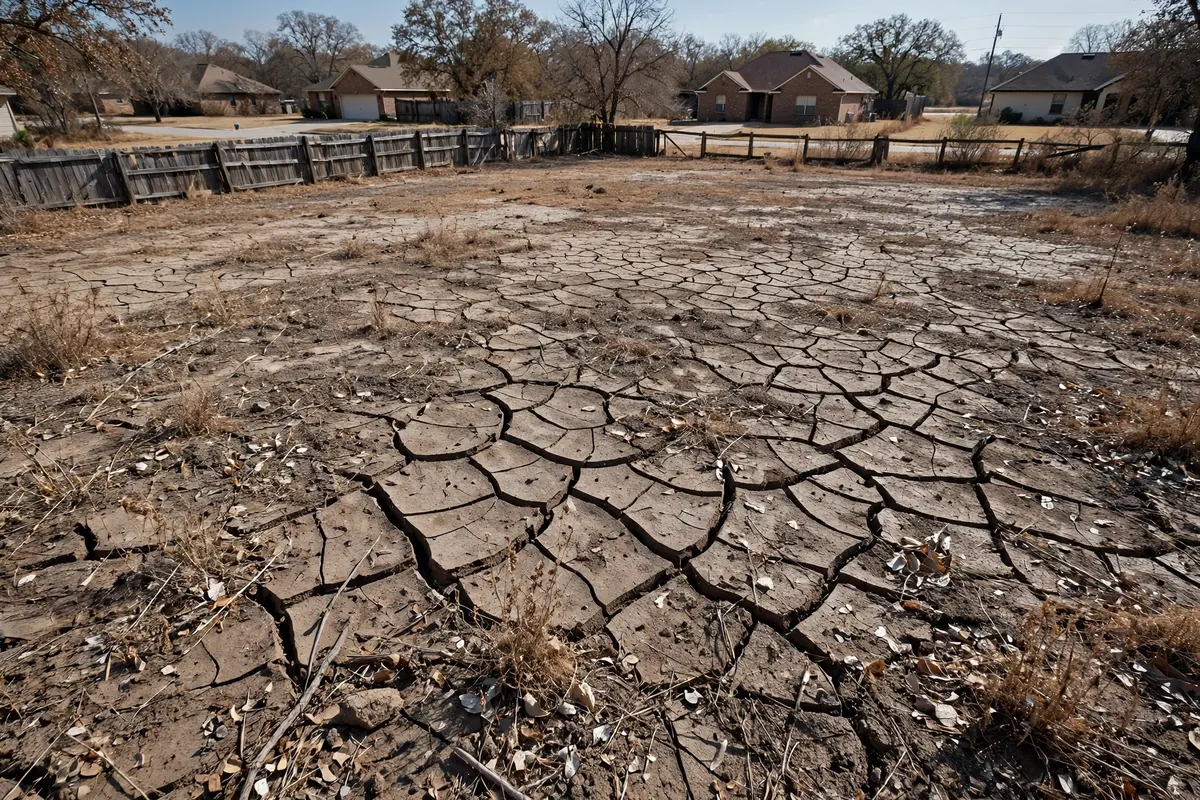
Drought leaves a clear set of signs, and they are worth learning so you can spot them early in the season. Outside, the soil pulls away from the slab edge in a gap you can see, cracks open in the bare ground across the yard, and the lawn turns thin and brown in patches, often worst near the house. Inside, doors on the dry side start to stick or show a gap at the top, a stair-step crack opens in the brick near a corner, and a floor that was level in spring now slopes gently toward the outside wall. A gap at the baseboard or a separation where the wall meets the ceiling can show the same movement.
Drought signs and where they show first
Sign
Where it shows first
What it points to
Soil gap along the slab edge
South and west sides, sunny spots
Clay shrinking away from the slab rim
Cracks in bare yard soil
Open lawn, near trees
Deep drying, several feet down
Stair-step crack in brick
Corners on the dry side
Corner settling as the edge drops
Doors sticking or gapping
Rooms on the dry side
Frame out of square from uneven settlement
One dry summer rarely ruins a foundation on its own. The damage builds over repeated dry seasons, with each one dropping the edges a little further and each wet season swelling the clay back only part of the way. That slow ratchet is why a crack that first appeared two summers ago and has grown a little each year deserves attention now, not next year. Photograph the soil gap and any cracks in late summer, when they are at their widest, and compare them with photos from the spring. A guide to telling whether a foundation crack is serious will help you judge what you find.
The gap tells the story. When dry clay pulls away from the slab edge, the outer rim of the house loses support and the floor above it starts to slope.
Which parts of a house settle first in a dry spell
The corners go first. A corner of a slab has soil on two sides drying at once, so it loses support faster than a straight stretch of wall, and the brick above a settling corner is where the first stair-step crack usually opens. After the corners, the long outside walls follow, especially on the sunny side, and the floors near those walls slope gently toward the outside. The center of the house, and any interior walls that sit over damp soil, usually stay close to level, which is why a floor can feel fine in the middle of a room and slope near the windows.
Which Plano homes move first
Older homes in east Plano, many built in the 1970s and 1980s on slab foundations, often show drought movement first because their slabs have been through decades of wet and dry cycles. Newer homes in west Plano are not safe from it either: a house built partly on fill can dry unevenly where the fill meets the undisturbed clay, and the edge over the fill can drop while the rest holds. Pier and beam homes show drought differently, with the piers settling unevenly and the floors above them sloping, and pier and beam foundation repair addresses that pattern. In every case the fix starts with the same step: floor readings that map where the house has dropped and by how much, so the work goes where the movement is.
Watering the soil through a drought, done the right way
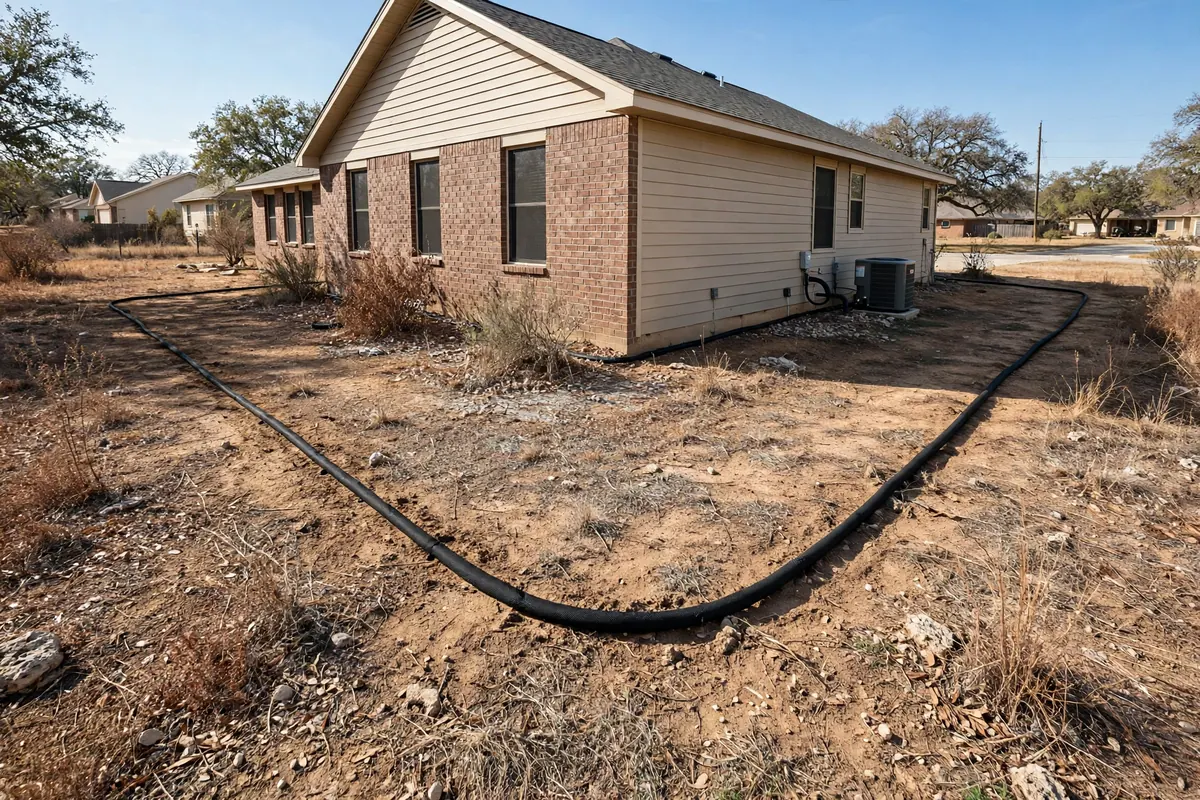
Watering through a drought is about keeping the soil moisture steady, not about flooding the yard. A soaker hose laid a foot or so out from the slab, run slowly for a few hours at a time, lets water soak down into the clay instead of running off the surface. Water all four sides of the house, not just the dry side, because watering one side only can make the moisture uneven and the slab can lift on the wet side while the dry side keeps dropping. Water in the early morning or evening, when less is lost to the sun, and water the lawn and beds near the house as part of the same routine, since dry beds pull moisture from the soil beside the slab.
Keep the watering steady through the dry months rather than soaking the ground once and forgetting it for three weeks. Clay takes water in slowly, so a long slow soak does more than a short hard spray, and a timer on the hose helps keep the routine regular. Do not water right against the brick or let water stand in a puddle beside the slab, and do not run a sprinkler that throws water onto the walls. A full guide to watering your foundation walks through soaker hoses, sprinklers, and the mistakes to avoid, and drainage correction keeps the water you add from pooling where it should not.
Steady water, evenly spread. A soaker hose around the perimeter keeps the clay damp on all sides, which is what stops the edges of the slab from dropping.
When a dry-season crack calls for an inspection
Most hairline cracks that open in a dry summer are seasonal and close partway when the rain returns, but a few signs mean it is time to get readings. A crack wider than about a quarter inch, a crack that grows through the summer instead of holding steady, a door that will not latch at all, or a floor slope you can feel when you walk across the room are all reasons to call. The same goes for a crack that runs through the brick and the mortar together, or for several signs showing up on the same side of the house at once.
An inspection in late summer is useful because the movement is at its worst then, and the readings show the full picture. The inspector will measure floor heights through the house, look at the slab edge and the soil gap, and check the doors, walls, and brick for the pattern of the movement. From those readings comes a written plan: whether the house needs steel pier installation to pin the settled corners to stable ground, whether concrete slab foundation repair is the right step, or whether steady watering and watching are enough for now. In Frisco and across the rest of the metro, the homes that come through a drought best are the ones where the owner watered steadily and got readings when the signs changed, and that routine is the cheapest protection a Plano home has.
Soil pulling away from your slab?
A visible gap along the slab edge means the clay has dried and shrunk. Call and we will measure how far the edges have dropped and lay out the next step.
Plain answers to the questions Plano homeowners ask us most about this topic.
?
Will the cracks close when the rain comes back?
Partly. Hairline cracks often narrow as the clay swells again, but a slab that has settled does not rise back on its own. If a crack stays open after a wet month, the settlement is likely permanent. Watch the crack through the next dry spell too, because one that opens again each summer is still moving.
?
Is drought worse for a slab or a pier and beam home?
Both suffer, in different ways. A slab drops at the edges, while a pier and beam home can see its piers settle unevenly and its floors slope. The signs differ, but the cause, drying clay, is the same. An inspection reads both types the same way, with floor levels and a look at the soil around the house.
The soil behind it all: how Blackland Prairie clay moves with water, wet or dry.
Last updated November 24, 2026
Keep the soil steady through the dry months
Tell us what this summer has done to your home: the gap at the slab, the sticking door, the crack that grew. We will measure the floors and give you a plain written plan.