Allen, TX
North up US-75, with master-planned neighborhoods and two-story brick homes on the same clay.
Collin County Foundation Repair
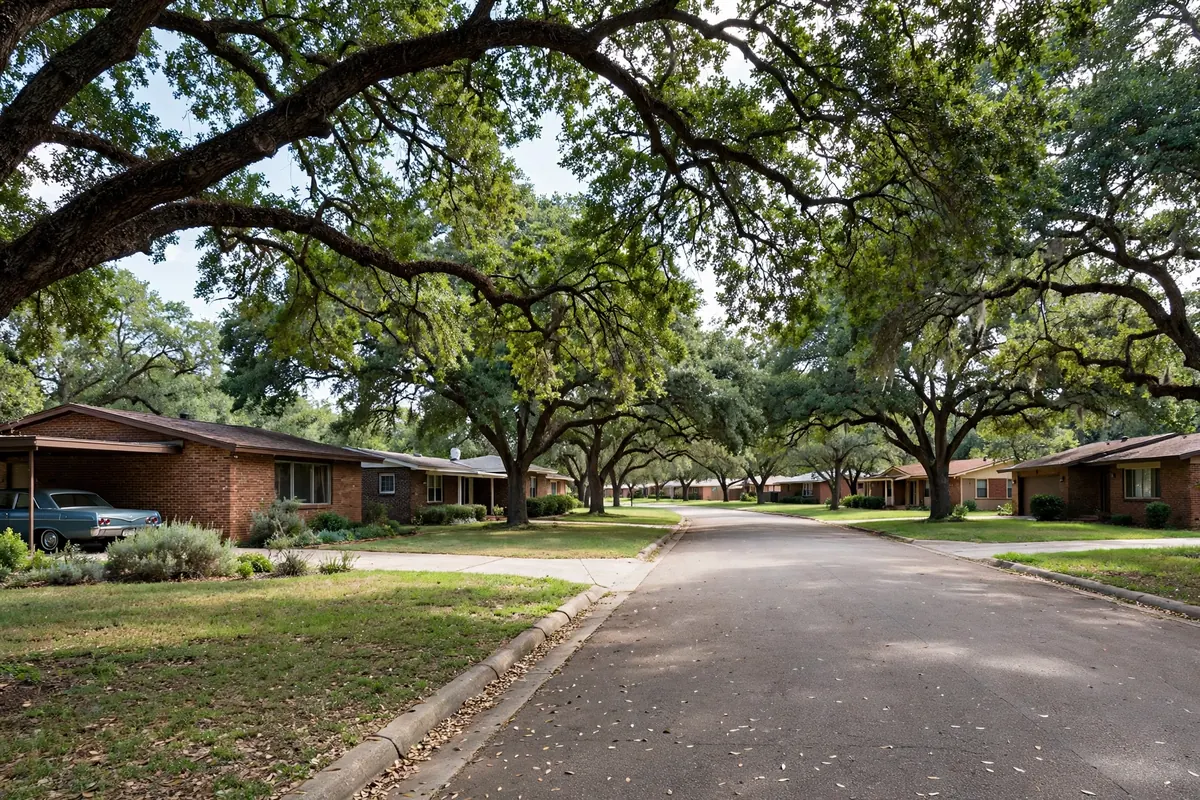
Richardson sits directly south of Plano, about nine miles down US-75, and its homes have been riding the same Blackland Prairie clay far longer than most of the metro. Mid-century ranch houses, mature oaks, and a few newer rebuilds share streets where the ground swells in wet springs and shrinks in dry August heat.
Richardson was largely built out between the 1950s and the 1980s, which makes it one of the older suburbs around Plano. The ground underneath is the same heavy clay that moves Plano foundations: Houston Black clay and Heiden soil, with a high shrink-swell range. When rain soaks in, the clay swells and pushes up on a slab. When a dry stretch pulls the moisture out, the clay shrinks and the slab loses support at the edges. A home that has gone through forty or fifty of those cycles shows the wear in its walls and floors.
Most Richardson homes sit on slab-on-grade foundations, either conventional slabs or post-tension slabs in the later builds. The older ranches in Richardson Heights, Greenwood Hills, and the streets around Arapaho Road were poured when post-tension work was less common, so their slabs are rigid and plain, and they crack rather than flex when one corner loses support. The northeast side around CityLine and the UT Dallas campus grew later, with newer construction and deeper footings, but the clay there is the same, and the same seasonal movement applies.
Trees add a second force. Canyon Creek, Prairie Creek, and the older central neighborhoods carry live oaks, pecans, and post oaks that have been drinking from the same soil for decades. A large oak near a corner can pull enough moisture out of the clay in a dry summer to drop that corner by itself, while the shaded side of the same house stays put. That uneven drying is why cracks often start at the corner nearest the biggest tree. Our guide to why Plano's clay soil cracks foundations walks through the same soil behavior, and it applies street by street in Richardson too.
An inspection here starts with the ground as much as the house. We take floor elevation readings across the slab, look at how water runs off the roof and the yard, and note where the big trees stand. A foundation inspection gives you a measured picture of what moved and by how much, instead of a guess based on one crack.
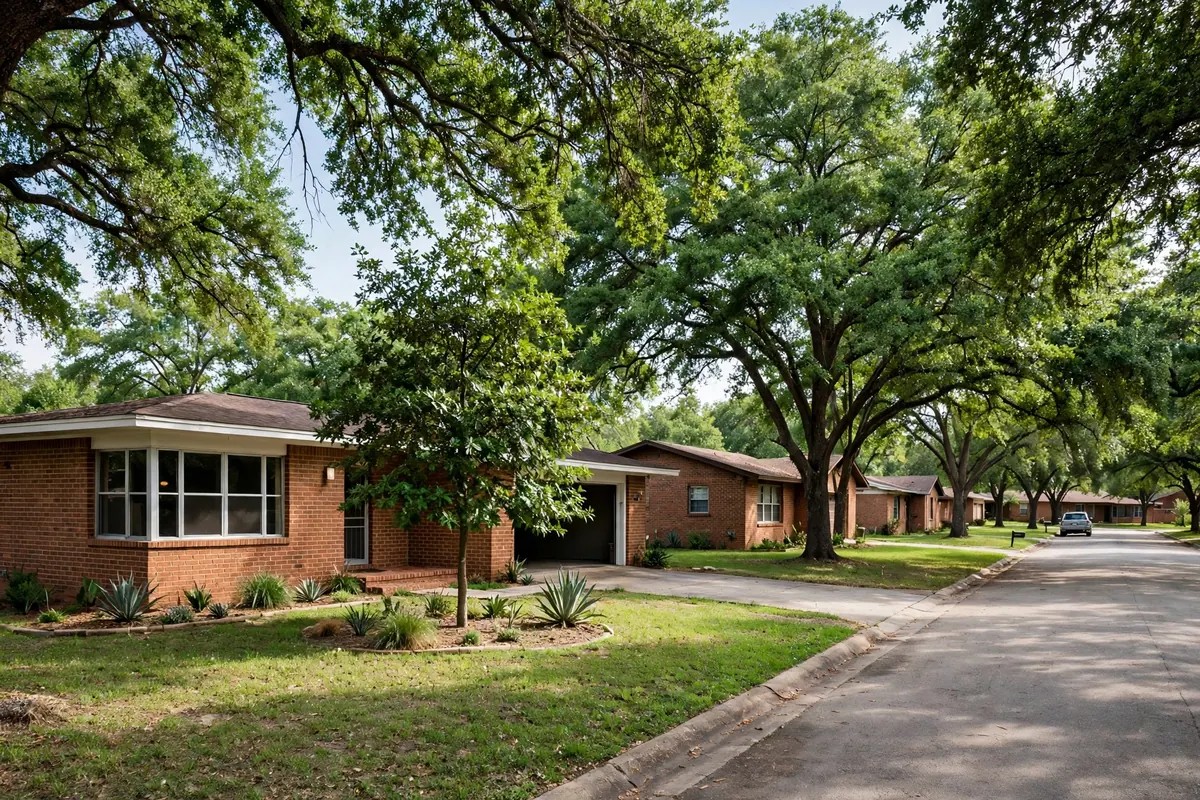
Because so many Richardson homes are mid-century brick ranches, the first sign is usually in the brick. Stair-step cracks that follow the mortar joints, often starting at a window corner or the top of a door frame, show that one part of the wall is settling while the rest holds. A single hairline crack in a mortar joint can sit still for years, but a crack that widens past a quarter inch deserves a closer look. Our guide to signs your Plano home's foundation is moving covers the same warning signs, and they read the same way on a Richardson ranch.
One sign on its own does not always mean a repair is needed. A door can stick because of humidity, and a hairline crack can come from a house settling into its first few seasons. The pattern matters more than any single mark: several signs on the same corner, or signs that keep getting worse through a dry summer, point to movement that is still going on. A foundation crack repair visit looks at the crack itself and the readings behind it, so the fix matches the cause instead of covering it.
An inspection gives you floor readings and a written plan, so you can decide with facts instead of worry.
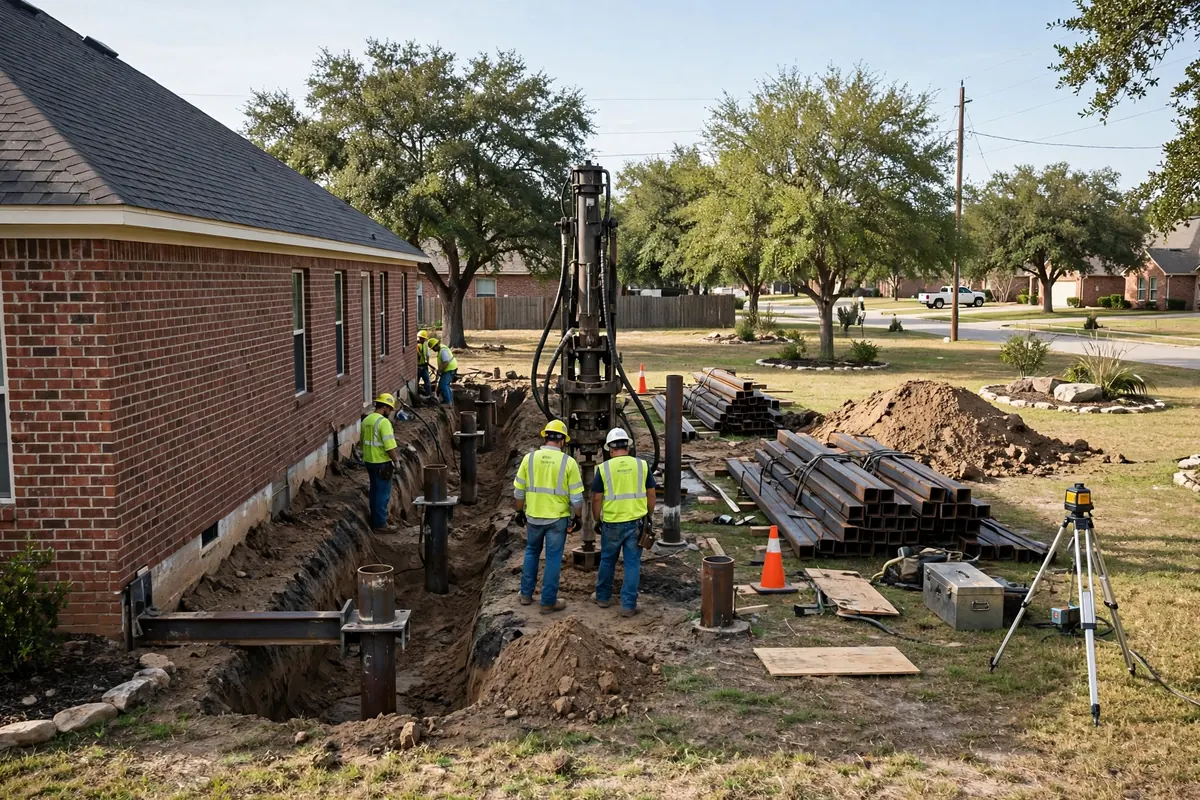
Most Richardson repairs come down to steel piers. The pier is driven beside the footing down to firm, load-bearing ground, a bracket is set under the footing, and the home is lifted back toward level in small steps while we watch the elevation readings. Because the piers reach past the moving clay, the repair holds through the wet and dry cycles that caused the problem in the first place. You can read how the method works on our steel pier installation page, and how it fits a slab home on our concrete slab foundation repair page.
Not every Richardson home is a slab. A few of the oldest homes near downtown and the Heights sit on pier and beam foundations, with a crawl space under the floor. Those need a different approach: shimming and re-leveling the beams, replacing failed piers, and dealing with moisture in the crawl space. Our pier and beam foundation repair page covers that work, and the crawl space side of it is on our crawl space repair page.
Water is the other half of most Richardson jobs. Gutters that dump at the foundation, a yard that slopes toward the house, or a low spot that holds water after rain all feed the clay right where it does the most harm. Drainage correction moves that water away, and it is often the step that keeps a pier repair holding for the long run. Where a driveway or patio slab has sunk on its own, concrete lifting and leveling can raise it back without tearing it out.
We start every job with readings, not assumptions. The inspection maps the high and low points of the floor, the pier plan follows that map, and the lift stops when the readings say the slab is back where it belongs. After the work, we walk the house with you and check the doors, windows, and cracks you pointed out at the start, so you can see what changed.
Richardson runs across Dallas County and Collin County, and its three ZIP codes split the city into clear parts. The 75080 side on the west and northwest holds Canyon Creek, Richardson Heights, Greenwood Hills, and the streets around UT Dallas. The 75081 side in the center and east holds J.J. Pearce, Duck Creek, Berkner Park, and the older streets along Belt Line Road. The 75082 side in the northeast holds Sherrill Park, Breckinridge Park Estates, and the CityLine district at the Bush Turnpike.
The housing age follows that split. West and central Richardson carry the 1950s through 1970s ranches, many of them renovated inside while the slab underneath stays original. Northeast Richardson grew later, with larger two-story homes and newer slabs. Both sides share the same clay, but the older side has had more seasons to show movement, and the newer side has more homes where a small crack is the first sign rather than the tenth.
Getting around Richardson means US-75, Campbell Road, Coit Road, Arapaho Road, and Belt Line Road, with the Bush Turnpike cutting across the north side. The landmarks owners use to place a street are UT Dallas off Campbell Road, the CityLine district and the Eisemann Center at Galatyn Park, Spring Creek Nature Area on the northeast side, and the Telecom Corridor offices along US-75. If your home sits near one of those, we know the streets around it.
We work across all three Richardson ZIP codes, and across the border into Allen to the north and Garland to the east, so a home near the city line is covered the same as one in the middle of town.
| Neighborhood | ZIP | What to know |
|---|---|---|
| Canyon Creek | 75080 | Country club streets with custom homes and large oaks around the golf course. |
| Richardson Heights | 75080 | One of the oldest central neighborhoods, mid-century ranches from 1950 on. |
| Greenwood Hills | 75080 | Mature streets west of Coit Road with deep lots and big trees. |
| Prairie Creek | 75080 | Established homes near Prairie Creek Park and its waterfall trail. |
| J.J. Pearce | 75081 | East side homes near the high school, many built in the 1960s and 1970s. |
| Duck Creek | 75081 | Streets near the creek greenbelt in east Richardson. |
| Berkner Park | 75081 | Neighborhood around Berkner High School in south-central Richardson. |
| Sherrill Park | 75082 | Golf course community in northeast Richardson with larger lots. |
| CityLine | 75082 | Newer mixed-use district at the Bush Turnpike with townhomes and apartments. |
| Breckinridge Park Estates | 75082 | Later-built homes near Breckinridge Park on the northeast side. |
Patching fills the crack you can see, but it does nothing about the slab movement behind it. If the floor readings show one corner has dropped, piers are what hold that corner up through the next wet and dry seasons. If the readings show the slab is stable and the crack is old and quiet, a patch and a watchful eye can be the right call.
Summer heat pulls moisture out of the clay, and the clay shrinks. The slab edge on the sunny, dry side can drop a little while the shaded side stays put, and a door frame that was square in spring goes out of square by August. Doors that stick every summer and ease every fall are telling you the clay is doing the moving.
The soil type is the same heavy clay on both sides, but the conditions are not. Canyon Creek has older homes, bigger trees, and deeper shade, so moisture changes there are driven more by tree roots. CityLine has newer construction, more fill, and younger trees, so drainage and grading play a bigger role. The repair method is the same, but the inspection looks for different causes in each place.
Walk the brick outside and look for stair-step cracks, then check every door and window inside for sticking or gaps. Ask for floor elevation readings as part of the inspection, and look at the gutters and grading to see where water goes in a storm. Old, quiet cracks with level floors are one thing; fresh cracks with a sloping living room are another.
The county line does not change the clay, since the same Blackland soil runs under both sides of Richardson. What changes is the age of the houses: the Dallas County side holds older ranch homes with mature oaks, while the Collin County side holds newer homes near CityLine on graded fill. An inspection reads each home on its own floors and walls, not on which county it sits in.
Last updated November 24, 2026
Call or book an inspection and we will measure your floors, walk the exterior with you, and lay out the options.