How to Choose a Foundation Repair Company in Plano
The right foundation repair company gives you readings, a written plan, and a clear scope before any work starts. If a visit ends with pressure and no numbers, keep looking.
By Plano Foundation Repair · Last updated November 24, 2026
Choosing a foundation repair company is a decision most Plano homeowners make once, and it is worth making slowly. The work is done under your house, out of sight, and the difference between a good job and a poor one may not show for a year or more. That makes the choice before the work starts the most important part of the whole job. A good company earns the work with measurements, a written plan, and straight answers to hard questions. A poor one leans on urgency, vague promises, and a scope for work that has not been measured yet. This guide lays out what to look for, the questions to ask, how to read a repair plan, and the warning signs that should make you pause, so you can choose with confidence and keep the decision in your own hands. Start with a foundation inspection and floor readings, since no honest plan exists without them.
Start with readings, not a sales pitch
Every good foundation job starts the same way: someone measures the floors. Floor elevation readings taken across the house show where the slab has settled and by how much, and those numbers are what the repair plan is built on. A company that offers a plan without taking readings is guessing, and a guess under a house is an expensive one. Ask for the readings to be marked on a floor plan that you keep, and ask the inspector to walk you through the pattern: which corners have dropped, which walls have settled, and what the numbers mean in plain words.
The readings also protect you from the most common sales pattern in this trade: a visit that finds a problem everywhere and a fix for all of it, with no numbers to back either claim up. A house with small seasonal movement may need nothing more than steady watering and watching, and an honest company will say so. A guide to what a foundation inspection covers explains each step of the visit, so you know what a thorough inspection looks like before anyone arrives. If a company will not show you readings, or will not leave you a written plan, that alone is reason to call someone else.
Questions to ask before you agree to any work
Good questions are the simplest test of a company, because a good company answers them plainly and a poor one dodges them. Ask what caused the movement, and whether the cause is drying clay, a tree, poor drainage, or a leak, since the repair should fit the cause. Ask how many piers the plan calls for and where each one goes, and ask what happens to the yard, the driveway, and the floors during the work. Ask how the work is sequenced, how long each stage takes, and how the site is left each evening. Ask what the plan does not cover, and what would change the scope once the work starts.
Questions to ask, and what a good answer sounds like
Question
A good answer
A weak answer
What caused the movement?
A named cause tied to the readings and the yard
A shrug, or blame on the house itself
How many piers, and where?
A count and a layout marked on a plan
A round number with no layout
What happens to the yard?
Where equipment sits and how soil is restored
No mention of the yard at all
What is not covered?
A clear list of what the plan leaves out
A promise that everything is covered
Two more questions belong on every list. Ask who will actually do the work, and whether the crew on site is the company's own team or a crew hired for the job, since the quality of the work depends on the hands doing it. And ask what happens after the work: whether the company returns to check the readings, and how a new crack or a sticking door is handled once the job is done. A company that answers these questions in writing, in the plan itself, is a company that expects to be held to its word. A guide to how long a repair takes will help you judge whether a timeline sounds realistic.
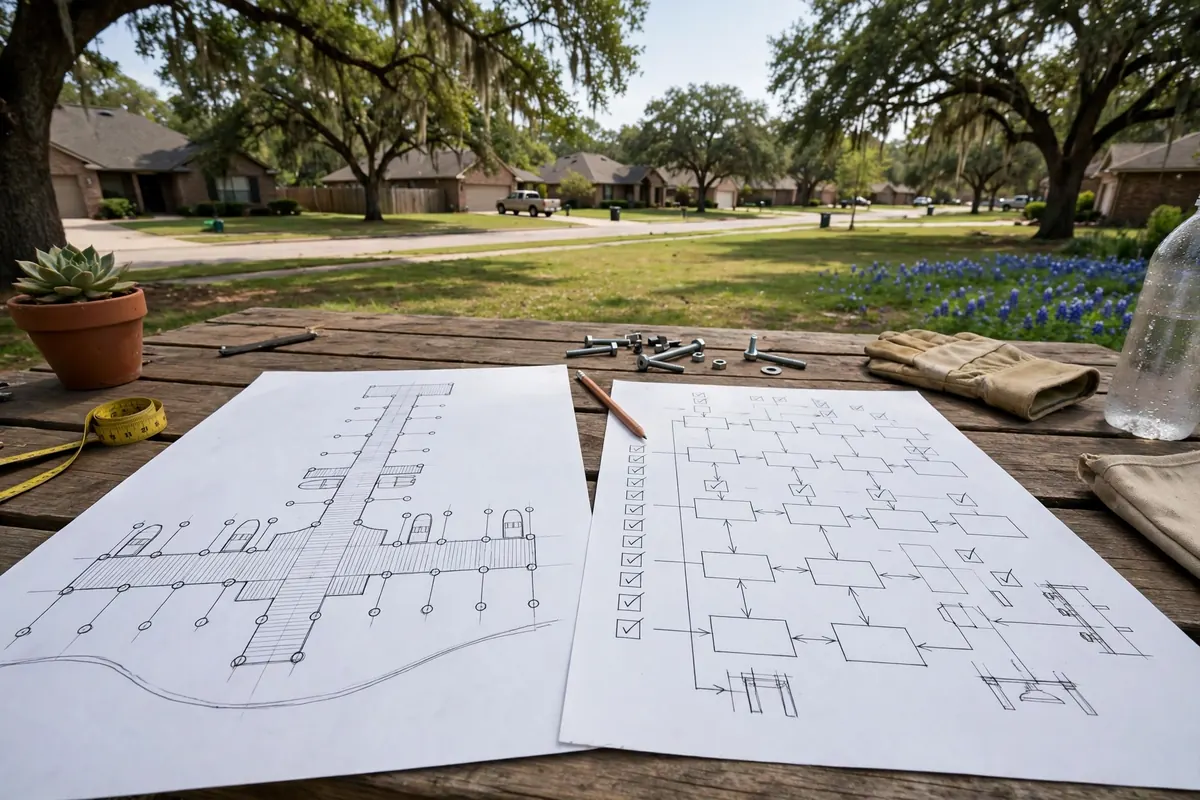
A plan you can hold. A written plan with a pier layout and readings is something you can compare with another company, side by side, before you agree to anything.
Reading a repair plan and a pier layout
A repair plan is a document, not a handshake, and it should be readable by a homeowner without a dictionary. The first page should name the problem in plain words and show the floor readings that support it. The second part should lay out the work: the method, whether that is steel pier installation, concrete lifting and leveling, or drainage correction, the number of piers or the area to be lifted, and where each piece of work happens. A pier layout, a simple drawing of the house with each pier marked, is the clearest part of any plan, and it lets you see at a glance whether the work goes where the movement is.
What a plan should not miss
Read the plan for what it leaves out as well as what it puts in. A plan that covers the settled corners but says nothing about the drainage that caused the settlement is a plan that invites the problem back. A plan that lifts the slab but says nothing about the water leak under the slab that washed the soil away is the same. The plan should also say how the floors will be checked after the work, and what the readings should show when the job is done. If you cannot understand a plan, ask the company to walk through it with you line by line: a good company welcomes that, and a poor one rushes past it.
Warning signs that should make you pause
Several warning signs should make you slow down, whatever the company promises. The first is pressure: a discount that expires today, a crew that is in the neighborhood only this week, or a demand for a decision before you have the plan in writing. Foundation work is not an emergency sale, and a company that treats it like one is selling urgency, not repair. The second is a plan with no readings and no layout, only a round number of piers and a promise that the house will be level. The third is a company that will not say who does the work, or that cannot name the method it will use in words you understand.
Other signs are quieter but just as telling. A company that will not put the plan in writing, a company that asks for full payment before the work starts, and a company that has no written plan for what happens after the job are all worth pausing over. So is a company that badmouths every other company in town instead of explaining its own work. None of these signs proves a company is dishonest, but each one is a reason to get a second opinion, and a second opinion in this trade is cheap insurance: another set of readings and another written plan, compared side by side with the first.
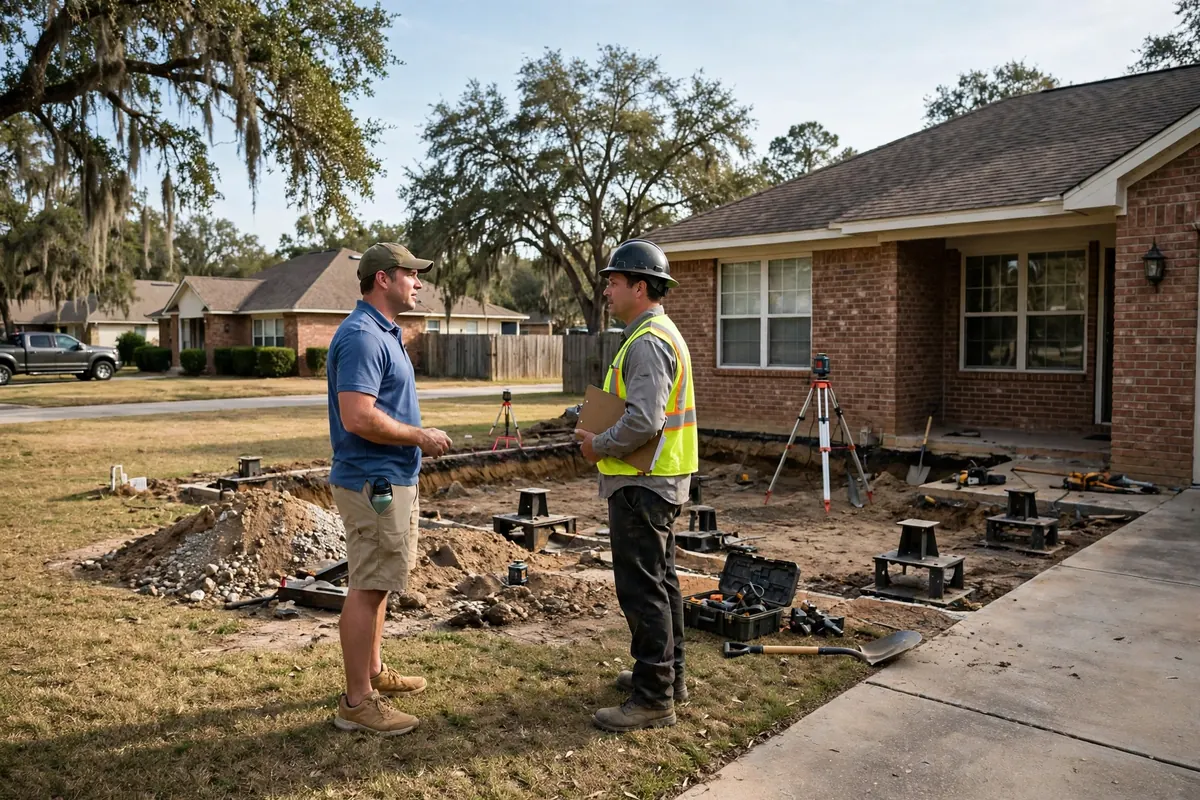
A crew that arrives ready. The crew, the equipment, and the plan should all arrive together, and the work should start where the readings say it should.
Comparing two plans side by side
The best way to choose is to compare two written plans, and the comparison is simpler than it sounds. Lay the two floor plans with their readings next to each other: do both companies agree on where the house has settled, and by how much? If they disagree sharply on the readings, one of them measured badly, and that alone settles the choice. Then compare the scope: do both plans put piers in the same places, or does one plan cover twice the house for the same problem? A plan that covers far more than the readings support is a plan that is selling work, not fixing a house.
Then compare the details that show care: does each plan say what happens to the yard, how the work is staged, and how the floors are checked after? Does each plan name the cause, and does the repair fit that cause? A guide to repair methods will help you judge whether the method in a plan fits the problem it names. In McKinney and across the metro, the homeowners who are happiest a year later are the ones who chose slowly, compared two plans, and picked the company that measured carefully and wrote everything down. That is the whole test, and it fits on a single page.
Comparing plans and not sure which to trust?
Bring us the readings and the plans you already have. We will walk through them with you and give you our own measured reading of the house.
Plain answers to the questions Plano homeowners ask us most about this topic.
?
Should I get more than one opinion?
Yes. Two sets of readings and two written plans let you compare where the house has settled and what each company proposes. If the readings disagree sharply, one of them measured badly. Ask each company for the floor readings behind its plan, because readings are harder to dress up than promises.
?
What should a written plan include?
The floor readings on a marked floor plan, the likely cause in plain words, the method and the pier layout, what happens to the yard, and how the floors are checked after the work. A good plan also gives the start date and how long each stage takes, in plain words.
What a repair timeline looks like, from the first pier to the final walkthrough.
Last updated November 24, 2026
Get a written plan you can compare
Tell us what you have noticed and what other companies have told you. We will measure the floors, explain the numbers, and leave you a plan in writing.